Does Shopify Accept Apple Pay and How Does It Work?
Yes, Shopify accepts Apple Pay. Learn how it works, when it shows up at checkout, and what you need to enable it for your store.
Jan 26, 2026



Physical therapy practices can grow through a mix of digital and traditional marketing strategies, including optimized websites, local SEO, patient referral programs, community partnerships, social media engagement, and educational content. Successful marketing focuses on building trust, showcasing expertise, and making it easy for patients to find and choose your practice. Industry data shows that practices combining online visibility with strong referral networks see the highest patient acquisition rates.
Marketing a physical therapy practice isn't what it used to be. Direct access laws have changed the game, allowing patients to seek PT services without physician referrals in most states. That's opened doors, but it's also made competition fiercer.
Research from 2018 shows that 59.9% of patients with back pain are referred for physiotherapy services, yet many practices still struggle to fill their schedules. The difference? Strategic marketing that reaches patients where they already are.
Here's the thing though—effective physical therapy marketing isn't about one magic bullet. It's about combining digital strategies with time-tested community engagement to build a steady patient pipeline.
Direct access means patients can come straight to your clinic without a doctor's prescription in many states. But that freedom also means they're choosing between multiple providers.
The American Physical Therapy Association promotes direct access through National Physical Therapy Month initiatives, including Times Square advertisements and nationwide satellite media tours. These efforts raise awareness, but individual practices still need to capture that attention locally.
Before diving into marketing tactics, check your state's specific direct access regulations and insurance carrier policies. Some insurers require physician referrals even in direct access states. Knowing these rules prevents marketing messages that promise access you can't deliver.
Your website is often the first impression potential patients get. It needs to answer their questions fast and make booking simple.
Essential website elements include clear service descriptions, staff bios with credentials, patient testimonials, online booking capabilities, and contact information prominently displayed. The site should load quickly on mobile devices since most local searches happen on phones.
Don't bury your contact button. Place it in the header, footer, and throughout service pages. Research on patient intake trends shows ease of access is now one of the fastest-growing factors in attracting and retaining patients.
When someone searches "physical therapy near me," you want your practice at the top. Local search engine optimization makes that happen.
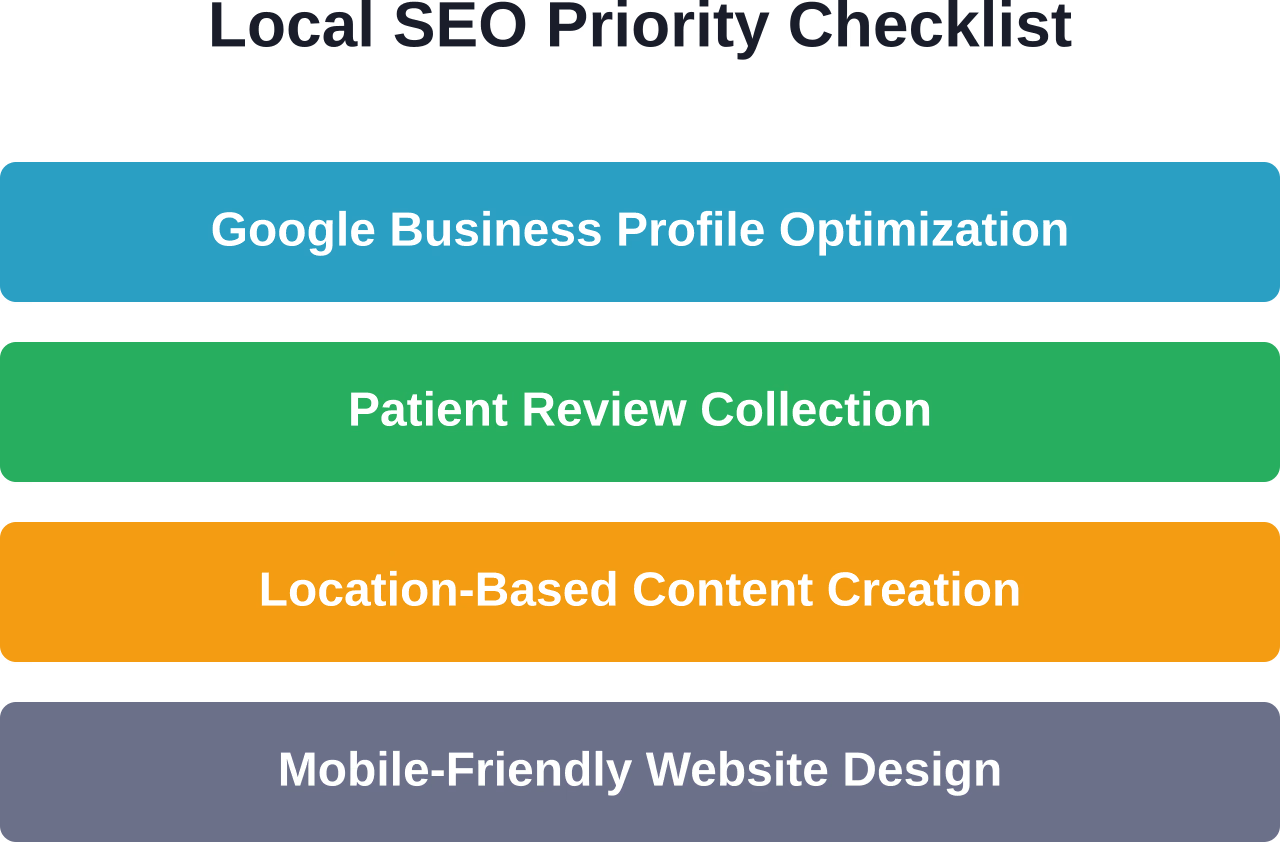
Start with a fully optimized Google Business Profile. Add your accurate business hours, services offered, photos of your facility, and respond to every review. Encourage satisfied patients to leave Google reviews—they're digital word-of-mouth that influences decision-making.
Create location-specific content on your website. If you're in Austin, write blog posts about "sports injury treatment in Austin" or "back pain relief for Austin residents." Use neighborhood names and local landmarks naturally in your content.
Social media isn't just for sharing memes. It's a powerful tool for educating potential patients and building trust.
Facebook and Instagram work well for physical therapy marketing. Share educational videos showing proper stretching techniques, post patient success stories (with permission), and highlight your team's expertise and community involvement.
The American Physical Therapy Association offers marketing resources including video clips specifically designed for private practice promotion. These professionally produced materials can elevate your social media presence without requiring video production expertise.
Consistency matters more than perfection. Posting twice weekly with valuable content beats sporadic bursts of daily posts followed by silence. Schedule content in advance to maintain regular engagement.
Content marketing positions your practice as the go-to expert. Blog posts, videos, and downloadable guides attract people searching for pain relief solutions.
Write about conditions you treat frequently. Topics like "5 exercises for shoulder pain relief" or "when to see a physical therapist for knee pain" capture people actively seeking help. Include clear calls-to-action inviting readers to schedule consultations.
Video content performs particularly well. Simple smartphone videos demonstrating home exercises or explaining common conditions can reach thousands of potential patients. No fancy production needed—authenticity and useful information matter most.
Digital strategies dominate discussions, but offline marketing builds deep community roots that algorithms can't replicate.
Despite direct access availability, physician referrals remain valuable. Building relationships with primary care doctors, orthopedic surgeons, and specialists creates steady referral streams.
Schedule brief meetings with local physicians to introduce your practice and specialties. Leave professional materials highlighting your outcomes and what sets your clinic apart. Follow up with thank-you notes when they refer patients.
Consider hosting continuing education events for local healthcare providers. Presenting on topics like latest rehabilitation techniques or specific treatment protocols demonstrates expertise while networking.
Your satisfied patients are your best marketers. Community discussions consistently cite word-of-mouth as the most effective marketing channel for physical therapy practices.
Create a formal referral program rewarding patients who recommend your services. Incentives might include discounted future visits, branded merchandise, or donations to charities they choose. Make sure any program complies with insurance regulations and ethical guidelines.
APTA learning resources emphasize the importance of systematic patient engagement approaches to improve clinic operations and patient arrival rates, dramatically improving both retention and referral potential.
Partnering with gyms, sports teams, senior centers, and corporate wellness programs puts your practice directly in front of target audiences.
Offer free injury prevention workshops at local gyms or running clubs. Provide sports physicals or injury screenings at youth sports events. These activities build brand awareness while demonstrating your commitment to community health.
Corporate wellness programs present another opportunity. Many companies seek onsite or preferred-provider partnerships for employee injury prevention and treatment. One corporate relationship can generate dozens of patient referrals.
Specializing your marketing around specific populations or conditions can differentiate your practice. Rather than being "just another PT clinic," become known as the experts in sports injuries, geriatric care, or pelvic health.
Research shows significant demand for specialized physical therapy services. Similarly, physical therapy plays a crucial role across the cancer care continuum. Research indicates that physical therapy can mitigate fatigue, anxiety, and depression through tailored exercises and manual therapy in cancer patients, creating opportunities for oncology rehabilitation specialization.
Hybrid care models combining in-person and virtual services are reshaping patient access. Marketing these capabilities expands your reach beyond immediate geographic boundaries.
The APTA Private Practice section offers courses on implementing digital-friendly approaches to physical therapy care, providing insights into successful hybrid models. These resources help practices navigate the technical and marketing aspects of virtual care.
Promote telehealth availability prominently on your website and in marketing materials. Many patients value the convenience, particularly for follow-up appointments, exercise coaching, or consultations that don't require hands-on treatment.
Marketing without measurement is guesswork. Track key metrics to understand what's working and where to invest more resources.
Monitor new patient inquiries by source—phone calls from Google, website contact forms, walk-ins, referrals. This reveals which marketing channels deliver results. Many practice management software systems can track this data automatically.
Calculate your patient acquisition cost by channel. Divide marketing spend for each channel by new patients it generated. This shows whether your Google ads, for instance, cost $50 or $500 per patient acquired.
Patient lifetime value matters too. A channel bringing fewer patients who stay longer and refer others may outperform one generating more one-time visits. Track retention rates and referral patterns alongside acquisition numbers.
Feeling overwhelmed by options? Start small and build systematically.
Begin with foundational digital presence—a professional website and optimized Google Business Profile. These are non-negotiable basics that take priority over everything else.
Next, choose one patient acquisition strategy to master. Maybe that's content marketing through weekly blog posts, or building physician referral relationships through monthly networking lunches. Do one thing consistently well before adding another.
Set specific, measurable goals. Rather than "get more patients," aim to "increase patient referrals by 20% within six months" or "generate 10 new patient inquiries monthly from social media." Specific targets enable real accountability.
The APTA Learning Center offers courses on marketing resources and practice elevation. Member pricing is $120 and non-member pricing is $155 for courses like the APTA Private Practice Video Clips webinar. These structured learning opportunities can accelerate marketing skill development.

Running ad campaigns without clear direction gets expensive fast for physical therapy clinics. Extuitive helps businesses evaluate creatives before launch using predictive advertising models trained on historical best and worst performers. The platform analyzes visual composition and creative structure to predict which creatives are more likely to drive higher CTR and stronger ROAS before campaigns go live.
Extuitive helps businesses:
Book a demo with Extuitive and review your physical therapy ads before they go live.
Even well-intentioned marketing efforts can backfire. Watch for these common mistakes:
Marketing a physical therapy practice requires consistent effort across multiple channels. Digital strategies provide scalable reach, while traditional relationship-building creates loyal referral networks.
Start with the fundamentals—professional website, local SEO, and patient referral systems. Master these before expanding to content marketing, paid advertising, or complex social media strategies.
Remember that marketing success compounds over time. Every blog post improves your search visibility. Every physician relationship potentially generates years of referrals. Every satisfied patient becomes a potential advocate.
The physical therapy profession continues evolving, with organizations like the APTA investing in public awareness campaigns and providing practice resources. Individual clinics that combine these broader efforts with targeted local marketing will thrive in an increasingly competitive landscape.
Ready to grow your practice? Pick one strategy from this guide and implement it this week. Consistent action beats perfect planning every time.


