Best Facebook Ads Competitor Analysis Tools 2026
Discover the leading tools for spying on Facebook ads. See what competitors run and spot winning creatives without any guesswork in 2026. Shop now.
Mar 24, 2026



Dropshipping tools are software platforms that streamline product sourcing, order fulfillment, inventory management, and sales tracking for e-commerce businesses. The best tools in 2026 include automation platforms like Zendrop and Tradelle, product research software, supplier directories, and analytics dashboards that help entrepreneurs run profitable stores without holding inventory.
Running a successful business without managing inventory, warehousing, or shipping might sound too good to be true. But that's exactly what dropshipping offers. According to research from An-Najah Repository, the model allows sellers to partner with trusted suppliers who handle manufacturing, packaging, and shipping products directly to customers.
The challenge? Success depends heavily on the tools in the tech stack.
Academic research from the University of San Francisco highlights that despite low entry costs, too many dropshippers fail due to common mistakes and operational difficulties. The right software can mean the difference between building a sustainable business and becoming another statistic.
Statista data shows smartphones now account for nearly 80 percent of all retail website visits worldwide as of 2025. This mobile-first reality makes choosing dropshipping tools that work across devices absolutely essential.

Dropshipping tools can help with products, automation, and operations, but ad performance still depends on the creative itself. Extuitive helps brands assess that earlier by predicting ad performance before launch. It gives teams a way to review concepts, compare directions, and make budget decisions with more context.
Talk with Extuitive to:
👉 Book a demo with Extuitive to review ad concepts before launch.
Dropshipping software encompasses platforms and applications designed to simplify e-commerce operations. These tools handle everything from discovering trending products to automating order processing.
Here's the thing though—different tools serve different purposes. Some focus exclusively on product research. Others handle supplier connections. Many modern platforms try to do everything.
The SBA notes that outsourcing allows small businesses to get more done and trust important processes to professionals without growing full-time teams significantly. Dropshipping tools essentially outsource the operational headaches.
Look, managing a dropshipping business manually means juggling supplier communications, tracking inventory changes, processing orders individually, and monitoring competitor pricing. That approach doesn't scale.
Smart automation software handles repetitive tasks while entrepreneurs focus on marketing and customer acquisition.
The dropshipping tools landscape breaks down into several distinct categories. Understanding these helps build a comprehensive tech stack.
Finding winning products separates profitable stores from failures. Product research tools analyze market trends, competitor sales data, and consumer behavior patterns.
Tradelle positions itself as a dropshipping product research tool that monitors competing stores, tracks their sales and bestsellers, then allows importing products with one click. The platform offers a 7-day trial for testing functionality.
These platforms typically provide metrics like estimated sales volume, competition levels, profit margins, and seasonal trends. Some aggregate data from multiple marketplaces simultaneously.
Real talk: guessing what products might sell is a recipe for inventory that doesn't move. Data-driven research tools remove guesswork from product selection.
Reliable suppliers form the backbone of any dropshipping operation. Supplier directories connect sellers with manufacturers and wholesalers across different product categories.
According to An-Najah Repository research, suppliers offer wide product ranges from countless categories, cooperating with hundreds of factories and suppliers. These resources also allow brand customization for unique positioning.
Supplier management features include automated inventory syncing, pricing updates, and quality ratings based on fulfillment performance.
Manual order processing becomes impossible at scale. Automation software connects online stores to suppliers, automatically forwarding customer orders for fulfillment.
According to competitor analysis, Dropified provides access to more than 75 marketplaces for product sourcing, with automated order fulfillment capabilities. The PRO plan runs $50 monthly according to competitor analysis.
These tools eliminate copying order details, manually placing supplier orders, and tracking shipments across multiple dashboards.
Understanding what's working requires solid analytics. Sales tracking tools monitor revenue, conversion rates, customer acquisition costs, and product performance.
Advanced platforms track competitor stores, alerting sellers when rivals add new products or adjust pricing strategies. This competitive intelligence proves invaluable for staying ahead.
All-in-one platforms attempt to consolidate multiple functions into single solutions. This approach simplifies tech stacks and reduces subscription costs.
Zendrop markets itself as the number one high-margin dropshipping platform. The service emphasizes fast and reliable shipping alongside access to over 1 million products.
The platform includes automated fulfillment, product discovery tools, and store-building features. Zendrop targets entrepreneurs looking to launch and scale quickly with integrated solutions.
Community discussions mention Zendrop frequently for US-based warehousing options, which significantly reduce shipping times compared to overseas suppliers.
Tradelle positions itself primarily as a product research tool but includes supplier connections. The platform monitors competing stores to identify bestsellers and trending products.
One-click import functionality streamlines adding products to Shopify stores. The system tracks metrics like product cost, selling price, and profit per sale.
Based on competitor data, Tradelle serves over 500,000 entrepreneurs. The platform offers a 7-day trial period for testing core features before committing.
DSM Tool describes itself as an innovative all-in-one dropshipping software. The platform focuses on allowing sellers to source products from an extensive variety of suppliers.
This approach gives entrepreneurs flexibility in choosing suppliers based on pricing, shipping speed, and product quality rather than locking into single supplier networks.
While all-in-one platforms offer convenience, specialized tools often provide deeper functionality in specific areas.
Dedicated research platforms go beyond basic trend identification. Advanced tools analyze historical sales data, social media engagement, and advertising spend estimates.
Some platforms track TikTok Shop performance, identifying products gaining traction on emerging sales channels. This early trend identification creates competitive advantages.
Research tools often include profit calculators that factor in product costs, shipping fees, payment processing charges, and advertising expenses to show realistic profit margins.
Shopify's app store contains numerous dropshipping-specific applications. These integrate directly with Shopify stores, adding functionality without switching platforms.
Integration apps handle product imports, automatic order forwarding to suppliers, inventory synchronization, and tracking number updates. The tight integration reduces manual data entry.
According to the FTC's guidance on the INFORM Consumers Act effective June 27, 2023, high-volume third party sellers must provide verification information to online marketplaces. Compliance-focused apps help sellers meet these regulatory requirements.
Print-on-demand represents a dropshipping subset focused on customizable products. These platforms manufacture products like t-shirts, mugs, and phone cases only after orders are placed.
The customization aspect allows brand building and unique product offerings rather than selling identical items as competitors. Profit margins often exceed traditional dropshipping.
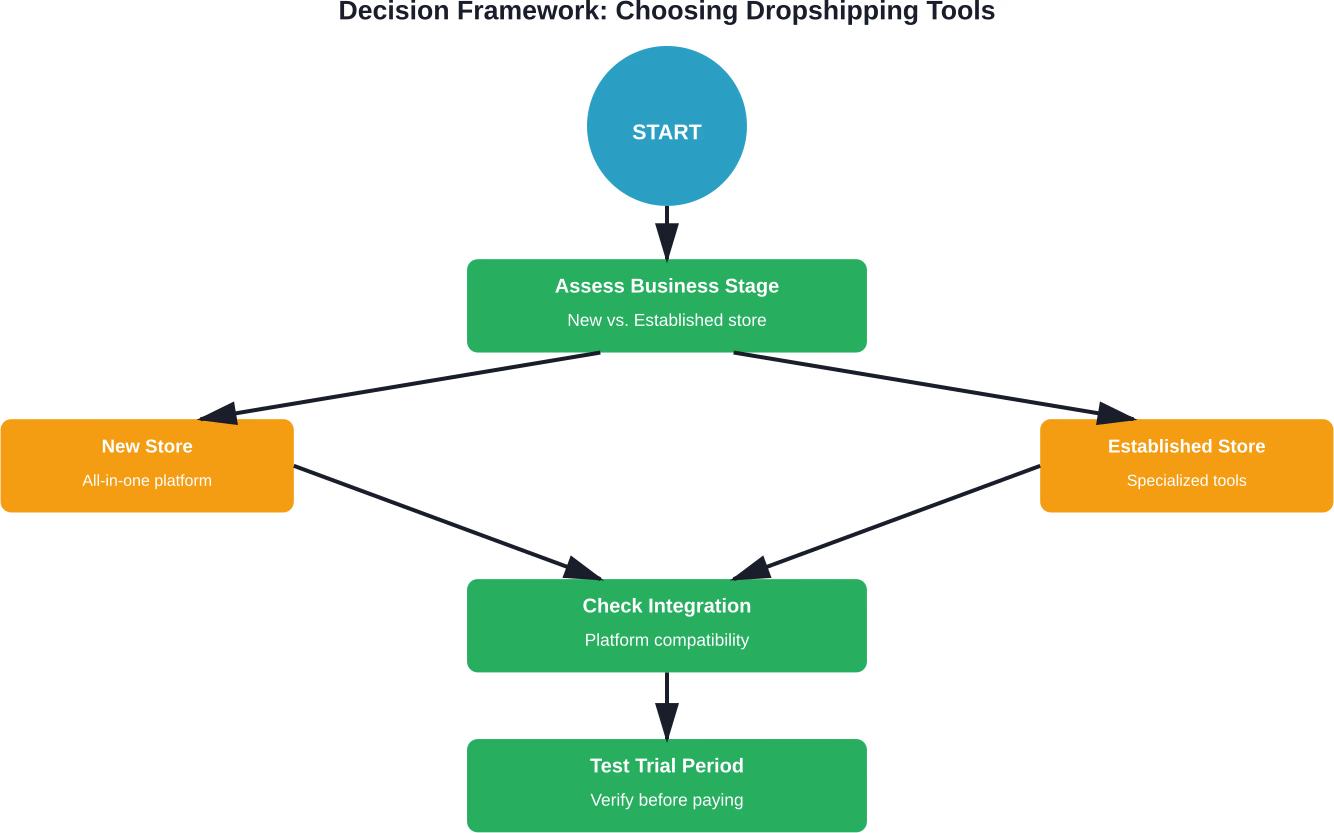
Selecting appropriate tools depends on business stage, budget, and specific needs. Not every business requires every tool.
Brand new stores have different requirements than established businesses processing hundreds of daily orders.
Beginners benefit most from all-in-one platforms with guided setup processes. These provide structure while learning dropshipping fundamentals.
Established businesses often need specialized tools addressing specific bottlenecks. Maybe product research is solid but order processing takes too long. That store needs automation software, not another research tool.
Tools must work with existing e-commerce platforms. A Shopify store needs Shopify-compatible apps. WooCommerce requires different integrations.
Check whether tools connect to preferred payment processors, email marketing platforms, and accounting software. Disconnected systems create data silos and manual work.
Community discussions frequently mention integration headaches as major pain points. Verify compatibility before purchasing subscriptions.
Software is only as good as its supplier connections. Research which suppliers each platform works with and their performance metrics.
Key supplier factors include shipping speeds, product quality consistency, communication responsiveness, and return policies. These directly impact customer satisfaction.
An-Najah Repository research emphasizes that reliable suppliers who handle packaging and shipping professionally are essential for dropshipping success. Tools connecting to subpar suppliers create problems regardless of software quality.
Many dropshipping tools advertise free plans but severely limit functionality. Understand what's included in free tiers versus paid plans.
Some platforms charge per order processed, meaning costs scale with sales volume. Others use flat monthly fees. Calculate which pricing model makes sense for anticipated order volumes.
Watch for hidden costs like transaction fees, additional charges for premium suppliers, or separate fees for specific features.
Most reputable platforms offer trial periods. Take advantage of these to test actual functionality with real store setups.
During trials, process test orders to verify automation works correctly. Import products to check how smoothly inventory syncs. Contact support to gauge responsiveness.
The SBA notes that even entrepreneurs can start businesses with just smartphones. Modern dropshipping tools should function on mobile devices, not just desktop computers.
Even the best software won't guarantee success if used incorrectly. Academic research from the University of San Francisco identifies common pitfalls that cause dropshippers to fail.
Automation handles repetitive tasks brilliantly. But it doesn't replace strategic thinking or customer service.
Some entrepreneurs set up automated systems then completely disengage from operations. They miss quality issues, customer complaints, and market shifts until serious damage occurs.
Smart automation means monitoring key metrics regularly and intervening when data suggests problems.
Treating suppliers as completely interchangeable commodities creates problems. The best dropshipping relationships involve communication and partnership.
When issues arise—and they will—having established supplier relationships makes resolution much smoother. Suppliers who know reliable sellers often provide better service and accommodations.
Product research tools make finding potential winners easy. Too easy, sometimes.
Stores that constantly add and remove products based on daily trend data confuse customers and dilute marketing efforts. Focus beats scattered approaches.
Select a manageable product catalog and market it effectively rather than endlessly chasing the next viral product.
The FTC enforces regulations affecting online sellers. The INFORM Consumers Act, effective since June 27, 2023, requires online marketplaces to obtain information from high-volume third party sellers.
The INFORM Consumers Act defines a 'high-volume third party seller' as one with 200 or more discrete sales totaling $5,000 or more in any continuous 12-month period during the previous 24 months.
The FTC also provides guidance on Mail, Internet, or Telephone Order Merchandise rules. These regulations require shipping products within stated timeframes or providing refund options.
Dropshipping tools should help manage compliance, but entrepreneurs remain legally responsible for following applicable regulations.
Budget constraints, especially for new businesses, make free tools attractive. But limitations matter.
Free plans typically include basic product browsing, limited supplier access, and manual order processing. These versions let entrepreneurs test concepts without financial commitment.
Some platforms offer generous free tiers for stores below certain order volumes. This works well for validating business ideas before scaling.
Community discussions suggest several tools provide useful functionality at no cost. These often impose product limits, monthly order caps, or reduced features.
As order volume increases, manual processing becomes impossible. Paid plans unlock automation that saves hours daily.
Advanced features like competitor tracking, detailed analytics, and priority supplier access require subscriptions. These capabilities often directly impact profitability.
Calculate the value of time saved. If automation eliminates five hours of weekly work, even a $100 monthly subscription pays for itself quickly.
Smart entrepreneurs often combine free and paid tools. Maybe use free supplier directories but pay for premium automation software.
This approach allocates budget to highest-impact areas while keeping costs manageable. Not every tool category requires paid subscriptions simultaneously.
The dropshipping tools landscape evolves rapidly. Several trends are reshaping how entrepreneurs build and scale online stores.
Artificial intelligence increasingly drives product research. Machine learning algorithms analyze vast datasets to predict trending products before they peak.
AI tools can generate product descriptions, optimize pricing dynamically, and even create marketing content. This reduces the creative workload significantly.
Some platforms now offer AI-built stores that launch with pre-selected products and basic designs. While customization remains important, these accelerate initial setup.
Successful dropshippers increasingly sell across multiple platforms simultaneously. Tools now integrate Shopify stores, Amazon storefronts, eBay listings, and emerging channels like TikTok Shop.
Unified dashboards manage inventory and orders across all channels from single interfaces. This multi-channel approach expands potential customer reach without proportionally increasing workload.
Consumer expectations for shipping speed continue rising. Dropshipping platforms increasingly offer US-based warehousing and fulfillment centers.
These domestic options cost more than overseas suppliers but deliver products in days rather than weeks. Customer satisfaction improvements often justify higher costs.
Generic product offerings face intense competition. Tools supporting customization and branding help differentiate stores.
Print-on-demand integration, custom packaging options, and branded inserts turn commodity products into unique offerings. Research from An-Najah Repository specifically mentions brand customization as a valuable advantage.
Rather than searching for single perfect tools, successful businesses assemble complementary systems.
Every dropshipping tech stack needs these foundation elements:
These five categories cover essential business functions. Everything else is supplementary.
Once foundations are solid, consider adding specialized tools:
Add these based on specific needs rather than adopting everything simultaneously.
Tools must communicate effectively. APIs and native integrations prevent data silos.
Before adopting new software, verify it integrates with existing systems. Manual data transfer between platforms creates errors and wastes time.
Zapier and similar automation platforms can connect tools lacking native integrations, though direct connections typically work better.
Software investments should produce measurable returns. Track specific metrics to evaluate whether tools justify costs.
Calculate hours saved weekly through automation. Multiply saved hours by effective hourly rate to determine value.
If automation saves ten hours weekly and hourly value is $50, that represents $500 weekly benefit—easily justifying substantial software costs.
Product research tools should identify items that actually sell. Track revenue generated from tool-discovered products versus manual selections.
Analytics platforms should reveal optimization opportunities that increase conversion rates or average order values. Measure revenue lifts from implemented insights.
Manual order processing creates mistakes. Wrong addresses, incorrect products, and missed orders damage customer relationships.
Track error rates before and after implementing automation. Calculate costs of errors prevented—including refunds, replacements, and lost customers.
Perhaps the most important metric: Can the business handle more orders without proportionally increasing workload?
Effective tools enable 2x or 3x order volume increases without hiring additional staff. This scalability directly impacts profitability.
The dropshipping tools landscape offers overwhelming options. But success doesn't require using every available platform.
Start with foundations: reliable product sourcing, automated fulfillment, and basic analytics. These core capabilities enable launching and testing business concepts quickly.
As operations scale, add specialized tools addressing specific challenges. Maybe competitor monitoring reveals market opportunities. Perhaps advanced analytics uncover optimization potential. Build the tech stack iteratively based on actual needs.
Academic research confirms that despite dropshipping's low entry barriers, continuous success requires avoiding common mistakes. The right software helps navigate challenges around inventory management, supplier relationships, and order fulfillment that sink too many businesses.
Tools are enablers, not magic solutions. They amplify strategy and execution but don't replace understanding customers, selecting quality products, and providing excellent service.
Evaluate tools based on measurable impact: time saved, revenue generated, errors prevented, and scalability achieved. Software that produces clear ROI justifies continued investment. Subscriptions that don't measurably improve operations should be cut.
Ready to build a dropshipping tech stack? Start by identifying the single biggest operational bottleneck in the current workflow. Find one tool that specifically addresses that challenge. Test it thoroughly. Then expand from there.


