Top AI Tools for Facebook Ads That Maximize Results
Discover top AI tools for Facebook Ads that optimize campaigns, increase performance, and save time. Find the best AI-powered solutions for your business.
Jan 6, 2026



Therapists can attract more clients through ethical marketing strategies including SEO-optimized websites, local networking, educational content creation, and community engagement. Effective marketing for therapy practices focuses on building trust and visibility while maintaining professional ethics, with proven tactics ranging from Google Business Profile optimization to hosting workshops and leveraging client referrals.
Marketing a therapy practice feels uncomfortable for many mental health professionals. The field trains clinicians to help people, not promote themselves.
But here's the thing—even the most skilled therapist won't fill their caseload if potential clients don't know they exist. Marketing for therapists isn't about aggressive sales tactics. It's about making sure people who need help can find the right practitioner.
With mental illness costing more than $282 billion annually in direct and indirect costs in America, according to the National Institute of Mental Health, the demand for accessible mental health services has never been higher. Yet many talented therapists struggle to connect with the clients who need them most.
The marketing landscape for therapy practices has evolved. What worked five years ago might not work today. So what actually drives new client appointments in 2026?
Marketing a therapy practice isn't like marketing other services. Mental health care involves deeply personal decisions, and potential clients need to feel trust before they'll ever book an appointment.
People searching for a therapist are often in vulnerable states. They're not looking for flashy advertising or aggressive promotions. They want to know they'll be understood, that their information stays confidential, and that the therapist has genuine expertise in their specific concerns.
Ethics matter tremendously in this field. Professional organizations provide guidance on marketing mental health services, emphasizing truthfulness, client privacy, and professional boundaries. Any marketing strategy for therapists must operate within these ethical frameworks.
That means no fabricated credentials, no promises of specific outcomes, and no exploitation of client testimonials without proper consent. The best marketing for therapy practices builds genuine trust through transparency and professionalism.

Extuitive helps businesses predict how ad creatives may perform before they go live. It compares copy, visuals, offers, and audience angles, then shows which ideas look stronger or weaker before campaign budget is spent.
For therapists, this can help review service or consultation ads without turning every idea into a paid test first.
Extuitive can help with:
👉 Book a demo with Extuitive to review your ad ideas.
Every therapist needs a professional website. Not a Psychology Today profile alone—an actual website that represents their practice.
A therapy website should accomplish several goals simultaneously. It needs to explain who the therapist helps, what issues they specialize in, and how they approach treatment. It should feel welcoming but professional.
Essential elements include a clear description of services, information about the therapist's credentials and training, details about insurance and fees, and—critically—an easy way to book an initial consultation. Many potential clients abandon their search if scheduling feels complicated.
The website design doesn't need elaborate bells and whistles. Clean layouts, readable fonts, and mobile responsiveness matter more than animation or complex graphics. Visitors should find what they need within seconds of landing on any page.
Most people searching for a therapist add a location to their search query. "Therapist near me," "anxiety counselor in Portland," or "couples therapy Brooklyn" dominate search patterns.
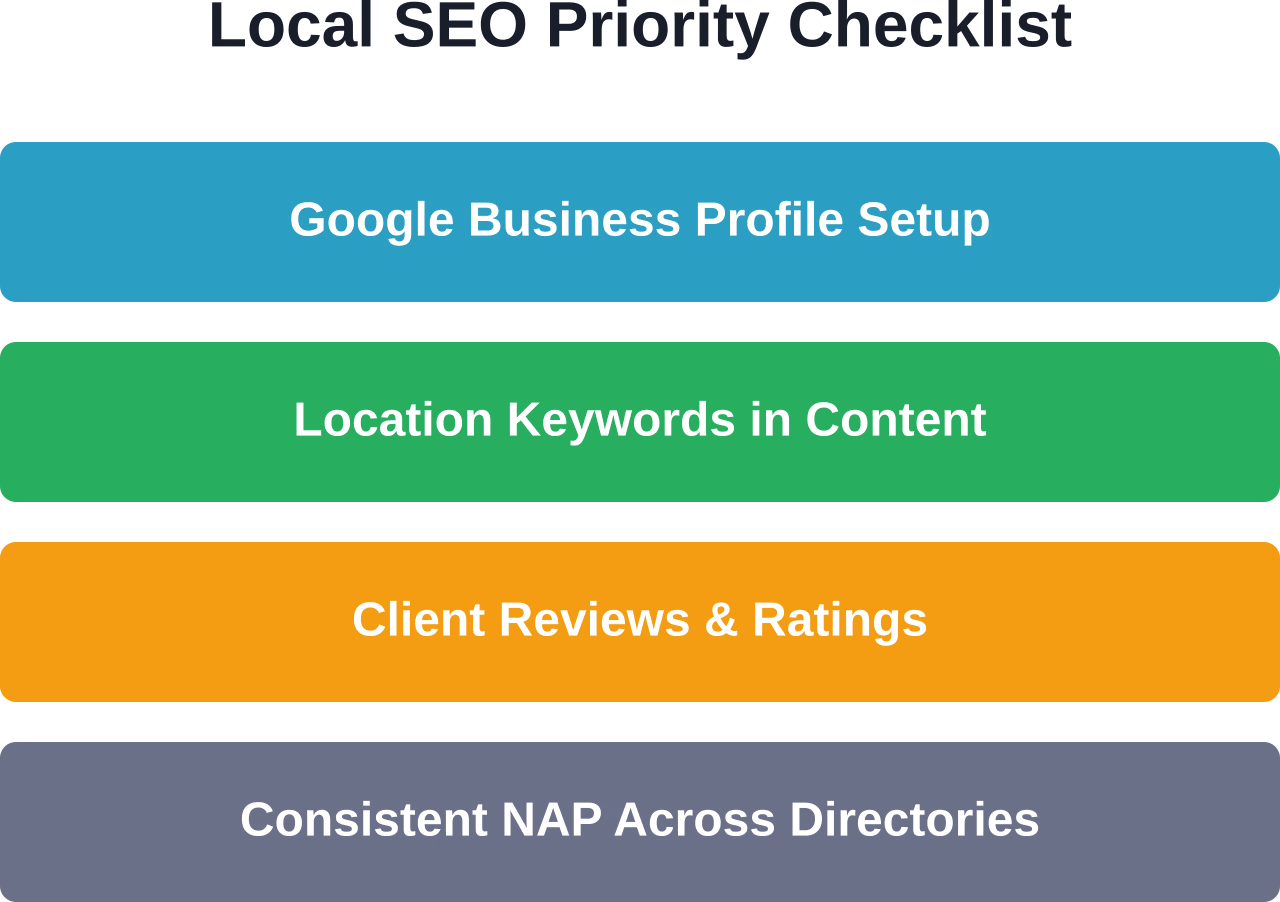
This makes local SEO crucial. Setting up and maintaining a Google Business Profile is non-negotiable. It costs nothing and puts a practice in the local map pack—those business listings that appear above organic search results.
The profile should include accurate hours, a complete address, phone number, and service categories. Regular posts and updates signal active engagement. Encouraging satisfied clients to leave reviews (within ethical guidelines) builds social proof that influences decision-making.
Beyond Google, the website itself needs location-specific optimization. That means including the city or neighborhood name in page titles, headings, and naturally throughout the content. Creating dedicated pages for each location helps multi-site practices rank for various geographic searches.
Educational content positions therapists as experts while helping potential clients understand whether they're a good fit. This isn't about going viral—it's about demonstrating knowledge and approach.
Blog posts answering common questions serve dual purposes. They provide value to readers while improving search visibility for specific terms people actually search for.
Topics might include "What to expect in your first therapy session," "How to know if you need therapy for anxiety," or "Understanding different therapy approaches for trauma." These posts address real concerns that bring people to search engines.
The writing should be accessible, not academic. Jargon creates distance. Plain language builds connection. Posts don't need to be exhaustive—600 to 1,200 words typically covers a topic thoroughly without overwhelming readers.
Consistency beats frequency. One well-researched post per month outperforms four rushed ones. Search engines favor regularly updated sites, and readers return to sources that consistently provide valuable information.
Video allows potential clients to get a sense of a therapist's personality and approach before booking. Short videos introducing the therapist, explaining their specialties, or discussing common mental health topics can reduce the anxiety some people feel about reaching out.
Production quality matters less than authenticity. A simple video recorded on a smartphone in a quiet office often performs better than overly polished corporate-style content. People want to see the actual human they might work with.
These videos can live on the practice website, YouTube, or both. YouTube functions as a search engine itself, and well-optimized videos can rank for therapy-related searches.
Social media for therapists requires careful navigation. The platforms offer reach and engagement opportunities, but privacy concerns and ethical boundaries require thoughtful approaches.
Research suggests social media campaigns may have potential for improving mental health knowledge and reducing stigma. But the goal for individual practitioners isn't massive followings—it's building connections with the local community and referral sources.
Not every therapist needs to be on every platform. A child psychologist might find Instagram useful for connecting with parents. A therapist specializing in professional burnout might focus on LinkedIn.
Each platform has different norms and audiences. Understanding where potential clients and referral sources spend time determines where to invest energy. Spreading efforts across six platforms typically dilutes effectiveness compared to doing two platforms well.
Professional guidelines suggest best practices for starting an ethical social media presence. The key principle: share general educational content, not anything that could identify or exploit clients.
Posts might include explanations of coping strategies, myth-busting about common mental health misconceptions, or insights into how therapy works. Behind-the-scenes content showing the office space or discussing why the therapist chose this career can build connection without crossing ethical lines.
Community discussions on platforms like Reddit reveal that many therapists feel uncomfortable with social media marketing. That discomfort often stems from concerns about maintaining boundaries. The solution isn't avoiding social media entirely—it's using it in ways that feel professionally congruent.
Referrals from other professionals remain one of the most effective marketing strategies for therapists. These warm introductions come with built-in trust.
Primary care physicians, psychiatrists, school counselors, and other therapists often need referral partners for specialties outside their scope. Building relationships with these professionals creates mutual referral opportunities.
This isn't about cold-calling medical offices. It starts with joining professional organizations, attending local mental health coalition meetings, and participating in continuing education events where these connections happen naturally.
Following up with a simple introduction email, a business card, and information about specific specialties makes it easy for contacts to remember and recommend the practice when appropriate cases arise.
Becoming known in the local community builds both credibility and client pipeline. This happens through consistent presence and genuine contribution, not one-off marketing stunts.
Free or low-cost workshops on mental health topics serve the community while demonstrating expertise. Topics like stress management, improving communication in relationships, or understanding adolescent mental health attract attendees who might later become clients or refer others.
These events can happen at libraries, community centers, yoga studios, or coworking spaces. Partners often welcome mental health education for their members. Virtual workshops expand geographic reach without venue costs.
The goal isn't to turn every attendee into a client. It's to provide genuine value while establishing the therapist as a knowledgeable, approachable resource in the community.
Partnerships with complementary businesses create cross-promotional opportunities. A therapist specializing in eating disorders might partner with a nutritionist. Someone focused on anxiety might connect with yoga studios or meditation centers.
These collaborations might involve sharing each other's materials in waiting rooms, co-hosting events, or simply knowing enough about each partner's work to make informed referrals. The relationships should feel mutually beneficial, not transactional.
Email remains surprisingly effective for staying connected with current and former clients. Not every therapist needs a newsletter, but those who maintain one often see benefits in retention and re-engagement.
A monthly or quarterly email might include mental health tips, announcements about new services or hours, relevant resources, or reminders about appointment availability. The content should provide value, not just promote the practice.
Former clients who ended therapy successfully might return months or years later when new challenges arise. Regular (but not excessive) email contact keeps the connection alive without being intrusive. An unsubscribe option must always be clear and functional.
While having a dedicated website matters, online directories still drive significant client traffic. Psychology Today, TherapyDen, GoodTherapy, and others function as search engines specifically for mental health services.
Profile completeness affects visibility within these platforms. That means uploading a professional photo, writing a detailed description of approach and specialties, listing all accepted insurance plans, and keeping availability updated.
Many therapists list on multiple directories. The time investment pays off because different potential clients search different platforms. Some profiles require paid subscriptions, but the cost per client acquisition often justifies the expense.
Organic marketing builds sustainable long-term growth, but paid advertising can accelerate results when used strategically.
Google Ads places a practice at the top of search results for specific keywords. Someone searching "trauma therapist Chicago" sees ads before organic results.
The effectiveness depends on budget, competition, and ad quality. In competitive markets, cost-per-click can get expensive quickly. But even modest budgets can generate leads if campaigns target specific, less competitive terms.
Setting clear geographic limits prevents wasted spend on clicks from people outside the service area. Ad copy should speak directly to specific concerns—"Specialized EMDR Therapy for Trauma" performs better than generic "Quality Therapy Services."
Most website visitors don't book appointments on their first visit. Retargeting shows ads to people who previously visited the site, reminding them to take the next step.
This requires careful ethical consideration. Some therapists feel uncomfortable with retargeting in mental health contexts because it could feel intrusive during a vulnerable decision-making process. Others use it sparingly with messages focused on availability and invitation rather than pressure.
Marketing without measurement is just guessing. Tracking where new clients come from reveals what's working and what's wasting time.
A simple intake form question—"How did you hear about our practice?"—provides foundational data. More sophisticated tracking uses unique phone numbers for different marketing channels or website analytics to monitor traffic sources.
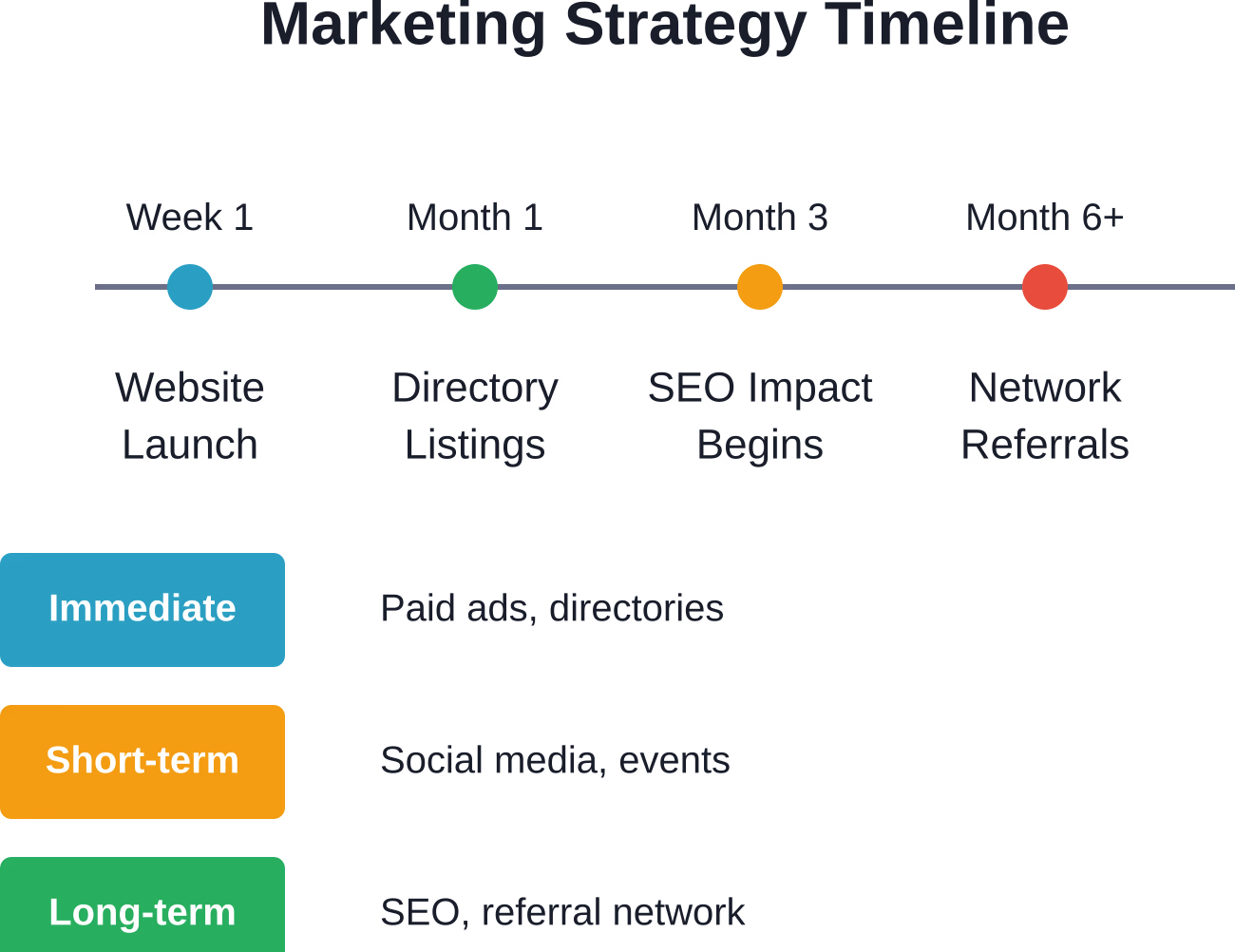
Not every marketing strategy produces immediate results. SEO and content marketing build momentum over months. Networking relationships might not yield referrals for a year. But paid ads should generate inquiries within weeks. Understanding these timelines prevents premature abandonment of effective long-term strategies.
Regular review of marketing performance—quarterly at minimum—allows strategic adjustments. If social media consumes hours but generates zero clients, that time might shift to networking or content creation. If 60% of new clients find the practice through the website, investing in SEO improvements makes sense.
Marketing a therapy practice doesn't require massive budgets or uncomfortable self-promotion. It requires clarity about who you serve, consistency in implementation, and patience as strategies build momentum.
Start with the fundamentals: a professional website optimized for local search, complete profiles on relevant directories, and a Google Business Profile. These form the foundation that makes other marketing efforts more effective.
From there, choose one or two additional strategies that align with your strengths and target audience. A therapist who enjoys writing might focus on blogging and email newsletters. Someone more comfortable with face-to-face connection might prioritize networking and community workshops. There's no single correct path.
The mental health field continues growing as stigma decreases and awareness increases. Mental disorders account for approximately 13% to 15% of the global burden of disease according to research cited by the National Institute of Mental Health. The need for accessible, skilled therapists has never been greater.
Effective marketing ensures that people who need help can find the right professional to support them. That's not salesy or unethical—it's an extension of the helping mission that drew most therapists to the field in the first place.
Track what works for your specific practice and double down on those strategies. Release what doesn't fit your style or produce results. Marketing evolves alongside the practice itself.
Ready to grow your therapy practice? Start with one strategy from this guide today. Set up your Google Business Profile if you haven't already, claim your directory listings, or draft that first blog post. Small, consistent actions compound into significant results over time.


