Marketing Ideas for Accounting Firms: 2026 Growth Guide
Marketing for accounting firms requires strategic digital efforts beyond referrals. High-growth firms invest over 12% of revenue in marketing, compared to the industry average of just 1%—focusing on SEO, content marketing, LinkedIn presence, and thought leadership. With 98% of accountants using AI automation and 85,000 US firms competing for clients, visibility through website optimization, email campaigns, and specialized positioning has become essential for sustainable growth.
Referrals built the foundation of most accounting practices. But here's the thing—relying on word-of-mouth alone won't scale your firm in an increasingly digital marketplace.
The accounting industry faces unprecedented competition. With 85,000 firms operating across the United States and nearly all accountants (98%) now using AI automation to help clients, differentiation has become critical. Traditional methods that worked a decade ago simply don't cut through the noise anymore.
The firms seeing the strongest growth aren't just waiting for referrals. They're investing strategically in marketing—allocating over 12% of revenue compared to the industry average of just 1%. That difference translates directly to competitive advantage.
Why Strategic Marketing Matters More Than Ever
The accounting profession is evolving rapidly. Employment projections show 5% growth from 2024 to 2034, with approximately 124,200 average annual job openings expected. The median annual wage stands at $81,680 as of May 2024, and over 1.6 million accountants and auditors are currently employed across the country.
What does this mean for firm owners? Competition for talent and clients intensifies every year. Automation reshapes service delivery. Client expectations shift toward faster response times and more specialized expertise.
Marketing isn't optional anymore—it's a core strategic capability. The firms that treat it as such are pulling ahead, building predictable client acquisition systems that don't depend on founder relationships alone.
The Referral Ceiling
Client referrals remain valuable. They always will. But research shows they're not a scalable long-term strategy on their own. High-growth firms recognize this limitation and diversify their business development approach.
Real talk: when your founding partner retires, what happens to those decades of relationships? Forward-thinking firms address this succession risk by building marketing systems that outlive any single person.
Check Ads Before Spending More With Extuitive
Extuitive helps businesses predict which ads are more likely to get clicks and conversions before launch. It can test creative options at scale and show which versions look weaker before they take up campaign budget.
For accounting firms, this can support service, consultation, or seasonal campaign ideas without relying only on guesswork.
Need a Clearer Way to Review Ads?
Extuitive can help with:
predicting ad performance before launch
comparing different ad creatives
checking copy and visual combinations
improving campaign decisions before spend
👉 Book a demo with Extuitive to review your ad ideas.
Building Your Foundation: Website and Brand Positioning
Over 80% of prospects will visit your website before ever contacting you. The quality of that website is also a top reason prospective buyers rule out firms—often before even reaching out.
Your website serves as the central hub for everything else you do in marketing. Email campaigns, social posts, content—they all drive back to this digital storefront. If it doesn't inspire confidence, the rest of your efforts leak potential clients.
What Makes an Effective Accounting Firm Website
Professional doesn't mean boring. The most effective firm websites clearly communicate specialization, demonstrate expertise through content, and make it easy for prospects to take the next step.
Key elements include:
Clear service descriptions focused on client outcomes, not just technical capabilities
Team bios that showcase credentials and personality
Case studies or success stories (within confidentiality boundaries)
Educational content that demonstrates thought leadership
Simple contact options with minimal friction
Mobile-responsive design that works flawlessly on every device
Technical performance matters too. Page load speed, security certificates, and clean navigation all contribute to user experience—and to search engine rankings.
Positioning: Advisor vs. Commodity
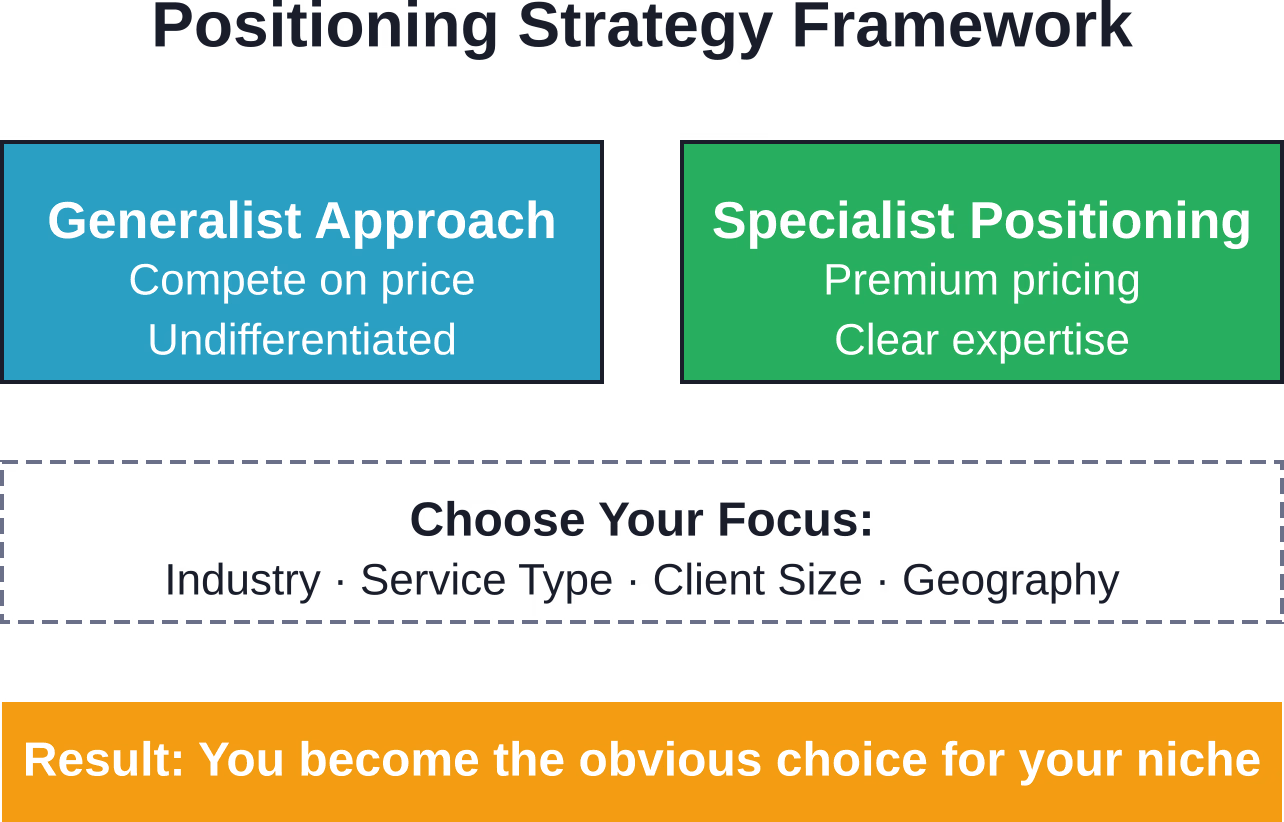
Here's where many firms struggle. Services provided by one firm often look nearly identical to those of competitors. This creates a sea of sameness that forces competition on price alone.
Strategic positioning breaks this pattern. Rather than being all things to all clients, high-growth firms specialize. They choose specific industries, service niches, or client segments where they can become the obvious expert choice.
Should you position as an advisor or a consultant? That depends on your service model and ideal client. Advisors typically maintain ongoing relationships, providing strategic guidance across accounting, tax, and business decisions. Consultants often engage project-by-project, solving specific problems.
Either can work. What doesn't work is ambiguity—trying to be both without clearly defining when and how you serve each role.
Search Engine Optimization: Getting Found by Ideal Clients
When potential clients search for accounting services, do they find you? Search engine optimization determines visibility at the exact moment prospects are actively looking.
The firms seeing the most growth don't just produce content—they ensure it gets found. SEO plays a critical role in helping firms appear when and where potential clients are actively looking for services.
Local SEO for Accounting Firms
Most accounting relationships happen locally, even in an increasingly remote world. Local SEO focuses your visibility in specific geographic areas.
Start with Google Business Profile optimization. Complete every field. Upload professional photos. Collect and respond to reviews consistently. These signals tell search engines your firm is active, legitimate, and serves a specific area.
Include location-specific keywords naturally throughout your website. "Tax preparation in [city]" or "[city] small business accounting" help search engines understand your service area.
Local citations—mentions of your firm name, address, and phone number across the web—also build authority. Ensure consistency across directories, industry associations, and business listings.
Technical SEO Essentials
Behind the scenes, technical factors affect how search engines crawl and index your site. These aren't visible to visitors, but they matter tremendously for rankings.
Key technical elements include:
Fast page load times (under 3 seconds)
Mobile-responsive design that adapts to any screen
Secure HTTPS connection
XML sitemap submitted to search engines
Clean URL structure
Proper heading hierarchy on every page
Optimized images with descriptive file names
Most of these require working with a developer or using modern website platforms that handle them automatically. Don't skip this foundation—it supports everything else.
Content That Ranks
Search engines prioritize content that answers user questions thoroughly and authoritatively. For accounting firms, this means creating resources that demonstrate expertise while addressing client needs.
Effective content topics include:
Tax planning strategies for specific industries
Explanations of regulatory changes and their implications
Small business financial management guides
Answers to frequently asked technical questions
Service-specific deep dives (R&D tax credits, cost segregation studies, etc.)
Each piece should target specific keywords while providing genuine value. Keyword stuffing hurts more than it helps. Write for humans first, optimize for search engines second.
Content Marketing and Thought Leadership
Content marketing builds authority over time. Rather than interrupting prospects with advertising, you attract them by providing value upfront.
For professional services firms, content serves multiple purposes. It demonstrates expertise, answers prospect questions before they're asked, provides material for sales conversations, and generates ongoing search traffic.
Building a Sustainable Content Strategy
Consistency beats perfection. Publishing valuable content regularly matters more than occasional brilliance. Most successful firms publish at least twice monthly—some weekly.
Start by identifying the questions prospects ask repeatedly. Every conversation with a potential client reveals content opportunities. What do they misunderstand about accounting services? What concerns do they raise? What stops them from making decisions?
Turn those questions into content. Blog posts, guides, videos, podcasts—format matters less than substance. Choose channels you can sustain long-term.
Content Types That Work for Accounting Firms
Content Type
Best For
Frequency
Time Investment
Blog Articles
SEO, evergreen topics
2-4x monthly
Medium
Video Explainers
Complex topics, engagement
1-2x monthly
High
Email Newsletter
Nurturing relationships
1-2x monthly
Low-Medium
LinkedIn Posts
Professional visibility
2-5x weekly
Low
Comprehensive Guides
Lead magnets, authority
Quarterly
High
Webinars
Direct engagement, leads
Monthly-Quarterly
High
Choose 2-3 formats to start. Master those before expanding. Spreading efforts too thin leads to inconsistency, which undermines the entire strategy.
Thought Leadership vs. Promotional Content
There's a crucial distinction here. Thought leadership educates, challenges assumptions, and provides frameworks for thinking about problems. Promotional content sells services directly.
Both have their place. But thought leadership builds the authority and trust that makes promotional content effective later. The ratio should lean heavily toward educational content—roughly 80% value, 20% promotion.
Thought leadership positions firm leaders as experts prospects want to work with. It generates speaking opportunities, media mentions, and referrals. This long-term investment compounds over years.
LinkedIn Strategy for Professional Services
LinkedIn remains the most effective social platform for B2B professional services. Decision-makers actively use it, making it ideal for accounting firms targeting business clients.
But effectiveness requires strategy. Simply having profiles isn't enough. Active participation—sharing insights, engaging with others' content, and building genuine connections—drives results.
Personal Brands vs. Firm Pages
Here's what many firms miss: personal profiles generate far more engagement than company pages. LinkedIn's algorithm favors individual content.
The most effective approach? Empower individual partners and senior staff to build their own LinkedIn presence. Their combined reach exceeds what any firm page achieves alone.
Firm pages still matter for credibility and information. Maintain them professionally. But invest the majority of effort in personal brand building for key team members.
Content That Resonates on LinkedIn
LinkedIn users engage most with content that's practical, concise, and relevant to current business challenges. Long-form posts can work, but they need strong openings that hook attention immediately.
Effective post types include:
Quick tips and actionable advice
Industry trend observations and analysis
Behind-the-scenes insights into how accounting work creates business value
Questions that spark discussion
Reactions to breaking news or regulatory changes
Client success stories (with permission)
Consistency matters more than volume. Three thoughtful posts weekly outperform daily rushed content. Quality and regularity build audience trust over time.
Email Marketing: The Highest ROI Channel
Email marketing is highly effective at nurturing prospects and maintaining client relationships. For accounting firms, it excels at nurturing prospects over extended sales cycles and maintaining top-of-mind awareness with existing clients.
The key is permission-based relationship building. Every subscriber should opt in willingly, expecting value from your communications.
Building Your Email List
Start with existing relationships. Current clients, past prospects, professional contacts—invite them to subscribe with a clear value proposition. What will they gain from your emails?
Then create lead magnets: valuable resources prospects receive in exchange for their email. Comprehensive guides, checklists, templates, or exclusive webinars work well for accounting firms.
Place email signup forms strategically on your website. Homepage, blog posts, resource pages—anywhere prospects might want to stay connected.
Email Content Strategy
Not every email should sell. The most effective email programs mix educational content, firm updates, and occasional promotional messages.
Monthly newsletters work well for most firms. Include a mix of:
Industry news and regulatory updates
Links to recent blog content or resources
Brief tips or insights
Upcoming deadline reminders
Team announcements or firm news
Segmentation improves results dramatically. Separate lists by client type, industry, or interest area. Relevant content drives higher open rates and engagement than generic blasts.
Automation That Nurtures Relationships
Email automation lets you deliver the right message at the right time without manual effort for each contact.
Welcome sequences introduce new subscribers to your firm and expertise. Drip campaigns educate prospects about specific services over time. Re-engagement campaigns win back inactive subscribers.
Set up these sequences once and they work continuously, nurturing relationships while you focus on client service.
Specialized Service Positioning
Generic accounting services face commodity pricing pressure. Specialized services command premium fees and attract clients who specifically need that expertise.
Specialization can focus on industry verticals (healthcare, real estate, technology startups), service types (R&D tax credits, international tax, forensic accounting), or client characteristics (high-net-worth individuals, venture-backed companies).
Identifying Your Specialization
Look at your existing client base. Where do you already have multiple clients in the same industry? Which engagements are most profitable? What work do partners enjoy most?
The best specializations sit at the intersection of market demand, team expertise, and strategic interest. You need enough market opportunity to build a practice, sufficient knowledge to serve it well, and genuine motivation to keep learning.
Marketing Specialized Services
Once you choose a specialization, focus all marketing efforts on demonstrating expertise in that area. Write about industry-specific challenges. Speak at relevant conferences. Join specialized professional associations.
This focused approach feels risky—like you're turning away potential clients. But it actually expands opportunity by making you the obvious choice for a specific segment.
Specialists can charge 20-40% more than generalists for the same technical work because they understand client context without extensive explanation. That efficiency benefits everyone.
Strategic Partnerships and Referral Networks
Not all referrals are passive waiting. Strategic partnership development actively cultivates referral sources who regularly encounter your ideal clients.
For accounting firms, natural partners include attorneys, financial advisors, business consultants, commercial bankers, and insurance brokers. These professionals serve similar clients but provide complementary services.
Building Productive Partnerships
Effective partnerships are reciprocal. Both parties should refer business to each other, creating mutual incentive to maintain the relationship.
Start by identifying professionals who serve your ideal client profile. Then develop genuine relationships—not transactional arrangements. Meet regularly. Share insights about client challenges. Look for ways to collaborate on complex situations.
Some firms formalize these relationships through advisory boards or referral agreements. Others keep them informal. Structure matters less than consistent mutual benefit.
Adding Value to Referral Partners
What can you offer partners beyond reciprocal referrals? Educational content they can share with their clients. Co-hosted webinars or events. Quick consultations when their clients have questions.
The more valuable you become to partners' own client relationships, the more naturally they'll think of you when opportunities arise.
Marketing Budget and Resource Allocation
How much should accounting firms invest in marketing? Industry data shows high-growth accounting firms invest over 12% of revenue in marketing, compared to the industry average of just 1%.
That difference compounds over time. Higher investment drives more visibility, which generates more opportunities, which creates growth that funds even more marketing.
Allocating Your Marketing Budget
Where should those dollars go? The optimal mix depends on firm size, growth stage, and strategic priorities. But general principles apply across most situations.
Investment Area
Typical Budget %
Primary Benefit
Time to Results
Website Development
15-20%
Foundation for all digital
3-6 months
Content Creation
25-30%
SEO and thought leadership
6-12 months
SEO Services
15-20%
Organic search visibility
6-12 months
Email Marketing
10-15%
Relationship nurturing
3-6 months
Social Media
10-15%
Professional visibility
6-12 months
Events/Sponsorships
10-15%
Community presence
Immediate
Marketing Technology
10-15%
Automation and analytics
Ongoing
These percentages serve as starting points, not rigid rules. Adjust based on what's working and where opportunities emerge.
Build vs. Buy: Internal Team or Outsourced?
Should you hire internal marketers or work with external agencies and consultants? Both approaches work, each with distinct advantages.
Internal marketers understand your firm deeply and focus exclusively on your success. They build institutional knowledge over time. But they require ongoing salary, benefits, and management.
External partners bring specialized expertise and broader perspective from working with multiple firms. They scale up or down easily. But they never know your firm as intimately as an internal team member.
Many firms use a hybrid approach: internal coordination and strategy with external execution for specialized tactics like SEO, website development, or content creation.
Measuring Marketing Performance
Marketing without measurement is just hoping. Effective firms track specific metrics that connect marketing activities to business results.
Key Metrics for Accounting Firms
Start with these fundamental measurements:
Website traffic: Total visitors, new vs. returning, traffic sources
Search rankings: Position for target keywords, visibility trends
Lead generation: Number of inquiries, source tracking, quality assessment
Conversion rates: Inquiry to consultation, consultation to engagement
Email performance: List growth, open rates, click rates
Social engagement: Followers, post reach, meaningful interactions
ROI by channel: Revenue attributed to each marketing source
Most important: track these consistently over time. Month-to-month fluctuations matter less than quarterly and annual trends.
Attribution Challenges
Professional services sales cycles are long and involve multiple touchpoints. Someone might discover you through search, read several blog posts, see LinkedIn content for months, then finally reach out after a referral mention.
Which channel gets credit? Simple attribution models assign credit to either the first or last touchpoint. More sophisticated approaches distribute credit across the entire journey.
Perfect attribution is impossible. But directional understanding is enough to make smart decisions. Ask every new client how they found you. Track referral sources. Notice which content generates the most engagement.
Emerging Trends: AI and Marketing Automation
Nearly all accountants (98%) have used AI automation to help clients. The same technology transforms marketing operations, making sophisticated tactics accessible to smaller firms.
AI Applications in Accounting Firm Marketing
AI tools now assist with content creation, social media scheduling, email personalization, and data analysis. They handle repetitive tasks, freeing time for strategic thinking and relationship building.
Practical applications include:
Content ideation and draft creation
Email subject line optimization
Automated lead scoring and prioritization
Chatbots for initial website inquiries
Predictive analytics for campaign performance
Personalized content recommendations
AI augments human effort rather than replacing it. The strategic decisions, relationship building, and expertise demonstration still require human judgment and authenticity.
Marketing Automation Platforms
Marketing automation software coordinates activities across channels, tracks prospect behavior, and triggers appropriate follow-up based on engagement.
These platforms can:
Score leads based on behavior and characteristics
Segment audiences automatically
Deliver personalized email sequences
Track full customer journeys
Generate performance reports
Integrate with CRM systems
The investment pays off through improved efficiency and more sophisticated nurturing. But automation requires setup, ongoing management, and quality content to distribute. It amplifies strategy—it doesn't create one.
Common Marketing Mistakes to Avoid
Even well-intentioned marketing efforts fail when firms make predictable mistakes. Awareness helps you sidestep these pitfalls.
Inconsistency
Starting strong then fading is worse than never starting. Sporadic blog posts, abandoned social accounts, and irregular emails signal unprofessionalism.
Better to commit to less and maintain it consistently than launch ambitious programs you can't sustain. Two quality blog posts monthly beats eight posts one quarter and none the next.
Lack of Differentiation
"We provide quality service" says nothing. Every firm claims that. What makes you genuinely different? Who specifically benefits most from your approach?
Generic positioning forces competition on price. Specific differentiation—industry focus, service specialization, unique methodology—justifies premium fees.
Neglecting Existing Clients
Acquiring new clients costs significantly more than expanding services to existing ones. Yet many firms focus marketing exclusively on acquisition.
Stay connected with current clients. Share insights. Educate them about additional services. Ask about changing needs. These relationships represent your highest-probability opportunities.
Ignoring Mobile Experience
Over half of website traffic comes from mobile devices. If your site doesn't work flawlessly on phones, you're losing prospects before they ever contact you.
Test your website on multiple devices regularly. Ensure forms work, pages load quickly, and content displays properly on small screens.
No Clear Call to Action
What should prospects do after reading your content or visiting your website? If you don't tell them explicitly, most do nothing.
Every marketing asset needs a clear next step: schedule a consultation, download a guide, subscribe to your newsletter, attend a webinar. Make it obvious and easy.
Building Long-Term Marketing Capability
Marketing isn't a campaign or a project. It's an organizational capability that compounds over years.
The firms pulling ahead treat marketing as core to strategy, not a support function. They allocate appropriate resources, measure results rigorously, and adapt based on data.
Cultural Commitment
Marketing succeeds when the entire firm embraces it. Partners need to participate in content creation, thought leadership, and business development. Staff should understand how marketing supports their work.
This cultural shift takes time, especially in firms where technical excellence historically mattered more than visibility. Leadership must model the behavior and celebrate marketing contributions.
Continuous Learning and Adaptation
Digital marketing evolves constantly. Search algorithms change. New platforms emerge. Client expectations shift. What worked two years ago might be ineffective today.
Successful firms stay current through ongoing education, industry participation, and willingness to experiment. They test new tactics, measure results, and scale what works.
Nobody masters everything immediately. Start with fundamentals—strong positioning, quality website, consistent content. Build sophistication over time as capabilities and resources grow.
Conclusion
Marketing transforms accounting firms from referral-dependent practices into predictable growth engines. The firms seeing the strongest results don't treat marketing as an afterthought—they recognize it as strategic infrastructure that compounds over years.
Start with strong fundamentals. Build a website that inspires confidence. Develop clear positioning that differentiates you in a crowded market. Create valuable content consistently. Optimize for search visibility. Nurture relationships through email. Build professional presence on LinkedIn.
None of these tactics delivers overnight results. But together, maintained consistently over 12-18 months, they generate sustainable client acquisition that doesn't depend on any single partner's relationships.
The accounting profession continues evolving. With 98% of accountants now using AI automation and 85,000 firms competing for clients, visibility matters more than ever. The question isn't whether to invest in marketing—it's whether you'll invest strategically now or struggle to catch up later.
High-growth firms already made this decision. They're investing over 12% of revenue, building specialized positioning, and treating marketing as core capability. That creates competitive distance that compounds annually.
Where does your firm want to be in three years? The marketing foundation you build today determines what's possible then. Start with one or two initiatives you can sustain consistently. Measure results. Adjust based on data. Scale what works.
The best time to start was five years ago. The second best time is now.
Frequently Asked Questions
How much should an accounting firm spend on marketing?
Industry data shows high-growth accounting firms invest over 12% of revenue in marketing, compared to the industry average of just 1%. Some rapidly scaling firms allocate even more. Start with at least 2% and adjust based on growth goals and what generates results for your specific market and services.
What marketing channels work best for accounting firms?
The most effective channels combine search engine optimization, content marketing, email campaigns, and LinkedIn presence. SEO and content drive organic visibility for prospects actively searching for services. Email nurtures relationships over long sales cycles. LinkedIn builds professional credibility and facilitates B2B connections. Start with these fundamentals before expanding to other channels.
How long does accounting firm marketing take to show results?
Different tactics deliver results on different timelines. Email marketing and partnerships can generate inquiries within 3-6 months. Content marketing and SEO typically require 6-12 months to build meaningful traction. Marketing is a long-term investment—consistent effort compounds over years. Firms that commit to 12-18 months of strategic marketing see the most substantial returns.
Should accounting firms focus on local or national marketing?
Most firms benefit from local focus initially, especially those serving small and mid-sized businesses. Local SEO, community involvement, and regional partnerships generate qualified leads efficiently. As firms develop specialized services or target specific industries, national marketing becomes more relevant. Remote work has expanded geographic possibilities, but local relationships remain valuable for most practices.
Do accounting firms need social media beyond LinkedIn?
LinkedIn is the priority for B2B professional services, but other platforms can add value depending on your target clients. Facebook works for consumer tax services and small business outreach. Twitter (X) suits real-time commentary on tax and regulatory changes. Instagram and TikTok reach younger entrepreneurs and specific niches. Focus on LinkedIn first, then add platforms only if they clearly serve your ideal client profile.
What's the best way to generate referrals beyond waiting for them?
Strategic partnership development actively cultivates referral sources. Identify professionals who serve your ideal clients—attorneys, financial advisors, bankers, consultants—and build genuine reciprocal relationships. Provide value to their clients through educational content, co-hosted events, or collaborative problem-solving. Stay connected consistently and make referrals when opportunities arise. Productive partnerships generate regular qualified introductions.
How can small accounting firms compete with larger firm marketing budgets?
Small firms win through specialization and authentic relationship building. Focus on a specific industry, service niche, or client segment where you can become the recognized expert. Leverage content marketing and thought leadership to demonstrate deep expertise. Personal brands often outperform expensive advertising. Consistency and genuine expertise matter more than budget size when targeting the right audience.
How much are you wasting on Meta ads? Connect your ad account. See your ad efficiency.