Is Shopify Worth It for Your Business in 2026?
Is Shopify worth it in 2026? A clear, practical look at pricing, benefits, drawbacks, and who the platform actually makes sense for.
Mar 16, 2026



Amazon dropshipping is a fulfillment model where sellers list products on Amazon without holding inventory—suppliers ship directly to customers. It's allowed under Amazon's policy if you identify yourself as the seller of record, ensure timely delivery, and comply with packing slip requirements. In 2024, independent sellers in the US averaged over $290,000 in annual sales, and more than 55,000 independent sellers generated over $1 million.
Building an online business without inventory sounds too good to be true. But that's exactly what dropshipping offers—and Amazon, the world's largest online marketplace, allows it under specific conditions.
Here's the thing though—while dropshipping on Amazon can be profitable, it comes with strict rules that many beginners overlook. Break these rules and Amazon can suspend your account without warning. Follow them correctly, and dropshipping becomes a legitimate path to building a scalable ecommerce business.
This guide covers everything from Amazon's official dropshipping policy to finding reliable suppliers, selecting profitable products, and scaling your operations. Whether this is your first venture into ecommerce or you're an experienced seller exploring new fulfillment methods, understanding the mechanics and regulations will determine your success.
Dropshipping is a fulfillment method that allows sellers to list and sell products without physically handling inventory. When a customer places an order, the seller purchases the item from a third-party supplier who then ships it directly to the customer.
In the Amazon marketplace, this model works slightly differently than standalone dropshipping stores. Sellers list products on Amazon's platform, customers purchase through Amazon, and the seller coordinates with suppliers to fulfill orders while maintaining Amazon's strict customer service standards.
The basic workflow looks like this:
According to Amazon's official resources, more than 60% of sales in the Amazon store come from independent sellers, most of which are small and midsize businesses. In 2024, independent sellers in the US averaged more than $290,000 in annual sales, and more than 55,000 independent sellers generated over $1 million.
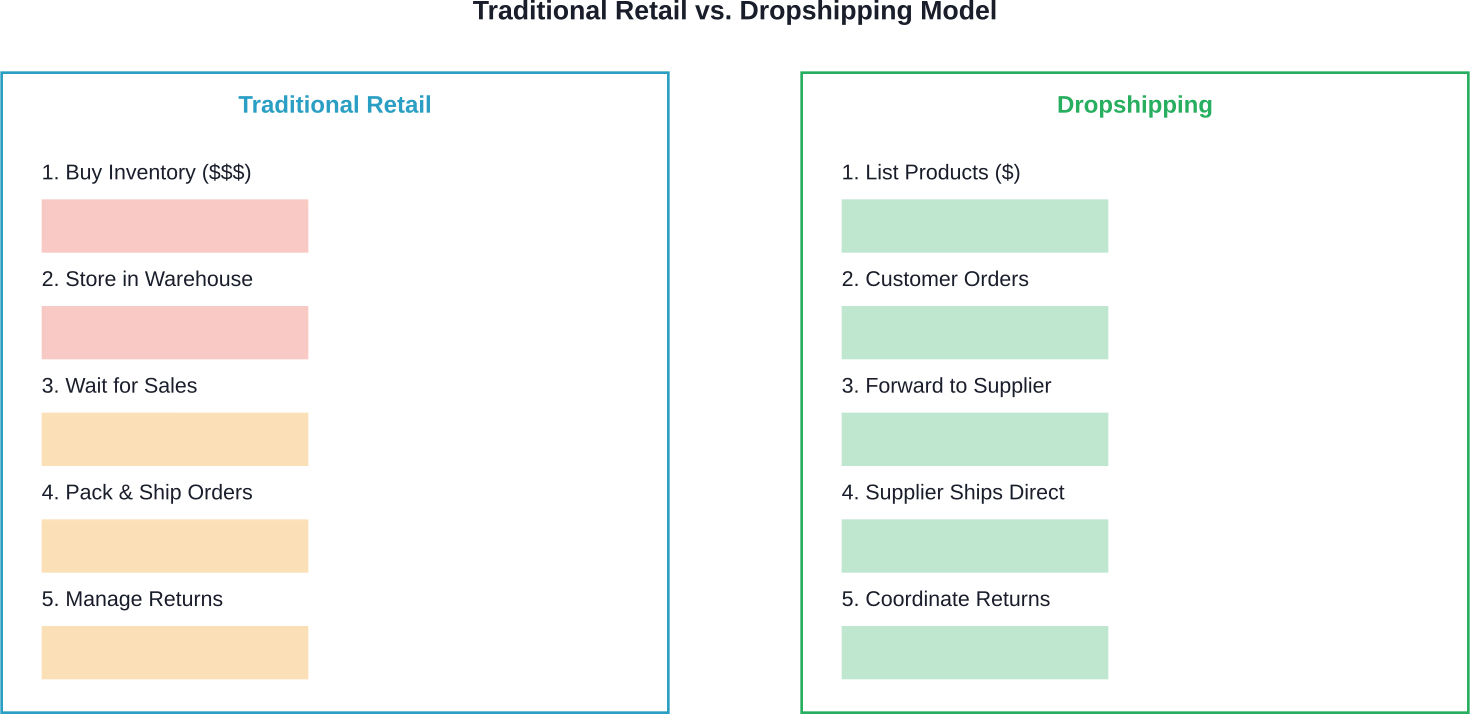
Traditional retail requires purchasing inventory upfront, storing it in a warehouse, and managing all logistics. This means significant capital investment before making a single sale.
Dropshipping flips this model. Instead of buying products before you have customers, you only purchase inventory after receiving orders. This dramatically reduces upfront costs and eliminates storage concerns.
But here's the trade-off: lower profit margins per unit and less control over shipping times and product quality. Successful dropshippers compensate through volume and careful supplier vetting.

Amazon dropshipping often comes down to one decision –- whether a product will actually move once it’s live. The problem is, you usually find out after listing, optimizing, and putting money into ads. By that point, changing direction costs time and eats into margins.
Extuitive fits earlier in that flow. Instead of relying on live results, it helps estimate how different product creatives might perform before you commit to a listing. That makes it easier to compare options, drop weaker ideas, and focus on products that are more likely to get traction once they hit Amazon. If you’re planning to test products on Amazon, it helps to narrow things down before doing the full setup. Try running your ideas through Extuitive first and move forward with the ones that hold up.
Amazon explicitly allows dropshipping, but the policy contains non-negotiable requirements. Violate these and Amazon will suspend your selling privileges—often without warning.
According to Amazon's Drop Shipping Policy published on Seller Central, sellers must meet these core requirements:
According to the Federal Trade Commission's guidance on the INFORM Consumers Act (effective June 27, 2023), online marketplaces must collect and verify information from high-volume third-party sellers. The statute defines 'high-volume third party seller' as a seller in an online marketplace that meets specific criteria detailed in the law (refer to the FTC source for exact definition).
Based on discussions in Amazon Seller Central forums, these violations trigger account suspensions most frequently:
One seller in the Seller Central forums reported a policy violation notice one year after their last sale, highlighting that Amazon monitors compliance retroactively. Documentation matters—keep invoices, shipping confirmations, and supplier agreements accessible.
The short answer? Yes, but profit margins are thinner than other fulfillment methods.
According to Amazon's official data, dropshipping on Amazon can be very profitable. More than 60% of sales in the Amazon store are from independent sellers, and in 2024, independent sellers in the US averaged more than $290,000 in annual sales, and more than 55,000 independent sellers generated over $1 million.
But these numbers don't tell the whole story. Success depends on product selection, supplier relationships, pricing strategy, and operational efficiency.
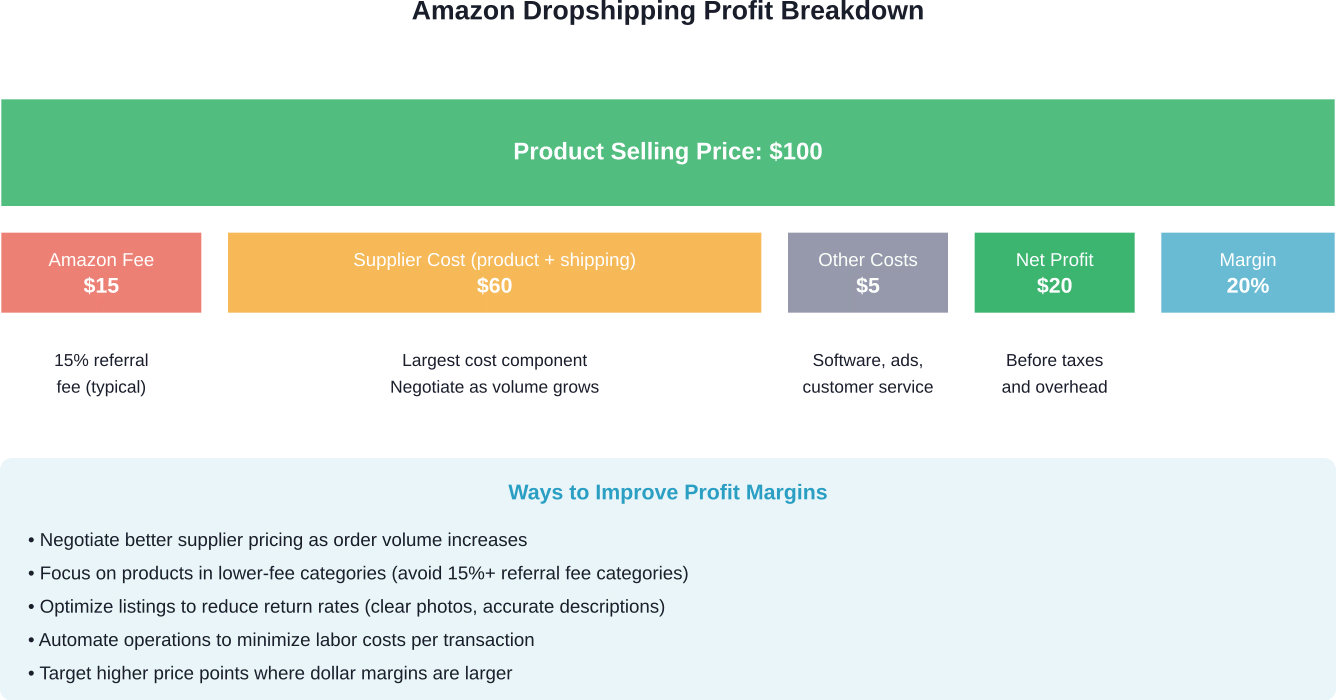
Typical dropshipping margins on Amazon range from 10% to 30% after all fees. Compare this to private label sellers who often achieve 30% to 50% margins.
Here's why margins are tighter: Amazon's referral fees (typically 3% to 45% depending on category) come off the top. Fulfillment costs remain since you're paying the supplier to ship. Supplier pricing includes their markup since they're handling logistics. Competition drives prices down since other sellers access the same suppliers.
The math looks like this: A product retails for $50 on Amazon. Amazon takes a 15% referral fee ($7.50). Your supplier charges $30 (including their shipping cost). Net profit before other expenses: $12.50 (25% margin).
That 25% margin then covers your business expenses: software subscriptions, customer service, returns processing, advertising, and general overhead.
Volume compensates for lower margins. Selling 100 units at $12.50 profit each generates $1,250. Scale to 1,000 units and that becomes $12,500.
Successful dropshippers focus on these profit drivers:
Starting a dropshipping business on Amazon requires methodical execution. Skip steps and problems compound quickly.
Amazon offers two selling plans: Individual (pay $0.99 per sale) and Professional ($39.99 monthly subscription). For dropshipping, the Professional plan makes more sense once you exceed 40 sales per month.
The Professional plan also unlocks bulk listing tools, advertising options, and API access—all critical for managing a dropshipping operation efficiently.
Setting up the account requires: Business information (sole proprietorship, LLC, or corporation). Tax identification number (EIN or SSN). Bank account for deposits. Credit card for Amazon fees. Phone number for verification.
According to the IRS guidance for small businesses, proper worker classification and tax reporting are critical. Most dropshipping arrangements involve independent contractors (suppliers), not employees, but understanding these distinctions matters for tax compliance.
Product selection determines everything. Choose wrong and no amount of operational excellence compensates.
Successful dropshippers look for products with these characteristics:
Research tools help identify opportunities. Amazon's Best Sellers list shows what's moving. Browser extensions analyze competitor pricing and sales estimates. Supplier catalogs reveal available inventory.
But here's what the tools don't show: actual profitability. Manual calculation remains essential. Take the retail price, subtract all fees, subtract supplier costs, and evaluate whether the remaining margin justifies the effort.
Supplier quality makes or breaks dropshipping businesses. A reliable supplier ensures timely shipping, accurate inventory data, and consistent product quality. An unreliable one generates angry customers and policy violations.
Finding suppliers requires research beyond simple Google searches. Wholesale directories, trade shows, and direct manufacturer contact all produce leads. The vetting process, however, determines which suppliers actually work.
Evaluate potential suppliers on these criteria:
According to Amazon Seller Central forum discussions, brand authorization has become increasingly important. Many manufacturers maintain whitelists of approved sellers. Attempting to sell branded products without authorization often results in intellectual property complaints and listing suspensions.
For restricted categories or branded items, Amazon requires invoices showing you purchased from authorized sources. This means establishing legitimate wholesale relationships—not buying retail products to resell.
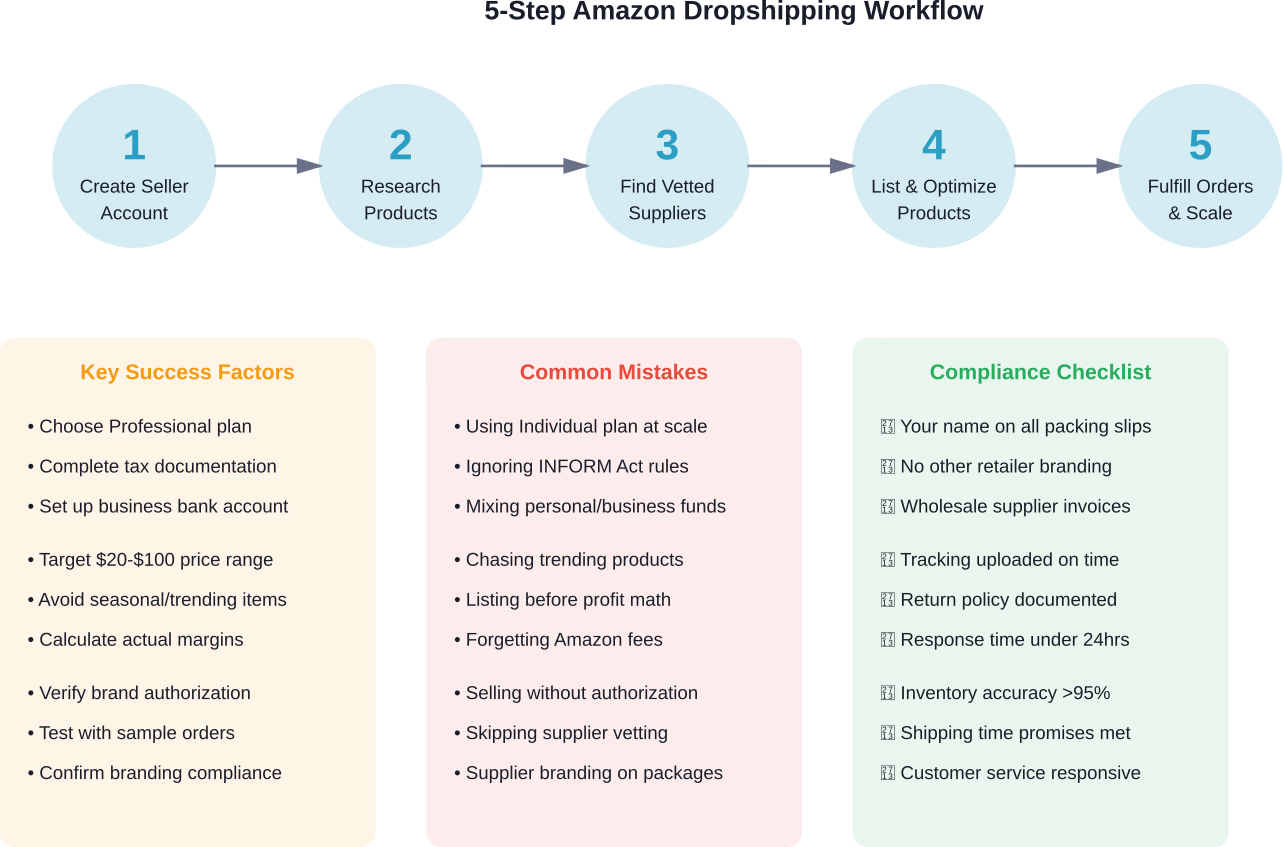
Amazon's search algorithm determines visibility. Poor listings mean no sales regardless of product quality or pricing.
Optimization starts with keyword research. Tools like Amazon's search bar autocomplete, competitor listing analysis, and dedicated keyword research software reveal what customers actually search for.
The listing components that matter most:
Pricing requires strategic thinking. Too high and competitors win the Buy Box. Too low and margins evaporate. Dynamic repricing tools adjust automatically based on competitor movements, but understanding the math behind pricing decisions remains critical.
Order management in dropshipping requires coordination. Amazon notifies you of the sale. You forward order details to your supplier. The supplier ships and provides tracking information. You upload tracking to Amazon within the handling time window.
This workflow seems straightforward but breaks down without systems. Automation tools connect Amazon to supplier systems, reducing manual work and errors.
Amazon measures seller performance through specific metrics:
Fall below these standards and Amazon restricts or suspends selling privileges. Maintaining metrics requires supplier reliability and operational discipline.
Amazon offers two primary fulfillment paths: Fulfillment by Amazon (FBA) and seller-fulfilled options including dropshipping. Understanding the differences determines which approach matches business goals.
FBA outsources storage, packing, shipping, and customer service to Amazon. Sellers send inventory to Amazon's fulfillment centers. When orders arrive, Amazon handles everything—picking, packing, shipping, returns, and customer inquiries.
According to Amazon's official FBA information, products fulfilled through FBA qualify for Prime shipping, reaching Amazon's most valuable customers. According to Amazon's official FBA information, shipping with FBA costs 70% less per unit than comparable premium options offered by other major US carriers.
FBA fee structure includes storage fees (charged monthly based on cubic feet) and fulfillment fees (charged per unit based on size and weight). For example, according to Amazon's FBA pricing, a small standard non-apparel item weighing 2 oz or less ranges $2.43-$3.58 to fulfill, while a large standard non-apparel item weighing 4 oz or less costs $2.91-$3.99.
The trade-off: FBA requires purchasing inventory upfront and paying storage costs before making sales. This means higher capital requirements but potentially higher margins and better conversion rates due to Prime eligibility.
Dropshipping works best for:
FBA works best for:
Many successful sellers combine both models. FBA handles best sellers with high volume. Dropshipping covers slower SKUs and product testing. This hybrid approach maximizes capital efficiency while maintaining Prime eligibility for core products.
Product selection determines success more than any other factor. Operational excellence can't compensate for selling the wrong products.
The best dropshipping products share specific traits:
Products failing any of these criteria require exceptional execution elsewhere to succeed.
Systematic research prevents costly mistakes. Start with Amazon's Best Sellers lists across categories. These show what's actually selling, not what you hope might sell.
Browser extensions and research tools provide data on:
But data alone doesn't reveal profitability. Manual calculation for each product candidate remains essential:
If the math doesn't work at current prices, move to the next product. Hoping to increase prices after launching rarely succeeds—Amazon's marketplace is brutally competitive.
Based on marketplace dynamics, these categories often provide better dropshipping opportunities:
Categories to generally avoid for dropshipping:
Supplier relationships determine whether dropshipping succeeds or fails. Unlike FBA where Amazon manages fulfillment, dropshippers depend entirely on supplier performance.
Suppliers work with dozens or hundreds of resellers. Standing out as a valuable partner improves service quality, pricing, and priority during inventory shortages.
Building relationships requires:
As order volume grows, negotiate better terms. Volume discounts, faster processing times, and custom packaging arrangements become available to suppliers' best customers.
Quality problems become your problems. Amazon holds sellers responsible regardless of who ships the product.
Implement quality control measures:
Documentation protects against policy violations. Keep supplier agreements, invoices, and correspondence accessible. If Amazon requests verification, providing documentation quickly often prevents account suspension.
Growth requires systems, not just more products. Scaling without infrastructure leads to poor metrics and account suspension.
Manual processes work for 5-10 orders per day. At 50+ orders daily, automation becomes essential.
Tools that enable scaling:
Investment in tools pays for itself through reduced manual work and fewer errors. A $200 monthly software expense that saves 20 hours of work generates obvious ROI.
Adding products increases revenue potential but also increases complexity. Each additional SKU requires listing optimization, supplier coordination, and performance monitoring.
Expand strategically:
Many successful dropshippers maintain 50-200 active listings rather than thousands. Depth in profitable niches often outperforms breadth across categories.
Most dropshippers start as resellers—listing existing products from catalogs. Some evolve into brand owners through private labeling.
The brand-building path requires:
This transition dramatically changes the business model, capital requirements, and competitive positioning. But it also unlocks higher margins, reduced competition, and business defensibility.
Dropshipping businesses face the same legal and tax obligations as any retail operation. Ignoring these creates serious problems.
Operating as a sole proprietorship offers simplicity but exposes personal assets to business liabilities. Forming an LLC or corporation provides legal protection and potential tax advantages.
According to the IRS guidance for small businesses, proper business structure impacts tax reporting, liability protection, and operational complexity. Consulting with an accountant or attorney before launching helps avoid costly mistakes.
The Supreme Court decision in South Dakota v. Wayfair established that online sellers may be required to collect and remit sales tax based on economic nexus rules established by individual states. Each state defines its own thresholds—typically $100,000 in sales or 200 transactions annually.
Amazon's Marketplace Tax Collection program automatically collects and remits sales tax for orders in states where Amazon has nexus. However, sellers remain responsible for understanding their own obligations and ensuring compliance.
Dropshipping businesses generate self-employment income. This requires:
According to IRS regulations, taxpayers must pay taxes throughout the year through withholding or estimated tax payments. Underpayment can result in penalties and interest.
According to the Federal Trade Commission's guidance on the INFORM Consumers Act (effective June 27, 2023), online marketplaces must collect and verify information from high-volume third-party sellers. The statute defines 'high-volume third party seller' as a seller in an online marketplace that meets specific criteria detailed in the law (refer to the FTC source for exact definition).
Amazon handles collection requirements, but sellers must provide accurate information including:
Providing false information or failing to update changes can result in selling privilege suspension.
Learning from others' mistakes saves time, money, and account suspensions.
The most common policy violation involves packages arriving with supplier or other retailer branding instead of the seller's information. Amazon's policy explicitly requires your business name on all packing slips and external packaging.
Solution: Before listing products, order samples to verify packaging. Communicate branding requirements clearly to suppliers. Some suppliers offer custom packing slips or blank packaging for a small fee. This investment prevents policy violations.
Setting aggressive handling times to appear competitive leads to late shipment metrics that tank account health. If suppliers consistently ship in 2-3 business days, promising next-day handling creates guaranteed problems.
Solution: Set handling times conservatively based on actual supplier performance. Track supplier shipping speed and adjust handling time settings accordingly. Better to under-promise and over-deliver than the reverse.
Many beginners calculate margins using only Amazon's referral fee, forgetting about returns, customer service time, advertising costs, and other operational expenses. What appears as a 25% margin often becomes 10% after real costs.
Solution: Build comprehensive margin calculations that include all fees, actual supplier costs including shipping, estimated return rate (typically 5-10% for most categories), advertising costs to acquire customers, and time costs for customer service and operations. Only list products where the final net margin justifies the effort.
Relying on one supplier for core products creates vulnerability. When that supplier runs out of stock, raises prices, or experiences quality issues, the business suffers immediately.
Solution: Identify backup suppliers for any product generating significant revenue. Test backup suppliers with small orders before emergencies arise. Maintain relationships with multiple suppliers even when primarily using one.
Certain product categories require approval before selling. Attempting to list restricted products without approval results in listing removal and potential account issues.
Solution: Review Amazon's category and product restrictions before researching products. If targeting restricted categories, understand approval requirements (typically include invoices from authorized distributors) and obtain approval before investing time in product research.
Selling products that suppliers don't have in stock creates cancellations that damage account metrics. If the pre-fulfillment cancel rate exceeds 2.5%, Amazon restricts selling privileges.
Solution: Use inventory management software that synchronizes supplier stock levels with Amazon listings. Implement automated systems that pause listings when suppliers show out-of-stock status. Check inventory availability before confirming orders manually if automation isn't in place.
Dropshipping isn't the only option. Understanding alternatives helps make informed decisions about business structure.
Already discussed extensively above, FBA offers Prime eligibility, higher conversion rates, and simplified operations in exchange for inventory investment and storage fees.
SFP allows sellers to fulfill orders from their own warehouse while maintaining Prime badge eligibility. This requires:
SFP works for sellers with established fulfillment infrastructure who want Prime benefits without sending inventory to Amazon.
MCF lets sellers use Amazon's fulfillment network for orders from other sales channels. Inventory stored in Amazon's warehouses can fulfill orders from Shopify, eBay, or other platforms.
This approach consolidates inventory across channels while leveraging Amazon's logistics expertise.
3PL companies offer fulfillment services similar to FBA but with more flexibility. Sellers send inventory to the 3PL warehouse, and the 3PL handles storage, packing, and shipping.
3PLs often provide better economics for large or heavy items where FBA fees become prohibitive. They also offer more customization options for packaging and inserts.
Combining fulfillment methods often produces the best results. Use FBA for fast-moving best sellers. Use dropshipping for slow-moving SKUs and product testing. Use 3PL for large items where FBA fees erode margins. Self-fulfill custom or high-value items requiring special handling.
This flexibility maximizes efficiency while maintaining control over critical aspects of the business.
The honest answer depends on goals, resources, and willingness to execute systematically.
Dropshipping on Amazon offers legitimate advantages: low startup capital requirements, minimal inventory risk, ability to test products before committing, and access to Amazon's massive customer base. The data supports profitability potential—independent sellers in the US averaged more than $290,000 in annual sales in 2024, and more than 55,000 generated over $1 million.
But dropshipping also presents challenges: thinner profit margins than other fulfillment methods, complete dependency on supplier reliability, intense competition in many categories, and strict policy requirements that lead to account suspension when violated.
Success requires more than just listing products. It demands rigorous product research, careful supplier vetting, attention to Amazon's policies, operational discipline, and realistic margin analysis. Sellers treating dropshipping as passive income inevitably fail. Those approaching it as a real business with systems, processes, and continuous optimization can build profitable operations.
The model works best for entrepreneurs who want to start lean, test market demand before inventory investment, or operate with limited capital. It works less well for those seeking maximum profit per transaction or complete control over the customer experience.


