Marketing Ideas for Painting Business That Work in 2026
Discover proven marketing ideas for painting businesses. Learn digital and offline strategies that attract clients and grow revenue in 2026.
May 18, 2026



Quick Summary: Halloween marketing presents a massive opportunity for businesses, with consumer spending reaching record levels and 73% of consumers planning to celebrate. The key is starting early—nearly half of shoppers begin purchasing Halloween items before October—and leveraging themed campaigns, promotions, email marketing, social media contests, and limited-edition products to capture attention during this highly commercial season.
Halloween isn't just about costumes and candy anymore.
According to the National Retail Federation, total Halloween spending is expected to reach a record $13.1 billion, with 73% of consumers planning to celebrate the holiday. That's a massive market opportunity for brands willing to think creatively and start early.
But here's the thing: successful Halloween marketing isn't about slapping a pumpkin on your logo and calling it a day. The brands that win this season understand their audience, create genuinely engaging campaigns, and time everything perfectly.
This guide breaks down the most effective Halloween marketing ideas for 2026, backed by real data and proven examples.
Halloween has evolved from a neighborhood trick-or-treat tradition into Britain's third-biggest retail event and a major commercial season in North America. Consumer behavior around the holiday has shifted dramatically.
The most engaged demographic? Adults aged 25-34. This group is the most likely to celebrate Halloween at 86%, with average per-person spending reaching $124.43. They're also the earliest shoppers—56% start purchasing Halloween items before October even begins.
That early shopping trend is crucial. Nearly half of all Halloween shoppers now begin purchasing before October, with 48% citing excitement for the fall season and 38% wanting to avoid last-minute stress as their main reasons.
Real talk: if your Halloween marketing kicks off on October 25th, you've already missed the boat.
The extended Halloween shopping season has fundamentally changed marketing timelines. Retailers now launch Halloween campaigns in late August and early September to capture early shoppers.
Among 25-34 year olds—Halloween's biggest fans—56% plan to begin purchasing Halloween items before October. These aren't last-minute impulse buyers. They're planning ahead, which means your marketing needs to reach them during that planning phase.
Launch campaigns in early September at the latest. Create content calendars that build momentum throughout September and peak in mid-October. Use early September to introduce themed products and tease upcoming promotions.
Major retailers understand this timing. Spirit Halloween, the seasonal costume giant, opens physical locations in August specifically to capture early demand. Online retailers begin email campaigns and social media teases even earlier.
The takeaway? Early birds don't just catch the worm—they capture the majority of Halloween spending.
Limited-edition Halloween products create urgency and give customers a reason to buy now rather than later. These don't need to be completely new products—seasonal packaging and themed variations work just as well.
Brands across industries successfully deploy this strategy. Starbucks launches its pumpkin spice latte earlier each year, creating anticipation that extends the Halloween season. Food and beverage brands release Halloween-themed packaging that turns ordinary products into collectibles.
The key is making your limited-edition offerings feel special and genuinely scarce. Announce specific end dates. Use phrases like "while supplies last" or "available through October only." Create countdown timers on product pages.
Consider bundling regular products in Halloween-themed packages. A coffee company might bundle beans in packaging featuring spooky artwork. A skincare brand could create a "witch's beauty ritual" set with existing products in special boxes.
Email marketing remains incredibly effective, delivering $36 in ROI for every $1 spent But Halloween emails need to stand out in crowded inboxes.
Start with subject lines that embrace the theme without being cheesy. Test variations like "Don't let these deals haunt you" versus "Frightfully good savings inside" to see what resonates with your audience.
Segment your email list based on past purchase behavior. Customers who bought Halloween items previously should receive your earliest and most aggressive campaigns. New subscribers might need more education about your Halloween offerings before pushing hard for the sale.
Design matters more for Halloween emails than most seasonal campaigns. Use bold oranges, blacks, and purples. Incorporate subtle animations if your email platform supports them—a floating ghost or flickering candle adds atmosphere without overwhelming the message.
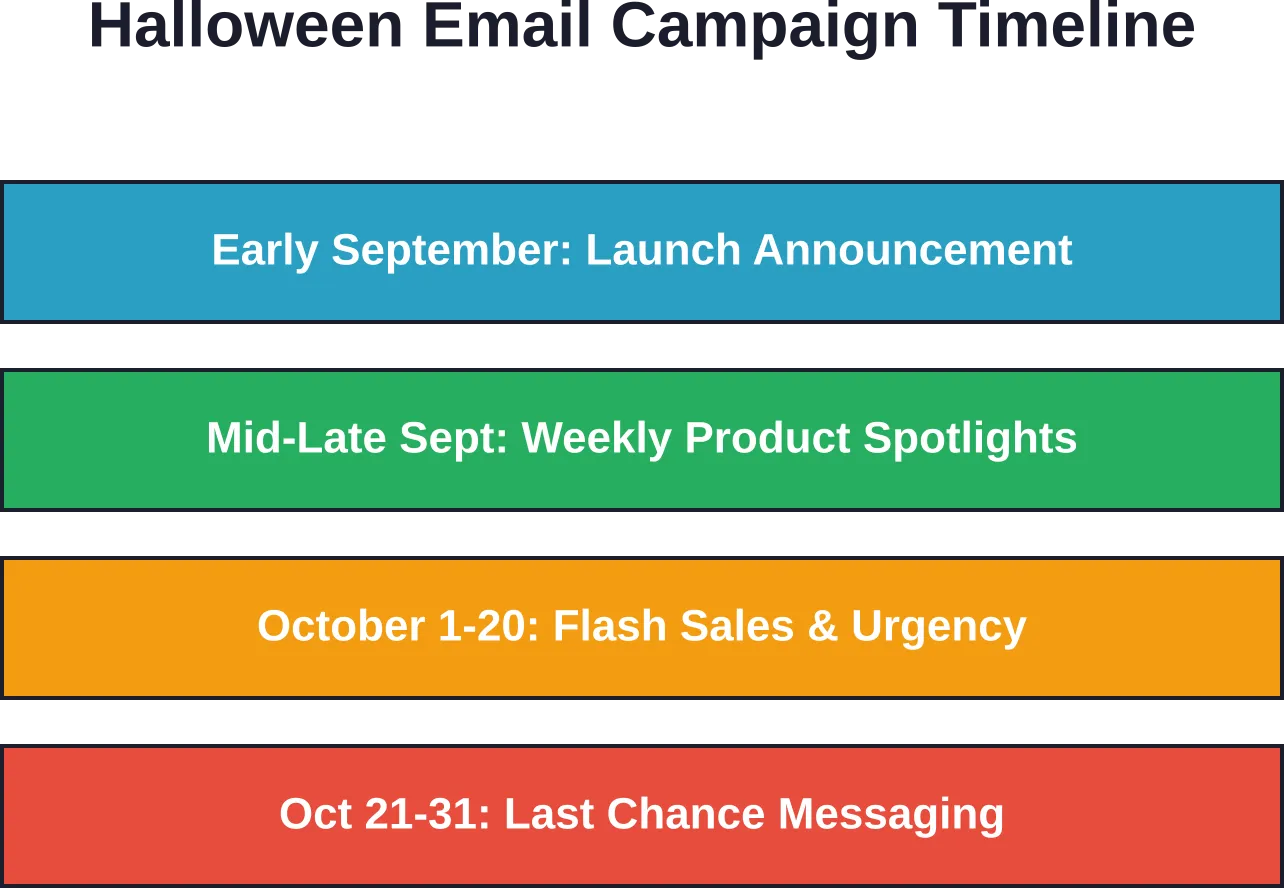
Timing is critical. Send your first Halloween email in early September to announce your seasonal offerings. Follow with weekly emails through September building anticipation. Increase frequency in October with flash sales and last-chance messaging.
Always include clear calls-to-action. "Shop Halloween Collection," "Get 20% Off Costumes," or "Claim Your Spooky Discount" work better than vague "Learn More" buttons.
Social media contests generate engagement, expand reach, and create authentic content your brand can repurpose. Halloween provides perfect contest opportunities because people already want to share their costumes, decorations, and celebrations.
Costume contests remain the most popular format. Ask followers to share photos of themselves wearing costumes featuring or incorporating your products. A coffee brand might run a "Best Barista Costume" contest. A pet supply company could host a "Spookiest Pet" competition.
Decoration contests work well for home goods, craft, and DIY brands. Ask customers to share photos of their Halloween displays featuring your products. Offer prizes like gift cards or product bundles.
The key to successful contests is making entry easy and incentivizing sharing. Use a unique, memorable hashtag. Require participants to tag friends or share the contest post for additional entries. This expands reach beyond your existing followers.
User-generated content from contests provides authentic marketing material for months. Request permission to repost winning entries. Feature customer photos in future marketing campaigns. This social proof is far more persuasive than traditional advertising.
Major brands excel at this. Fanta's "Summon What You Wanta" campaign encouraged user participation through social media challenges, creating viral momentum that extended the campaign's reach far beyond paid advertising.

Seasonal campaigns can lose momentum quickly when teams spend too long testing ideas after launch instead of before it. Extuitive helps businesses review ad creatives early using predictive campaign analysis and AI consumer simulations. For Halloween promotions, this can help narrow down stronger concepts, messaging, and creative direction before the budget gets spent.
Extuitive gives teams a way to:
👉Book a demo with Extuitive and evaluate your next Halloween campaign before launch day arrives.
Halloween's fixed deadline creates natural urgency, but time-limited promotions amplify that pressure. Flash sales and countdown offers push hesitant shoppers to convert.
BOGO deals perform especially well during Halloween. Spirit Halloween frequently runs "Buy One, Get One 50% Off" promotions on costumes and accessories. These offers increase average order value while still feeling like significant savings.
Tiered discounts reward larger purchases. Offer 15% off orders over $50, 20% off orders over $75, and 25% off orders over $100. This encourages customers to add more items to reach the next discount threshold.
Daily deals throughout October create reasons for customers to check back repeatedly. Monday might be "Spooky Decor Day" with 30% off decorations. Wednesday could be "Costume Clearance" with deep discounts on specific styles.
Countdown timers on product pages and in emails make urgency visible. "Only 3 days left for Halloween delivery" or "Flash sale ends in 6 hours" prompts immediate action.
But avoid overdoing it. Too many promotions train customers to wait for discounts and devalue your brand. Reserve your deepest discounts for the final week before Halloween, when you're clearing inventory anyway.
Content marketing positions your brand as helpful and relevant during Halloween season while driving organic traffic. The key is creating genuinely useful content, not thinly-veiled product pitches.
How-to guides perform exceptionally well. A hardware store might publish "How to Build a Haunted House in Your Garage." A food brand could create "15 Spooky Halloween Treats You Can Make in 30 Minutes." These guides should genuinely help readers, with product mentions feeling natural rather than forced.
Listicles capture attention and are highly shareable. "10 Last-Minute Costume Ideas Using Items You Already Own" or "7 Halloween Safety Tips Every Parent Should Know" provide value while associating your brand with helpful seasonal content.
Video content expands reach across platforms. Tutorial videos showing costume creation, makeup application, or party setup ideas generate engagement on YouTube, Instagram, TikTok, and Facebook. The National Retail Federation reports that 51% of consumers plan to decorate their home or yard—decorating tutorials tap directly into that massive audience.
Blog posts optimized for Halloween-related searches drive organic traffic for years. A well-optimized guide to "Halloween Party Ideas for Adults" published in 2024 will continue attracting traffic in 2025, 2026, and beyond with minor updates.
Repurpose content across channels. Turn a blog post into an infographic for Pinterest, a video for YouTube, social media posts for Instagram, and email content for your newsletter. This maximizes ROI on content creation efforts.
Local businesses can capture Halloween spending by connecting with community celebrations and events. This grassroots approach builds brand awareness and goodwill while driving immediate sales:
The National Retail Federation reports that 46% of consumers plan to carve a pumpkin and 32% plan to throw or attend a party. Local events and partnerships connect brands with customers during these high-engagement activities.
Halloween marketing that taps into nostalgia and current pop culture resonates emotionally and generates social media buzz. The most successful campaigns find the sweet spot between familiar and fresh.
Classic horror movies provide endless inspiration. Heinz's "Tomato Blood" campaign paid homage to horror film aesthetics while playfully highlighting their product. IKEA's "Monsters Not Included" ads referenced classic monster movies with a humorous twist about furniture shopping.
Current pop culture trends keep campaigns feeling timely. When a particular TV show, movie, or meme dominates conversation, incorporating those references makes your brand feel culturally aware. Just move quickly—pop culture moments fade fast.
Nostalgia for childhood Halloween experiences connects across demographics. Campaigns featuring classic costumes, traditional candy, or retro Halloween decorations trigger positive memories and emotional connections.
But avoid being too clever or obscure. References should be immediately recognizable to your target audience. A Gen Z audience won't connect with 1970s horror movie references, while Boomers might miss current TikTok trends.
Burger King's "The Call" campaign brilliantly executed pop culture references by playing with classic horror film tropes in a light-hearted, accessible way. The campaign included a real-world element where users could sign up for personalized calls, creating immersive engagement beyond passive viewing.
Mobile commerce dominates Halloween shopping, especially among younger consumers and last-minute buyers. Your mobile experience can make or break sales.
Website loading speed matters more during high-traffic periods. Compress images, minimize code, and use content delivery networks to ensure fast load times even when traffic spikes. Every second of delay reduces conversions.
Simplify mobile checkout to the absolute minimum. Offer guest checkout, enable autofill, and integrate mobile payment options like Apple Pay and Google Pay. Reducing checkout from five steps to three can dramatically improve conversion rates.
Create mobile-specific offers delivered via SMS for last-minute shoppers. "Halloween is tomorrow! Get 30% off all in-stock costumes with code LASTMINUTE" captures procrastinators who didn't plan ahead.
Highlight same-day pickup or fast shipping options prominently on mobile product pages. Last-minute shoppers need to know whether they can get items in time. Make delivery cutoff dates impossible to miss.
Use location-based mobile advertising to target shoppers near your physical locations. Geo-targeted ads saying "Halloween costume emergency? We're 2 miles away with hundreds in stock" convert local shoppers actively searching for quick solutions.
Successful Halloween marketing doesn't end on November 1st. The best brands analyze performance immediately and use insights to improve next year's campaigns:
Halloween represents one of the year's most commercially significant holidays, with spending reaching record levels and consumer participation remaining consistently high. The brands that succeed treat Halloween as a major seasonal campaign worthy of serious planning and creative execution.
Start early, create genuine value for customers, and focus on the tactics that align with your specific business model and audience. Whether that means email campaigns, social media contests, limited-edition products, or local partnerships, the opportunity is there.
The data is clear: consumers are ready to spend on Halloween. The question is whether your marketing will capture their attention and convert that readiness into sales.
Begin planning your 2027 Halloween campaign now, and you'll be months ahead of competitors still treating it as an afterthought.


