OpenClaw Hardware Requirements: 2026 Specs Guide
OpenClaw hardware requirements explained: minimum 2GB RAM, recommended 16GB. Compare Raspberry Pi, Mac Mini, cloud VPS, and mini PCs for reliable AI agents.
Apr 8, 2026



Quick Summary: Wedding photographers can attract more clients through a strategic mix of organic and paid marketing. Focus on building genuine vendor relationships, optimizing your website for search engines, creating engaging social media content, and investing in targeted advertising. The most effective approach combines multiple channels tailored to your specific market and business goals.
Finding couples who'll actually book has become the defining challenge for wedding photographers. The photography services market continues growing, with industry forecasts projecting significant expansion through 2030, yet individual photographers often struggle to capture their fair share.
Here's the reality: there's no single "secret" marketing tactic that'll fill your calendar overnight.
What works for a photographer in Nashville might flop for someone in Portland. The photographers who consistently book weddings understand this fundamental truth—they build marketing systems rather than chasing magic bullets.
This guide breaks down proven marketing ideas that wedding photographers are actually using to book clients in 2026. Some require zero budget. Others demand investment. All of them work when implemented correctly for the right audience.
Wedding photographers operate in an increasingly diversified market. According to recent industry surveys, some photographers operate in more than one business model, adapting to market demands rather than staying rigidly specialized.
The photographers who thrive don't rely on a single marketing channel.
They build systems where multiple tactics work together. A couple might discover a photographer through Instagram, check reviews on Google, read blog posts for reassurance, then finally book after seeing a recommendation from their venue coordinator.
That's five touchpoints before one booking. Marketing isn't linear anymore.
According to research on marketing content, attention spans are evolving rather than shrinking. Content that holds attention needs to be either immediately valuable or genuinely engaging. Generic wedding galleries won't cut it.
Everything else falls apart without a functional website. Not pretty—functional.
Search engines drive discovery for wedding services. Couples start their search on Google, not Instagram. If your website doesn't appear in local search results, you're invisible to a massive segment of potential clients.
Search engine optimization sounds technical, but the fundamentals are straightforward. Your website needs to clearly communicate what you do, where you work, and why couples should care.
Include location-specific keywords naturally throughout your site. "Wedding photographer in Austin" matters more than "visual storyteller capturing authentic moments." Couples search for the former.
Page speed affects rankings and bookings. Slow websites lose visitors before they see a single image. Compress photos before uploading them to improve page speed and user experience.
Mobile optimization isn't optional. More than half of website traffic comes from phones. If your site doesn't work perfectly on mobile, you're losing bookings.
Your website needs clear calls to action on every page. "Contact" isn't compelling. "Check availability for your date" works better.
Include pricing information—even ranges. The photographers who hide pricing often report they get lots of inquiries from unqualified leads. Transparency filters for serious couples who can actually afford your services.
Testimonials matter more than you think. Don't just list five-star reviews. Feature detailed stories from real couples explaining why they chose you and what the experience was like.
Blogs feel outdated. They're not.
Wedding photographers who consistently publish blog content rank higher in search results. Period. That's because search engines reward websites that regularly add fresh, relevant content.
But here's the catch—generic blogs don't work. "5 Tips for Your Wedding Day" won't move the needle. Location-specific, detailed wedding features will.
Feature every wedding you shoot. Include the venue name, location, and vendors involved. When couples search "[Venue Name] wedding photos," your blog post appears.
Write vendor-focused content. "Best Outdoor Wedding Venues in [City]" or "Top Wedding Planners in [Region]" posts serve two purposes. They rank for valuable keywords and get shared by the vendors you mention.
Answer real questions couples ask. What should the timeline look like? How long does editing take? What happens if it rains? These informational posts attract couples early in their planning process.
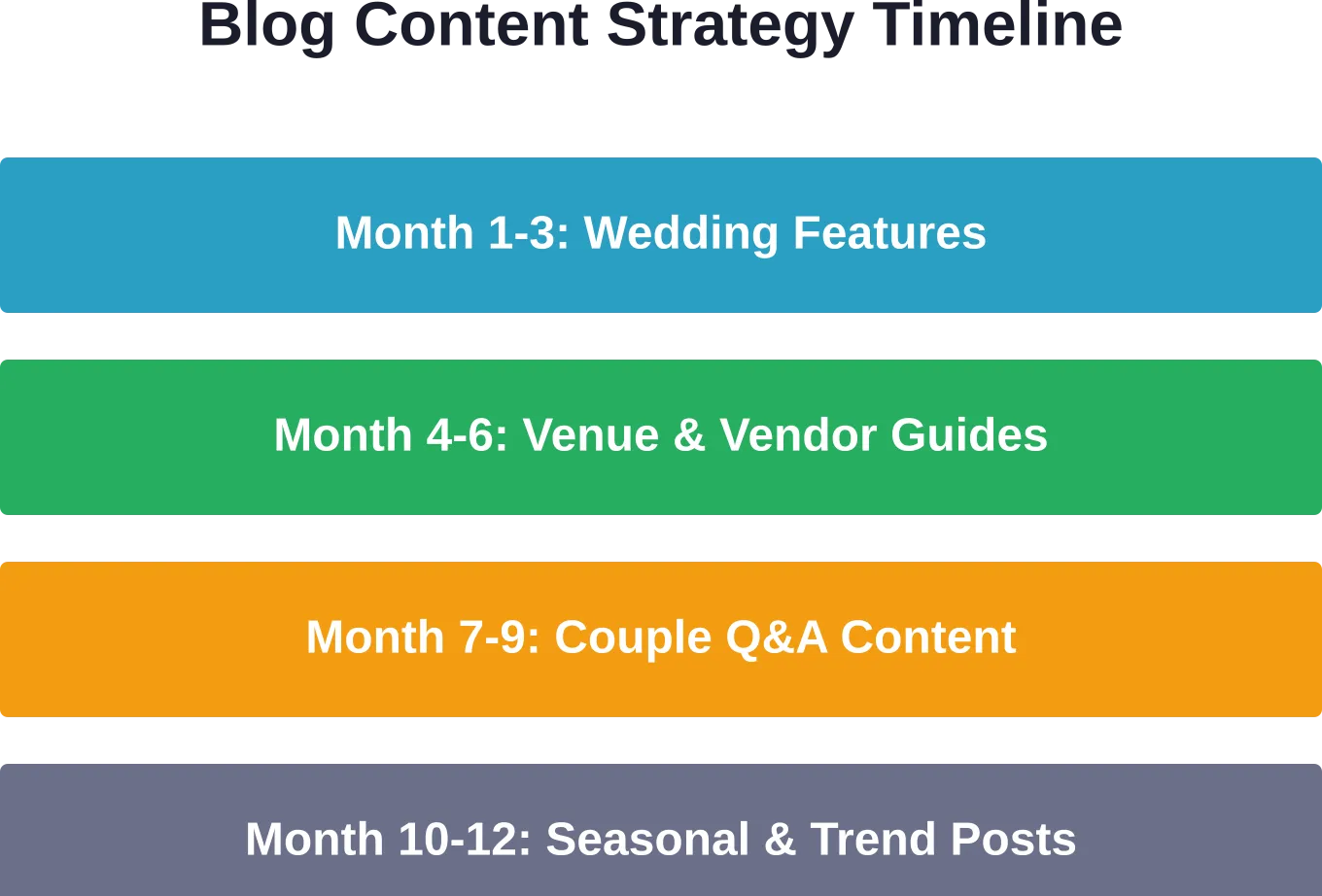
Consistency beats perfection. One blog post per month, published reliably, outperforms sporadic bursts of daily posting. Search engines favor sustained effort.
Social media for wedding photographers isn't one strategy. Each platform serves different purposes and requires different approaches.
The U.S. Small Business Administration recommends defining clear marketing goals before choosing platforms. Trying to maintain presence everywhere spreads effort too thin.
Instagram remains the primary discovery platform for wedding photography. But the algorithm rewards specific behaviors:
Organic Facebook reach is essentially dead for business pages. But Facebook ads remain one of the most cost-effective ways to reach engaged couples.
The targeting capabilities are incredibly specific. Photographers can target people who recently got engaged, live in specific ZIP codes, and match certain income brackets.
Some photographers report starting with modest ad budgets to test platform effectiveness. Results vary wildly based on market saturation and ad quality.
Campaign results vary based on market and targeting parameters. But when the combination works, Facebook ads deliver qualified leads cheaper than most other paid channels.
Pinterest works differently than other platforms. Content has a longer shelf life. Pins from years ago still drive website traffic if they're well-optimized.
Wedding content performs exceptionally well on Pinterest. Couples planning weddings actively search the platform for inspiration.
Create pins for every blog post. Include venue names, locations, and wedding style keywords in pin descriptions. Link directly to your website, not to Instagram or other social profiles.
Consistency matters here too. Regular pinning signals the algorithm that your account is active and valuable.
Vendor referrals book more weddings than any other single channel for many photographers. The relationship-based approach scales slower than paid ads but produces higher-quality leads.
Wedding planners, venues, florists, and other vendors regularly recommend photographers to their clients. Earning those recommendations requires strategic relationship building.
Stop treating vendor relationships as transactional. Planners see through photographers who only reach out when they want something.
Add value first. Share their work on social media. Send referrals when couples ask for vendor recommendations. Feature them prominently in blog posts.
In-person connection still matters. Attend local wedding industry events. Join professional groups. Show up consistently, not just when your calendar has openings.
Brand advocates promote businesses because they believe in the value and want to help, not because they're paid—a distinction from influencers who work on transactional terms. Vendors who consistently refer photographers do so because they trust the quality and reliability.
Vendors won't refer to photographers who are difficult to work with or whose booking process creates headaches for couples. Therefore:
Paid advertising accelerates visibility but requires budget and testing. The stigma against paid ads in the photography industry stems from bad experiences with ineffective campaigns.
When done correctly, paid ads complement organic marketing. They don't replace it.
Google Ads target people actively searching for wedding photographers. That's fundamentally different from social media advertising, where ads interrupt browsing.
Search intent matters. Someone searching "wedding photographer [city name]" is further along in their decision process than someone scrolling Instagram.
Google Ads cost more per click than Facebook ads in most markets. But the conversion rate is often higher because the intent is stronger.
Start with exact location targeting. Don't waste the budget showing ads to people outside your service area. Set realistic geographic boundaries based on where you actually want to shoot weddings.
Meta's ad platform allows simultaneous advertising across Facebook and Instagram. The same ad budget reaches both platforms.
Lead generation campaigns work well for photographers. Instead of driving traffic to a website, these ads collect contact information directly within Facebook, reducing friction.
Retargeting campaigns follow website visitors with ads after they leave. Someone who spent five minutes browsing your portfolio but didn't inquire gets reminded that you exist. Retargeting typically converts at higher rates than cold traffic.
Testing is mandatory. Ad creative, targeting parameters, and messaging all affect performance. One photographer's winning ad might flop for another in a different market.

Wedding photography marketing often depends on emotional timing, visual appeal, and seasonal demand, which can make weak campaigns expensive once the budget starts moving. With Extuitive, businesses can forecast ad performance earlier using predictive advertising technology trained against real campaign behavior and AI-powered consumer simulations.
Extuitive can help businesses:
👉Book a demo with Extuitive and discover which wedding photography promotions may carry stronger potential before launch.
Most couples don't book the first photographer they contact. They research, compare, and deliberate.
Email marketing keeps you visible during that decision process. It's not about bombarding inquiries with daily emails. Strategic, valuable emails maintain connection without being pushy.
When someone inquires but doesn't book immediately, they enter a follow-up sequence. Not every inquiry converts on the first conversation.
Send a thank-you email immediately after initial contact. Include answers to common questions even if they weren't asked yet. Many couples wonder about the same things but don't ask.
Follow up three days later with relevant portfolio examples. If they mentioned a specific venue or style, send similar work that matches their vision.
A week later, share a recent blog post or planning resource. Position yourself as helpful, not desperate.
Some bookings happen months after initial inquiry. Consistent, valuable communication keeps you top-of-mind when they're ready to decide.
Past wedding clients rarely book wedding photography again. But they refer to friends constantly.
Stay connected with previous clients through occasional emails. Anniversary reminders, updates about new services, or simply sharing their gallery again keeps the relationship alive.
When their friends get engaged, your name comes up naturally.
Content marketing encompasses more than written blog posts. Video, podcasts, and downloadable resources all build authority and attract potential clients.
Video doesn't require professional production quality. Behind-the-scenes clips shot on phones perform well on social media.
Show what couples actually experience working with you. The interaction matters more than the final images for many people.
YouTube functions as a search engine. Wedding planning content published on YouTube ranks in both YouTube and Google searches. Videos answering common wedding photography questions attract couples researching photographers.
Create valuable resources couples actually want. Wedding timeline templates, planning checklists, or photography prep guides work well.
Gate these resources behind email signup forms. That's how you build an email list of engaged couples in your market.
The resource needs to be genuinely valuable. A two-item checklist won't convince anyone to hand over their email address.
Digital marketing dominates discussions, but in-person networking still books weddings. Real relationships create trust faster than online interactions.
Wedding expos put photographers directly in front of engaged couples. The return on investment varies dramatically based on the event quality and market size.
Booth presence matters. Couples walk past dozens of vendors. Your booth needs to grab attention and facilitate conversation, not just display photos.
Follow up matters more than the event itself. Collect contact information and email everyone within 48 hours. Most vendors never follow up. Prompt communication sets you apart.
Styled shoots create portfolio content while building vendor relationships. When photographers, planners, florists, and other vendors collaborate on a styled shoot, everyone gets content and strengthens professional connections.
The content fills portfolio gaps. Need fall wedding photos? Beach wedding content? Styled shoots let photographers create specific portfolio pieces rather than waiting for clients to book those scenarios.
Real wedding content generally performs better for booking actual couples. But styled shoots serve specific strategic purposes when used correctly.
Every interaction with clients is marketing. The experience directly influences referrals and reviews.
Personal consultation sessions and follow-up interactions can significantly increase client satisfaction and referral rates.
Small unexpected extras create disproportionate value. A simple thank-you card, a preview photo texted the night of the wedding, or a printed photo mailed for their anniversary cost little but generate significant goodwill.
Communication sets expectations. Unclear processes frustrate clients. Crystal-clear communication about timelines, deliverables, and what happens at each stage eliminates anxiety.
When clients feel cared for, they become advocates. That word-of-mouth marketing is more powerful than any ad campaign.
Online reviews influence booking decisions significantly. Couples trust peer experiences more than marketing claims, so:
Generalist photographers face steeper marketing challenges than specialists. When everyone shoots "weddings, portraits, families, and events," nobody stands out.
But wait. Specialization isn't mandatory for success.
Some photographers build thriving businesses as generalists. The key is strategic positioning that makes sense for your specific market and goals.
Industry experts hold conflicting opinions on niching. Some photographers swear by ultra-specific positioning—"luxury mountain elopement photographer" or "documentary-style same-sex wedding specialist."
Others succeed as generalists, shooting anything wedding-related in their region.
Market size determines which approach works. In major metropolitan areas, narrow niches can sustain full-time businesses. In smaller markets, photographers need broader positioning to book enough weddings.
The 2025 industry survey data shows photographers operating in multiple business models. Flexibility matters in an evolving market.
Competing on price is a losing strategy. Someone will always undercut your rates.
Premium positioning attracts clients who value quality over cost. Marketing messaging focuses on experience, artistry, and the relationship rather than affordability.
Premium doesn't mean expensive for its own sake. It means delivering exceptional value and communicating that value clearly.
Marketing without measurement is guessing. Photographers who track lead sources and conversion rates can optimize what works and eliminate what doesn't.
Where inquiries come from matters. Ask every single inquiry how they found you. Track the answers.
Conversion rates reveal problems. If 50 people inquire but nobody books, pricing might be off or the sales process needs work. If five people inquire and four books, lead quality is excellent.
Cost per acquisition tells whether paid advertising makes financial sense. Spending $500 to book a $3,000 wedding works. Spending $500 to book a $1,000 wedding doesn't.
Website analytics show which content attracts visitors. Double down on what works.
Marketing isn't set-and-forget. Markets change. Algorithms update. Competitor strategies evolve.
Test different approaches systematically. Change one variable at a time so results are attributable to specific changes.
What worked last year might not work now. Regular evaluation prevents wasted effort on outdated tactics.
The temptation to try everything simultaneously leads to burnout and mediocre results across all channels.
Successful wedding photographers build marketing systems gradually, mastering each channel before adding the next.
New wedding photographers should prioritize website optimization and vendor relationship building. These foundational elements support everything else.
Get the website right—fast, mobile-friendly, clearly communicating value and location.
Start blogging consistently. Once per month minimum.
Connect with local vendors authentically. Attend events. Join groups. Build real relationships.
Once foundations are solid, add social media consistency and email marketing.
Post regularly on your primary social platform. Master one before adding others.
Build an email list and send regular valuable content.
Consider small paid advertising tests if budget allows.
Established photographers focus on optimizing existing channels rather than constantly adding new ones.
Analyze what drives the most bookings and allocate time accordingly.
Some channels might get dropped entirely if they don't produce results.
Marketing systems mature into reliable lead generation machines when given time and consistent effort.
Marketing ideas for wedding photographers span from zero-cost organic strategies to significant paid advertising investments. No single tactic books all your weddings.
The photographers who consistently book clients build diversified marketing systems tailored to their specific markets, business models, and personal strengths.
Start with the fundamentals—a solid website, consistent blogging, and genuine vendor relationships. These create sustainable growth over time.
Add social media, email marketing, and paid advertising strategically as foundations solidify. Test systematically. Track everything. Optimize based on actual results rather than assumptions.
The wedding photography market continues expanding, with substantial opportunity for photographers willing to market strategically.
Stop searching for the secret tactic. Build a system instead. Implement consistently. The bookings will follow.
Ready to transform how couples discover your work? Pick one strategy from this guide and implement it fully this month. Mastery of one tactic beats mediocre execution of ten.


