How to Remove “Powered by Shopify” from Your Store
Learn simple ways to remove or replace the “Powered by Shopify” footer message on your store. No coding experience needed.
Jan 7, 2026



Marketing for home health agencies requires a strategic mix of digital and traditional tactics—local SEO, physician referrals, community engagement, HIPAA-compliant patient outreach, and content marketing all play vital roles. Success depends on building trust with families, caregivers, and healthcare providers while maintaining regulatory compliance and demonstrating measurable value in patient outcomes.
Home health agencies operate in one of the most competitive healthcare sectors today. Families searching for in-home care want providers they can trust. Physicians want reliable partners for patient referrals. And the regulatory landscape—shaped by HIPAA and Medicare payment structures like the CY 2026 Home Health Prospective Payment System—demands careful attention to compliance.
So where does that leave marketing? Right at the center of everything.
The agencies that grow aren't necessarily the ones with the biggest budgets. They're the ones that understand their local market, build genuine relationships, and communicate value clearly across every channel. Here's how to make that happen.
Home health marketing differs fundamentally from other healthcare sectors. Families don't typically shop for home care the way they'd choose a new dentist. The decision often comes during moments of crisis—after a hospital discharge, following a dementia diagnosis, or when aging parents can no longer manage alone.
That urgency shapes the entire marketing approach. Families need immediate answers. They're searching late at night on mobile devices. They're asking neighbors for recommendations. And they're heavily influenced by what they find in those first few search results.
According to data from top-ranking agencies, businesses with updated photos on their profiles get 42% more requests for directions than those without. That single statistic reveals something crucial: visibility and credibility are inseparable in this industry.
But here's the thing—traditional advertising alone won't cut it. Families want proof. They want to see real people, hear authentic stories, and verify credentials before they ever pick up the phone.
When someone searches "home health care near me" at 11 PM, your agency needs to appear. Not on page two. Right at the top, with complete information and clear next steps.
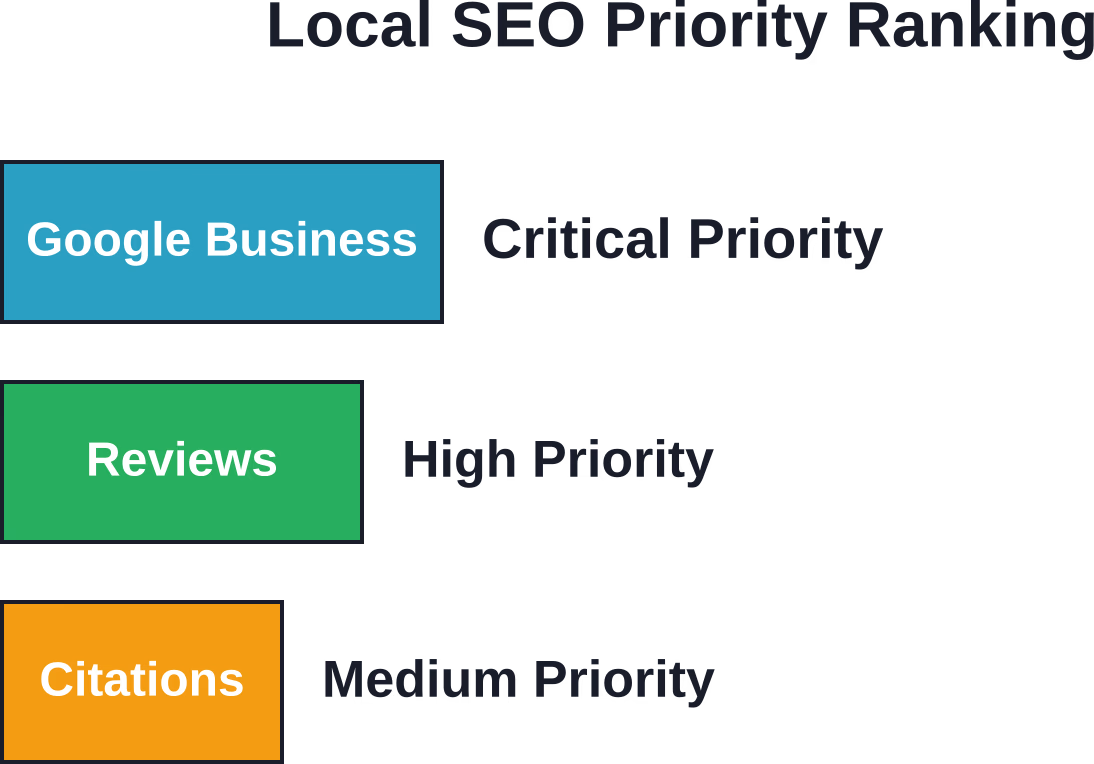
Google Business Profile optimization sits at the core of local visibility. The profile should include current operating hours, service areas, high-quality photos of caregivers (with proper consent), and regular posts about health tips or company updates.
Reviews matter enormously. Families trust other families. A steady stream of authentic reviews—responding professionally to both positive and negative feedback—builds the social proof that converts searchers into callers.
Local citations across healthcare directories, chamber of commerce listings, and senior living referral sites reinforce geographic relevance. Consistency matters here: the same name, address, and phone number everywhere Google looks.
Website structure should mirror how families search. Separate service pages for Alzheimer's care, post-surgical recovery, diabetes management, and other specialties help capture long-tail searches. Each page needs clear calls to action, local geographic markers, and content that answers specific questions families ask.
Mobile performance isn't optional. Most families search from phones, often while sitting in hospital waiting rooms or parked in a physician's office parking lot. Pages must load in under three seconds. Forms need to work flawlessly on small screens.
Schema markup for healthcare organizations tells search engines exactly what services are offered, coverage areas, and business type. Structured data won't make a site rank higher by itself, but it does improve how listings appear—and that impacts click-through rates directly.
Physicians remain the single most valuable referral source for home health agencies. A trusted primary care doctor recommending your services carries more weight than any advertisement ever could.
But here's what doesn't work: dropping off donuts and brochures once a quarter. Physicians are overwhelmed. They need partners who make their lives easier, not vendors asking for favors.
The agencies that win physician referrals focus on three things: communication speed, clinical quality, and hassle-free coordination. When a doctor refers to a patient, they want confirmation within hours. They want to know the patient is being monitored. And they absolutely don't want families calling back with complaints about missed appointments or poor care.
Regular outcomes reporting strengthens these relationships. Simple quarterly summaries showing patient improvement metrics, hospitalization prevention rates, and medication adherence demonstrate tangible value. Physicians want data proving their referrals lead to better patient outcomes.
Face-to-face relationship building still matters. Attendance at medical staff meetings, participation in care coordination committees, and presence at community health events keeps agencies top of mind when discharge planning conversations happen.
Marketing in healthcare operates under stricter rules than most industries. The HIPAA Privacy Rule defines marketing as making "a communication about a product or service that encourages recipients of the communication to purchase or use the product or service." Generally, if the communication is marketing, then the communication can occur only if the covered entity first obtains the individual's written authorization.
There are exceptions. Disease management programs, wellness initiatives, and preventive care communications operated directly by the covered entity or through a business associate generally don't fall under HIPAA marketing restrictions. So a home health agency could start a fall prevention education series without authorization, because it's about the agency's own health-related services.
But sending a list of patients to a pharmaceutical company for diabetes medication promotions? That requires explicit written consent.
Violations carry real consequences. HIPAA marketing rule violations can result in penalties, with amounts varying based on factors such as the date of violation and whether the covered entity knew of the failure to comply, subject to calendar year caps for multiple violations of the same requirement. Entities that correct violations within 30 days after discovering them may avoid penalties, but that's not guaranteed.
The safest approach: establish clear internal protocols. Every marketing communication should pass through compliance review. Patient testimonials require written authorization. Photos of patients need explicit consent. And third-party marketing partnerships demand careful contractual protections.
Families searching for home health information are typically in learning mode before they're ready to buy. They want to understand what services exist, what Medicare covers, how to evaluate quality, and what questions to ask.
Agencies that publish genuinely helpful content—not thinly veiled sales pitches—build authority and trust long before the first phone call. Blog posts answering common questions, video tutorials on safe transfers or medication management, and downloadable guides to Medicare home health benefits all serve this goal.
The content doesn't need to be fancy. Straightforward answers in plain language outperform jargon-heavy clinical explanations. Families want to know: "Will someone help my dad shower safely?" and "How much will this cost?" Address those questions directly.
The video performs especially well. Short clips introducing caregivers, explaining what happens during a typical visit, or touring the office humanize the agency. Families want to see real people before they invite them into their homes.
Not everyone who visits a website is ready to commit. Email nurture sequences keep the agency top of mind while providing ongoing value.
A typical sequence might include: an immediate welcome email with a helpful guide, a follow-up sharing a caregiver success story, educational content about choosing quality care, information about Medicare coverage, and finally a gentle invitation to schedule a free consultation.
The key is spacing—one email every three to five days, not daily bombardment. And every email should offer genuine value, not just repeated sales pitches.
Home health agencies succeed when they're woven into the fabric of their communities. That means showing up—at senior centers, faith communities, hospital health fairs, and caregiver support groups.
Free educational workshops on topics like fall prevention, dementia care basics, or navigating Medicare demonstrate expertise while building goodwill. These sessions shouldn't be sales presentations. They should be genuinely helpful, with agency information mentioned briefly at the end.
Partnerships with complementary providers expand reach. Collaborations with physical therapy clinics, assisted living communities, hospice agencies, and elder law attorneys create referral networks where everyone benefits.
Sponsoring local events—5K runs for Alzheimer's research, senior prom nights at assisted living facilities, caregiver appreciation luncheons—builds brand visibility while demonstrating community investment.
Social media serves two distinct purposes for home health agencies: building awareness and demonstrating culture.
Families researching agencies often check social profiles to get a feel for company culture. Are the posts warm and personal, or corporate and sterile? Do real caregivers appear in photos? Does the agency celebrate staff achievements and patient milestones (with appropriate consent)?
Facebook remains the primary platform for reaching adult children making care decisions for aging parents. Regular posts sharing health tips, caregiver resources, and agency news keep the brand visible. Facebook groups for local caregivers provide opportunities to participate in conversations and offer helpful advice without overt selling.
LinkedIn serves a different purpose—building professional credibility and connecting with referral sources. Sharing thought leadership content, celebrating clinical certifications, and participating in healthcare industry discussions positions agency leaders as experts.
Social media advertising has become increasingly important in healthcare marketing. While home health budgets are typically smaller than those of larger healthcare organizations, the principle holds: people increasingly expect to find and evaluate healthcare providers through social channels.
Marketing without measurement is just spending money and hoping. The agencies that grow consistently track specific metrics and adjust based on what the data reveals.
Call tracking shows which marketing channels generate phone inquiries. Unique phone numbers for different campaigns—one for the website, another for direct mail, a third for physician office materials—reveal exactly where leads originate.
Conversion rate analysis matters more than raw traffic. A website getting 500 monthly visitors with a 5% conversion rate (25 inquiries) outperforms one getting 2,000 visitors with a 1% conversion rate (20 inquiries). The question isn't just "how many people see us?" but "how many take action?"
Cost per acquisition tells the real story. If social media ads cost $800 to generate one new patient admission, but physician referrals cost $150, resources should shift accordingly. Not every channel needs to perform equally, but the mix should optimize overall efficiency.

Home health agencies often promote multiple care services at once, which makes weak campaigns expensive to test in real time. Extuitive predicts ad performance before launch using AI models validated against live campaign results, helping teams evaluate stronger campaign directions earlier.
Marketing teams can use Extuitive to:
👉Book a demo with Extuitive and test home health campaigns before they go live.
The CY 2026 Home Health Prospective Payment System brings routine updates to Medicare payment rates, recalibrated case-mix weights, updated functional impairment levels, comorbidity subgroups, and adjusted low-utilization payment thresholds. The CY 2026 Home Health Prospective Payment System includes adjustments relevant to different service settings and areas.
These payment structure changes affect marketing in subtle but important ways. Agencies need to communicate value beyond just Medicare reimbursement. Families want to know about quality of care, caregiver training, and patient outcomes—not payment mechanics.
But the economics matter internally. Tighter margins mean marketing spend must work harder. The days of throwing money at broad advertising and hoping something sticks are over. Every dollar needs to generate a measurable return.
Marketing for home health agencies isn't about tricks or hacks. It's about showing up consistently, communicating value clearly, and building trust across every interaction.
The agencies that thrive focus on fundamentals: strong local SEO, meaningful physician relationships, genuine community engagement, and HIPAA-compliant communications that respect patient privacy while demonstrating expertise.
Start with high-impact, low-cost strategies—optimize that Google Business Profile, ask satisfied patients for reviews, and strengthen one physician relationship this month. Then layer in content marketing, expand social media presence, and test paid channels as resources allow.
The families searching for home health care right now need someone they can trust. Make sure they can find you, understand what makes you different, and feel confident taking that first step. That's marketing that actually matters.


