How to Shut Down Your Shopify Store: A Step-by-Step Guide
Learn how to close your Shopify store in simple steps, and make sure you handle everything before deactivating your account.
Feb 3, 2026



Effective assisted living marketing in 2026 combines digital strategies with authentic community engagement. Focus on multi-channel approaches including optimized websites, local SEO, virtual tours, educational content, and targeted events that address the needs of adult children (age 45-65) making decisions for aging parents. Data shows 75% of adults 50+ prefer aging in place, making trust-building and clear value communication essential for occupancy growth.
The assisted living landscape has transformed dramatically. With baby boomers reaching their 80s by the decade's end and senior households projected to double from 6% in 2018 to 12% in 2038, competition for qualified residents has intensified.
Here's the challenge: most companies are missing the mark. Some industry analysis suggests a gap in how companies account for aging populations in their marketing strategies. Marketing budgets often underallocate resources to the 50+ demographic relative to this group's purchasing power.
This gap creates opportunity. Communities that implement strategic, data-driven marketing approaches consistently outperform competitors. But what actually works?
Effective marketing starts with knowing who's making the decision. For assisted living, that's rarely the person who'll occupy the room.
The primary decision-maker is typically an adult child, aged 45-65, researching options for an aging parent. They're juggling careers, families, and caregiving responsibilities. According to available data, approximately 27% of adults 50+ serve as caregivers.
This audience consumes information differently than previous generations. They research extensively online before making contact. They read reviews, compare facilities, and seek validation from multiple sources.
Current assisted living residents break down this way: 70% are women, 30% are men. Over half are 85 and above, with 31% falling in the 75-84 age bracket. Medical needs are significant—over 50% manage high blood pressure and 40% live with Alzheimer's or other dementias.
But the person writing the check? That's the adult child, and they're looking for specific reassurances: safety protocols, care quality, engagement opportunities, and value for money.
Your website isn't just a digital brochure—it's often the first (and sometimes only) impression you'll make. Treat it accordingly.
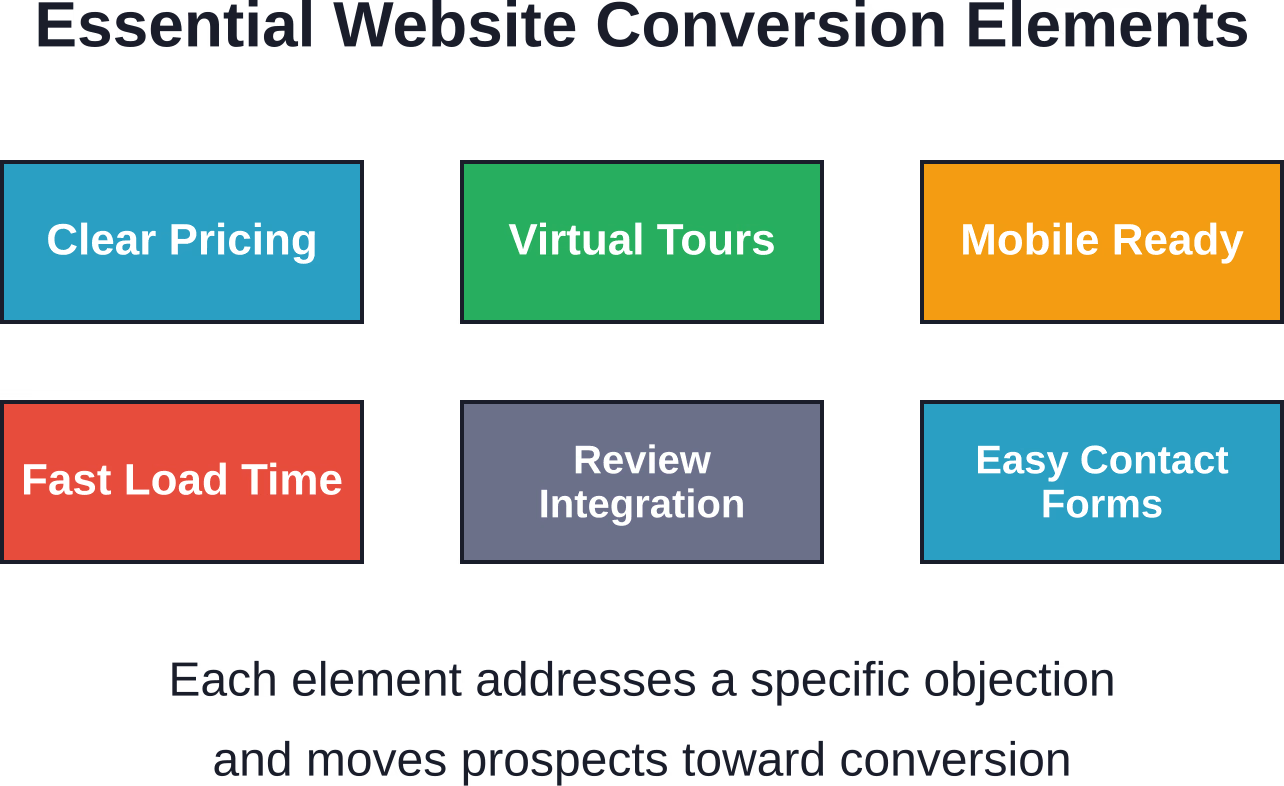
Most senior living websites fail basic usability tests. Slow load times, confusing navigation, and buried contact information kill conversions before they start. The fix? Prioritize speed, clarity, and mobile responsiveness.
Every assisted living website needs crystal-clear information architecture. Visitors should find pricing (or at least ranges), services included, care levels offered, and facility amenities within two clicks. Hiding information doesn't generate calls—it generates frustration.
Virtual tours have become non-negotiable. High-quality video walkthroughs let families preview apartments, common areas, and outdoor spaces without scheduling visits. This pre-qualifies leads and makes in-person tours more productive.
One marketing team saw meal program clients increase from 500 to 1,500 within months by expanding virtual programming options from 25 to 100. That kind of digital accessibility translates directly to engagement.
Local SEO determines whether your community appears when families search "assisted living near me" or "memory care in [city name]." Google Business Profile optimization isn't optional—it's foundational.
Claim and complete your profile. Add high-quality photos weekly. Respond to every review, positive or negative, within 48 hours. Regular updates signal activity and relevance to search algorithms.
Location pages for each facility should include specific addresses, local landmarks, and neighborhood information. Don't just list services—describe the community context that makes your location desirable.
Well-executed events accomplish multiple goals simultaneously: they generate leads, nurture existing prospects, and build community relationships. But generic open houses rarely deliver results.
The most effective events provide genuine value. Educational seminars on estate planning, Medicare navigation, or aging-in-place modifications position your community as a trusted resource, not just a sales target.
Partner with local attorneys, financial planners, or healthcare providers to host expert panels. These professionals bring their own networks, expanding your reach. Topics that consistently draw attendance include:
According to case study data, Acts Retirement-Life Communities collaborated with engagement tools to provide more than twice the daily average of resident engagement, reducing social isolation by 94%.
Invite prospects to participate in existing community activities. Cooking classes, art workshops, musical performances, and holiday celebrations let families experience your culture firsthand.
These events answer the unasked question: "Will my parents actually enjoy living here?" Seeing current residents engaged, laughing, and connected provides reassurance that brochures can't match.
Seasonal events tied to local traditions work particularly well. Garden tours in spring, outdoor concerts in summer, harvest festivals in fall—these create natural touchpoints throughout the year.
Consistent, helpful content establishes expertise and improves search visibility. But forget about promotional blog posts that nobody reads.
Create content that answers real questions families are asking. What does "assisted living" actually include? How do costs compare to in-home care? What's the difference between memory care and skilled nursing?
Video content outperforms text for senior living marketing. Short resident testimonials (with proper permissions) humanize your community. Staff introductions build familiarity. Day-in-the-life footage shows authentic experiences.
Written content should target specific decision points. Comparison guides (assisted living vs. independent living vs. memory care), cost breakdowns, and "how to choose" articles attract high-intent traffic.
According to recent research from Christian Living Communities, marketing teams using AI tools to increase productivity found success, though they maintain strict guardrails—all marketing copy must be at least 50% human-written to preserve authenticity.
Online reviews influence decisions more than any marketing material you produce. Families trust other families who've walked this path.
Active review management isn't about collecting only five-star reviews—it's about demonstrating responsiveness and genuine care. How you handle a three-star review matters more than having exclusively perfect ratings.
Request reviews systematically. After a positive family interaction, make it easy to share feedback. Provide direct links to your Google Business Profile, Facebook page, and relevant senior living directories.
Negative reviews happen. Respond quickly, professionally, and with empathy. Acknowledge concerns, explain (without making excuses) what happened, and describe corrective actions taken.
This public accountability actually builds trust. Prospects see that you listen, adapt, and prioritize resident satisfaction over reputation management.
No single marketing channel dominates. Effective strategies combine multiple touchpoints that reinforce messaging and build familiarity over time.
Digital advertising works when campaigns target the right audience with the right message. Geographic targeting ensures ads reach families in your service area. Demographic targeting focuses on the 45-65 age range making care decisions.
Retargeting campaigns re-engage website visitors who didn't convert. Someone who spent five minutes exploring your virtual tour represents warm interest—stay visible as they continue researching.
Budget matters less than consistency. A modest monthly spend maintained over time outperforms sporadic large investments.

Assisted living campaigns often require heavy spending before teams know which messaging will actually connect with families. Extuitive helps businesses forecast ad performance before launch using historical campaign data and AI consumer simulations, giving assisted living teams earlier signals before scaling campaigns.
Extuitive helps assisted living marketers:
👉Book a demo with Extuitive to evaluate your next assisted living campaign before it goes live.

Hospital discharge planners, social workers, geriatric care managers, and primary care physicians influence placement decisions. Building authentic relationships with these professionals creates a steady referral flow.
But here's what doesn't work: showing up quarterly with branded pens and brochures. Referral partners need substance.
Become a resource, not a vendor. Share your expertise through lunch-and-learn presentations at medical practices. Offer to answer patient questions about care transitions. Provide educational materials that help professionals guide families.
Respond to referrals quickly and communicate outcomes. When a social worker refers to a family, update them on the result. This feedback loop demonstrates reliability and closes the circle.
Track referral sources systematically. Knowing which partners consistently send qualified leads lets you prioritize relationship investment effectively.
Technology adoption among older adults continues accelerating. AARP research shows 71% of adults 50+ use health-tracking apps and 59% participate in digital fitness classes. This technological comfort extends to how they research senior living options.
Communities that lag in digital capabilities lose competitive advantage. Online scheduling for tours, virtual consultations, and digital document signing remove friction from the decision process.
Customer relationship management software prevents leads from slipping through cracks. Automated follow-up sequences ensure timely contact. Lead scoring identifies high-intent prospects deserving immediate attention.
Integration between marketing platforms and CRM systems provides visibility into what's working. Which Facebook ad generated this lead? What content did they consume before requesting a tour? These insights inform optimization.
Marketing without measurement is guesswork. Track metrics that connect to business outcomes, not vanity metrics that look impressive but lack impact.
Website traffic means nothing if visitors don't convert. Social media followers don't fill apartments. Focus on:
These metrics reveal whether marketing investments generate returns. A qualified lead costs something—whether $10, $1,000, or $5,500. Understanding that cost lets you allocate budgets strategically.
Cost represents the biggest barrier to assisted living for most families. Affordability represents a significant barrier to assisted living access for many middle-income seniors.
Transparent pricing helps rather than hurts. Families appreciate knowing what to expect. Hidden costs discovered late in the process damage trust and kill deals.
Many families don't understand available financial resources. Long-term care insurance, veterans' benefits, bridge loans, and Medicaid planning can make care affordable for those who think it's out of reach.
Offering financial counseling or partnering with elder law attorneys who specialize in Medicaid planning adds value. You're helping solve the affordability problem, not just collecting payment.
Generic messaging about "quality care" and "comfortable living" doesn't differentiate. Every community claims the same benefits.
Real differentiation comes from specificity. What unique programs do you offer? What specialized training do staff receive? What outcomes can you demonstrate?
Communities with specialized offerings—dementia care, Parkinson's programs, post-stroke rehabilitation—can market to targeted audiences with specific needs.
Programming specificity attracts residents. "Memory care" is vague. "Montessori-based dementia engagement program with certified practitioners" communicates expertise.
How a community handles challenges defines its reputation. Outbreaks, incidents, or regulatory issues will occur. Transparency and proactive communication determine whether trust survives.
Families recognize that facilities serving vulnerable populations face inherent risks. They're evaluating response competence, not expecting perfection.
During difficult periods, overcommunicate. Explain what happened, what you're doing about it, and how you're preventing recurrence. Silence breeds suspicion.
Every team member participates in marketing, whether they realize it or not. Caregivers, dining staff, maintenance workers—all shape family impressions during tours and visits.
Invest in training that helps staff understand their role in creating positive experiences. Friendly, engaged employees who genuinely care about residents provide the most powerful marketing possible.
Turnover undermines this advantage. High staff retention signals stability and quality. Low turnover becomes a marketing point worth highlighting.
The assisted living market will grow substantially as demographics shift. Communities that build sophisticated marketing capabilities now will dominate their markets for years.
Start with foundations: optimize your website for conversions, claim and actively manage local listings, and implement systematic lead follow-up. Build from there with content marketing, paid advertising, event programming, and referral development.
Real talk: marketing success comes from consistency, not perfection. A solid strategy executed reliably beats brilliant tactics applied sporadically.
Measure everything. Let data guide decisions. Double down on what works and eliminate what doesn't. The communities thriving in this competitive environment aren't the ones with the biggest budgets—they're the ones making strategic choices based on evidence.
Your marketing should reflect the care quality you provide. Authentic, helpful, and focused on genuinely serving families navigating difficult transitions. Do that well, and occupancy follows.


