Marketing Ideas for Flight Schools That Fill Schedules
Discover proven marketing ideas for flight schools in 2026. Learn digital strategies, budget tips, and enrollment tactics that convert inquiries into students.
Jun 7, 2026



Effective school admission marketing combines digital strategies like SEO-optimized websites, targeted advertising, and social media engagement with traditional outreach such as open houses and community events. According to National Center for Education Statistics data, chosen public schools enrolled 19 percent of students in grades 1-12 in 2019, highlighting the competitive landscape. Schools typically allocate 1–10% of their budget to marketing, focusing on building trust, showcasing unique value, and nurturing prospective families through multi-channel campaigns.
Competition for student enrollment has intensified across all education sectors. Parents research exhaustively online, compare multiple institutions, and expect transparency before making decisions.
The landscape has shifted dramatically. In fall 2021, some 9.4 million students, or 61 percent of all undergraduate students, were enrolled in at least one distance education course. Of undergraduate students taking exclusively distance education courses, 74 percent were enrolled in institutions in their home state. This flexibility has expanded options for families, making differentiation harder for traditional institutions.
But here's the thing—effective marketing doesn't require massive budgets. It demands strategic thinking, consistent execution, and genuine connection with prospective families.
The competition isn't just local anymore. Data from the National Center for Education Statistics shows that charter schools expanded significantly between 2000 and 2017.
School choice has expanded significantly. The percentage of students in assigned public schools dropped from 74 percent in 1999 to 69 percent in 2016, while chosen public schools increased from 14 percent to 19 percent during the same period.
Demographic patterns show differences in chosen school enrollment compared to traditional public schools.
Rural schools face unique challenges. In fall 2019, public schools in rural areas represented 28 percent of all public schools but enrolled only 19 percent of students, serving 9.8 million students.
Your website serves as the digital front door. Most prospective families start their search online, making your site the critical first impression.
Navigation must be intuitive. Prospective families should find admission requirements, tuition information, and contact forms within two clicks. Burying essential information frustrates visitors and increases bounce rates.
Mobile optimization isn't optional—it's mandatory. Parents browse on phones during commutes, lunch breaks, and evening research sessions. Sites that load slowly or display poorly on mobile devices lose prospects immediately.
Authentic photography beats stock images every time. Show real students, actual classrooms, and genuine moments. Families can spot staged photos, and authenticity builds trust faster than polished marketing shots.
Parents search for specific phrases: "best elementary schools near [city]", "private high school [neighborhood]", "STEM programs [area]". Your content must match these search patterns.
Create dedicated pages for each program, grade level, and specialty. A single general page can't rank for multiple distinct searches. Depth beats breadth in local education searches.
Load speed affects rankings and user experience. Compress images, minimize code, and choose reliable hosting. Every second of delay costs conversions.
Parents don't just want promotional content—they need educational resources. Position your institution as a trusted advisor, not just a service provider.
Blog topics should address genuine parent concerns: "How to choose the right school for your child", "Understanding different teaching methodologies", "Supporting kids through school transitions". These topics attract families early in their decision process.
Video content performs exceptionally well. Virtual tours, teacher introductions, student testimonials, and day-in-the-life segments help families experience your culture remotely. Keep videos under three minutes—attention spans are short.
Downloadable resources work as lead magnets. Create guides like "School Selection Checklist", "Questions to Ask During Campus Visits", or "Understanding Curriculum Approaches". Gate these behind simple email forms to build your prospect list.
Social platforms offer direct access to parent communities. But success requires consistency and authenticity, not sporadic posting.
Facebook remains powerful for school marketing. Parent groups, local community pages, and targeted ads reach decision-makers effectively. Share student achievements, upcoming events, and behind-the-scenes glimpses.
Instagram showcases visual culture. Highlight campus life, student work, special events, and daily moments. Stories and Reels increase engagement, especially with younger parents and alumni.
LinkedIn shouldn't be ignored. It reaches professional parents and supports employer partnership development. Share academic achievements, teacher credentials, and institutional milestones.
Social media works best as a conversation, not an announcement channel. Respond to comments, answer questions publicly, and participate in relevant local discussions.
User-generated content amplifies reach. Encourage current families to share experiences, tag your institution, and participate in campaigns. Authentic parent voices convince prospects better than official messaging.
Consistency matters more than frequency. Three quality posts weekly beats daily low-effort content. Establish a sustainable schedule and maintain it.
Email remains remarkably effective for enrollment marketing. Families who provide email addresses signal genuine interest—don't waste the opportunity.
Segment your lists by interest and stage. Prospective elementary families need different messages than high school prospects. Parents requesting information differ from those who attended open houses.
Automation saves time while maintaining personalization. Welcome sequences, event reminders, application deadline alerts, and post-visit follow-ups can run automatically once configured.
Value-driven content keeps subscribers engaged. Share educational tips, school news, student spotlights, and exclusive previews. Make emails worth opening, not just promotional blasts.

Organic reach has limits. Paid advertising accelerates awareness and targets specific demographics precisely:
Track cost per lead, not just impressions or clicks. A campaign generating 1,000 clicks means nothing if zero prospects inquired.
Conversion pixels and UTM parameters reveal which campaigns drive results. Connect advertising directly to inquiry forms, tour bookings, and applications.
Test continuously. Run A/B tests on ad copy, images, targeting, and landing pages. Small improvements compound over time.

Enrollment marketing becomes expensive fast when schools rely only on testing after launch. Extuitive helps brands forecast likely ad performance before launch using historical campaign patterns, creative signals, and AI-powered consumer intelligence. That gives schools a faster way to compare campaign directions and focus budget on stronger-performing creatives earlier.
With Extuitive, admission teams can:
👉Book a demo with Extuitive before putting more budget behind your next enrollment campaign.
Digital marketing builds awareness, but personal experiences close enrollment decisions. Events let families experience your culture firsthand:
Referrals remain powerful. According to research, 77% of consumers trust referrals from people they know. Prospective parents value current family opinions above marketing messages.
Make reviews easy. Send follow-up emails to satisfied families with direct links to review platforms. Google reviews boost local search visibility while building credibility.
Video testimonials outperform written ones. Record brief interviews with current parents discussing their decision process and experiences. Authentic emotion and specific stories resonate deeply.
Address negative reviews professionally. Respond quickly, acknowledge concerns, and offer to discuss offline. Handled well, responses to criticism demonstrate commitment to improvement.
Referral incentives can work but tread carefully. Small thank-you gifts or recognition feel appropriate; large financial incentives can feel transactional and damage relationships.
Gut feelings don't scale. Successful enrollment marketing relies on measuring, analyzing, and optimizing based on actual performance data.
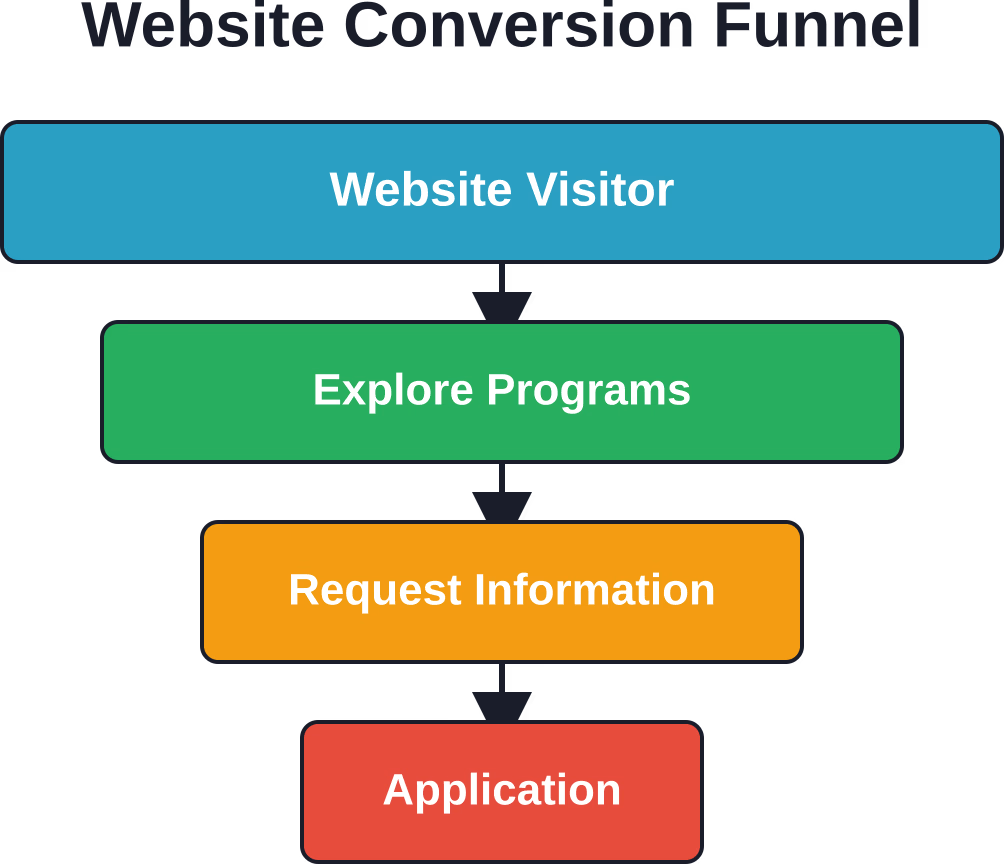
Track leading indicators: website traffic, inquiry form submissions, tour bookings, application starts, and completed applications. Monitor conversion rates between each stage.
Google Analytics reveals where prospects come from and how they behave. Which pages do convert visitors' views? Where do prospects drop off? Data answers these questions.
CRM systems organize prospect information and track engagement. Know who attended events, opened emails, and requested information. Personalize follow-up based on demonstrated interest.
Attribution modeling shows which channels drive results. Did that enrollment come from organic search, a Facebook ad, or a parent referral? Understanding attribution guides budget allocation.
A/B testing improves incrementally. Test one variable at a time—subject lines, landing page headlines, form fields, call-to-action buttons. Small wins accumulate into significant improvements.
Enrollment marketing isn't just filling next year's class—it's building lasting institutional reputation:
Even well-intentioned marketing efforts fail when fundamental mistakes undermine results:
Effective school admission marketing isn't about tricks or gimmicks. It requires understanding prospective families, communicating authentic value, and guiding them through a clear enrollment journey.
The competitive landscape will continue intensifying. According to National Center for Education Statistics data, school choice options expanded significantly between 1999 and 2016, with chosen public schools increasing from 14 percent to 19 percent of enrollment. Institutions that invest in strategic, data-driven marketing will thrive.
Start with quick wins—optimize your website, collect testimonials, improve follow-up speed. Build toward comprehensive strategies that integrate digital channels, community engagement, and exceptional prospect experiences.
The families you want to reach are actively searching right now. Will they find your school, understand what makes it special, and feel compelled to take the next step? That's what effective admission marketing delivers.


