Leading Auto Dealer Facebook Marketing Agencies in 2026
A curated list of Facebook marketing agencies that help auto dealerships generate leads, sell more vehicles, and improve local ad performance.
Mar 22, 2026



Retail success on Shopify no longer means choosing between online and offline channels. Customers expect the same brand experience whether they browse on their phone at 2 a.m. or walk into a physical store on Saturday afternoon. The retailers who win are the ones who stop treating these channels as separate businesses and start running true unified commerce.
Shopify, especially when paired with Shopify POS, makes this possible by keeping inventory, customer profiles, orders, and loyalty data in perfect sync. Marketing strategies must follow the same principle: every campaign, message, and promotion has to work across all touchpoints without creating confusion or extra work.
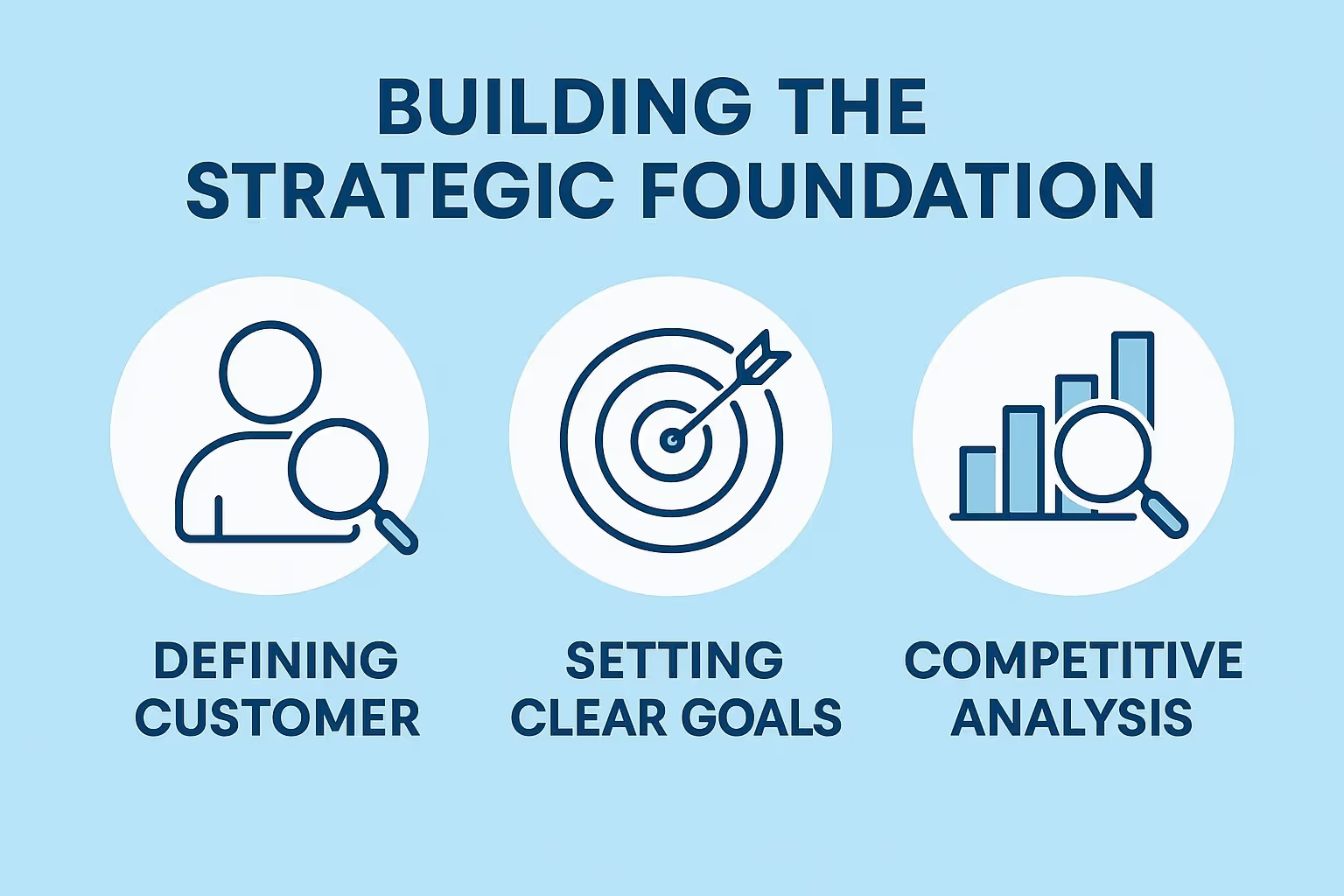
No marketing tactic performs well in a vacuum. Before spending money on ads or posting on social media, retailers need to know exactly who they serve and what they want to achieve.
Shopify Analytics combined with POS transaction data gives a complete picture of shopping behavior. Retailers can see which products sell better in-store, which categories drive online traffic, and how purchase patterns differ by location or device.
This data becomes the basis for detailed buyer personas that include both digital and physical shopping habits. A persona might prefer researching products online but completing high-value purchases in person, or the opposite. Understanding these patterns determines where to focus marketing budget and messaging.
Vague targets like “grow sales” waste time and money. Effective retail marketing plans use specific goals tied to the unique realities of omnichannel commerce.
Common objectives include increasing foot traffic from online sources by a set percentage, raising average transaction value through cross-channel upsells, or improving repeat purchase rates by recognizing customers across channels. These goals become the benchmarks for every campaign decision.
Studying other Shopify-powered retail brands reveals practical insights. Look at how they handle local SEO, structure their Instagram Shops, integrate in-store events with digital promotions, and display real-time inventory online.
The goal is not to copy but to identify gaps. Many competitors still treat online and offline as separate businesses, creating opportunities for those who execute unified strategies better.
Shopify’s native functionality covers the core of omnichannel retail, but the majority of successful brands extend it with targeted apps. The right combination of tools removes manual work, adds missing features, and connects data across channels that Shopify alone does not bridge automatically.
Most retail stores end up with 8-15 active apps once they reach maturity. The goal is not to install everything, but to solve specific friction points that native Shopify cannot handle efficiently.
Regular app audits prevent performance issues: every additional app increases page load time and complexity. Brands that review their stack quarterly and remove redundant tools maintain faster sites and lower subscription costs.

Shopify gives retailers a solid base, but we see the biggest jumps in performance when brands start using the right apps on top of it. The tools that handle SEO automation, cross-channel loyalty, advanced email flows, and real-time local inventory can turn a good store into a dominant one without adding headcount.
When it comes to paid advertising - usually the largest marketing expense for any Shopify retailer - we built Extuitive exactly for this reality. We use AI agents to connect directly to your store, to pull your catalog. Our AI agents are trained on real consumer behavior to create and validate ad creatives in minutes. Instead of burning budget on split tests that take weeks, we simulate thousands of actual buyers, predict purchase intent, and deliver only the variants that score highest. Once the winners are clear, we launch them across Meta, Google, and TikTok while continuing to track and optimize performance. Retail teams we work with tell us the time saved and the higher ROAS make the difference between scraping by and actually scaling both their online and in-store channels.
Search remains the primary discovery channel for both online orders and store visits. Retail SEO requires attention to both traditional ecommerce best practices and local signals.
Product pages drive the majority of organic revenue. Titles, descriptions, bullet points, and image alt text must contain the specific terms customers search, including brand names, features, and use cases.
Collection pages, blog content, and category landing pages need the same treatment. Clean URL structures, proper heading hierarchy, and strategic internal linking improve crawl efficiency and user experience simultaneously.
Structured data markup deserves special attention. Implementing Product, LocalBusiness, and Offer schema helps search engines display prices, availability, reviews, and store pickup options directly in results.
Physical locations require active Google Business Profile management. Regular posts, quick responses to reviews, updated photos, and accurate hours all influence local pack rankings.
Embedding a store locator with real-time inventory on the website strengthens local signals further. Location-specific landing pages optimized for “near me” searches capture mobile traffic ready to visit or order for pickup.
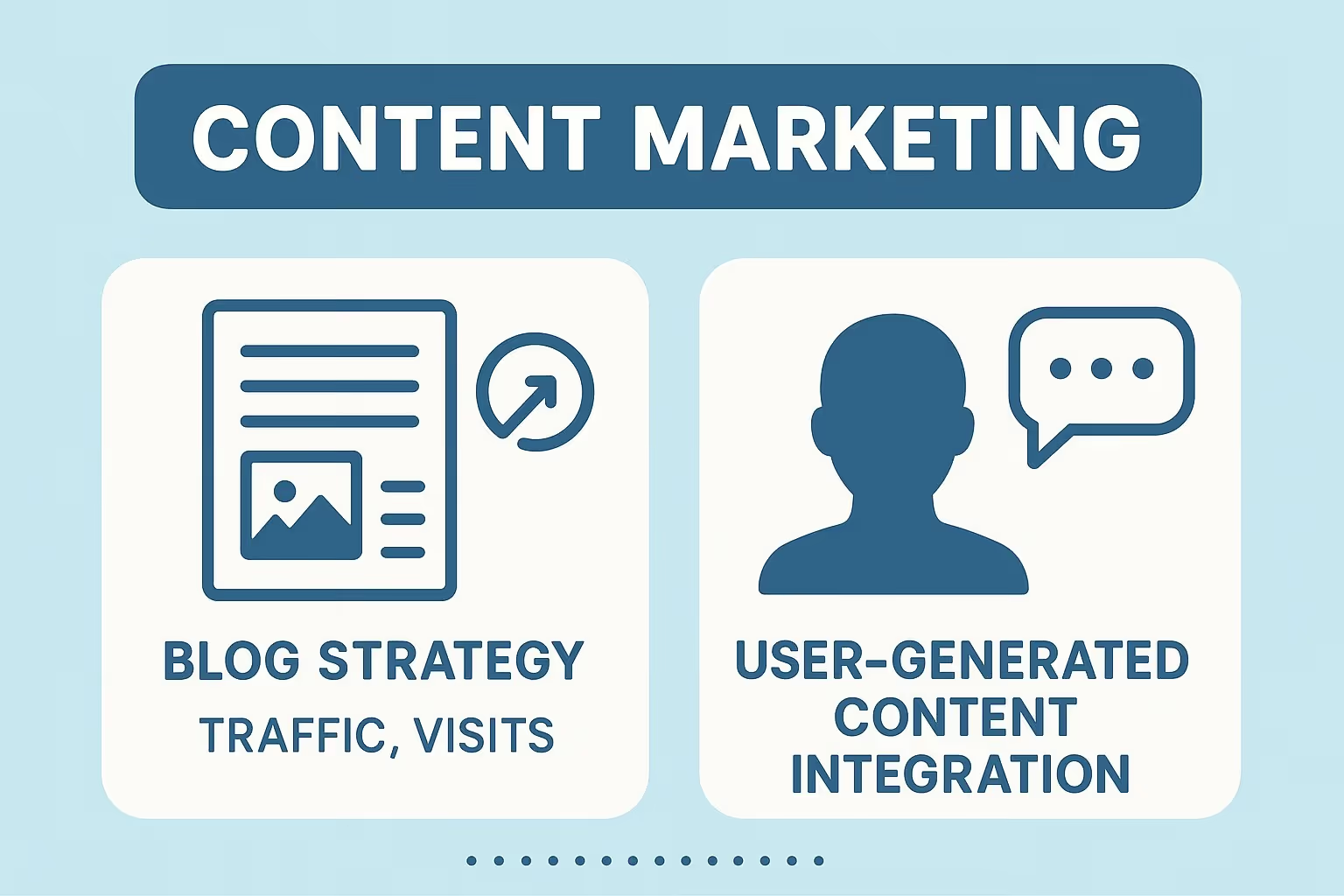
Content for retail brands must serve dual purposes: attract organic search traffic and influence in-store purchases.
Educational content performs best when it addresses real customer questions. How-to guides, product comparison posts, styling advice, and seasonal trend reports all work when optimized for mid-funnel keywords.
The most effective posts include clear calls-to-action that bridge online and offline. A guide to choosing running shoes should mention which models are in stock at local stores and offer a store locator link.
Customer photos and videos provide social proof that works across channels. The best submissions appear on product pages, in email campaigns, on social media, and on in-store digital displays.
Many retailers create branded hashtags and feature top posts regularly. This creates a content flywheel where customers generate marketing assets continuously.
Social platforms have become primary product discovery channels, especially for younger demographics.
Properly configured product catalogs enable direct tagging and, where available by region, in-app checkout within the apps. Retailers who keep feeds updated with current pricing and availability see significantly higher conversion rates from social traffic.
Stories and Reels showing products in real store settings perform particularly well. The familiarity of seeing items in a physical space reduces purchase hesitation.
Short-form video excels at showing product use cases and behind-the-scenes store content. Videos featuring staff demonstrations or customer reactions in-store often achieve viral reach.
The platform favors authentic content over polished production. Simple videos shot in the actual retail environment frequently outperform expensive studio shoots.
Home goods, fashion, and decor retailers benefit from rich pins that pull real-time pricing and stock status. Boards organized by room, style, or season drive ongoing traffic as users plan purchases over weeks or months.
Unified customer data enables segmentation and personalization impossible with separate systems.
Key sequences include:
Customers who frequently buy in-store but never online receive different messaging than pure ecommerce shoppers. Someone who browses extensively online but completes purchases in person gets targeted promotions that acknowledge this pattern.
SMS works best for urgent messages: order ready for pickup notifications, same-day flash sales starting in-store, or last-chance reminders for limited promotions.
Paid channels must account for both online and offline outcomes.
Standard Shopping campaigns drive ecommerce sales, while local inventory ads show nearby store availability to mobile searchers. Many retailers run both simultaneously with different bids based on margin and inventory goals.
Location extensions and store visit tracking provide data on physical traffic generated. This closed-loop reporting justifies budget allocation.
Dynamic product ads become more effective when they reflect items viewed both online and scanned in-store (where privacy rules permit). Messaging can highlight “available now at your local store” for high-intent audiences.
Geotargeted campaigns around store locations work well for events, new arrivals, or clearance promotions. Radius targeting with clear in-store calls-to-action delivers measurable foot traffic.
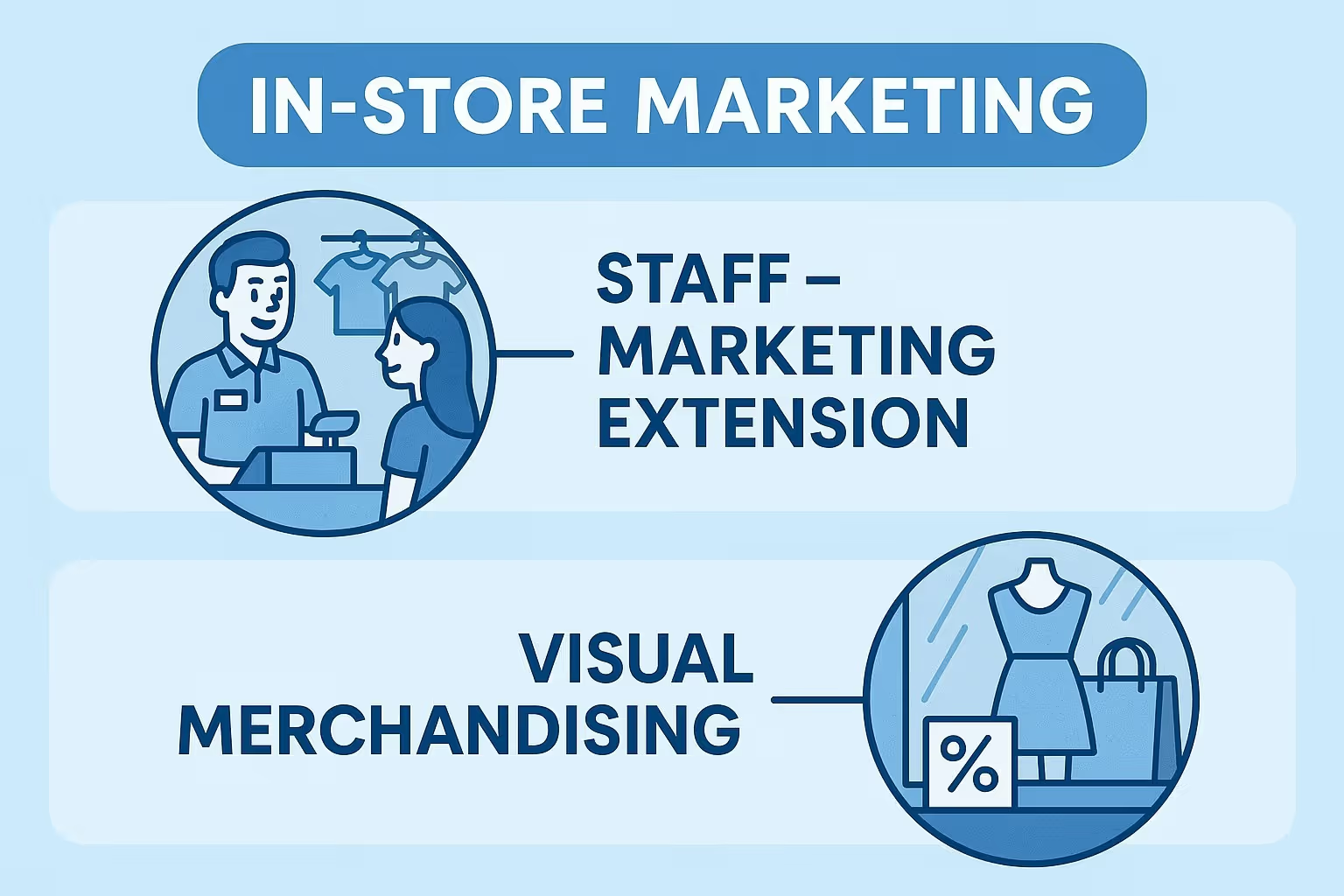
Physical locations offer unique marketing opportunities that should feed digital channels.
Trained employees collect email addresses at checkout, promote online exclusives, and encourage social media follows. Simple scripts and incentives make this consistent across locations.
QR codes on receipts linking to review requests or loyalty program sign-ups extend digital relationships started in person.
Window displays and endcap promotions photographed professionally become social media and email content. The best retailers plan in-store visuals with digital repurposing in mind from the start.
The most successful Shopify retailers treat online and offline as two sides of the same customer journey. Tactics only deliver real impact when inventory, pricing, promotions, and customer recognition stay identical no matter where the sale happens. These three areas separate the brands that just have both channels from the ones that actually profit from true omnichannel execution.
Buy online, pickup in-store has become standard expectation. Clear communication about pickup windows, dedicated parking spots, and smooth POS integration determine success or frustration.
Showing per-location stock levels on product pages prevents lost sales and encourages store visits when items are unavailable for delivery. This single feature often drives significant revenue increases.
Points earned online spendable in-store create actual incentive to engage both channels. Tier benefits including early access to new products or exclusive in-store events strengthen the connection further.
Shopify’s built-in reporting combines online and offline data into unified views.
Key metrics for omnichannel retail marketing include:
Regular profit analysis matters as much as revenue tracking. Some channels generate high sales volume but destroy margins after fulfillment costs, returns, and discounts.
A/B testing applies to email subject lines, ad creative, in-store signage, and promotional offers. Continuous small improvements compound into significant gains over time.
Shopify retail marketing only works when online and offline channels stop competing and start reinforcing each other. The strategies that deliver real growth are rarely complicated: accurate product data everywhere, real-time inventory visibility, unified customer recognition, and consistent messaging across every touchpoint. Retailers who treat their website, social channels, email lists, and physical stores as parts of one system consistently outperform those still running separate playbooks. Start with the pieces that remove the most friction for your customers-whether that is click-and-collect, proper local SEO, or cross-channel loyalty-and build from there. The platform already connects the data; the winning brands are simply the ones that use it.
Local SEO directly impacts both online visibility and physical foot traffic. Properly optimized Google Business Profiles and location pages routinely appear for “near me” searches.
Results vary by category. Fashion and beauty brands typically see strongest performance from Instagram and TikTok, while home goods retailers often find Pinterest more effective.
Yes. Properly configured flows based on combined online and offline behavior consistently generate the highest ROI of any marketing channel for retail brands.
Many retailers run both simultaneously. Local inventory ads and location extensions allow campaigns to drive the most profitable outcome based on current stock levels.
Most retailers see immediate revenue increases from customers who would have abandoned without the pickup option, plus incremental in-store upsells during collection.
Track combined metrics: total revenue across channels, customer lifetime value by cohort, repeat purchase rate, and changes in average order value over time.
Shopify’s unified system levels the playing field. Small retailers often execute omnichannel marketing better than large chains because decisions move faster and customer relationships remain more personal.


