Will AI Replace Real Estate Agents? 2026 Reality Check
AI is transforming real estate, but can it replace agents? Discover what tasks AI can automate, where human expertise still wins, and how top agents use both.
Apr 16, 2026



Meta ads are no longer about squeezing a few tweaks out of Ads Manager and calling it optimization. In 2026, the platform runs on automation, modeled data, and incomplete signals, which means the old playbooks break faster than ever. What still works is thinking in systems. How your account is structured. How signals flow. How creatives are tested and retired. And how decisions are made before spend goes out the door. This article looks at Meta ads optimization strategies through that lens. Not shortcuts, not hacks, just the parts that still move results when the algorithm changes and the data gets messy.
At Extuitive, we believe Meta ads optimization should start before ads go live. Too much budget is still wasted on creatives that never had a real chance to perform.
Traditional optimization relies on trial and error. Ads launch, spend accumulates, signals trickle in, and teams react after the fact. With higher CPMs and weaker attribution, that loop is slow and expensive. We built Extuitive to replace it with prediction.
Our prediction engine evaluates creatives before launch using brand-specific performance patterns and consumer intelligence. Because performance is contextual, the same ad can succeed for one brand and fail for another.
Predictive ad performance changes how optimization works:
When optimization starts with prediction, every downstream decision becomes easier. Bidding settles faster, automation has clearer signals, and scale becomes more predictable. That is why we see predictive ad performance as a core Meta ads optimization strategy, not an add-on.
A single Meta campaign rarely tells the full story. Performance emerges from how campaigns interact, how signals are shared, and how decisions compound over time.
Strong accounts behave like systems:
When something breaks, the system shows you where. When something works, the system makes it repeatable. This shift in thinking is the biggest difference between accounts that scale cleanly and those that spike and crash.
Account structure determines how fast Meta learns and how clean your data stays. Over-segmentation slows learning and fragments signals. Over-consolidation hides inefficiencies.
A useful rule of thumb is simple: consolidate by intent, segment by constraint.
If campaigns serve the same funnel stage and objective, they usually belong together. If they compete for budget or require different efficiency thresholds, they should be separated.
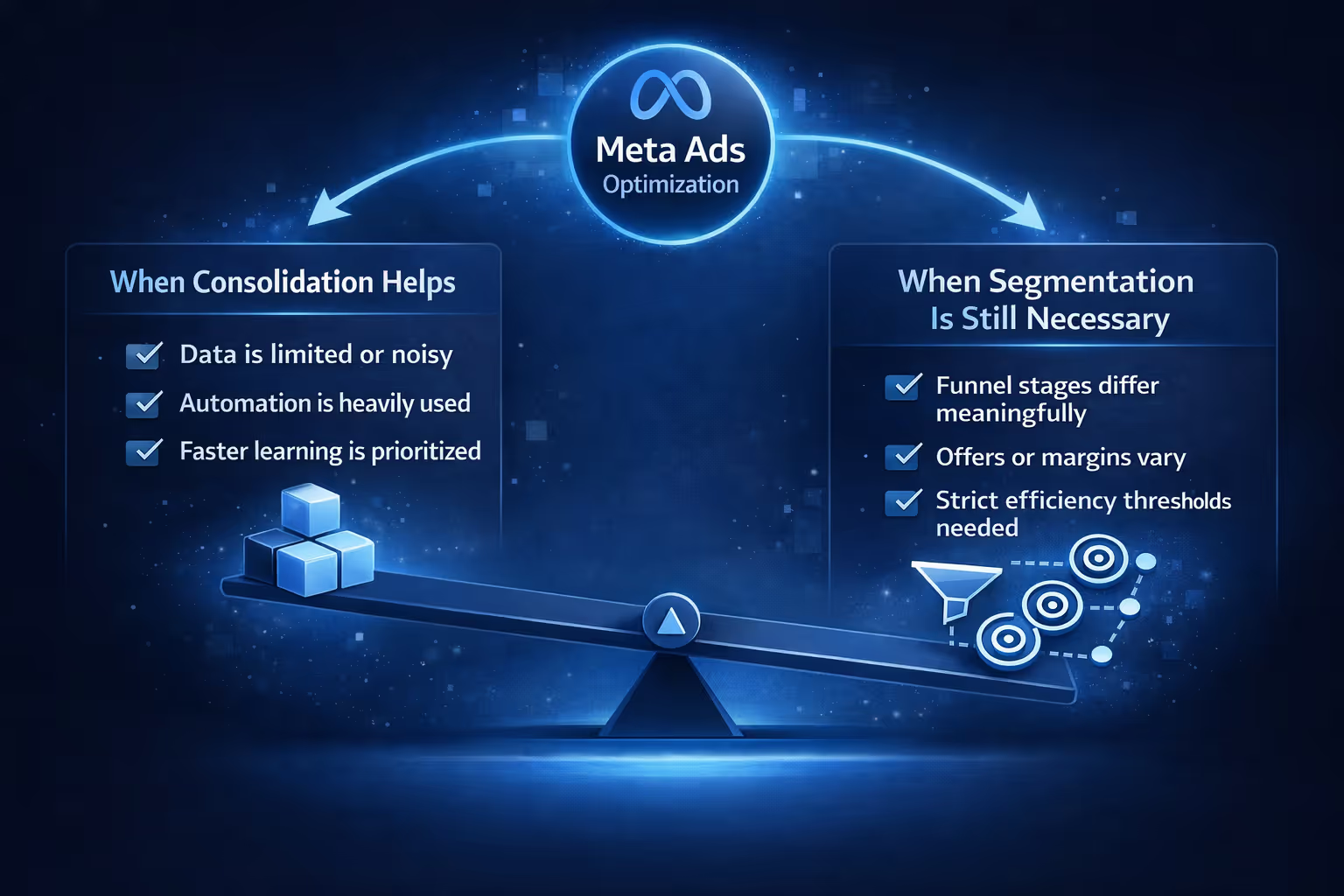
Consolidated structures work best when data is limited or noisy, when automation like Advantage+ is heavily used, and when faster learning matters more than granular control.
Segmentation still makes sense when funnel stages differ meaningfully, when offers or margins vary, or when strict efficiency thresholds must be protected.
Optimization here is about reducing noise, not creating perfect organization.
Meta can only optimize what it can see. When signals weaken, automation turns into guesswork. That is why signal quality sits underneath every serious Meta ads optimization strategy.
Client-side pixels alone are no longer enough. Even the traditional Pixel plus CAPI setup has limits as browsers restrict data, attribution windows shrink, and modeled conversions increase. Stable performance now depends on moving beyond hybrid tracking toward a more resilient signal foundation.
High-performing teams are migrating to a unified signal architecture. Instead of relying on browser-based pixels as the primary source of truth, signals are sent directly from server to server with stronger identity resolution and encryption.
This approach reduces data loss, improves consistency, and gives Meta clearer feedback across the full conversion lifecycle.
Better signals do more than improve delivery. They reduce volatility as budgets grow. When Meta receives clean, consistent feedback, automation becomes more predictable, bidding stabilizes faster, and performance holds under pressure.
Signal quality is not a technical detail. It is a scaling lever.
Creative still drives performance more than bidding, audiences, or placements. What has changed is the pace. Fatigue arrives faster and looks subtler than it used to.
Creative rarely fails all at once. It decays over time. CTR slips, CPM rises, and conversion rates soften. Waiting for obvious failure usually means reacting too late. Effective Meta ads optimization treats creative as a lifecycle, not a single upload.
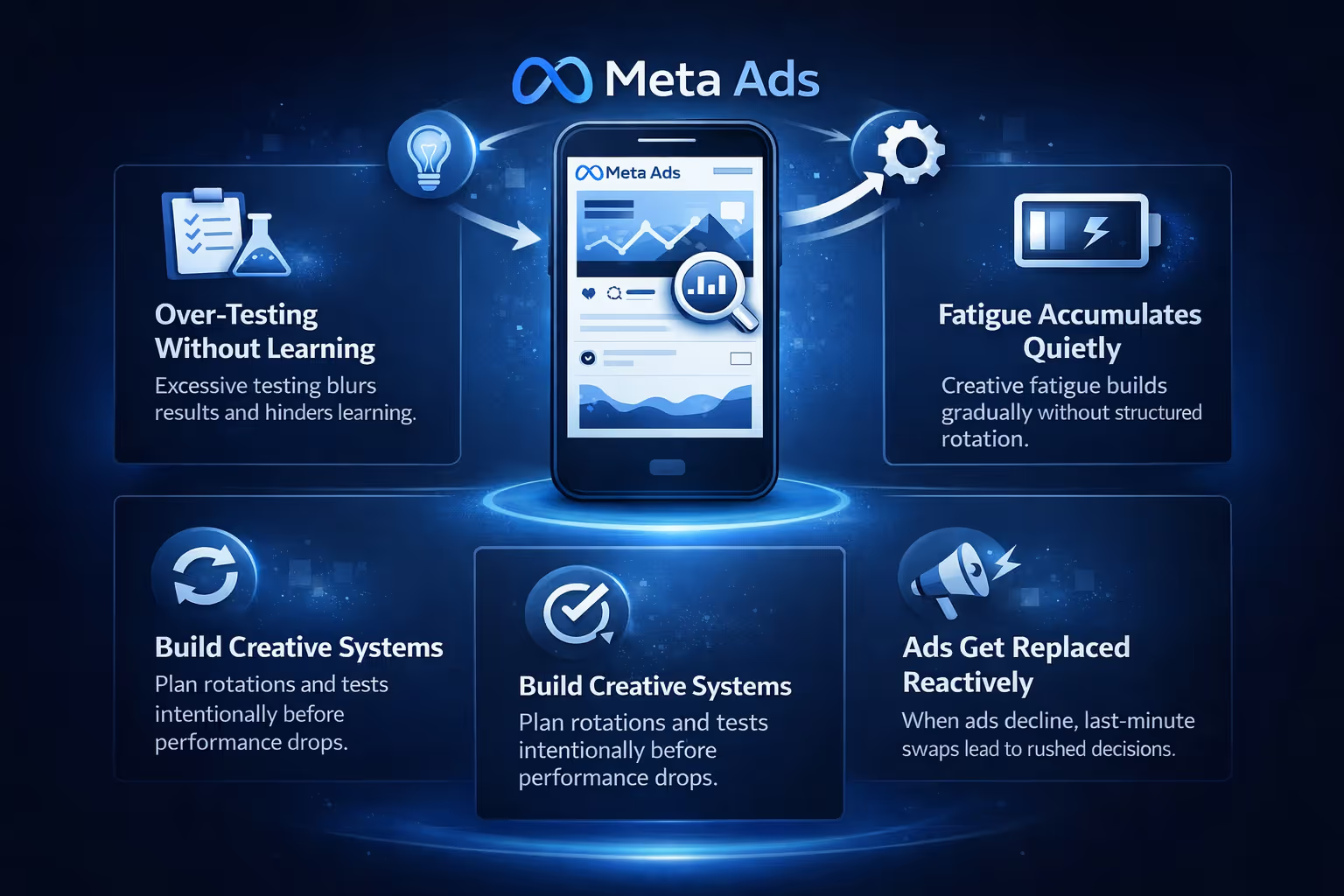
When teams test too many variations at once, results blur together. Performance shifts, but the reason behind them stays unclear. Volume replaces insight, and learning stalls.
Without structured rotation and monitoring, creative fatigue builds in the background. CTR slips gradually, CPM rises, and performance erodes before anyone flags a problem.
When declines finally become obvious, creatives are swapped in a rush. Decisions are made under pressure, not strategy, and the cycle repeats.
A creative system prevents these patterns before they show up in performance by making testing, rotation, and replacement intentional rather than reactive.
High-performing teams test one hypothesis at a time. Variations are grouped by intent, not aesthetics, and the number of active variants is intentionally limited.
A stable control creative stays live to anchor results. Testing everything at once creates noise. Testing intentionally creates insight.
Creative performance follows predictable decay patterns by format and audience. Static ads often fatigue faster than video. Prospecting fatigues differently than retargeting.
By tracking decay curves, teams can plan rotations instead of reacting to drops. Once typical lifespans are clear, creative swaps happen before performance declines show up in reports.
This single shift prevents many avoidable drops in CTR and ROAS.
Meta’s automation works best when goals are clear and inputs are clean. It struggles when left unchecked. As automation takes on more execution, optimization becomes less about constant manual tweaks and more about setting the right boundaries.
Advantage+ campaigns, dynamic creative, and automated placements are powerful tools, but they are not strategies on their own. Left alone, automation will optimize for what is easiest to achieve, not always for what matters most to the business.
Strong accounts use automation for execution and humans for direction. That balance is what keeps performance stable as spend grows.
Automation excels at:
When inputs are strong, automation reduces manual workload and speeds up learning. Optimization is not about choosing manual or automated approaches. It is about layering them. Let automation manage execution, but step in when context matters, signals shift, or priorities change. When automation operates inside clear limits, it becomes an advantage rather than a risk.
Scaling is rarely blocked by ideas. It is blocked by economics. If cost control collapses at higher spend, growth stops.
Spend-based bidding works best when volume matters more than efficiency and margins allow flexibility. Goal-based bidding suits accounts that need predictable CPA or ROAS and can send strong server-side signals. Manual bidding still matters during volatility, testing windows, or strict pacing periods.
The mistake is treating bidding strategy as permanent. The right approach changes as the account evolves.
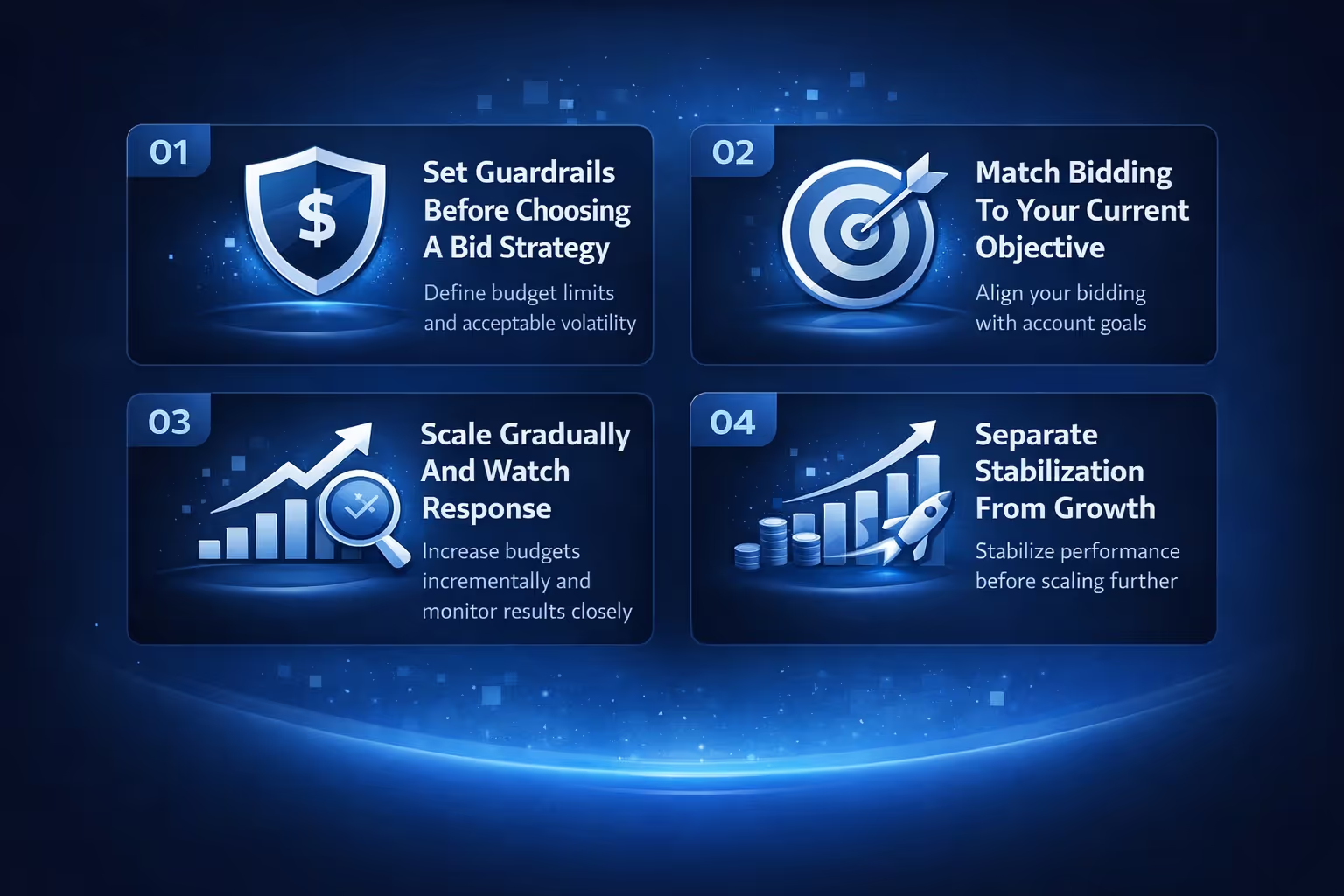
Start with business limits, not platform settings. Define what efficiency you cannot afford to lose and how much budget volatility is acceptable. Without guardrails, Meta will push spend toward volume until performance breaks.
Choose bidding based on what the account needs right now. Use spend-based approaches to learn or expand reach. Shift to goal-based bidding once performance stabilizes. Use manual controls when you need precision or protection. Revisit this choice as the account evolves.
Increase budgets incrementally and monitor how volume and costs move together. If spend rises but conversions flatten or efficiency degrades quickly, the constraint is usually creative or structure, not bidding.
Stabilize performance at a given spend level before scaling further. Trying to optimize and scale at the same time creates noisy signals and unpredictable results.
Predictable growth comes from sequencing decisions, not chasing hero ROAS at every stage.
Ads Manager is built for delivery, not diagnosis. It prioritizes pacing, optimization, and modeled outcomes, which makes it useful for execution but risky for decision-making. Modeled data, delayed attribution, and smoothing can hide early warning signs or exaggerate short-term swings.
Stable optimization depends on external reference points. Trend dashboards help separate noise from real movement. Cross-channel comparisons add context when Meta performance shifts but demand has not. Lag-aware reporting prevents teams from reacting to data that has not fully settled yet. Rule-based alerts surface issues the moment they start, not days later.
When performance drops, the most important question is not what to change, but what changed first. CTR, CPM, conversion rate, and volume each tell a different part of the story. A CTR drop points to creative or message fatigue. Rising CPM often signals auction pressure or weakening signals. Conversion rate changes hint at landing pages, offers, or intent mismatch. Volume trends show whether the system is still finding opportunities at scale.
Reading these signals together prevents overreaction. Instead of chasing every dip, teams can isolate the real cause and respond with intent rather than urgency. That discipline is what keeps optimization stable as spend grows.
In-platform ROAS is no longer a reliable measure of true impact, especially for brands with longer buying cycles or omnichannel revenue.
Incrementality testing is not about proving Meta works. It is about understanding where and how it works for your business.
Lower-funnel campaigns often capture demand rather than create it. Mid- and upper-funnel activity drives delayed impact. Automation tends to favor short-term wins unless guided otherwise. Platforms like Haus exist to answer these questions when Ads Manager cannot.
Accounts focused only on bottom-funnel performance tend to stall. Costs rise, returns compress, and automation keeps chasing the same high-intent users until efficiency collapses. What looks like optimization in the short term often limits growth in the long term.
Healthy scaling accounts balance the entire funnel. Each stage plays a different role, and removing one weakens the system as a whole.
A full-funnel approach typically looks like this:
Upper-funnel campaigns rarely look strong in isolation. Their value appears later, across channels, and in repeat behavior. Ignoring that effect leads to short-term efficiency gains followed by long-term decline.
Protecting scale means resisting the urge to optimize only what is easiest to measure and instead supporting the full system that makes growth possible.
Scaling too fast breaks learning. Scaling too slowly wastes opportunity. The challenge is not choosing one or the other, but knowing when the system is ready for more spend.
Confidence alone is a poor signal. A few strong days or a single winning creative do not mean an account can absorb higher budgets without consequences. Budget growth should follow evidence that performance is stable, not just that it looks good right now.
A disciplined approach keeps scale under control. Budgets are increased incrementally so the system has time to adapt. Volume response is monitored alongside efficiency to understand elasticity, not just headline ROAS. When marginal returns flatten or volatility increases, growth pauses. Structural issues like creative saturation or audience constraints are addressed before pushing more spend.
Stable performance is what gives you permission to scale. When costs hold, volume responds, and signals remain clean, growth becomes repeatable. Without that foundation, scaling turns into gambling, where short-term wins mask long-term damage.
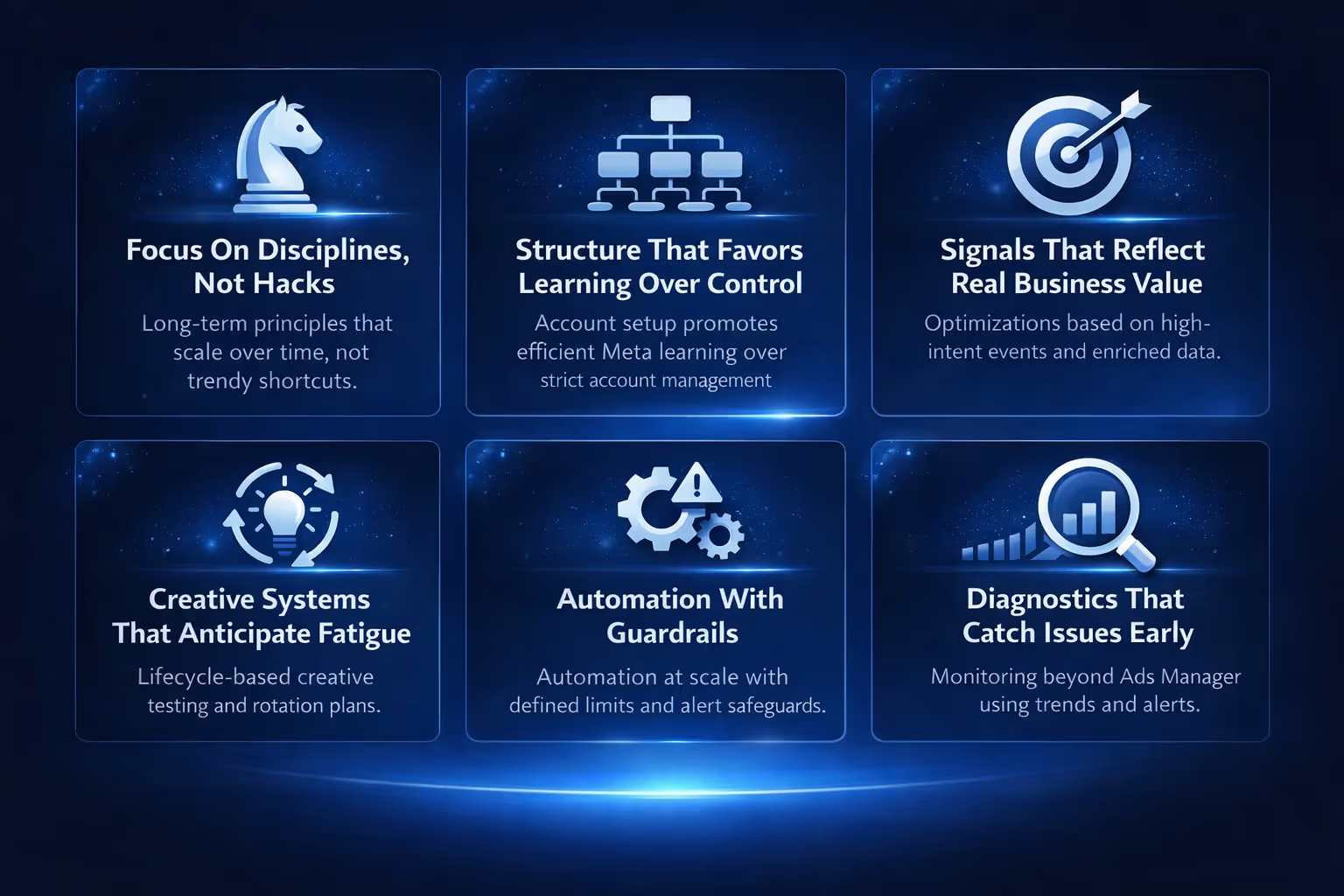
Across accounts that scale cleanly, the same principles keep showing up. Not because they are trendy, but because they hold up when spend increases and conditions change.
These are not hacks. They are disciplines that make Meta ads scalable and sustainable.
Meta ads have not become impossible. They have become less forgiving. Accounts that rely on instinct, quick fixes, or recycled playbooks struggle. Accounts built as systems adapt.
Optimization today is quieter. Fewer dramatic changes. More small, intentional decisions. Less reacting, more steering.
If you aim for stable performance first, scale becomes a byproduct rather than a risk.
That difference lasts.


