Best AI Model for OpenClaw 2026: Claude vs GPT Compared
Claude Opus 4.6 leads OpenClaw benchmarks, but Sonnet 4.5 costs 80% less. Compare Claude, GPT-4o, DeepSeek, and local models with real pricing and benchmarks.
Mar 20, 2026



If you search for how many apps are in the Shopify App Store in 2026, you’ll notice something right away: the number isn’t always the same. Some sources say just under 12,000. Others list more than 13,000. Both can be true, depending on when the data was captured and how the count is measured.
The Shopify App Store isn’t a static catalog. Apps are added, removed, paused, and reinstated all the time as Shopify updates its quality standards and developers ship new tools. In this article, we’ll pin down the most reliable 2026 figures, explain why the totals shift, and clarify what those numbers actually mean if you’re building, selling, or choosing apps today.
As of January 2026, the Shopify App Store hosts over 16,200 active apps, showing a 45% increase compared to early 2026.
Here is why the range matters.
Some sources track every publicly listed app visible in the store on a specific date. Others include apps that are temporarily unpublished, under review, or recently approved but not yet promoted. A smaller number still count private or custom apps created for individual merchants, even though those are not discoverable through the App Store itself.
When you filter strictly for public, installable apps available to merchants, the most consistent figure for 2026 lands just under 12,000.
That number has fluctuated throughout the year. In some months, the total climbs above 12,200 as new apps launch in clusters. In other periods, it dips closer to 11,900 when Shopify removes underperforming or non-compliant listings.
The important takeaway is not the exact digit. It is the direction and behavior of the ecosystem.
The current app count did not happen overnight. In 2021, the Shopify App Store listed roughly 5,600 apps. By early 2023, that number had crossed 10,500, driven by a wave of merchants moving online, agencies building Shopify-focused tools, and the platform expanding its global reach.
The sharpest increase came between 2022 and 2023, when app submissions surged by more than 50 percent year over year. That spike reflected a broader shift in ecommerce. More businesses were experimenting with online sales, demand for automation grew quickly, and tools for marketing, fulfillment, and analytics became essential rather than optional.
In 2024, something changed. For the first time in years, the total number of apps declined. This was not a slowdown in interest or innovation. It was the result of stricter quality enforcement. Shopify began removing apps that failed to meet updated standards for performance, security, support responsiveness, and merchant transparency. Thousands of low-quality or abandoned listings were taken out of the store.
By late 2024 and into 2026, growth resumed, but at a steadier and healthier pace. The App Store continued to expand, just with more emphasis on long-term value than raw volume.

With nearly 12,000 apps in the Shopify App Store, most store-level problems already have a solution. Merchants use apps to build pages, manage inventory, collect reviews, automate emails, and improve checkout. In other words, apps help make the store work.
What they don’t solve is what happens next.
Once the stack is in place, growth decisions move outside the store. Teams still have to decide which ads to launch, which creatives to trust, and which audiences are worth budget. That part is usually handled through testing, intuition, or expensive trial and error.
That’s where Extuitive comes in.
We focus on predicting real-world ad performance before launch. Our AI models are trained and validated against live campaign results, allowing Shopify brands to see which creatives are likely to win before money is spent. Instead of testing dozens of variations in-market and cutting losers later, teams can narrow their choices upfront and move faster with more confidence.
Our system works at scale, analyzing large volumes of creatives and benchmarking forecasts against your historical performance. Combined with intelligent audience targeting, this helps improve CTR and ROAS while keeping ad decisions grounded in data rather than guesswork.
Apps help run the store. Extuitive helps decide where growth dollars should go.
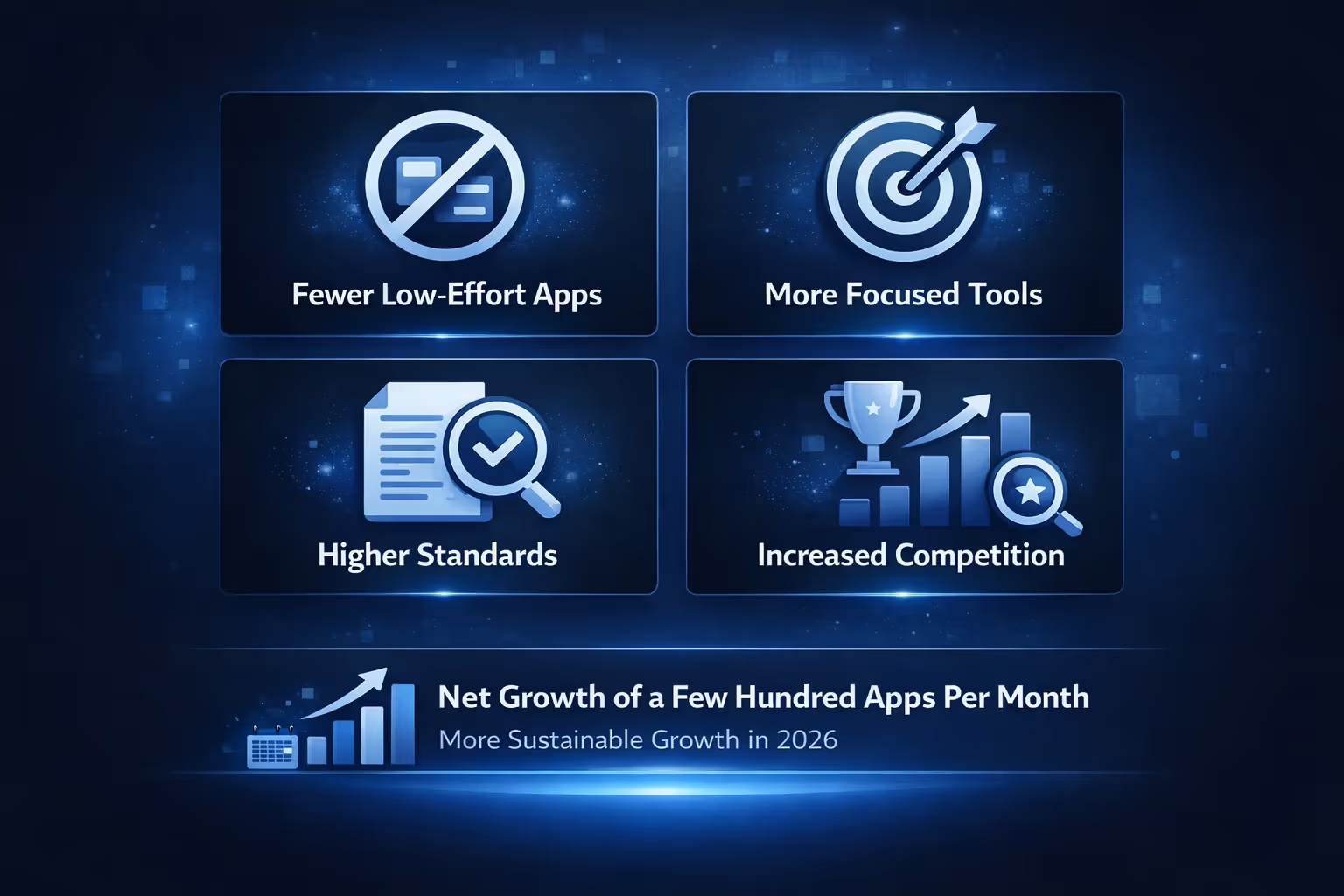
In 2026, the Shopify App Store is growing more slowly than during the earlier surge years, but it is also growing more sustainably.
Instead of explosive increases in raw app count, the platform is seeing:
Monthly net growth in 2026 averages a few hundred apps, not thousands. This reflects a more mature ecosystem where quality and differentiation matter more than volume.
For merchants, this is a positive shift. A smaller percentage of apps now feel abandoned or incomplete. For developers, it raises the bar, but it also rewards clarity and usefulness.
In raw terms, thousands of apps are submitted to the Shopify App Store each year. However, not all of them remain listed.
In 2026 alone:
The net result is a modest increase in total app count, even though developer activity remains high.
This explains why the total number does not skyrocket despite strong interest in Shopify development. The store is no longer optimized for sheer volume. It is optimized for merchant trust.
The size of the App Store often leads to another question: how many apps does the average merchant actually use?
In 2026, most Shopify merchants run around 6 apps on their store. This number has remained surprisingly stable over the past few years.
Some stores use only one or two apps for basic needs like reviews or email capture. Others rely on ten or more to manage advanced workflows. A small percentage of large or complex stores run dozens of apps.
The key point is that the vast majority of apps in the store are not competing for every merchant. They serve specific niches, workflows, or stages of business growth.
Not all apps are created for the same purpose, and the distribution across categories is uneven.
In 2026, the most crowded categories include:
These categories attract the most developers because they target universal merchant needs. They also tend to be the most competitive, with many apps offering overlapping features.
Other categories, such as fulfillment, inventory management, or internationalization, have fewer apps but often higher complexity.
Understanding this distribution helps explain why the App Store feels overwhelming at first glance. The sheer number comes largely from a handful of high-demand areas.
Out of the over 16,000 apps available, Shopify has developed 39 native apps to provide core dashboard functionality.
Most apps are built by independent developers, agencies, or SaaS companies that specialize in ecommerce tooling. Shopify’s own apps focus on core platform extensions, integrations, and infrastructure.
Interestingly, Shopify-developed apps often receive more scrutiny from users. Expectations are higher, and reviews tend to be more critical. This has led to some official apps having lower average ratings than popular third-party alternatives.
From a numbers perspective, however, Shopify’s own apps account for only a tiny percentage of the total store.
Another reason the app count keeps changing is pricing strategy. In 2026, nearly half of all Shopify apps offer some form of free plan or free trial, which has become an important factor in whether an app gains traction. Many paid apps also rely on usage-based tiers, allowing merchants to start small and scale costs as their store grows.
At the higher end of the market, some apps are priced in the hundreds of dollars per month, usually targeting larger or more complex stores. These tools tend to serve narrower use cases and attract fewer installs, even if they deliver strong value.
When an app removes its free option or raises prices sharply, adoption often drops. Developers respond in different ways. Some pull the app from the public store, rework the pricing model, and relaunch later. Others shift toward private listings or enterprise-only distribution. All of these changes affect the public app count, even when the software itself continues to exist and be used.
Despite the large number of apps, most developers publish only one.
In 2026, roughly:
This concentration matters. It means the App Store is driven by many small teams solving specific problems, not by a few companies flooding the market.
It also explains why app quality varies. Some tools are built by seasoned teams with years of experience. Others are passion projects maintained by one or two people.
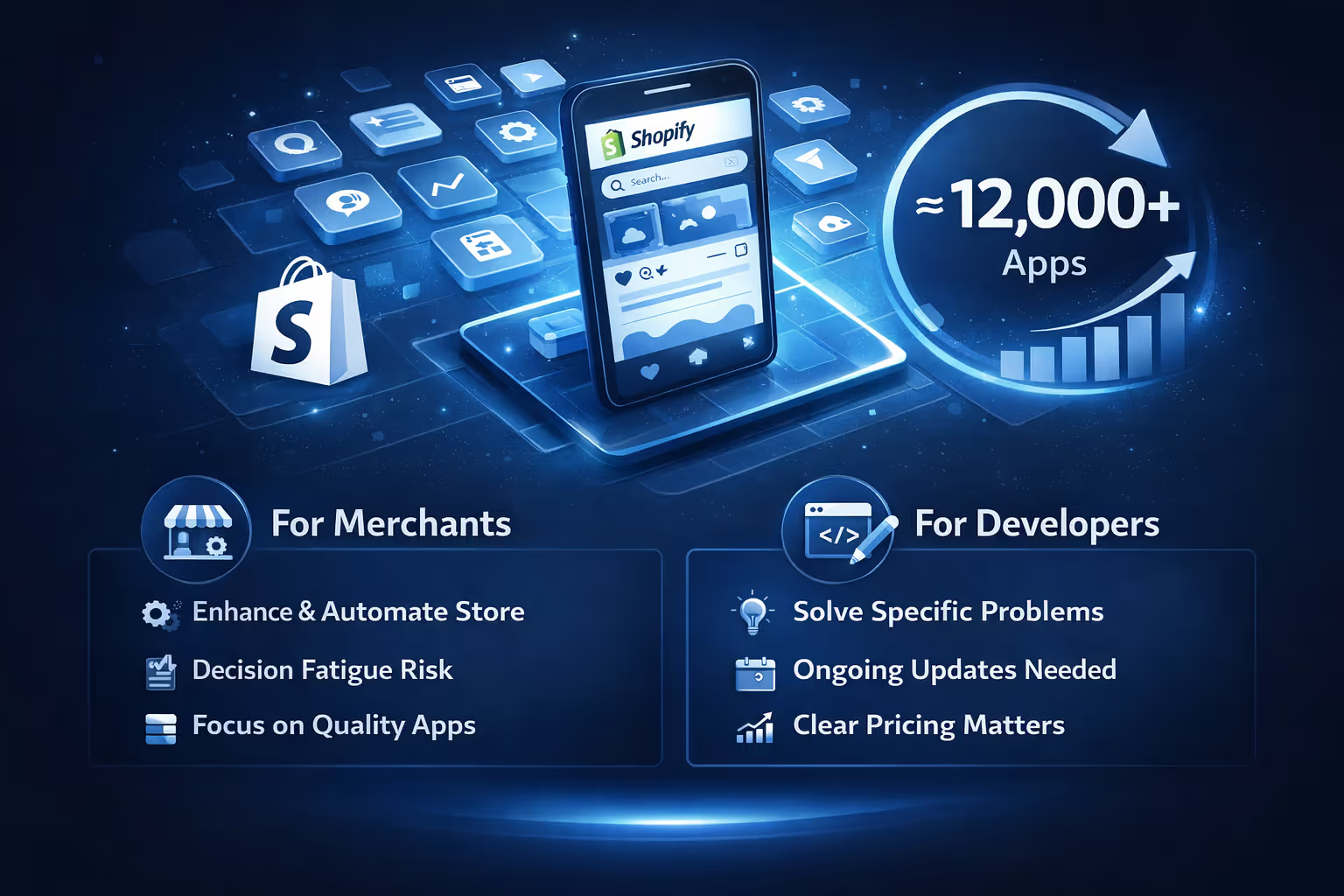
For merchants, the headline number matters less than what it represents. A store with close to 12,000 apps signals flexibility. It means that almost any workflow can be customized, automated, or extended without rebuilding the store from scratch. At the same time, that level of choice can be overwhelming.
With so many options available, decision fatigue is real. Many apps solve similar problems in slightly different ways, and it is easy to install more tools than a store actually needs. In practice, merchants tend to see the best results when they focus on apps with clear, well-defined use cases, avoid stacking tools that overlap in functionality, and pay attention to support quality rather than feature lists alone. Apps work best when they are treated as infrastructure that supports the business, not shortcuts that promise instant results.
The size of the App Store creates opportunity, but it does not guarantee outcomes. The value comes from choosing carefully, not from having access to everything.
For developers, the same number tells a very different story. The opportunity to build for Shopify is still there, but it looks nothing like it did a few years ago. With thousands of apps already listed, releasing something generic is unlikely to gain traction on its own.
In 2026, successful apps tend to solve a specific problem well and communicate that focus clearly. Positioning matters more than ever, as does ongoing support and regular updates. Merchants expect apps to evolve alongside the platform, not remain static after launch. Pricing also plays a role. Clear, honest pricing and transparent communication help build trust in a crowded marketplace.
The barrier to entry is higher than it used to be, but so is the potential reward. Developers who earn merchant trust can build sustainable products in an ecosystem that continues to grow, even as it becomes more selective.
If you revisit this question next year, the number will be different again.
That is not a flaw. It is a sign of a healthy ecosystem.
As long as Shopify continues to enforce quality standards, encourage innovation, and adapt to merchant needs, the App Store will keep evolving. Apps will come and go. Categories will shift. New patterns will emerge.
The important thing is not memorizing a single number. It is understanding what that number reflects.
So, how many apps are in the Shopify App Store in 2026?
The most accurate answer is around twelve thousand active, public apps, with the exact figure changing as the ecosystem evolves.
More importantly, that number represents a mature platform where tools are constantly tested by real merchants, filtered by real standards, and shaped by real demand.
Whether you are building a store, developing an app, or simply researching the platform, the size of the App Store is best seen as context, not a scoreboard. What matters is how well the right apps fit the work you are trying to do.


