Marketing Ideas for Fitness Clubs That Drive Growth in 2026
Discover proven marketing ideas for fitness clubs in 2026. Attract members, boost retention, and grow your business with these actionable strategies.
Jun 6, 2026



If you have ever managed inventory, orders, and finances inside Shopify, you have probably wondered whether it already counts as an ERP. The dashboards feel powerful. The reports look serious. And with apps layered on top, it can seem like Shopify does a bit of everything.
But ERP systems are a different category altogether. In this article, we break down what an ERP actually is, where Shopify fits in, and why the difference matters once your business starts to scale. No buzzwords, no tech hype, just a clear explanation you can actually use.
The short answer is no. Shopify is not an ERP. It’s a powerful ecommerce platform, but its core job is to help you sell online and manage your storefront. It handles the customer-facing side of your business really well: product listings, shopping carts, checkout, payments, and basic reporting.
Shopify does include some operational features like inventory tracking, order management, and shipping integration. But those features are surface-level compared to what a full ERP can do. Think of Shopify as the storefront and transaction engine. An ERP is the operational backbone.
That said, the two aren’t enemies. In fact, they’re a great match when connected properly.
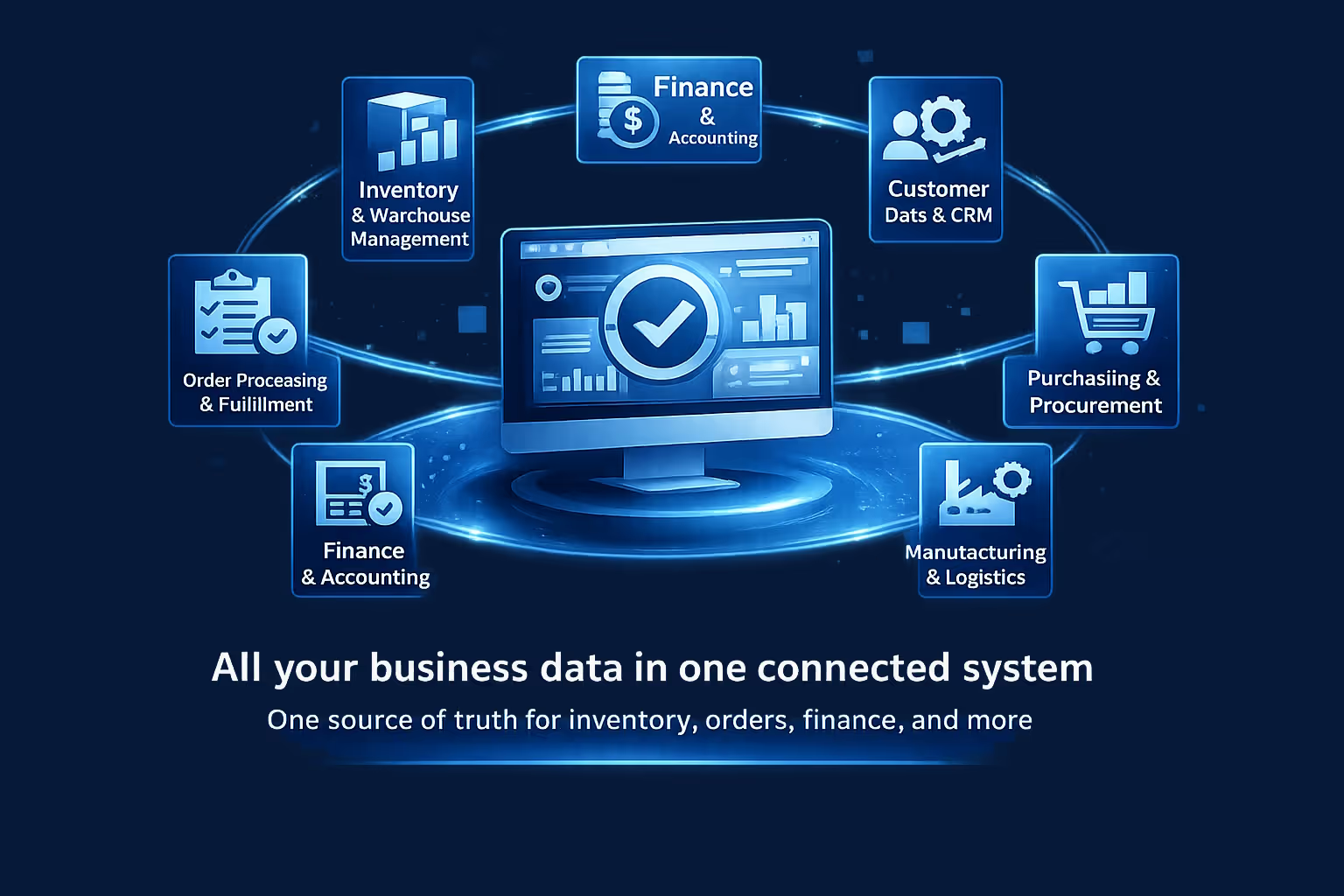
Let’s start with the basics. ERP stands for Enterprise Resource Planning. It’s not one tool, but a suite of connected applications that manage your core business operations in one place. This can include:
The big value of an ERP is that all your data lives in one system. So instead of stitching together tools, spreadsheets, and custom dashboards, an ERP gives you one source of truth. It’s especially helpful when you’re selling across multiple channels or managing a high volume of inventory and transactions.
If you're running a small store with a limited product catalog, Shopify might be all you need for a while. But as you scale up, you start to feel the limits.
Here’s where Shopify stops short:
This is why many mid-sized and growing businesses pair Shopify with an ERP system that covers these gaps.
When you plug in an ERP system to Shopify, something important happens: data starts to flow in both directions.
Let’s say you use an ERP. Once integrated, your product catalog, inventory levels, order data, customer info, and even financials can sync in near real time. That means:
Instead of manually exporting spreadsheets or logging into five dashboards, your ERP becomes the command center.
So why do people often confuse Shopify with an ERP? The main reason is that Shopify offers a lot out of the box. It feels like it could be an ERP because:
But that functionality only goes so far. Shopify was built for ecommerce, not enterprise operations. As your business adds warehouses, product lines, teams, and regions, the gaps become obvious.
Another reason: the Shopify App Store is filled with plug-ins that offer ERP-like features. You can piece together solutions that mimic ERP functionality, but this often results in disconnected systems and duplicated data.

If you’re ready to consider an ERP to support your Shopify store, here are some things to prioritize:
Not every ERP system is built with Shopify in mind. Some require custom work just to get the two talking. While not required, choosing an ERP with a prebuilt Shopify connector or one that is part of Shopify’s ERP Partner Program can significantly simplify the integration process. These integrations are already tested, supported, and designed to work out of the box. That means less time spent troubleshooting and more time running your business without sync errors or delayed updates.
Inventory management is where things can go sideways fast if your systems aren’t connected properly. Ideally, your ERP should support near real-time inventory updates to Shopify, ensuring product availability is reflected accurately across all channels. This keeps your listings accurate across channels and helps avoid frustrating situations like selling an item that’s already out of stock. Real-time syncing also gives your team a better handle on what’s actually available at any moment.
Even if you only sell through Shopify today, that might change tomorrow. Many growing brands also use Amazon, Walmart, Etsy, retail stores, or pop-ups to reach more customers. Your ERP should be able to pull sales and inventory data from all those channels into one unified dashboard. That way, you’re not jumping between tools or losing track of stock just because it sold somewhere else. It keeps things cleaner, faster, and a whole lot easier to scale.
A good ERP system can take a lot of routine work off your plate. It can generate purchase orders as stock runs low, reorder inventory based on how quickly products are selling, send invoices and receipts without manual follow-ups, and keep accounts in sync by handling reconciliation automatically.
Beyond simply tracking SKUs and orders, the real value comes from understanding how everything performs together. That means seeing how quickly inventory moves, which products actually deliver healthy margins, how accurate your fulfillment process is, and how long suppliers take to restock when demand picks up.
Here’s how a Shopify store typically benefits from adding an ERP:

At Extuitive, we work with Shopify brands that need fast, reliable insight into what’s coming next. Our platform helps you predict how your ads will perform before they ever go live, using AI models trained and validated on real campaign data. It’s like having a testing lab for your creative ideas, only at scale, and without the time or spend of trial-and-error campaigns.
For teams already connecting Shopify with ERP systems, this layer of foresight adds something crucial: clarity on what demand might look like before you invest in inventory or budget. When you can forecast which ad creatives are likely to drive clicks, conversions, and revenue, you can better align purchasing decisions, inventory planning, and fulfillment operations. That kind of visibility bridges the gap between marketing and operations, and it’s especially useful when your business is growing fast and every decision matters.
If you're already using Shopify alongside an ERP system to manage the backend, Extuitive can help you get the front-end signals right. We make it easier to prioritize the ads that are likely to perform, avoid waste, and move forward with real confidence.
Not every business needs a full ERP right away. If you're still growing or your operations are relatively simple, Shopify’s built-in tools may be enough for now. You can also extend its functionality with apps.
But as operations become more layered, eventually managing everything through apps starts to break down. That’s when a centralized ERP starts making sense.
Shopify is an excellent ecommerce platform, and it’s become even more capable over the years. But it’s not an ERP, and it doesn’t try to be. If you’re running a fast-growing business and you’re starting to feel the cracks in your current setup, integrating Shopify with a real ERP system could be the next logical step.
Instead of patching together tools and spreadsheets, an ERP lets you run your operations on solid ground. Think of Shopify as your engine for growth, and the ERP as the infrastructure that keeps that engine running smoothly.
The key is to pick the right ERP partner, set clear goals for what you want to automate or unify, and make sure the integration supports your team rather than overcomplicating things.
ERP systems aren’t just for giants anymore. And for serious Shopify stores, they’re often the missing link.


