Shopify Sales Resources: What’s Worth Using and Why
A practical look at Shopify sales resources that support real growth, from partner tools to marketing and learning materials.
Jan 6, 2026



If you’ve ever bought something online, there’s a good chance Shopify was behind the scenes. But is this e-commerce powerhouse actually Canadian? Short answer: yes. But like most big tech stories, there’s more to it than just the headquarters. Shopify didn’t just happen to be founded in Canada – its growth, culture, and place in the global market all tie back to its Canadian roots. Let’s take a closer look at where it started, where it stands now, and why that little detail still matters.
Shopify started in 2006, but its actual roots trace back a bit earlier. It began as a snowboarding shop. That’s right – the founders, led by Tobias Lütke, wanted to sell snowboards online but weren’t satisfied with the e-commerce tools available at the time. So instead of settling, they built their own. The result was something better than they expected. Other people wanted it too, and that’s when the idea for Shopify took off.
The company was founded and remains headquartered in Ottawa, Ontario, which makes it one of the most successful tech companies ever created in Canada. Unlike many startups that move to Silicon Valley once they hit a certain size, Shopify stayed rooted in Canada.
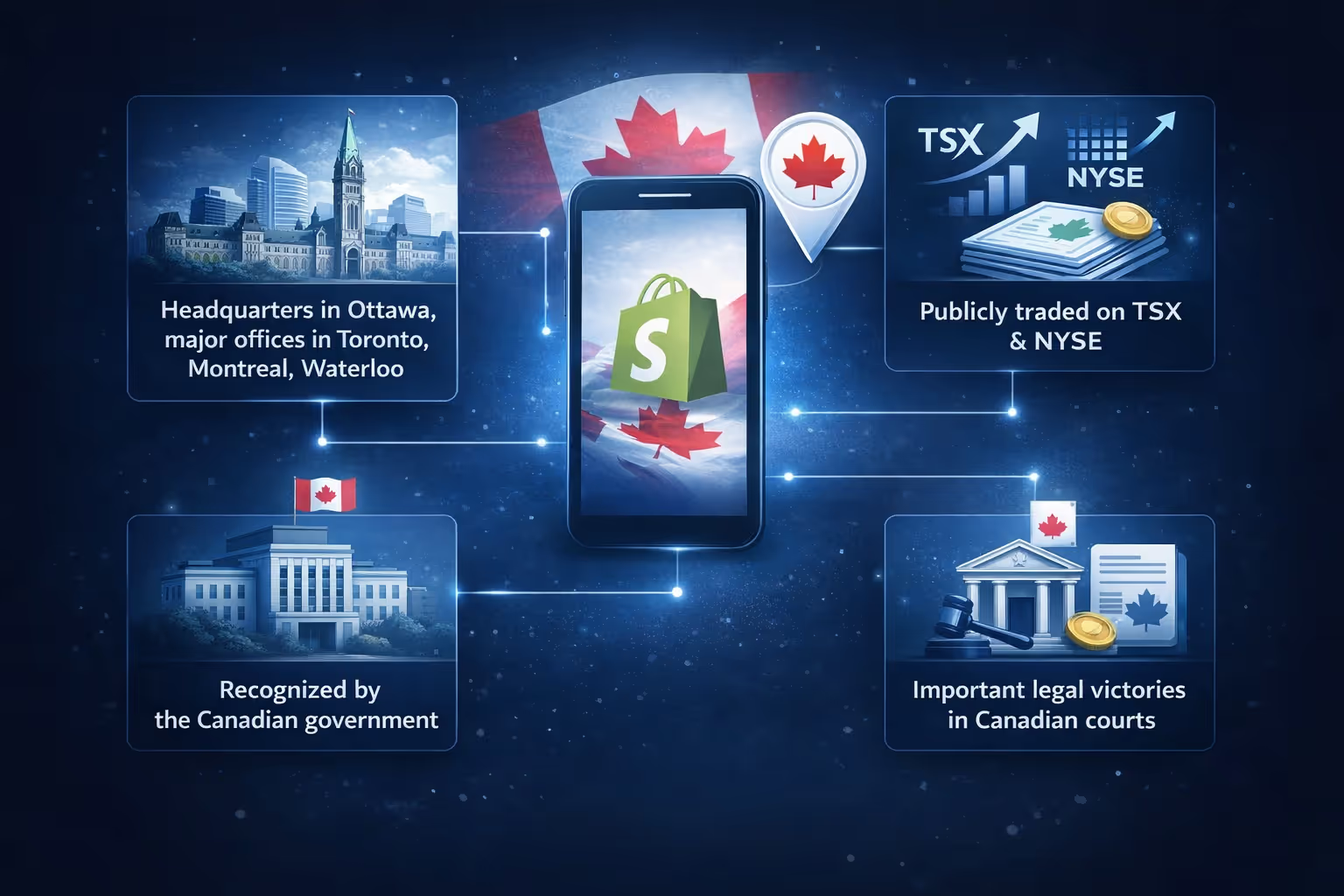
Being Canadian isn’t just a footnote for Shopify. It shows up in how the company operates and positions itself globally. While Shopify has always served merchants across the world, its leadership, product development, and legal framework are still largely tied to Canadian systems.
Some examples of its Canadian ties:
This last point is important. In 2025, Shopify won a key court ruling against the Canada Revenue Agency after the Federal Court found the CRA’s request for merchant data was overly broad and lacked clarity. The court did not oppose data sharing in principle but rejected the request as written.
In mid-2025, Shopify reclaimed its spot as Canada’s most valuable publicly traded company, surpassing the Royal Bank of Canada. Let’s break down the numbers that led to this:
That’s not just growth. That’s dominance.
Even in the face of global economic pressure, shipping challenges, and new tariff rules under the U.S. administration, Shopify continued to grow. In fact, sales in the U.S. actually accelerated during this period, despite fears that consumer spending would shrink.
Not at all. Shopify is a global platform. Most of its merchants are outside Canada, and its biggest revenue source is the United States. However, its foundation, leadership, and legal entity remain Canadian.
Its international reach includes:
So, while the company is Canadian by birth and corporate structure, its operations are global by design.
To better understand how Shopify grew into a Canadian success story, it helps to look at a few key events:
Shopify didn’t follow the traditional tech path of relocating to the Bay Area. Instead, it doubled down on building a strong engineering and business culture in Canada.
While also listed on the NYSE, Shopify's presence on the Toronto Stock Exchange keeps it tied closely to Canadian investors and markets.
In 2025, Shopify successfully challenged the Canadian Revenue Agency’s demand for merchant data. It wasn’t just a legal win. It showed the company’s stance on protecting user privacy and set a precedent for other platforms operating under Canadian law.
Through initiatives like Shopify Capital and mentorship programs, the company actively supports other businesses and startups in Canada.
.avif)
Canada has produced several well-known tech names: BlackBerry, Hootsuite, Lightspeed, and OpenText to name a few. But none have reached Shopify’s scale or sustained momentum.
What sets Shopify apart:
While many Canadian firms focused on B2B services or niche software, Shopify took on global commerce head-on. That ambition, paired with steady leadership and strategic risk-taking, helped it reach a level no other Canadian tech company has touched.
Shopify has managed to hold onto what makes it Canadian while also going head-to-head with U.S. and global competitors. That’s not easy.
Some of the advantages it draws from its Canadian foundation include:
These factors gave Shopify an edge in building something global without losing its footing.

As a company working closely with fast-moving Shopify brands, we’ve seen firsthand how important it is to know what’s going to work before spending a dollar on ads. That’s where we come in. At Extuitive, we help businesses forecast the real-world performance of their creative campaigns before they ever go live. No guesswork. No waiting to see if something flops. Just clear predictions that make planning easier and results more consistent.
Our AI models are trained on actual campaign data, so the forecasts aren’t theoretical. Shopify merchants use our platform to test ads at scale, target smarter, and drive better outcomes without burning through their budget on trial and error. Whether you're launching your first product or scaling globally, understanding how ads will perform before you run them is a game-changer. And for Shopify sellers looking to stay competitive, it's often the difference between steady growth and stalled campaigns.
We’re proud to support brands built on Shopify’s Canadian-born platform, and we share the same mindset: build tools that actually help people run their business better. If that sounds like something you need, we’re easy to find.
Let’s clear up a couple of lingering misconceptions:
In a world where global tech giants often blur national lines, Shopify’s Canadian roots give it a distinct identity. It represents something rare – a company that scaled globally without abandoning where it started.
For Canadian entrepreneurs and tech workers, it’s also a symbol. It proves you don’t have to leave the country to build something big. And for Shopify itself, that identity offers more than just branding. It influences the way the company thinks about privacy, growth, and long-term value.
So, is Shopify Canadian? Absolutely. But it’s not just a Canadian company in name or location. Its path, values, and even some of its biggest business decisions reflect that origin. While its reach is global, its foundation is unmistakably Canadian.
Whether you’re a merchant using the platform or just someone curious about the tech scene, it’s worth knowing that one of the most influential companies in e-commerce started not in Silicon Valley, but in snowy Ottawa – with a snowboard shop that didn’t like the tools it had.
And it hasn’t looked back since.


