The Best Proven AI Marketing Platforms Right Now 2026 ROI Edition
Discover the leading AI marketing platforms that help teams create content, optimize ads, and boost ROI. See which ones deliver real results in 2026.
Mar 24, 2026



Selling cars in 2026 demands a blend of digital-first tactics and trust-building transparency. Focus on fast online listings, video content, local SEO, and compliance with FTC rules to avoid deceptive pricing pitfalls. Combine these with authentic social engagement, email nurturing, and inventory turnover strategies to convert modern buyers and move metal faster.
The automotive retail game has changed. Buyers start their journey online, scroll through reviews, and show up armed with pricing data. That means marketing ideas for selling cars can't rely on a lot of traffic and handshakes anymore.
Modern automotive marketing blends speed, transparency, and digital reach. Dealers who adapt—listing inventory fast, embracing video, staying compliant—win the race. Those clinging to old playbooks watch cars depreciate on the lot.
This guide unpacks the strategies that actually move metal in 2026. From FTC compliance to social media hacks, these ideas help dealerships attract buyers, close deals, and keep inventory turning.
The automotive industry sits in a unique spot: it's one of six industries where the majority of offline purchases are consistently preceded by online research. Buyers compare models, read reviews, and vet dealerships before stepping foot on a lot.
That shifts hand control to the buyer. And it rewards dealers who show up where buyers look—search engines, social feeds, video platforms.
Here's the thing though—online presence isn't optional anymore. Shoppers expect inventory details, pricing transparency, and social proof before contact. Dealers without strong digital footprints lose deals to competitors who invested in visibility.
The Federal Trade Commission has turned up the heat. On March 12, 2026, the FTC warned 97 auto dealership groups about deceptive pricing practices, stressing the need for truthful and transparent pricing in the automotive industry. In December 2023, the FTC announced the Combating Auto Retail Scams (CARS) Rule, which was originally set to take effect on July 30, 2024 (later stayed pending judicial review).
Translation? Marketing claims must match reality. Advertised prices need to be accurate. Hidden fees and misleading promotions invite regulatory trouble and destroy trust.
Smart dealers treat compliance as a marketing advantage. Transparent pricing builds credibility. Clear disclosures set honest expectations. That trust converts better than any flashy promotion.
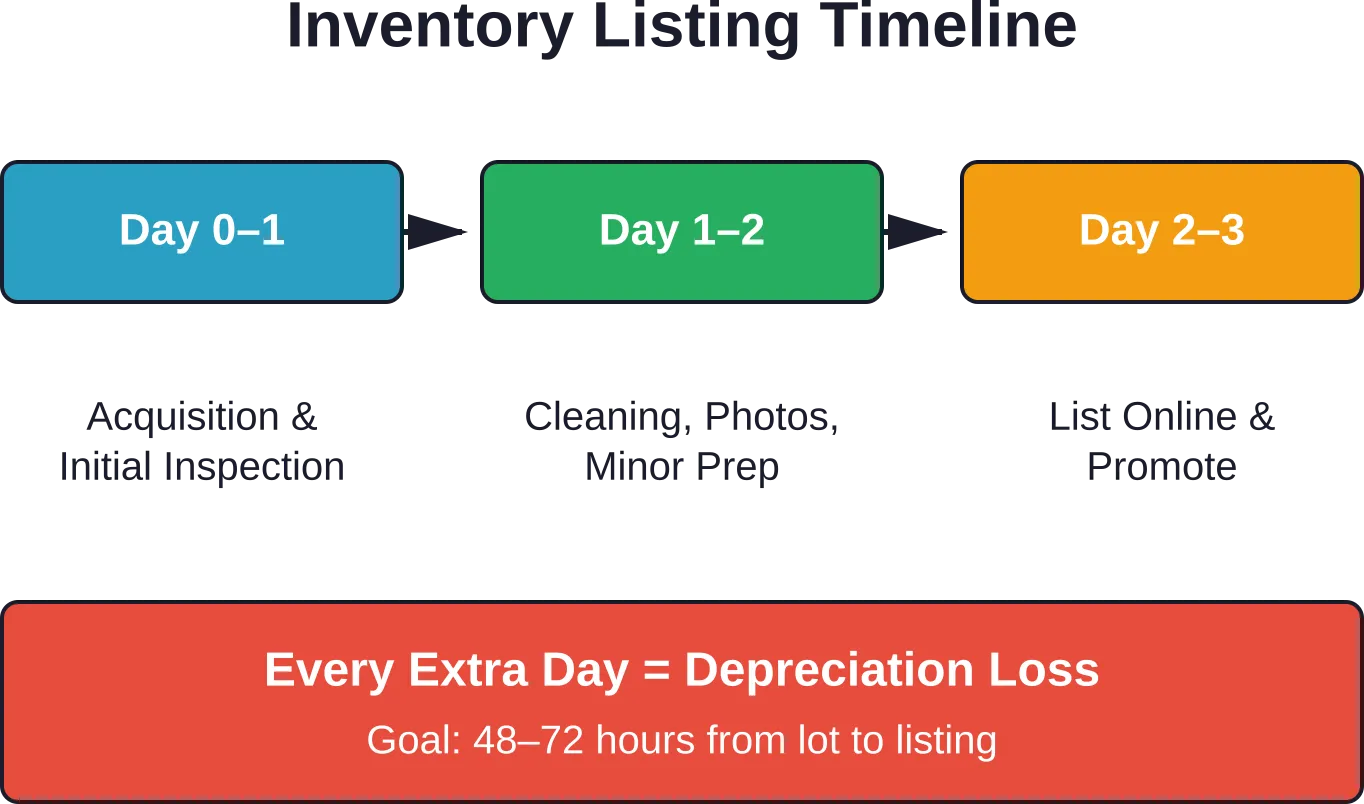
Every day a car sits unmarketed is a day of depreciation and holding costs. Used vehicles lose value fast—especially in competitive markets where buyers have options.
The goal? Get cars cleaned, prepped, photographed, and listed within 48–72 hours of acquisition. Streamline reconditioning so inventory moves from the lot to the digital storefront as quickly as possible.
Don't wait until every minor repair is perfect. If a car is drivable and presentable, list it. Note any pending fixes in the description. Buyers appreciate honesty, and early listings capture lookers before they commit elsewhere.
Real talk: speed wins. The faster inventory hits online channels, the more exposure it gets. More exposure means more inquiries, test drives, and sales.
Video sells cars. Period. Walkaround videos, interior tours, test-drive footage—these give buyers the next-best thing to an in-person visit. They build confidence, answer questions, and filter out tire-kickers.
Platforms like YouTube, Instagram Reels, TikTok, and Facebook all favor video in their algorithms. A 60-second walkaround can reach thousands of local buyers organically.
But wait. Video doesn't need Hollywood production value. Smartphone footage shot in good lighting works fine. Focus on clarity: highlight features, show condition, mention any quirks. Authenticity beats polish.
Consider live video too. Facebook Live or Instagram Live lot tours let buyers ask questions in real time. That interaction builds rapport and trust—key ingredients for closing deals.
Manual video production slows things down. AI-powered tools can generate listing videos automatically from photos and inventory data. Upload images, add VIN details, and the software stitches together a polished clip.
This acceleration matters. When cars go from acquisition to full multimedia listing in 48 hours, marketing starts immediately. Early exposure drives early inquiries.
Most car buyers shop locally. They search for "used cars near me," "Ford dealership [city]," or "best price on [model] [zip code]." Local SEO ensures your dealership appears in those searches.
Start with Google Business Profile. Keep it updated: accurate hours, photos, inventory links, and fresh posts. Encourage satisfied customers to leave reviews. Google rewards active, well-reviewed profiles with higher local rankings.
On-page SEO matters too. Each vehicle listing should have a unique, keyword-rich title and description. Include make, model, year, trim, mileage, and location. Avoid duplicate content—cookie-cutter descriptions hurt rankings.
Build location-specific landing pages if you serve multiple areas. A "Used Trucks in [City]" page optimized for local keywords captures search traffic competitors miss.
Social media isn't just for brand awareness—it's a sales channel. Platforms like Facebook Marketplace, Instagram, and even TikTok drive traffic and leads when used strategically.
Post consistently. Mix promotional content (new arrivals, price drops, specials) with value-driven posts (maintenance tips, buyer guides, behind-the-scenes). The 60-30-10 model works well: 60% original content, 30% curated third-party articles, 10% promotional.
Engage with comments and messages promptly. Social platforms reward responsiveness with better reach. Quick replies also build trust and keep buyers warm.
Organic reach has limits. Paid social ads let you target by location, age, income, interests, and even online behavior. Promote high-margin inventory or time-sensitive offers to the exact audience most likely to buy.
Facebook and Instagram ads work especially well for automotive. Use carousel ads to showcase multiple angles of a vehicle. Retarget website visitors who browsed but didn't convert.
Track ROI closely. Platform analytics show which ads drive clicks, form fills, and showroom visits. Double down on what works; kill what doesn't.

Car ads often rely on similar offers and messaging, making it difficult to know what will actually stand out before launch. Extuitive helps businesses evaluate campaign creatives early using predictive ad analysis and AI consumer simulations.
With Extuitive, businesses can find out:
👉Book a demo with Extuitive and review your next automotive campaign before it goes live.
Email remains one of the highest-ROI marketing channels. For dealerships, it nurtures leads, re-engages past buyers, and drives service appointments:
Shoppers distrust dealerships by default. Decades of hard-sell tactics and hidden fees bred skepticism. Overcoming that skepticism requires radical transparency.
List real, out-the-door prices. No asterisks, no fine print. When buyers see honest pricing upfront, trust builds. They're more likely to inquire, visit, and buy.
Highlight reviews everywhere—website, social media, Google Business Profile. Positive testimonials provide social proof. Negative reviews? Respond professionally and resolve issues publicly. That demonstrates accountability.
Research indicates that the majority of car buyers rely heavily on online information and peer reviews before making purchasing decisions. Dealers who manage online reputation proactively capture more of that buyer segment.
Video testimonials pack even more punch than text reviews. Ask happy customers to record short clips about their experience. Feature these on landing pages, social posts, and email campaigns.
Authenticity matters. Scripted, overproduced testimonials feel fake. Real people, real stories, real results—that's what converts skeptics into buyers.
Not everyone searching online is ready to buy today. Many are researching makes, models, financing options, or trade-in value. Educational content captures these early-stage buyers and nurtures them toward a sale.
Publish blog posts, videos, and guides on topics like:
This content ranks in search engines, drives organic traffic, and positions your dealership as a helpful resource. When buyers are ready to purchase, you're top of mind.
Repurpose content across channels. Turn a blog post into a video, an infographic, and a series of social posts. Maximize the value of every piece.
Digital marketing dominates, but in-person events still convert. Test-drive events, community sponsorships, and seasonal sales create urgency and foot traffic.
Partner with local organizations—schools, charities, sports teams. Sponsor events, offer vehicle displays, or run fundraising promotions. Community goodwill translates into brand loyalty and referrals.
Promote events across all channels: email, social media, local radio, and your website. Create a sense of exclusivity or limited-time offers to boost attendance.
Run a "Win a Free Oil Change" or "Enter to Win $500 Toward Your Next Vehicle" contest. Require an email signup to enter. This builds your contact list with local, engaged prospects.
Promote the contest on social media and encourage sharing. The viral potential extends reach far beyond your existing audience.
Marketing generates leads. Sales closes them. But a clunky handoff between marketing and sales kills conversions:
The automotive market shifts fast. New competitors enter, pricing fluctuates, and buyer preferences evolve. Staying static is a recipe for lost sales.
Track competitor inventory, pricing, and promotions. Tools and manual checks reveal what's working in your market. If a rival drops prices on trucks, respond strategically—don't just match blindly.
Monitor their digital presence too. What keywords do they rank for? Which social platforms drive their engagement? Learn from their wins and avoid their mistakes.
Adaptation beats perfection. Test new tactics, measure results, and iterate. The dealerships that experiment and adjust outperform those waiting for perfect certainty.
Most website visitors leave without converting. Retargeting ads bring them back.
When someone browses your inventory but doesn't fill out a form, retargeting pixels let you serve ads to them on Facebook, Instagram, Google Display Network, and other platforms. These ads remind them of the vehicles they viewed and nudge them toward contact.
Retargeting works because it targets warm leads—people already interested. Conversion rates on retargeting ads often outperform cold prospecting by a wide margin.
Segment retargeting by behavior. Someone who viewed a specific vehicle gets an ad featuring that car. Someone who browsed the homepage gets a broader inventory showcase.
Gut instinct doesn't scale. Data-driven marketing does.
Track everything: website traffic sources, conversion rates, ad performance, email open rates, social engagement. Analytics platforms (Google Analytics, CRM dashboards, ad manager tools) reveal what's working and what's wasting budget.
Set clear KPIs: cost per lead, lead-to-sale conversion rate, inventory turnover speed, customer acquisition cost. Measure against these benchmarks monthly.
When a channel underperforms, dig into the data. Is the targeting off? The creative weak? Is the landing page broken? Fix the leak, test the fix, and measure again.
Financing friction kills deals. Buyers want quick approvals, competitive rates, and transparent terms. Partnering with multiple lenders increases approval odds and offers better rates.
Offer online pre-qualification. Let buyers check rates and approval amounts before visiting the lot. This filters serious shoppers and sets realistic expectations.
Promote financing options in marketing. Highlight low APR offers, flexible terms, or special programs for military members or first-time buyers. Clear financing messaging removes a major purchase barrier.
Transparency around vehicle conditions builds confidence. Buyers worry about hidden problems, past accidents, or odometer fraud.
Provide free vehicle history reports (Carfax, AutoCheck) with every listing. Include multi-point inspection results. Disclose any known issues upfront.
This honesty differentiates your dealership. Competitors who hide flaws lose trust. Buyers reward transparency with loyalty and referrals.
Sales and service teams often operate in silos. Breaking down that wall unlocks retention and repeat business.
Service customers are warm leads for trade-ins and upgrades. Train service advisors to identify customers ready for a new vehicle. Offer trade-in appraisals during service visits.
Cross-promote: service specials in sales emails, new inventory alerts to service customers. Each department feeds the other.
Loyal service customers become brand advocates. They refer friends, leave positive reviews, and return for future purchases. That lifetime value far exceeds a single sale.
Regulatory missteps damage reputation and drain resources. The FTC's recent actions underscore the stakes.
Dealerships have faced enforcement actions for deceptive practices. The CARS Rule targets bait-and-switch tactics and junk fees, with specific protections for military members.
Compliance isn't just legal—it's marketing. Honest advertising, transparent pricing, and ethical practices attract buyers tired of industry tricks. Position compliance as a competitive advantage.
Stay current on FTC guidance, state laws, and manufacturer requirements. Consult legal counsel when launching new promotions or pricing strategies. Prevention costs less than penalties.
Digital marketing evolves constantly. Platforms rise, algorithms change, and new tactics emerge. Dealers who experiment early gain first-mover advantages.
TikTok's audience skews younger, but it's growing fast. Short, authentic videos showcasing inventory, team personalities, or buyer testimonials can go viral and drive traffic.
Voice search is changing SEO. Optimize for conversational queries: "What's the best used truck under $30k near me?" instead of just "used trucks."
AI chatbots handle initial inquiries 24/7, qualifying leads and scheduling appointments while sales teams sleep. These tools improve response times and capture leads that would otherwise vanish overnight.
Test new channels with small budgets. Measure results. Scale what works. Kill what doesn't. Agility beats caution in fast-moving markets.
Marketing ideas for selling cars in 2026 boil down to three pillars: speed, transparency, and adaptation. List inventory fast to beat depreciation. Price honestly to build trust. Embrace digital channels where buyers actually look. Stay compliant to avoid regulatory headaches and earn credibility.
The dealerships that thrive aren't necessarily the biggest or flashiest. They're the ones who respond quickly, market smartly, and treat buyers with respect. They leverage data, test new tactics, and refine relentlessly.
So here's the move: audit your current marketing. Identify gaps—slow listings, weak SEO, thin social presence, compliance risks. Prioritize fixes based on ROI potential. Implement, measure, adjust. Rinse and repeat.
The market rewards action. Start today, and the cars you list tomorrow will move faster, sell higher, and build the reputation that drives referrals for years.


