Marketing Ideas for Fitness Clubs That Drive Growth in 2026
Marketing ideas for fitness clubs in 2026 center on digital-first strategies combined with community engagement: optimizing local SEO and mobile-friendly websites, leveraging social media with authentic member stories, implementing referral programs that reduce attrition, hosting community events that build loyalty, and using targeted email campaigns. Research from IHRSA shows that 23% of members indicated leaving because they did not use the health club, making retention-focused marketing as critical as acquisition.
The fitness industry landscape has shifted. New boutique studios, digital workout platforms, and evolving member expectations mean that traditional marketing approaches no longer cut it.
Fitness clubs that thrive in 2026 understand one fundamental truth: marketing isn't just about getting bodies through the door. It's about creating an experience that keeps members engaged, active, and talking about your club to their friends.
According to IHRSA research, 23% of former health club members indicated leaving because they did not use the health club. That's a staggering statistic that reveals the real challenge: member engagement matters more than initial sign-ups.
Here's the thing though—effective fitness club marketing doesn't require a massive budget. What it requires is strategic thinking, consistent execution, and a genuine focus on what members actually want.
Build a Mobile-Optimized Digital Foundation
Most potential members will interact with a fitness club's website before they ever walk through the doors. That first digital impression determines whether they book a tour or bounce to a competitor.
Mobile optimization isn't optional anymore. Over 60% of local searches come from mobile devices, and user behavior data shows that 53% of mobile users leave a site that takes longer than 3 seconds to load.
A fitness club website needs to deliver three things immediately:
Clear pricing and membership options (hiding this information creates friction)
Easy-to-find class schedules with real-time availability
One-click contact options—phone numbers that dial with a tap, contact forms that work flawlessly on small screens
Fast loading speed directly impacts conversion. Compress images, minimize plugins, and use a hosting solution that can handle traffic spikes when promotional campaigns go live.
Navigation should be intuitive. If someone can't find the class schedule or membership pricing within two taps, the site architecture needs work.
Dominate Local Search and Map Listings
When someone searches for "gym near me" or "fitness classes in [city]," appearing in those top results is non-negotiable. Local SEO determines whether potential members discover your club or a competitor's.
Start with Google Business Profile optimization. Complete every field: hours, services, amenities, photos, and a detailed description packed with relevant local keywords. Upload high-quality images regularly—photos of classes in action, equipment, facilities, and happy members.
Reviews carry enormous weight in local search rankings and consumer decisions. Actively request reviews from satisfied members. Ask after milestone visits, following successful transformations, or when members mention positive experiences.
Respond to every review within 24 hours. Positive reviews deserve thanks; negative reviews need professional, empathetic responses that demonstrate accountability and a commitment to improvement.
Local citations—mentions of your club's name, address, and phone number across directories—reinforce local search signals. Ensure consistency across platforms: Yelp, Apple Maps, Bing Places, and industry-specific directories.
Leverage Social Media to Build Community
Social media marketing for fitness clubs works when it focuses on community rather than constant sales pitches. Members don't follow gym accounts to see promotional offers—they follow for motivation, connection, and inspiration.
Authentic member stories generate more engagement than polished marketing copy. Share transformation journeys, member milestones, and authentic testimonials. Real people achieving real results create emotional connections that drive membership inquiries.
Behind-the-scenes content humanizes the club. Show trainers preparing for classes, maintenance staff keeping facilities pristine, or the team celebrating member achievements. This content builds trust and showcases club culture.
Platform selection matters. Instagram and Facebook remain dominant for fitness marketing, but don't ignore emerging platforms where your target demographic spends time.
Platform
Best Content Type
Ideal Frequency
Primary Benefit
Instagram
Visual transformations, class highlights, reels
5-7 posts per week
Visual storytelling and engagement
Facebook
Community events, member spotlights, longer updates
Consistency beats perfection. Regular posting with authentic content outperforms sporadic bursts of highly produced material that feels disconnected from real member experiences.
Forecast Winning Fitness Ads Before Launch
Fitness campaigns move fast, and weak creatives can waste budget before teams have time to react. Extuitive helps businesses forecast ad performance before launch using AI models validated against real campaign results.
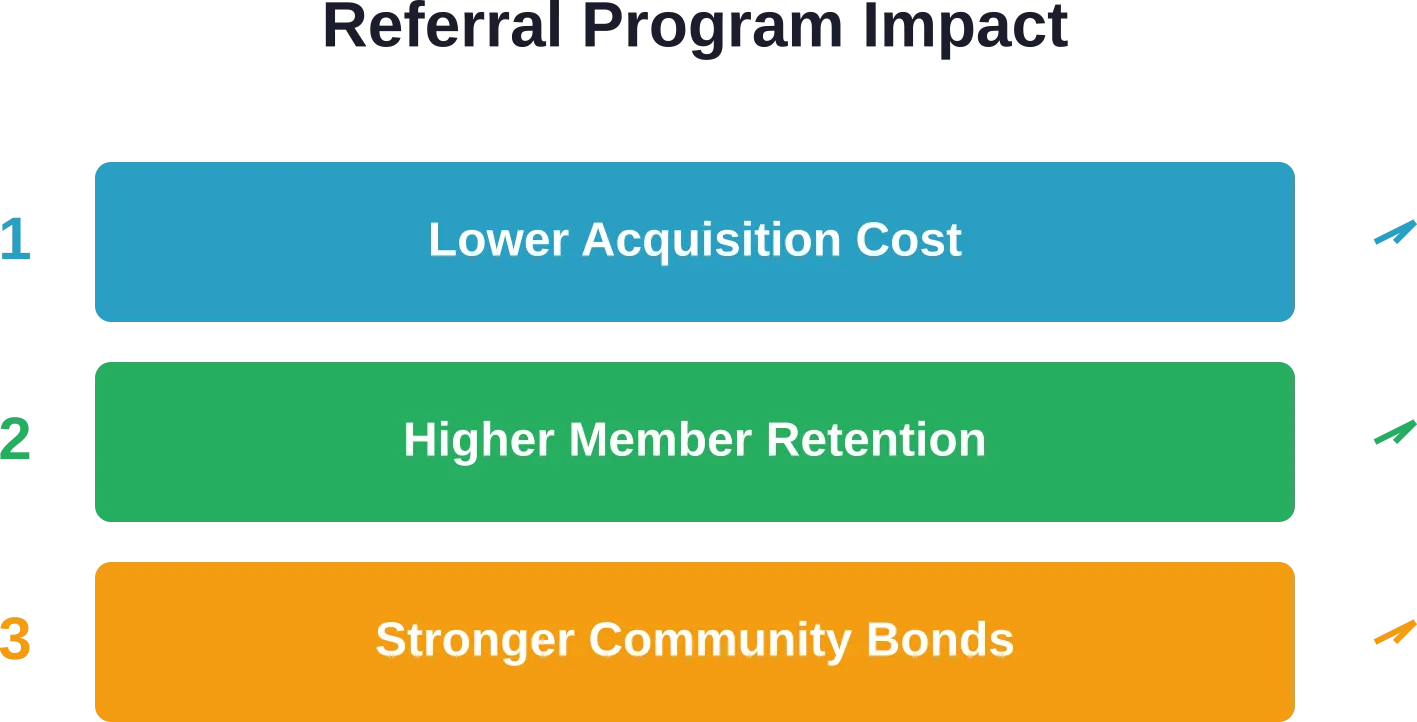
Referral programs turn satisfied members into active marketing channels. The economics are compelling: referred members typically have higher retention rates and lower acquisition costs than members acquired through paid advertising.
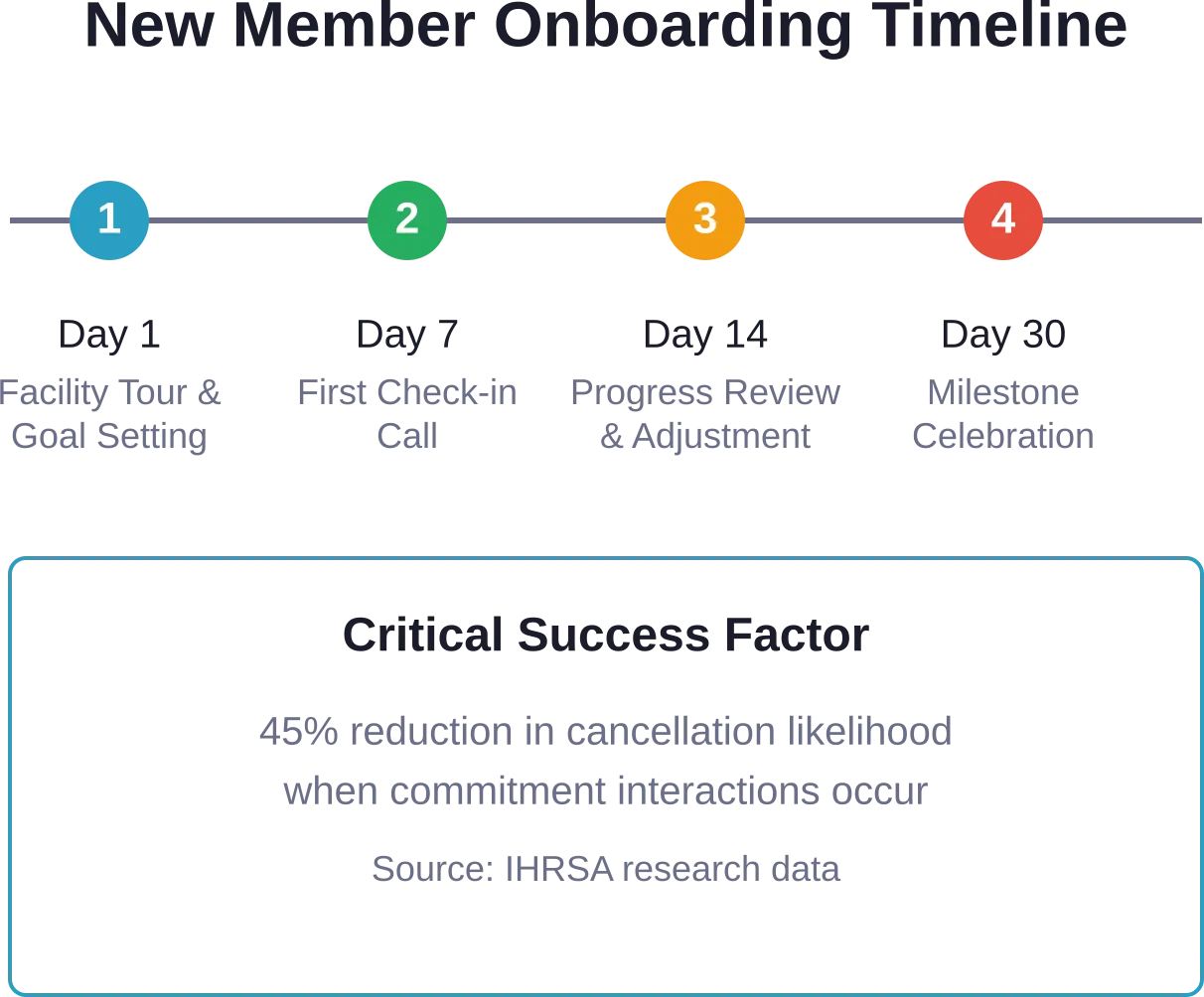
IHRSA research shows that successful commitment interactions reduce cancellation likelihood by 45% in the following month. Building referral programs creates those commitment touchpoints naturally.
Effective referral programs reward both parties. Offering only the referring member an incentive creates imbalanced motivation. When both the existing member and the new member receive benefits, conversion rates increase significantly.
Consider these referral incentive structures:
One free month for the referrer, 50% off first month for the new member
Account credits that accumulate with multiple referrals
Exclusive access to premium classes or training sessions
Branded gear or merchandise for referral milestones
Make the referral process frictionless. Digital referral links that members can share via text or social media remove barriers. Complicated multi-step processes kill participation.
Track referral performance religiously. Which members generate the most referrals? What messaging converts best? Use this data to refine the program continuously.
Host Community Events Beyond Standard Classes
Community events transform a fitness club from a transactional service into a social hub. These events create emotional connections that transcend typical member-business relationships.
The CDC emphasizes community-wide campaigns as effective strategies for promoting physical activity. Fitness clubs are uniquely positioned to lead these initiatives in their local areas.
Event ideas that generate engagement and attract new members:
Charity workout events where participation supports local causes
Outdoor fitness challenges in local parks (expanding beyond facility walls)
Member appreciation days with free guest passes and special programming
Wellness workshops covering nutrition, injury prevention, or mental health
Seasonal challenges with public leaderboards and prizes
Partner events multiply reach. Collaborating with complementary local businesses—healthy restaurants, sports medicine clinics, wellness centers—exposes the club to new audiences while providing value to existing members.
Document everything. Events generate massive content opportunities: photos, videos, testimonials, and social media buzz. This content fuels marketing efforts for months after the event concludes.
But wait. Events also serve retention purposes. IHRSA research identified that 23% of members leave due to non-usage. Events create additional touchpoints that re-engage members who might otherwise drift away.
Implement Strategic Email Marketing Campaigns
Email marketing remains one of the highest-ROI channels for fitness clubs despite newer platforms grabbing headlines. The key lies in segmentation and personalization rather than generic blast emails.
Build email lists from day one. Every facility tour, class trial, and website inquiry should include an email capture opportunity. Offer value in exchange: free workout guides, nutrition tips, or exclusive early access to new programs.
Segment lists based on member behavior and stage:
Prospects who toured but haven't joined
New members in their first 30 days
Active members attending regularly
At-risk members with declining attendance
Former members who cancelled
Each segment needs tailored messaging. New members benefit from onboarding sequences that guide them through available programs and help them establish routines. At-risk members need re-engagement campaigns highlighting new classes or special offers.
Automation handles the heavy lifting. Set up triggered email sequences based on member actions: welcome series for new sign-ups, re-engagement campaigns when attendance drops, renewal reminders before memberships expire.
Subject lines determine whether emails get opened. Test different approaches: questions, curiosity gaps, personalization, and urgency. Track open rates and refine based on what resonates with your specific audience.
Offer Founding Member and Limited-Time Promotions
Scarcity and exclusivity are powerful psychological triggers. Founding member offers and limited-time promotions create urgency that moves prospects from consideration to action.
Founding member programs work particularly well for new locations or when launching new services. These offers typically include lifetime rate locks, exclusive benefits, or special access in exchange for early commitment.
The value proposition must be genuinely compelling. Prospects recognize manufactured urgency. Real limitations—actual capacity constraints, genuine early-access periods, or authentic discounts—build trust while driving conversions.
Time-limited promotions combat decision paralysis. When prospects can join "anytime," many postpone indefinitely. Creating specific deadlines forces decision-making.
Frame promotions around natural timing triggers:
New Year resolution period
Summer body preparation (spring season)
Back-to-routine fall promotions
Anniversary or milestone celebrations
Track promotion performance meticulously. Which offers generate the most sign-ups? What promotional periods yield the highest lifetime value members? This data informs future campaign planning.
Develop Partnerships with Local Businesses
Strategic local partnerships expand marketing reach without proportionally increasing costs. The right partnerships expose the fitness club to aligned audiences who are likely to be interested in membership.
Identify businesses that serve similar demographics but aren't direct competitors: physical therapy clinics, sports equipment retailers, healthy restaurants, corporate wellness coordinators, or local sports teams.
Partnership structures vary based on mutual goals:
Cross-promotional agreements where each business promotes the other
Corporate wellness programs offering discounted memberships to employees
Joint events that combine complementary services
Referral arrangements with financial incentives
Corporate partnerships deserve special attention. Businesses increasingly prioritize employee wellness programs. Offering group rates or on-site services creates stable, predictable membership growth.
According to CDC community-wide campaign strategies, multi-sector partnerships amplify health promotion efforts. Fitness clubs participating in broader community health initiatives gain visibility and credibility.
Maximize Member Retention Through First Impressions
Acquisition costs are wasted if new members cancel within the first few months. The initial experience determines whether someone becomes a long-term member or another attrition statistic.
The first 30 days are critical. New members face uncertainty about equipment, class formats, facility norms, and social dynamics. Structured onboarding reduces this friction dramatically.
Effective onboarding includes:
Comprehensive facility orientation covering all amenities and services
Personalized goal-setting sessions that create accountability
Scheduled check-ins at days 7, 14, and 30 to address questions
Introduction to staff and trainers to build familiarity
Invitation to beginner-friendly classes or buddy systems
IHRSA research (The Guidance Group) indicates that a successful 'commitment interaction' reduces the likelihood of a member cancelling in the following month by nearly 20%. Every touchpoint during onboarding is a commitment interaction opportunity.
Track new member attendance patterns. When someone misses their typical workout days, proactive outreach can re-engage them before habits break completely.
Use Targeted Paid Advertising Strategically
Paid advertising works for fitness clubs when targeting is precise and messaging aligns with specific audience segments. Broad, generic campaigns waste budget and generate low-quality leads.
Platform selection depends on target demographics and campaign objectives. Facebook and Instagram ads excel for local awareness and reaching specific age groups. Google Ads capture high-intent searchers actively looking for gym memberships.
Geographic targeting is essential for fitness clubs. Hyper-local campaigns targeting neighborhoods within a 5-10 mile radius generate better conversion rates than broader regional campaigns. Most members won't travel more than 15 minutes for regular workouts.
Audience segmentation refines targeting further:
Young professionals seeking convenient early morning or evening classes
Parents looking for childcare amenities and flexible schedules
Seniors interested in low-impact fitness and community
Athletes focused on performance training and specialized equipment
Ad creative should showcase real members and authentic facility experiences rather than stock photography. User-generated content and testimonial videos consistently outperform polished corporate content.
Track cost per acquisition religiously. If paid advertising costs exceed the first-month membership revenue, the campaign needs optimization or discontinuation unless lifetime value justifies the investment.
Retargeting campaigns capture interested prospects who visited the website but didn't convert. These campaigns typically achieve significantly higher conversion rates than cold traffic campaigns.
Emphasize Group Fitness and Specialized Programming
IHRSA research identifies that clubs not successfully marketing group fitness miss significant engagement opportunities. In 2014, 88% of group exercise members retained their membership compared to 82% of gym-only members.
Group classes create built-in community and accountability. Participants develop relationships with instructors and fellow members, creating social bonds that transcend the workout itself.
Specialized programming attracts niche audiences that might overlook general fitness clubs:
Senior fitness classes addressing mobility and balance
Youth athletic development programs
Prenatal and postnatal fitness
Sport-specific training for local athletes
Adaptive fitness for individuals with disabilities
Marketing these programs requires targeted messaging highlighting specific benefits relevant to each audience. Generic fitness marketing won't resonate with someone seeking specialized programming.
According to CDC guidelines, you just need 150 minutes a week of moderate-intensity physical activity—achievable through 30 minutes five days a week plus 2 days of muscle-strengthening activity per week. Marketing can frame group classes as convenient, pre-scheduled paths to meeting these recommendations.
Class variety prevents boredom and accommodates different fitness levels and preferences. Offering cycling, yoga, HIIT, dance fitness, and strength classes ensures something appeals to most prospects.
Program Type
Target Audience
Key Marketing Angle
Retention Benefit
Group Fitness Classes
Social exercisers, beginners
Community and motivation
High social accountability
Personal Training
Goal-focused, time-limited
Personalized results
Direct relationship with trainer
Small Group Training
Budget-conscious, semi-social
Personalization at lower cost
Peer support system
Specialty Classes
Niche interests (yoga, cycling, etc.)
Expertise and variety
Passionate engagement
Collect and Showcase Authentic Testimonials
Social proof influences decision-making more than any marketing copy a fitness club can write. Authentic testimonials from real members who achieved real results build credibility that advertising cannot match.
Video testimonials carry the most weight. Seeing and hearing a real person describe their transformation creates emotional connections that text alone cannot achieve. These don't need professional production—smartphone videos often feel more authentic.
Request testimonials at strategic moments when member satisfaction peaks: after achieving a goal, completing a challenge, or reaching a membership milestone. Timing the request when positive emotions are highest increases participation.
Make providing testimonials easy. Offer specific prompts rather than open-ended requests: "What was your biggest concern before joining?" or "How has your life changed since becoming a member?"
Display testimonials across all marketing channels: website homepage, social media, email campaigns, and even in-facility signage. Different prospects respond to different stories, so variety matters.
Before-and-after transformations grab attention, but diversify beyond just physical changes. Testimonials highlighting improved energy, better sleep, increased confidence, or new friendships resonate with different prospect motivations.
Monitor and Adapt Marketing Performance
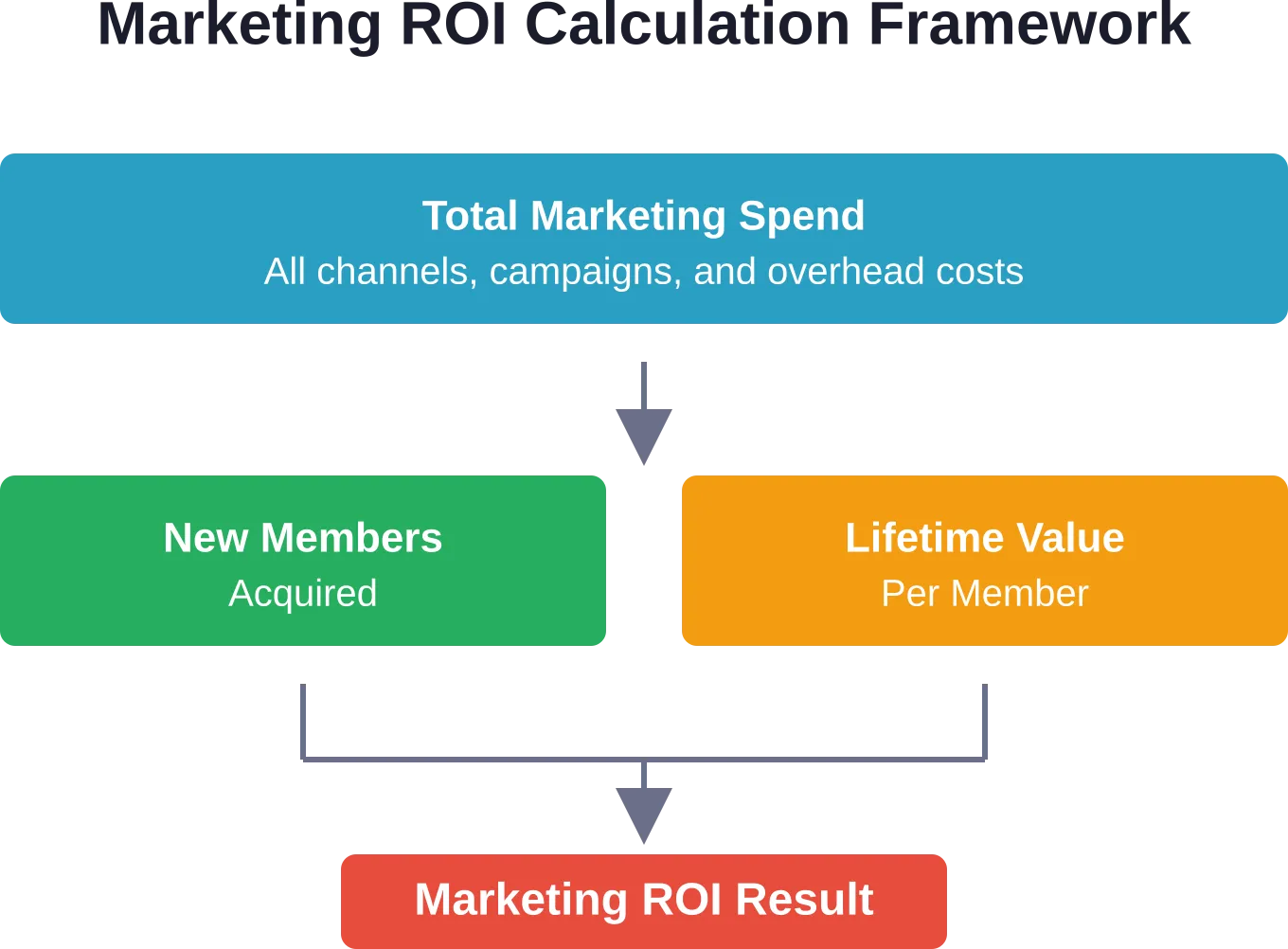
Marketing without measurement is just guessing. Successful fitness clubs track key metrics religiously and adjust strategies based on performance data.
Essential marketing metrics include:
Cost per lead across different channels
Lead-to-member conversion rate
Member acquisition cost
First-year member retention rate
Member lifetime value
Marketing channel attribution
Compare channel performance regularly. If Instagram generates leads at $15 each while Google Ads costs $45 per lead, but Google leads convert at triple the rate, the higher cost may be justified.
Track not just quantity but quality. A campaign generating 100 leads worth $3,000 in first-year revenue beats a campaign generating 200 leads worth $2,500.
Real talk: most fitness clubs under-invest in analytics. Setting up proper tracking requires upfront effort but pays dividends through improved decision-making.
Use tools like Google Analytics for website behavior, call tracking for phone inquiries, and CRM systems to follow leads through the entire conversion funnel. Gaps in tracking create blind spots in understanding what actually works.
Seasonal patterns matter in fitness marketing. January sees massive interest spikes; summer often brings slowdowns. Plan marketing budgets and campaigns around these predictable fluctuations.
Moving Forward with Marketing That Works
The fitness club marketing landscape in 2026 rewards authenticity, community focus, and strategic consistency over flashy campaigns and empty promises.
Here's what actually moves the needle: a mobile-optimized digital presence that converts visitors into members, local SEO that captures high-intent searches, social media showcasing real member experiences rather than stock photos, referral programs that turn satisfied members into active advocates, and retention-focused strategies that recognize keeping members engaged matters as much as acquiring new ones.
The clubs that thrive don't just market fitness services. They build communities where members feel connected, supported, and motivated to show up consistently. That community becomes the marketing engine.
Start with one or two strategies from this guide rather than attempting everything simultaneously. Perfect execution of focused tactics beats mediocre implementation across all channels. Track results, double down on what works, and eliminate what doesn't.
The data is clear: according to IHRSA research, successful commitment interactions reduce member cancellation by 45%. Every marketing effort should ultimately create those commitment touchpoints—whether through onboarding sequences, community events, or personalized outreach.
Ready to transform your fitness club's marketing? Begin by auditing your current digital presence, requesting reviews from satisfied members this week, and mapping out a 90-day referral program launch. Small consistent actions compound into significant growth.
Frequently Asked Questions
```html id="fitnessclubfaq"
What marketing strategies work best for attracting new fitness club members?
The most effective fitness club marketing strategies combine local SEO, a mobile-friendly website, an optimized Google Business Profile, engaging social media content, referral programs, and partnerships with local businesses. Showcasing real member success stories and building community engagement often generates stronger results than focusing solely on promotional offers.
How much should fitness clubs budget for marketing?
Most fitness clubs allocate approximately 5–10% of gross revenue to marketing. New facilities or clubs operating in highly competitive markets may invest 12–15% during growth phases. Rather than focusing solely on budget percentages, successful clubs track cost per acquisition and member lifetime value to ensure marketing investments generate profitable returns.
How can fitness clubs improve member retention through marketing?
Retention-focused marketing includes structured onboarding programs, personalized email campaigns, attendance-based re-engagement messaging, community events, and promotion of group fitness classes. Building relationships and encouraging member participation beyond workouts helps increase loyalty and reduces cancellation rates over time.
Which social media platforms are most effective for fitness club marketing?
Instagram and Facebook remain the most effective platforms for many fitness clubs because they support visual storytelling, local targeting, and community engagement. Instagram is ideal for workout content, member transformations, and short-form videos, while Facebook supports event promotion and member interaction. TikTok can be valuable for reaching younger audiences, and YouTube works well for educational fitness content.
How important are online reviews for fitness club marketing?
Online reviews are extremely important because they influence both local search rankings and consumer trust. Positive reviews provide social proof and help potential members evaluate the club before visiting. Fitness businesses should actively encourage satisfied members to leave reviews and respond professionally to all feedback, including negative comments.
What makes a fitness club referral program successful?
Successful referral programs reward both the existing member and the new member, creating incentives for participation on both sides. The process should be simple, easy to share digitally, and promoted consistently throughout the member experience. Popular rewards include membership credits, free months, exclusive classes, or branded merchandise.
How can small fitness clubs compete with larger chain gyms in marketing?
Small fitness clubs can compete by emphasizing personalized service, specialized programs, strong community culture, and local involvement. Authentic member stories, neighborhood-focused marketing, and partnerships with local organizations help create advantages that large chains often struggle to replicate. Competing on experience and relationships is usually more effective than competing on price alone.
```
How much are you wasting on Meta ads? Connect your ad account. See your ad efficiency.