Top Proven ROAS Optimization Tools for Scaling Meta Ads 2026
Discover the leading ROAS optimization tools for Meta ads in 2026. Boost returns and cut wasted spend on Facebook and Instagram with these AI platforms.
Mar 24, 2026



Quick Summary: Aircraft repair shops face a competitive market where traditional word-of-mouth isn't enough. Successful marketing strategies blend digital presence—SEO-optimized websites, targeted social media, and video content—with industry networking, email campaigns, and trust-building certifications. Shops that showcase expertise, leverage customer testimonials, and maintain consistent community engagement stand out and attract both aircraft owners and commercial clients.
The aircraft repair industry operates in a unique space where technical expertise meets strict regulatory compliance. But here's the thing—being the best mechanic on the field doesn't guarantee a full schedule.
Personal aviation accounts for roughly 65% of the active general aviation fleet in the United States, representing around 14,632 aircraft that need regular maintenance. That's a substantial market, yet many shops struggle to fill their hangars.
The mechanic shortage compounds the challenge. With current shop rates hovering around $110-85 per hour and mechanics generating only 5-6 billable hours per day despite eight-hour shifts, profitability depends on consistent workflow. Marketing becomes the bridge between technical capability and business viability.
Aviation maintenance operates under different rules than typical service businesses. Trust isn't just important—it's everything.
Aircraft owners entrust shops with their safety and their significant investments. According to the FAA, procedural compliance remains one of the most critical factors in aviation maintenance, contributing to the majority of safety-related incidents when procedures aren't followed correctly.
This regulatory environment shapes marketing approaches. Shops can't just promise fast service or low prices. They need to demonstrate competence, compliance, and reliability through every marketing touchpoint.
Aircraft repair marketing typically addresses two distinct segments:
Each segment responds to different messaging. Individual owners often prioritize trustworthiness and transparent communication. Commercial clients focus on turnaround time, competitive pricing, and reliability.
A website isn't optional anymore. It's the first place prospective clients look when vetting maintenance providers.
But not just any website will do. The site needs to answer the core questions aircraft owners ask: What certifications does the shop hold? What aircraft types does the team specialize in? What's the typical turnaround time?
Aircraft repair websites should include specific features that address industry concerns:
The website should also be mobile-responsive. Pilots and aircraft owners research services from tablets and phones in hangars and FBOs regularly.
Most aircraft owners prefer nearby maintenance providers for convenience and ongoing service relationships.
Local search optimization makes shops discoverable when owners search "aircraft mechanic near me" or "annual inspection [city name]." This involves claiming and optimizing Google Business Profile listings, maintaining consistent NAP (name, address, phone) information across directories, and accumulating positive reviews.
Reviews matter enormously in aviation maintenance. Research has found that 84% of customers surveyed stated that marketing videos often interest them, convincing them to invest in a product or service—and reviews function as user-generated marketing content.
Social media serves different functions for aircraft maintenance businesses than traditional B2C companies. It's less about going viral and more about maintaining consistent visibility within the aviation community.
Facebook and Instagram work well for reaching individual aircraft owners. LinkedIn connects with commercial operators and corporate flight departments. Aviation-specific forums and groups provide targeted exposure.
Successful social media content for aircraft repair includes:
The key is consistency over frequency. Three quality posts per week outperform daily low-effort content.

Extuitive helps teams review ad concepts before launching campaigns. The platform uses AI models to forecast likely performance, compare creative options, and support better decisions around messaging and targeting.
For aircraft repair companies, this can be useful when choosing between service, maintenance, or B2B campaign ideas.
Extuitive can help with:
👉 Book a demo with Extuitive to review your ad ideas.
Content marketing serves a dual purpose for aircraft repair shops. It improves search engine visibility while simultaneously establishing technical credibility.
Here's what works: educational blog posts addressing common aircraft owner questions, maintenance tip videos, regulatory update summaries, and seasonal inspection reminders.
These topics address real concerns while naturally incorporating search terms aircraft owners use. They position the shop as a knowledgeable resource rather than just a service provider.
Video content performs exceptionally well for aircraft maintenance marketing. Walk-through videos of annual inspections, time-lapse footage of major repairs, and mechanic interviews humanize the shop while showcasing capabilities.
Research has found that 84% of customers surveyed stated that marketing videos often interest them, convincing them to invest in a product or service. Video marketing is therefore one of the most effective ways to communicate complex technical information in digestible formats.
Post videos on YouTube with proper titles and descriptions for search visibility, then embed them on the website and share across social media channels.
Email marketing generates impressive returns for aviation maintenance businesses. Industry analyses indicate email campaigns can achieve open rates between 29.7% and 41.9% for targeted segments in the aviation sector, with additional targeted segments reaching 34.5% to 35.2% open rates.
Email serves multiple marketing functions for aircraft repair shops. It maintains contact with existing clients between service visits, nurtures leads who requested quotes but haven't committed, and re-engages inactive customers.
Segmentation improves email performance significantly. Separate lists for single-engine piston owners, turbine operators, and commercial clients allow tailored messaging that addresses specific concerns and needs.
Growing an email list requires offering value in exchange for contact information. Effective lead magnets for aircraft repair shops include:
Place signup forms prominently on the website, particularly on high-traffic pages like the services overview and blog posts.
Aviation remains a relationship-driven industry. Personal connections and community reputation often matter more than advertising spend.
Active participation in the local aviation community builds the referral pipeline that sustains many successful shops. This includes attending EAA chapter meetings, sponsoring fly-in breakfast events, participating in safety seminars, and maintaining relationships with local flight schools.
Strategic partnerships extend marketing reach efficiently. Consider relationships with:
These partnerships work best when they're reciprocal. Referring business to trusted partners builds goodwill that generates returns over time.
Regulatory compliance isn't just a legal requirement—it's a marketing asset.
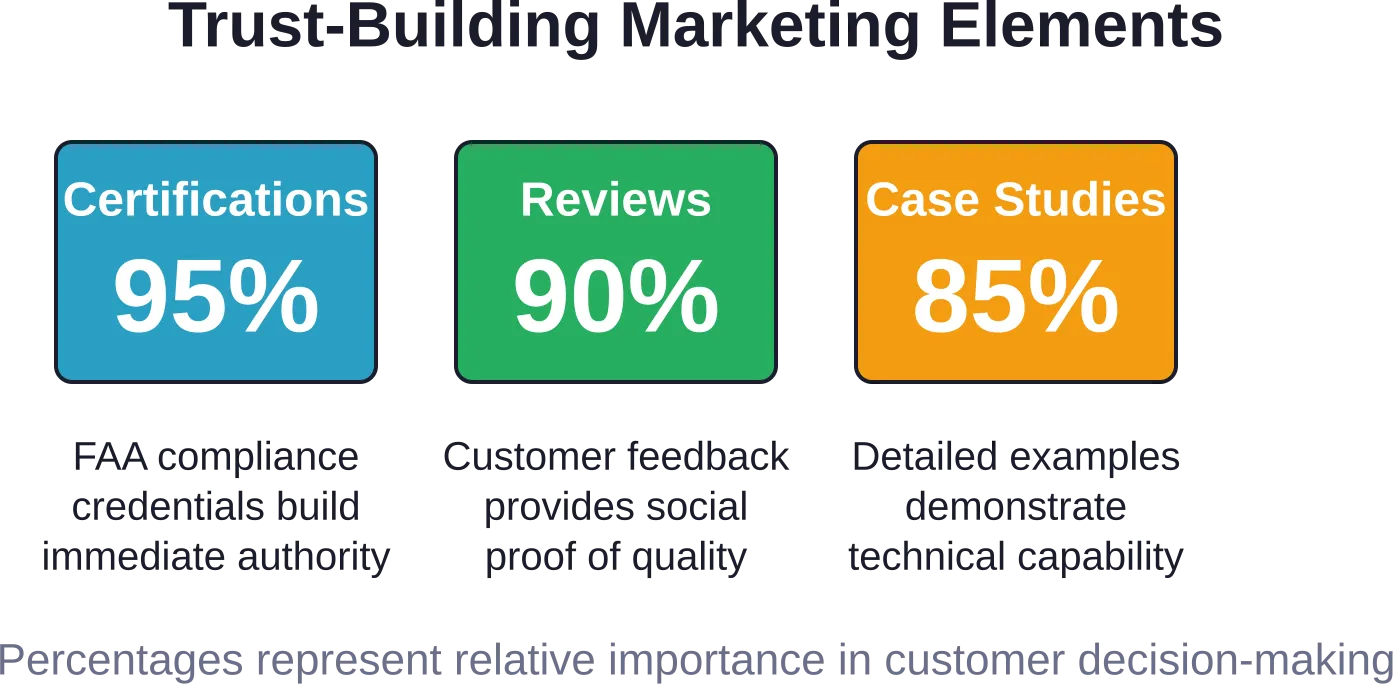
The FAA maintains strict standards for aircraft maintenance, and shops that hold specific certifications demonstrate commitment to quality and safety. These credentials should feature prominently in all marketing materials.
Different certifications signal different capabilities to prospective clients:
According to the FAA, special airworthiness certificates and repair station authorizations govern what maintenance operations shops can legally perform. Making these credentials visible builds confidence that work will be performed correctly and legally.
Organic marketing builds long-term presence, but paid advertising accelerates visibility and fills the pipeline faster.
Google Ads work particularly well for aircraft repair shops because search intent is clear. Someone searching "annual inspection Cessna 172 [city]" is actively shopping for service.
Successful paid campaigns for aircraft maintenance focus on:
Facebook advertising allows demographic and interest targeting. Targeting users who follow aviation pages, pilot groups, and aircraft owner associations reaches relevant audiences efficiently.
Typical click-through rates for aviation-related campaigns range around 0.8%, though rates vary depending on targeting and campaign specifics, meaning significant impression volume is needed to generate meaningful lead flow.
Social proof matters enormously in aviation maintenance marketing. Aircraft owners want evidence that other pilots trust the shop and received quality service.
Testimonials should be specific rather than generic. "They completed my annual inspection on time and found a critical issue that prevented an in-flight emergency" carries more weight than "Great service, highly recommend."
Systematic review collection generates the social proof needed for effective marketing:
Case studies work well for complex repairs and restorations. Document the problem, the solution process, and the outcome with photos throughout. These demonstrate technical capability while engaging readers with narrative.
Marketing without measurement wastes resources. Tracking key metrics shows what works and what doesn't, allowing continuous improvement.
Essential metrics for aircraft repair marketing include:
Google Analytics tracks website performance, showing which pages attract traffic and where visitors leave. Call tracking numbers reveal which marketing channels drive phone inquiries. CRM systems monitor how leads progress through the sales pipeline.
Real talk: most small aircraft repair shops don't need enterprise-level analytics. Simple tracking of monthly leads, their sources, and conversion rates provides sufficient data for optimization.
Aircraft maintenance marketing isn't a sprint—it's building sustained visibility and reputation over time.
The shops that win don't just run occasional promotions or sporadic social media posts. They commit to consistent presence across multiple channels, gradually building recognition as the go-to maintenance provider in their market.
This means publishing content regularly, maintaining active social media profiles, nurturing email lists, showing up at community events, and continuously collecting reviews and testimonials.
The compound effect of consistent marketing outperforms sporadic high-intensity campaigns. A shop that publishes two blog posts monthly for two years builds significantly more search visibility than one that publishes twenty posts in a month then goes silent.
The aircraft repair market remains strong, with 140,000 personal aviation aircraft requiring regular maintenance. But competition intensifies as the mechanic shortage drives consolidation and remaining shops fight for market share.
Marketing separates shops that thrive from those that merely survive.
Start with the fundamentals: a professional website showcasing certifications and services, active Google Business Profile with consistent reviews, and regular communication with existing clients through email. Build from there with content marketing, social media presence, and community involvement.
The shops that dominate their markets don't necessarily have the biggest budgets. They have consistent execution, clear messaging, and deep engagement with their aviation communities.
Aviation remains a relationship business. Marketing amplifies those relationships, making sure pilots know who to call when their aircraft needs expert care. Implement these strategies systematically, measure results, and adjust based on what actually drives leads and conversions.
Ready to fill your hangar? Start with one channel, execute it consistently for 90 days, then expand. Your next customer is searching right now—make sure they find you.


