Marketing Ideas for Plastic Surgeons That Generate Leads
Discover proven marketing ideas for plastic surgeons in 2026. Learn strategies to attract more patients, boost online presence, and grow your practice ethically.
May 15, 2026



Effective care home marketing in 2026 requires a blend of digital strategies, community engagement, and regulatory compliance. From optimizing your online presence and leveraging video tours to building referral networks and hosting local events, success depends on understanding your audience and demonstrating the quality of care you provide. Most prospective residents and their families research online first, making SEO, social media, and authentic testimonials critical for standing out in a competitive market.
Marketing a care home isn't the same as selling widgets online. Families are making one of the most emotional, difficult decisions of their lives—choosing where their loved one will live, receive care, and feel safe.
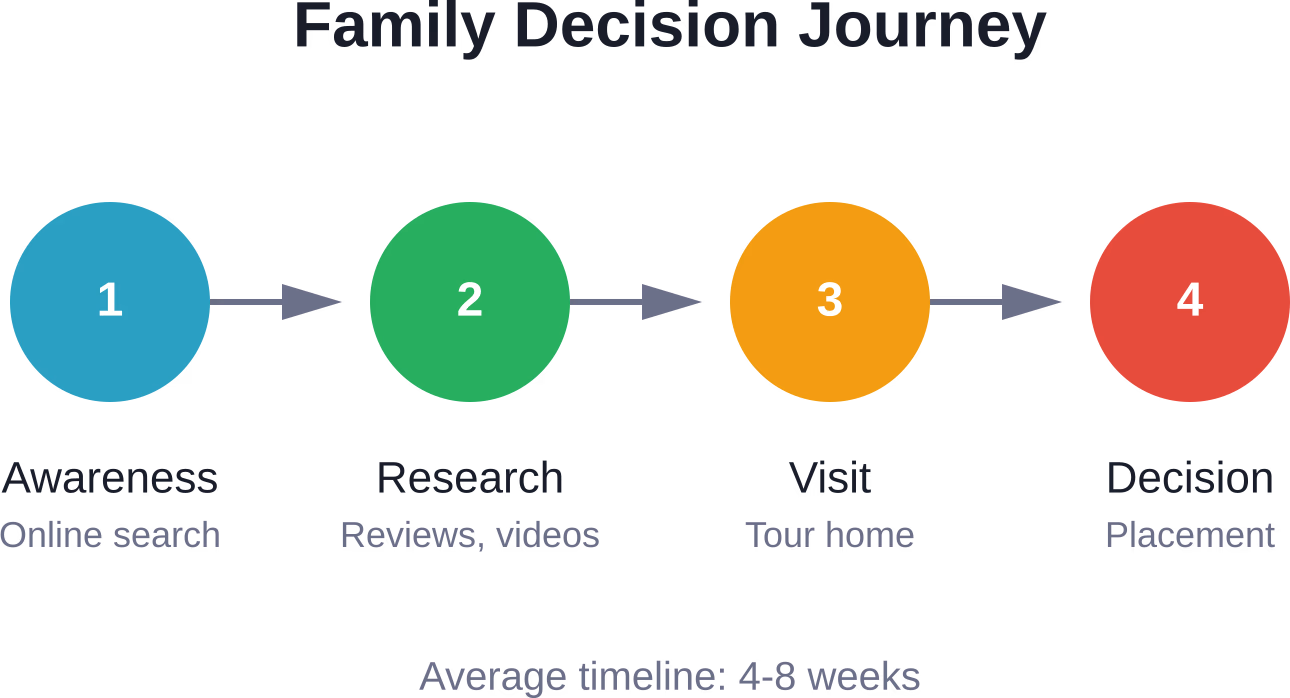
That decision comes with scrutiny. Many first-time visitors aren't ready to commit immediately. They're researching, comparing, reading reviews, and asking tough questions about safety standards, staff qualifications, and quality of life.
So how do care homes cut through the noise and build trust? The answer lies in authentic marketing that showcases real care, meets families where they are, and demonstrates compliance with fundamental standards set by regulators like the Care Quality Commission.
Here's the thing though—there's no single magic bullet. Effective care home marketing combines digital presence, community relationships, testimonials, and transparent communication. Let's break down the strategies that actually work.
Before launching any campaign, you need clarity on who you're speaking to. For most care homes, that's a dual audience: the prospective resident and their adult children or family decision-makers.
Adult children often initiate the search. They're juggling work, families, and the emotional weight of seeing a parent decline. They want reassurance, transparency, and evidence that staff are trained and compassionate.
The prospective resident wants dignity, independence where possible, and reassurance that this won't feel institutional. They care about activities, food quality, room amenities, and whether they'll feel at home.
Both groups are doing extensive online research. They're reading reviews, watching virtual tours, and checking whether your home meets the fundamental standards of care established by the CQC. These standards—person-centred care, dignity, safety, and protection from abuse—are non-negotiable baselines that your marketing must reflect.
Not all care homes serve the same population. Assisted living attracts different searchers than memory care or skilled nursing. Tailor messaging accordingly:

Extuitive helps businesses predict how ad creatives may perform before they go live. It compares copy, visuals, offers, and audience angles, then shows which ideas look stronger or weaker before campaign budget is spent.
For care homes, this can help review campaign ideas before turning every version into a live paid test.
Extuitive can help with:
👉 Book a demo with Extuitive to review your ad ideas.
Digital presence is where most care home searches begin. Families Google "care homes near me," scan the first page of results, and make snap judgments based on what they see.
Local search is everything. When someone types "care home in [your town]," you need to appear.
Start with Google Business Profile. Keep it updated with accurate hours, address, phone number, and fresh photos. Businesses with photos get significantly more requests for directions than those that don't. Upload images of common areas, resident rooms, gardens, dining spaces, and staff interactions (with proper consent).
Encourage reviews. Positive testimonials build trust fast. Respond to every review—good or bad—professionally. When handling negative feedback, acknowledge concerns and explain how you've addressed them. Prospective families watch how you handle criticism.
On your website, create location-specific pages if you operate multiple homes. Include the town name, nearby landmarks, and local community connections in your content naturally.
Your website is your 24/7 salesperson. It should answer common questions without requiring a phone call.
Make sure the site loads fast on mobile. Families often search on phones while in the car or during lunch breaks. If pages lag, they'll bounce to a competitor.
Integrated contact centers and live chat functionality have proven results. Some implementations show increases in leads, tours, and web lead conversions.
Here's why: families have questions outside business hours. A chatbot or after-hours answering service captures inquiries when your office is closed. Even better, live chat lets anxious family members get immediate answers without committing to a phone call.
Train staff to respond within minutes. Speed matters. The first care home to reply often wins the tour booking.
Families want evidence you know what you're doing. Educational content positions your care home as knowledgeable and trustworthy.
Publish blog articles and guides addressing common concerns:
These pieces rank in search engines, attract organic traffic, and demonstrate expertise. They also give families something to share with other decision-makers in the family.
Real talk: consistency matters more than perfection. One solid article per month beats sporadic bursts of content.
Video builds emotional connection faster than text. Families want to see the environment, meet staff, and watch residents engage in activities.
Create these video types:
Don't worry about Hollywood production quality. Authenticity beats polish. Shoot on a decent smartphone, use natural lighting, and keep videos under three minutes.
Post videos on YouTube (great for SEO), embed them on your website, and share on social media.
Social media isn't just for trendy brands. Care homes can build community presence and engage families effectively.
Facebook remains the top platform for reaching adult children (ages 40-65) who are primary decision-makers. Instagram works for showcasing visual content—resident activities, garden photos, special events.
LinkedIn is useful for professional networking with healthcare providers, social workers, and hospital discharge planners who refer patients.
Skip TikTok unless you have dedicated resources. Focus beats scattered presence.
Mix educational content with community updates:
Post 3-4 times per week minimum. Consistency signals that your home is active and engaged.
Respond to comments and messages quickly. Social media is a two-way conversation, not a broadcast channel.
Word-of-mouth and professional referrals remain powerful acquisition channels. Many families trust recommendations from healthcare providers more than advertising.
Build relationships with:
Visit local hospitals and clinics. Drop off brochures, introduce yourself, and explain what makes your care home different. Offer to provide tours for healthcare professionals so they can confidently recommend you.
The long-term care market is projected to grow to approximately $730 billion by 2030, reflecting a 7.7% compound annual growth rate. That growth brings more providers into the space, making strong referral relationships even more valuable.
Happy families are your best marketers. Create incentives for referrals:
Make it easy. Provide referral cards families can hand out, or create a simple online referral form.
Track referrals carefully. Every name that comes to you has an associated cost—whether £10 or £5,500 depending on the marketing channel. Treat each lead as the valuable asset it is.
In-person interaction builds trust in ways digital marketing can't replicate. Events let families see your home in action, meet staff, and observe resident interactions.
Host quarterly open days specifically for prospective families. Offer tours, refreshments, and informal Q&A with the care manager.
Make it low-pressure. Some families are just beginning research and aren't ready for hard-sell tactics. Let them explore at their own pace.
Advertise these events on social media, local community boards, and through GP surgeries.
Raise your profile by sponsoring community events:
Sponsorship gets your name in front of local families in a positive context. It also demonstrates community commitment—something families value when choosing care.
Host free seminars on topics families care about:
Partner with local solicitors, financial advisors, or healthcare professionals to co-host. These events position you as a resource, not just a vendor.
Most families don't choose a care home on first contact. They need time, multiple touchpoints, and ongoing information.
Email nurture campaigns keep you top-of-mind during that decision process.
Capture email addresses through:
Always get explicit consent. UK GDPR rules require clear opt-in for marketing emails.
Not everyone is at the same stage. Segment by:
Marketing automation tools make this manageable. Platforms like Mailchimp, HubSpot, or care-specific CRMs can trigger emails based on user behavior.
Send 1-2 emails per week maximum. Too frequent and you'll trigger unsubscribes.
Organic strategies take time to build momentum. Paid advertising delivers faster results when done right.
Search ads appear when families actively look for care. Target high-intent keywords:
Use location extensions so your address and phone number appear in ads. Enable call extensions for one-click mobile calls.
Budget carefully. Care home clicks can cost £3-8 depending on competition in your area. Set daily budgets you can sustain, and track conversions ruthlessly. If a keyword doesn't generate tours, pause it.
Social ads work for building awareness and retargeting website visitors.
Create lookalike audiences based on families who've toured or placed a loved one. Facebook finds similar users likely to be interested.
Use video ads showcasing your home. Carousel ads work well for displaying multiple room types or highlighting different care services.
Retarget website visitors who didn't complete an inquiry form. Show them testimonials, virtual tour reminders, or limited-time tour incentives.
Don't dismiss traditional media entirely. Many families in the 60+ demographic still read local newspapers and listen to community radio.
Test small campaigns in local papers or sponsor segments on local radio. Track response with unique phone numbers or promo codes.
Social proof is powerful. Families trust other families more than marketing copy.
Ask satisfied families for reviews on:
Time your ask strategically. Request a review 2-4 weeks after move-in, once the resident has settled and family can see positive outcomes.
Display reviews prominently on your website homepage. Consider a dedicated testimonials page with video and written reviews.
Detailed case studies work well for specific care scenarios. With permission, share stories like:
Include photos (with consent), quotes from family, and specific outcomes. Case studies demonstrate expertise and create emotional connection.
Families need reassurance that you meet—and exceed—regulatory standards.
If you've received a Good or Outstanding rating from the Care Quality Commission, make it visible everywhere:
The CQC assesses homes on five key questions: Is it safe? Is it effective? Is it caring? Is it responsive to people's needs? Is it well-led? Address these directly in your marketing.
If your rating needs improvement, be transparent about steps you're taking. Families appreciate honesty over evasion.
Highlight training, certifications, and ongoing professional development:
Create staff spotlight posts on social media. Let team members share why they love working in care. This humanizes your home and demonstrates staff retention—a key quality indicator.
Marketing without measurement is guesswork. Track what works and double down on it.
Use Google Analytics to track website behavior. Set up conversion tracking for form submissions, phone calls, and chat interactions.
Test different approaches:
Small changes can yield big improvements. Testing shows what resonates with your specific audience.
Manual follow-up doesn't scale. Marketing automation ensures no lead falls through the cracks.
Not all inquiries are equally urgent. Score leads based on:
Automated lead scoring helps sales teams prioritize follow-up. Hot leads get immediate attention; cooler prospects enter nurture campaigns.
Care home-specific CRMs often include features like tour scheduling, family portals, and automated follow-up sequences.
Alternatively, general platforms like HubSpot, Salesforce, or Zoho can work with proper configuration.
Key features to look for:
The best marketing in the world fails if your team can't close. Invest in senior living-specific sales training.
Train staff to:
Marketing generates leads; sales converts them. These teams must work in sync.
Hold weekly meetings to review:
When marketing hears what sales is experiencing, they can adjust campaigns accordingly.
Marketing a care home in 2026 means meeting families where they are—online, in the community, and throughout a decision journey that often spans weeks or months.
The homes that succeed combine digital excellence with human connection. They optimize for local search so anxious families find them at 11 PM. They post authentic content showing real life in the home. They train staff to respond with empathy and speed. They build referral networks with healthcare providers who trust their quality of care.
But here's the thing: tactics alone won't carry you. The foundation of effective marketing is delivering exceptional, person-centred care that meets the fundamental standards families expect and regulators demand. Marketing amplifies good care; it can't mask poor care.
Start with three priorities: fix your digital presence, collect and showcase testimonials, and build a systematic follow-up process. Master those, then layer in community events, paid advertising, and advanced automation.
The families searching for care homes right now are scared, overwhelmed, and desperately hoping to find a place where their loved one will thrive. Your marketing should make it easy for them to discover you, trust you, and take that first step toward a tour.
Ready to improve your care home's marketing? Start by auditing your Google Business Profile today—it's free, takes 30 minutes, and could be the difference between being found or overlooked.


