Can You Sell Used Clothes on Shopify? Rules, Reality, and What to Expect
Yes, you can sell used clothes on Shopify. Learn what the rules allow, how to list secondhand items properly, and what matters for real sales.
Jun 10, 2026



Quick Summary: Audiology practices can grow by combining digital marketing strategies like SEO and local listings with community engagement and patient retention tactics. Effective marketing focuses on educating patients about hearing health, building online visibility, and creating streamlined scheduling experiences. With hearing aid adoption reaching 39% and demand rising, targeted marketing helps practices capture their share of a growing market.
The audiology industry faces a unique marketing challenge. Nearly 50% of adults over 60 experience hearing loss, yet only 39% of those who could benefit actually use hearing aids. That gap represents millions of potential patients searching for help.
Marketing and promoting an audiology practice requires continuous evaluation and coordination with clinic growth. It's not just about advertising—it's about building trust, educating communities, and making hearing care accessible.
The landscape shifted dramatically after 2022, when OTC hearing aids entered the market. By 2025, traditional hearing aids accounted for 33.5% of adoption while OTC devices captured 5.7% among those using hearing aids. This changing environment demands smarter marketing strategies.
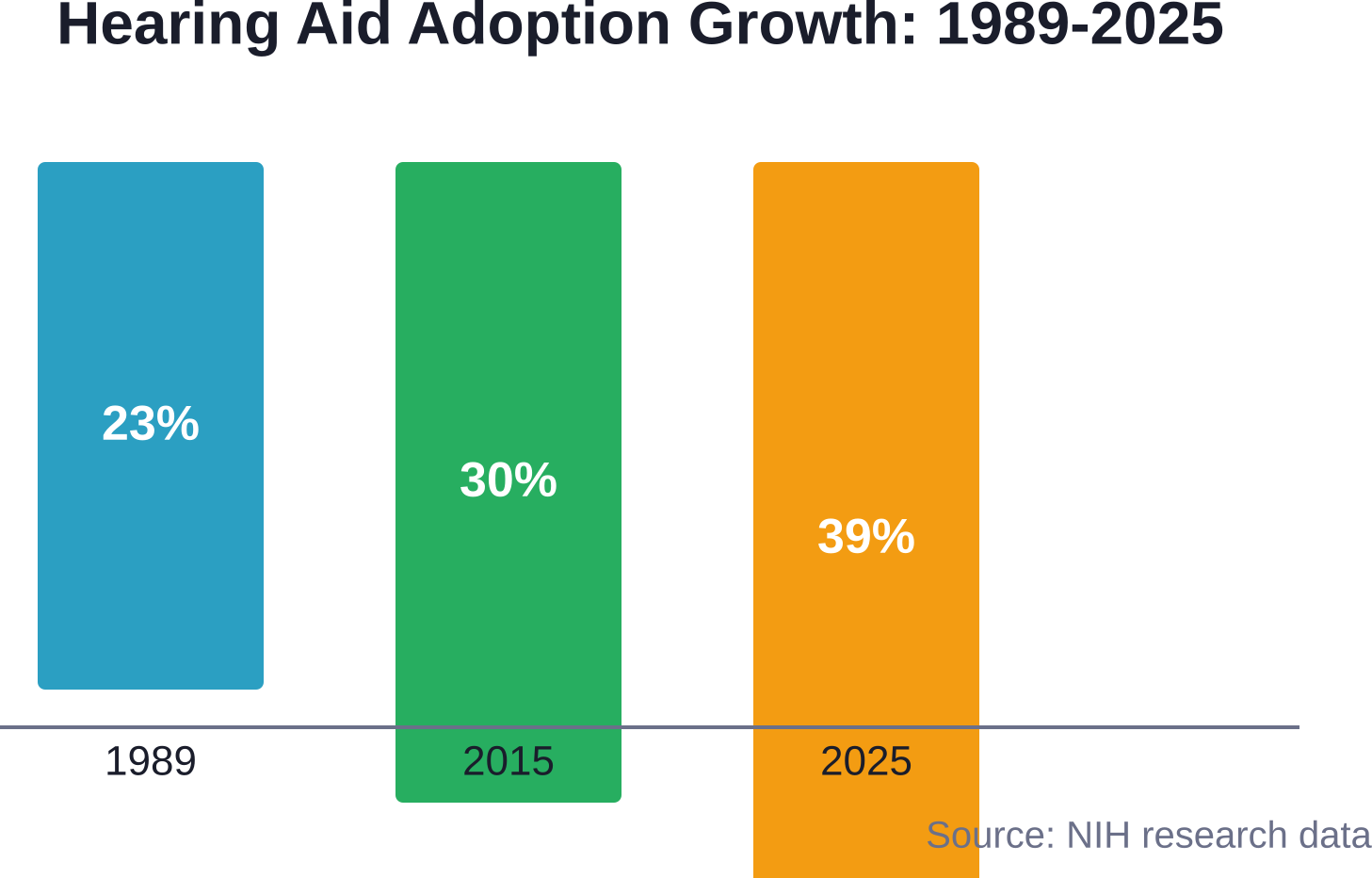
The numbers tell a compelling story. In 1989, hearing aid adoption sat at just 23%. It climbed to 30% by 2015, then jumped to 39% in 2025. Note: The MarkeTrak survey indicates adoption was 39% as of the most recent data point available. That's significant progress, but it also means 61% of people with hearing loss still aren't getting help.
Demographics matter here. Among adults 45-54, about 5% experience disabling hearing loss. That number doubles to 10% for the 55-64 age group, then increases significantly to 22% for ages 65-74. For adults 75 and older, 55% face disabling hearing loss.
These statistics reveal massive opportunities for practices that market effectively.
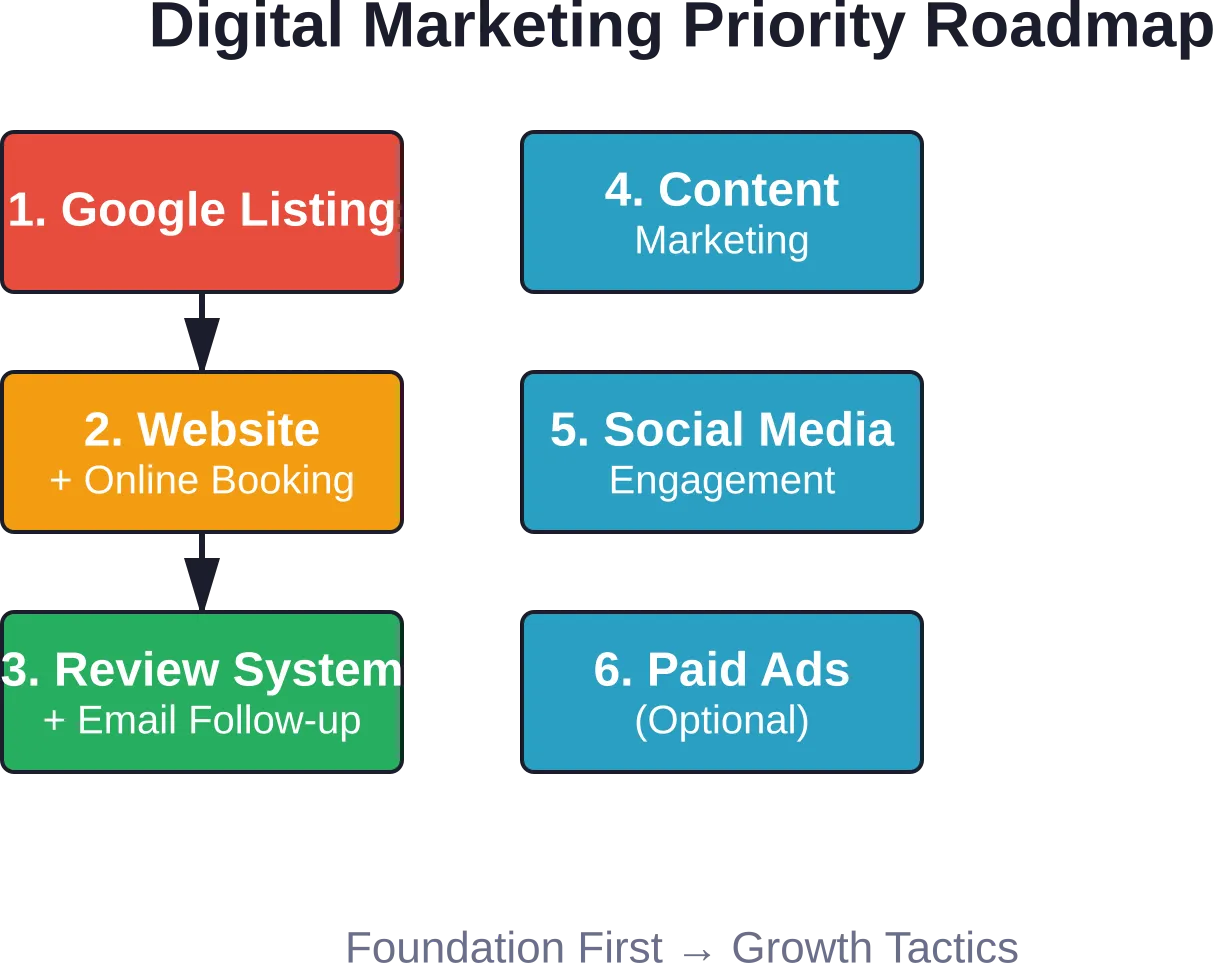
Before diving into advanced tactics, practices need the basics in place. That means a website, at least one active social media account, business cards, and a Google Business listing. These aren't optional—they're the foundation everything else builds on.
Here's the thing though—having these elements isn't enough. They need regular updates. A stale website or dormant social account signals that the practice itself might be outdated.
Local SEO drives measurable results. Industry analyses indicate that SEO generates over 1,000% more traffic than organic social media. More than 28% of people click the first search result they see, and clickthrough rates drop dramatically for lower rankings.
Claiming and optimizing the Google Business listing is step one. Add accurate hours, services, photos, and respond to every review. Consistency across online directories matters—NAP (name, address, phone) information should match exactly everywhere.
Location-based keywords help practices appear when people search "audiologist near me" or "hearing test in [city]." Embedding these naturally in website content, page titles, and meta descriptions improves visibility.
Content marketing establishes expertise while answering patient questions. Blog posts about hearing loss signs, hearing aid comparisons, or tinnitus management attract people researching these topics.
Video content performs particularly well. Short clips explaining common hearing issues or demonstrating proper hearing aid care build trust and engagement. These don't require professional production—authenticity often outperforms polish.
Once the foundation is solid, specific tactics drive patient acquisition. These strategies focus on converting searchers into scheduled appointments.
The difference between requesting an appointment and booking one is massive. Research shows 69% of patients prefer self-service scheduling. Practices without online booking lose leads to competitors who offer it.
Online scheduling works 24/7, capturing patients who research hearing care outside business hours. It also reduces administrative burden—staff spend less time playing phone tag.
Healthcare email campaigns achieve average open rates exceeding 41%, well above most industries. Marketing automation keeps patients informed about hearing health without adding workload.
Welcome sequences for new patients, appointment reminders, and educational newsletters maintain engagement. Seasonal campaigns about hearing protection during hunting season or holiday gatherings feel relevant rather than pushy.
Reviews function as social proof. Potential patients read them before booking, and positive reviews directly influence decisions.
The key is making reviews easy. Send follow-up emails after appointments with direct links to Google or Facebook review pages. Respond to every review—positive or negative—to show the practice values feedback.

A lot of audiology campaigns rely on similar offers and awareness messaging, making it difficult to know what may actually connect before the budget starts moving. Extuitive gives businesses a way to model ad performance early using AI-driven prediction systems trained against real campaign outcomes.
Before campaigns launch, Extuitive can help teams:
👉Book a demo with Extuitive and review likely campaign performance before your next audiology promotion goes live.
Digital tactics capture intent, but community engagement builds brand awareness and trust. These strategies reach people before they start searching for hearing care.
Primary care physicians, ENTs, and senior living facilities are natural referral sources. Building relationships with these providers creates steady patient flow.
Offering educational lunch-and-learns for medical practices positions audiologists as the hearing health experts. Providing easy referral processes—simple forms, quick communication—makes physicians more likely to send patients.
Free hearing screenings at senior centers, health fairs, or community festivals put the practice in front of potential patients. These events work best when they provide genuine value rather than feeling like sales pitches.
Educational seminars about hearing health, tinnitus management, or new hearing aid technology attract engaged audiences. Partnering with local libraries or community centers for these events builds goodwill.
Sponsoring youth sports teams, charity runs, or community theater keeps the practice name visible. These sponsorships demonstrate community investment beyond just patient acquisition.
The key is choosing sponsorships that align with practice values and reach the target demographic. Supporting senior fitness programs makes more sense for audiology than sponsoring a college bar crawl.
Acquiring new patients costs significantly more than retaining existing ones. Smart marketing strategies emphasize keeping patients engaged long-term.
Annual hearing checks and hearing aid maintenance appointments shouldn't rely on patients remembering to schedule. Automated recall systems send reminders when patients are due for follow-ups.
These systems can include educational content about why regular checks matter, making the outreach feel helpful rather than nagging.
Satisfied patients are the best marketing channel. Formal referral programs encourage word-of-mouth by rewarding patients who bring friends or family.
Rewards don't need to be expensive—discounts on accessories, free cleaning services, or small gift cards show appreciation. The acknowledgment often matters more than the value.
Providing resources that patients can share extends reach. Brochures about hearing loss signs that patients can give to concerned family members, or email-friendly articles about hearing health, turn patients into advocates.
These materials should carry practice branding but focus on education rather than promotion. The goal is being helpful, not salesy.
Marketing without measurement wastes resources. Tracking specific metrics shows which tactics drive results and which drain budgets.
Google Analytics tracks website behavior—which pages attract visitors, where they spend time, and where they drop off. Setting up goal tracking for appointment bookings quantifies marketing ROI.
Call tracking numbers for different marketing channels reveal which tactics drive phone inquiries. A unique number for the website versus direct mail versus local ads shows what's working.
Even well-intentioned marketing efforts can backfire. Awareness of common mistakes helps practices avoid wasted effort and budget.
The biggest pitfall is inconsistency. Sporadic social media posting, irregular blog updates, or abandoned email campaigns signal unreliability. It's better to commit to a smaller scope consistently than attempt everything sporadically.
Another trap is focusing solely on acquisition while ignoring retention. Chasing new patients while existing ones drift away creates a leaky bucket. Balanced strategies maintain current relationships while building new ones.
Overpromising and underdelivering damages reputation faster than no marketing at all. Claims about "instant hearing improvement" or "miracle solutions" attract skepticism and regulatory attention. Honest, realistic messaging builds lasting trust.
The introduction of OTC hearing aids in 2022 changed the competitive landscape. These changes don't eliminate the need for professional audiology services—they create opportunities to educate patients about when DIY solutions work and when professional care is necessary.
Content addressing OTC devices honestly—explaining their benefits for mild loss while highlighting limitations for moderate-to-severe cases—positions practices as trusted advisors rather than defensive salespeople.
Successful marketing requires planning rather than random tactics. A sound business plan coordinates marketing with clinic growth and changing business models.
Start by defining clear goals. "Get more patients" is too vague. "Increase new patient appointments by 20% in six months" or "achieve 50 Google reviews by year-end" provides direction.
Budget allocation matters. Generally speaking, practices should invest marketing resources strategically based on practice stage and goals.
Quarterly reviews ensure the plan stays relevant. What worked in January might not work in July. Market conditions change, patient preferences shift, and competition evolves. Regular assessment allows course correction.
The audiology market continues expanding as the population ages and awareness of hearing health grows. With nearly 50% of adults over 60 experiencing hearing loss but only 39% adoption rates, the opportunity for practices that market effectively is substantial.
Success doesn't require massive budgets or complex strategies. It requires consistency, authenticity, and patient focus. Start with the foundation—Google Business listing, functional website with online booking, and review generation. Build from there based on results and resources.
Marketing should feel like education and relationship-building rather than selling. Patients seeking hearing care are looking for trusted professionals who understand their challenges and can guide solutions. Practices that communicate this through their marketing efforts will capture growing demand while building sustainable patient relationships.
The practices that thrive in 2026 and beyond will be those that adapt to changing patient preferences, embrace digital tools while maintaining personal connections, and consistently demonstrate value beyond just selling devices. Sound familiar? That's because effective marketing ultimately reflects effective practice management—both focus on serving patients well.


