Principles of Building AI Agents: 2026 Guide
Master the core principles of building AI agents with proven architectural patterns, evaluation strategies, and responsible deployment practices for 2026.
Apr 10, 2026



Quick Summary: Fitness studios can grow their membership through strategic marketing that combines community building, local partnerships, and digital presence. Effective tactics include referral programs, founding member offers, targeted social media content, and exceptional first-visit experiences. Marketing budgets typically run 2% of revenue with focus on high-ROI activities like email, SMS, and local events rather than expensive paid advertising.
The fitness industry supports approximately 600,000 jobs across the United States, generating $59.62B in annual economic activity. But here's the thing—opening a studio is one challenge. Getting people through the door? That's where most owners struggle.
Signing those first 100 members isn't just about numbers. It's about exposure, proof of concept, and building momentum that carries the business forward.
The fitness market has shifted. Digital-first marketing replaced expensive billboards and yellow page ads. Community discussions reveal what works: referrals, local partnerships, and authentic content beat generic advertising every time.
Marketing a fitness studio isn't the same as promoting a product online. Studios sell transformation, community, and ongoing commitment—not one-time purchases.
According to IHRSA (now the Health & Fitness Association) best practice guidelines, typical marketing spend is 1-4% of revenue, with 2% appearing as a current norm based on digital focus. That's not much room for waste.
Boutique studios face unique challenges. Limited budgets. Hyper-local competition. Membership models that require long-term retention, not just acquisition.
The shift toward community-driven marketing over paid advertising has accelerated. Studios under 500 members see better returns from referrals and partnerships than from paid ads. Real talk: throwing money at Facebook ads without a foundation rarely works.
Before spending a dollar on marketing, studios need clarity on what makes them different.
Generic positioning kills growth. "We offer great workouts and community" describes every studio. Specificity sells.
Ask these questions:
A clear UVP guides every marketing decision. It determines messaging, partnerships, content topics, and which platforms to prioritize.
Studios that try to appeal to everyone end up attracting no one. Narrowing focus paradoxically expands reach because the message resonates deeper with the right audience.
Local visibility determines whether potential members find the studio when searching for fitness options nearby.
Claiming and optimizing Google Business Profile is non-negotiable. This free tool puts the studio on Google Maps and local search results.
Complete every section: hours, services, photos, description. Upload fresh photos monthly. Respond to every review within 24 hours, positive or negative.
Reviews carry weight. Early members should be asked for feedback after milestone visits—first class, tenth class, first month. The prompt matters: "Would you mind leaving a quick review on Google about your experience?"
Beyond Google, studios should appear on Yelp, Apple Maps, ClassPass, Mindbody, and niche fitness directories.
Consistent NAP (Name, Address, Phone) across all listings improves local SEO. Inconsistent information confuses search engines and potential members.
Social media isn't about posting motivational quotes and workout photos. It's about building community and creating content that converts followers into members.
Studios don't need to be everywhere. Focus on one or two platforms where the target audience spends time.
Instagram works for younger demographics and visual transformation stories. Facebook still dominates for community building and local groups, particularly for audiences over 35.
TikTok has emerged as a discovery platform for fitness content, but requires consistent, creative output.
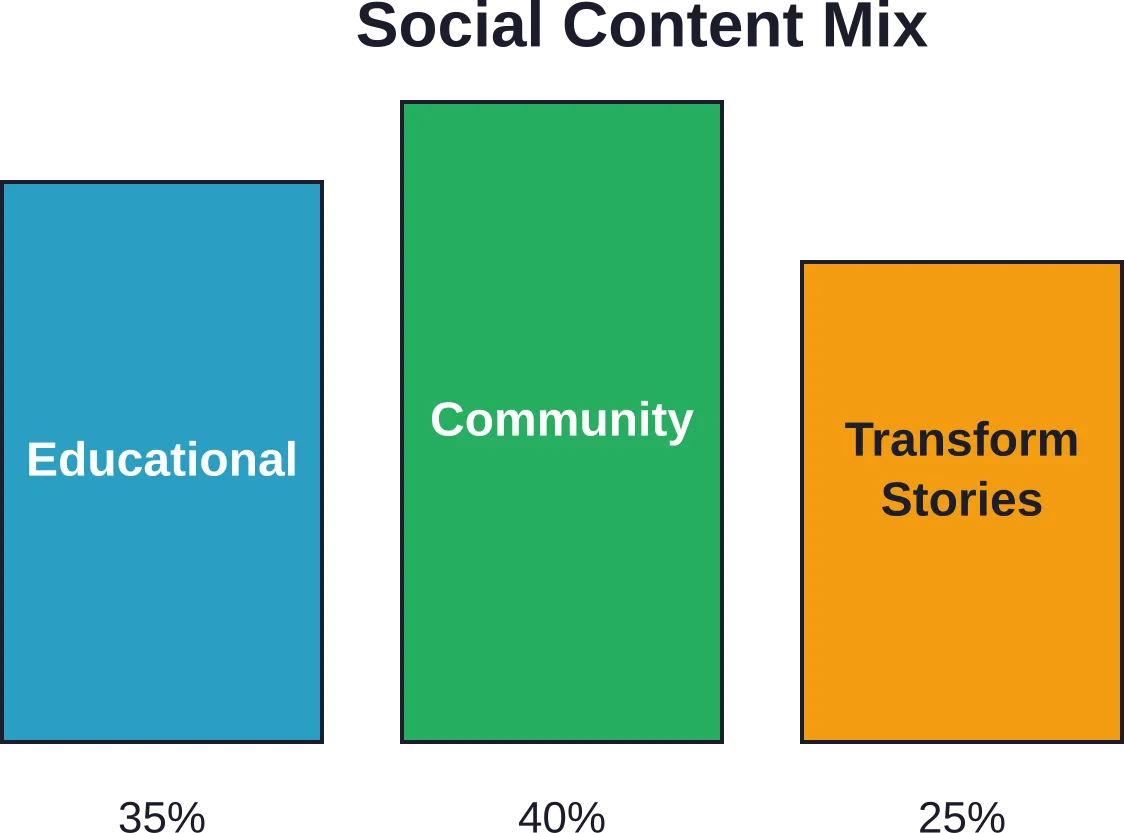
Effective social content falls into categories:
Series-based content performs better than random posts. Structured serialized content can build momentum—some virtual fitness series have featured seven-hour shows with 28 presenters speaking for 15 minutes each as an example of how serialized content builds engagement.
Consistency beats perfection. Three quality posts per week outperform daily mediocre content.
Founding member programs create urgency and reward early adopters while generating initial revenue and momentum.
The key is making the offer valuable but sustainable. Locking in rates too low can hurt revenue for years.
Effective founding member offers include:
Specificity sells. "Join before January 10th and get 6 weeks of personal training included" performs better than "20% off memberships." The concrete deadline and specific benefit create clearer value.
Limit the number of founding memberships available. Scarcity drives action. "First 50 members" or "Available through December 31" work better than open-ended offers.
Referral programs turn members into marketers. But most studios structure them wrong.
The best referral incentives reward both parties. Current members need motivation to refer; prospects need reason to act.
Offer value to the referring member and the new member. Examples:
Make claiming rewards frictionless. Automated tracking through management software beats manual tracking with spreadsheets.
Buddy memberships let two people join together at a discounted rate. This works because fitness commitment is easier with accountability.
Promote buddy passes: current members can bring a friend to three classes free. If the friend joins, the member earns a reward.
These programs leverage existing relationships rather than asking members to sell to strangers.
Events position the studio as a community hub beyond just workout classes.
Free community workouts in local parks build visibility. Partner with other businesses for wellness events—yoga plus healthy brunch, HIIT class plus nutrition workshop.
Pop-up classes at local festivals, farmers markets, or corporate offices introduce the brand to new audiences.
These events shouldn't be sales pitches. Provide genuine value. Capture contact information through sign-up sheets or digital forms. Follow up within 48 hours with a limited-time trial offer.
Strategic partnerships expand reach without advertising costs.
Identify businesses serving similar customers: health food stores, juice bars, physical therapy clinics, sports apparel shops, wellness centers.
Propose cross-promotions:
Corporate partnerships create consistent member pipelines. Offer corporate wellness packages to nearby companies. On-site lunch classes or discounted memberships for employees build bulk membership.
Paid ads work, but only with tight targeting and clear offers.
Studios with limited budgets should start small—$300-500 monthly—and test before scaling.
Geographic targeting within 3-5 miles of the studio location ensures ads reach potential members who can actually attend.
Target by interests: fitness, yoga, CrossFit, specific workout styles, health and wellness.
Demographic targeting depends on the ideal member profile. Age, income, life stage all factor in.
Lead ads work better than traffic ads for studios. Capture contact information directly in the platform with a compelling offer: free week trial, intro session, or founding member information.
Google Local Services Ads and Search Ads capture high-intent searches: "fitness studio near me," "boot camp classes [city]," "personal training [neighborhood]."
These searchers are ready to act. A well-structured landing page with clear call-to-action converts these clicks.
Budget recommendation: start with $10-15 daily. Track cost per lead. If cost per lead is under $30 and conversion rate from lead to member is above 10%, scale budget.

Fitness studio promotions can move through budget quickly, especially when businesses scale campaigns before understanding which offers are more likely to attract sign-ups. Extuitive helps businesses forecast ad performance before launch using predictive advertising models and AI-powered consumer simulations instead of relying only on live testing later.
Extuitive helps teams:
👉Book a demo with Extuitive and explore which fitness studio campaigns may be worth spending on before launch.
Email and SMS are owned channels. Social platforms can change algorithms or shut down. Email lists remain under studio control.
Capture emails everywhere: website, front desk, events, social media, partner locations.
Offer value in exchange for contact information:
Automated welcome sequences nurture leads:
Regular newsletters keep the studio top-of-mind for prospects and current members. Weekly or biweekly frequency works for most studios.
Text messages have higher open rates than email—often 90%+ versus 20-30% for email.
Use SMS for time-sensitive offers, class reminders, last-minute openings, and urgent updates.
Keep messages brief. Include clear call-to-action. Always provide an opt-out option.
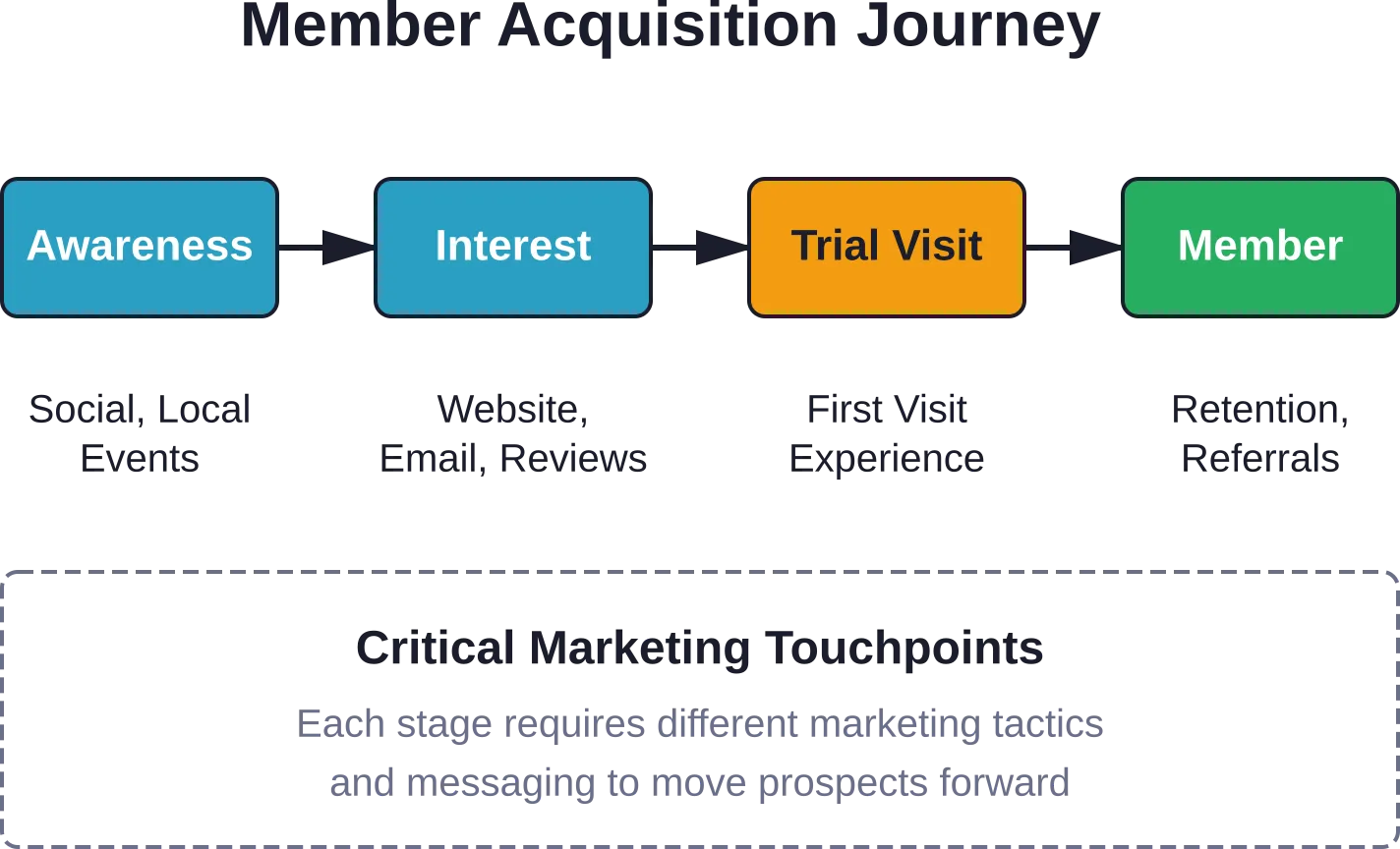
Marketing gets people in the door. Experience determines if they stay.
The first visit shapes perception more than any other touchpoint. Onboarding done right converts trials into members.
Send confirmation immediately after booking. Include:
Reduce anxiety through clear communication. First-timers worry about looking foolish or not fitting in. Address concerns proactively.
Staff should know first-timers by name before they arrive. Personal greetings make an immediate impact.
Give a brief facility tour. Introduce to other members or instructors. Make them feel welcomed, not invisible.
Instructors must check in with first-timers during class. Offer modifications. Provide encouragement.
The goal isn't perfection; it's feeling capable and supported.
After class, invite questions. Explain membership options without pressure.
Follow up within 24 hours via email or text: "How did the class feel? Any questions about getting started?"
If no response, follow up again at day 3 and day 7. Many people need multiple touchpoints before deciding.
Member-created content provides social proof while reducing content creation burden:
Challenges create engagement, urgency, and visible results that market themselves.
30-day challenges, 6-week transformation programs, or seasonal fitness challenges give members goals beyond just attending classes.
Charge a fee for premium challenges or make them free as a member benefit. Both models work depending on positioning.
Track progress through photos, measurements, or performance benchmarks. Share results (with permission) to demonstrate effectiveness.
Challenges also create natural content: progress updates, tips, member spotlights, before/after reveals.
The website serves as a 24/7 sales tool. Most studios underutilize this asset.
Every page should guide visitors toward one action: book intro session, claim trial offer, join challenge, download guide.
Make CTAs prominent. Use contrasting colors. Place them above the fold and throughout the page.
Display testimonials, reviews, transformation stories prominently. Video testimonials outperform text.
Include specific results when possible: "Lost 20 pounds in 12 weeks" or "Completed first 5K after training here."
Hiding pricing or schedules creates friction. Make information easy to find.
Allow online booking directly from the website. Every additional step in the signup process loses potential members.
Over 60% of website traffic comes from mobile devices. Sites that don't display properly on phones lose members.
Test the site on multiple devices. Forms should be easy to fill. Buttons large enough to tap. Text readable without zooming.
Marketing without measurement wastes resources. Studios need to track specific metrics.
Where do members find the studio? Google search, social media, referral, partner, walk-by, other?
Ask every new member during signup. Track in spreadsheet or management software.
Double down on channels producing most members. Reduce spend on channels that don't convert.
What percentage of trial visits convert to paying members? Industry average ranges from 30-50%.
If conversion is below 30%, the problem likely isn't marketing—it's the product or first-visit experience.
How much does it cost to acquire a new member through each channel?
Calculate: Total marketing spend on channel ÷ new members from that channel.
If average membership generates $1,200 in first-year revenue and cost per acquisition is $400, that's sustainable. If CPA is $800, margins get tight.
Percentage of members still active after 3 months, 6 months, 12 months.
Retention matters more than acquisition. A studio losing 20% of members monthly needs to add 20+ new members just to stay flat.
Marketing should support retention through engagement, community building, and ongoing communication.
Certain times of year create natural marketing windows.
New Year resolution traffic peaks in January. Prepare campaigns in November and December.
Offer New Year challenges or transformation programs starting January 2-5. Make signup available in December.
"Get summer ready" messaging resonates. Launch 6-week challenges or bootcamps.
Back-to-school mindset creates the second-best signup period after January. Position September as a fresh-start opportunity.
Gift memberships and class packages make thoughtful presents. Promote gift certificates starting November 1.
Counter-program against holiday indulgence: "Stay strong through the holidays" challenges or maintenance programs.
Long-form content positions studios as experts, improves SEO, and provides shareable resources.
Weekly or biweekly blog posts on the studio website drive organic search traffic.
Topics that work:
Each post should target specific search queries potential members might use.
Short instructional videos on social media provide value while showcasing expertise.
Longer YouTube videos (10-15 minutes) can attract search traffic and serve as evergreen content.
Topics: proper form demonstrations, at-home workout routines, studio tours, member interviews.
Being a guest on local podcasts or wellness-focused shows expands reach to new audiences.
Share expertise without selling. Mention the studio briefly but focus on providing value. Listeners who resonate will seek out the studio.
Acquiring new members costs 5-10 times more than retaining current ones. Yet many studios focus marketing almost exclusively on acquisition.
Retention marketing keeps members engaged, connected, and committed.
Weekly emails or texts with workout tips, upcoming events, class schedules, and member spotlights keep the studio top-of-mind.
Monthly newsletters highlighting community achievements, introducing new instructors, or sharing health content add value beyond just selling.
Celebrate member milestones: 10th class, 50th class, one-year anniversary, personal records, birthdays.
Small gestures—personalized card, social media shoutout, small gift—create emotional connection.
When members stop attending, reach out proactively. Automated campaigns can trigger after 10-14 days of inactivity.
"We missed you!" messages with personalized offers or check-ins show members they matter.
The right tools streamline marketing while providing better results.
Platforms like Mindbody, Glofox, Zen Planner, or Wodify handle scheduling, billing, marketing automation, and reporting in one system.
These tools cost $100-400 monthly but pay for themselves through efficiency and improved conversion.
Mailchimp, ConvertKit, or Constant Contact enable automated sequences, segmentation, and campaign tracking.
Many studio management systems include email marketing, eliminating the need for separate tools.
Buffer, Hootsuite, or Later allow batch-creating and scheduling social posts.
Create a month of content in one sitting, schedule it, and maintain consistent presence without daily effort.
Apps like Trainerize provide member workout tracking, communication, and programming outside class times. ACE Certified Professionals receive various benefits through the ACE Advantage program, including discounts such as $100 off or specific percentages (e.g., 20% or a free month) on platforms like Trainerize or MyFitnessPal.
These extend studio value and create additional retention touchpoints.
Certain missteps sabotage marketing effectiveness.
Leads who don't join immediately aren't lost—but only if there's follow-up. Most studios never contact leads after the initial inquiry or trial.
Automated follow-up sequences nurture leads over weeks or months until they're ready to commit.
Visual identity, messaging, and tone should remain consistent across platforms. Inconsistency dilutes brand recognition.
Define brand colors, fonts, voice, and messaging pillars. Use them everywhere.
Mimicking what other studios do rarely works. What succeeds for a yoga studio might fail for a HIIT gym.
Test tactics, but customize them to the specific audience, location, and brand.
Deep discounts attract price shoppers who leave when rates return to normal.
Value-added offers (extra sessions, services, extended access) work better than percentage discounts.
Gut feelings shouldn't drive marketing decisions. Track what works. Scale successful tactics. Cut failures quickly.
Marketing a fitness studio successfully requires strategic thinking, consistent execution, and patience.
The tactics that work best—referrals, community building, email nurturing, exceptional experiences—cost less than traditional advertising but demand more thoughtful implementation.
Studios operating on the typical 2% marketing budget can't waste resources on ineffective tactics. Every dollar must work.
Start with foundations: clear positioning, optimized local presence, compelling offers. Build from there with tactics matching the target audience and business stage.
Track what works. Double down on successful channels. Cut what doesn't produce results.
But remember: marketing gets people in the door. Product keeps them coming back. Invest in both for sustainable growth.
Ready to implement these strategies? Start with three tactics this month. Master them. Then add more. Consistent small actions compound into significant results.


