How Long Does It Take to Set Up a Shopify Store: A Simple Guide
A realistic look at how long it takes to set up a Shopify store, from first signup to launch, based on real tasks and decisions.
Jun 10, 2026



Masonry businesses can grow by combining digital marketing strategies like local SEO and Google Business Profile optimization with traditional methods such as networking and referrals. The most effective approaches include showcasing visual project portfolios, managing online reviews, targeting local homeowners, and allocating around 5–8% of revenue to marketing efforts. Success comes from building trust through authentic testimonials and maintaining consistent visibility in high-value service areas.
The masonry industry faces a unique marketing challenge. Homeowners don't think about stonework, brick repair, or concrete projects until they need them. That means masonry contractors can't rely on impulse purchases or repeat business at predictable intervals.
Instead, success comes from being visible at the exact moment a property owner realizes their chimney needs repointing or their patio requires new pavers. This visibility demands a strategic marketing approach that balances online presence with traditional relationship-building.
Digital marketing can deliver leads at significantly lower cost than traditional methods. Masonry businesses with optimized Google listings are significantly more likely to attract phone calls from potential clients. But here's the thing—digital alone won't cut it.
The most successful masonry companies blend modern tactics with time-tested approaches. They understand their target audience, allocate budget wisely, and consistently execute across multiple channels.
Before diving into specific tactics, masonry contractors need realistic budget expectations. According to the U.S. Small Business Administration, businesses typically allocate a percentage of revenues to advertising, with many businesses using around 5% as a starting point.
Some industries go higher—retail hits 4%, restaurants average 1.93%. For masonry companies, starting 5–8% makes sense, especially when brand recognition is still developing.
Here's what that looks like in practice. A masonry business generating $500,000 annually should allocate between $25,000 and $40,000 (5–8%) to marketing to ensure a steady pipeline of new leads. That might sound modest, but strategic deployment across the right channels delivers measurable returns.
As revenue grows and brand awareness increases, the budget can scale. The key is treating marketing as an investment that drives sales, not merely an expense.
Consider setting aside a percentage of revenue as the budget amount. As progress builds in brand recognition or lead generation, the strategy—and therefore the budget—will evolve year over year.

Extuitive helps teams review ad concepts before launching campaigns. The platform uses AI models to forecast likely performance, compare creative options, and support better decisions around messaging and targeting.
For masonry businesses, this can be useful when choosing between project, repair, or local service ad ideas.
Extuitive can help with:
👉 Book a demo with Extuitive to review your ad ideas.
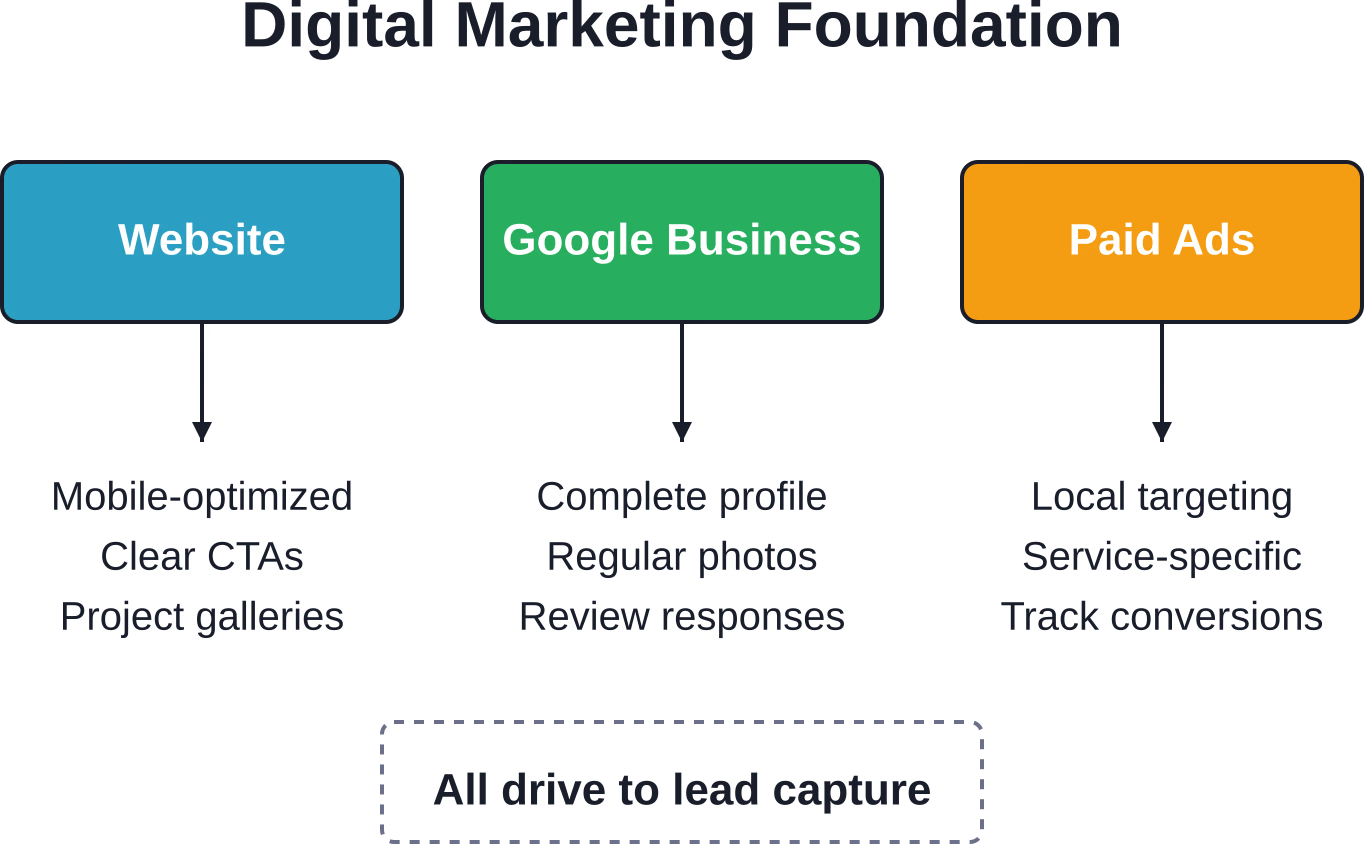
The foundation of any modern masonry marketing strategy starts with digital infrastructure. Homeowners research contractors online before making contact, which means visibility at that research stage is non-negotiable.
A high-converting website serves as the central hub for all marketing efforts. It needs clear calls-to-action, trust signals like certifications and insurance information, and compelling project galleries.
The site should answer the three questions every homeowner asks: Can you do my specific project? Are you trustworthy? How do I contact you?
Mobile optimization isn't optional—most homeowners will first encounter the site on their phones. Fast loading speeds, simple navigation, and prominent phone numbers make the difference between a lead and a bounce.
Local search engine optimization puts masonry contractors in front of homeowners actively searching for services. When someone types "brick repair near me" or "concrete contractor [city name]," proper local SEO determines who appears.
This starts with claiming and optimizing the Google Business Profile. Complete every section: business hours, service areas, categories, descriptions, and attributes. Upload high-quality photos of completed projects—exteriors, detailed close-ups, before-and-after comparisons.
Masonry businesses with optimized listings capture significantly more leads than competitors with incomplete profiles. The Google Business Profile acts as a mini-website in search results, often appearing before organic listings.
Consistency matters too. Ensure the business name, address, and phone number match exactly across the website, Google, Yelp, Facebook, and any directory listings. Search engines reward this consistency with better rankings.
Paid advertising offers two primary paths: traditional Google Search Ads and Local Service Ads. Each serves different purposes.
Local Service Ads require background checks and license verification but provide a trust badge that converts well with cautious homeowners. Search Ads offer more control over messaging and can target very specific project types.
Many masonry contractors run both simultaneously, using Search Ads for brand protection and specific services while letting Local Service Ads capture broader intent.
Masonry is an inherently visual craft. The quality of stonework, the precision of mortar joints, the transformation from damaged to restored—these sell better through images than words ever could.
Project photography needs strategic thinking. Before-and-after sequences prove transformation capability. Detail shots demonstrate craftsmanship. Finished project photos show the final result in context.
Lighting matters tremendously. Golden hour shots (early morning or late afternoon) make brick and stone glow. Overcast days provide even lighting for detail work. Harsh midday sun washes out texture and creates unflattering shadows.
Consistency builds brand recognition. Using similar angles, compositions, and editing styles across the project portfolio creates a cohesive professional image.
Video testimonials and project walkthroughs create emotional connections that static images can't match. Short-form interactive videos have the potential to increase conversions by up to 80%.
The most effective videos feature satisfied clients discussing their experience. Real homeowners, unscripted (or lightly scripted), talking about the problem they faced, why they chose this contractor, and how the finished project exceeded expectations.
Project walkthrough videos work well too. A brief clip showing the completed work from multiple angles, perhaps with a voiceover explaining the materials used and challenges overcome, demonstrates expertise.
Keep videos short—30 to 90 seconds typically performs best on social platforms. Longer isn't better; attention spans demand quick value delivery.
Facebook and Instagram serve as dynamic portfolio platforms for masonry businesses. Regular posting keeps the company visible in local feeds and demonstrates active operation.
Facebook remains particularly strong for reaching homeowners aged 35-65, the demographic most likely to undertake significant masonry projects. Instagram skews younger but excels at visual storytelling.
Content variety prevents feed fatigue. Mix completed projects, in-progress shots, team introductions, helpful tips, and customer testimonials. Behind-the-scenes content humanizes the business and builds connection.
Engagement matters more than follower count. A few hundred local followers who interact with posts deliver more value than thousands of disengaged accounts from outside the service area.
Online reviews function as the modern word-of-mouth referral. They build trust with prospective clients who don't know the company personally and influence search rankings.
The best time to request a review is immediately after project completion, while satisfaction is highest. Make the process simple—send a direct link to the Google Business Profile review form via text or email.
Don't overthink the ask. A straightforward message works: "We're glad you're happy with your new patio. Would you mind sharing your experience in a Google review? Here's the link."
Never offer incentives for reviews (it violates platform policies) or write fake reviews. Both tactics backfire spectacularly when discovered and can result in profile suspension.
Every review deserves a response—positive and negative alike. Thanking satisfied clients reinforces the relationship. Addressing concerns from unhappy customers demonstrates professionalism to everyone reading.
Keep responses professional, specific to the project when possible, and brief. Avoid defensive language even when a negative review feels unfair. Prospective clients judge the response as much as the original review.
For negative reviews, acknowledge the concern, offer to make things right if appropriate, and take detailed discussion offline. The public response shows willingness to resolve issues; the private follow-up actually solves problems.
Not all homeowners need masonry services, and not all who need them represent ideal clients. Strategic marketing focuses on high-probability prospects.
Travel time affects profitability. Projects two hours away might pay the same as local jobs but consume more time and resources. Staying visible in the best ZIP codes—those within efficient service range—maximizes return on marketing investment.
Local print publications, neighborhood social media groups, and geo-targeted digital ads all support geographic concentration. Becoming the known masonry contractor in specific communities builds referral momentum.
Homes aged 20-50 years require the most masonry work. Older homes need repairs; mid-century properties often seek updates. Newer construction rarely needs significant masonry services.
Targeting neighborhoods with older housing stock through direct mail, local ads, or door hangers reaches homeowners statistically more likely to need services soon. The message should emphasize inspection, maintenance, and repair to prevent larger problems.
Homeowners associations in communities with brick or stone exteriors represent concentrated opportunity. Offering educational seminars or association newsletter content positions the contractor as the local expert.
Digital dominates modern marketing conversations, but traditional methods retain effectiveness for local service businesses like masonry contractors.
Work trucks function as mobile billboards. Professional vehicle wraps or magnetic signs ensure visibility throughout service areas. Every trip to the supply house, every job site visit, puts the company name and contact information in front of potential clients.
Include the website, phone number, and primary services. Keep design clean and readable—complicated graphics don't work at highway speeds.
Job site signage captures neighbors' attention at the exact moment they're thinking, "Our driveway could use that." A simple sign with company name, services, phone number, and website keeps things professional.
Always ask the homeowner's permission before placing signage. Most are happy to help, especially when they're proud of the work being done.
Industry events, local business associations, and trade groups provide networking opportunities with complementary contractors. Building relationships with roofers, general contractors, landscapers, and architects creates referral pipelines.
These professionals encounter homeowners who need masonry services. When they trust the quality and professionalism, they'll recommend the company. Reciprocating referrals strengthens these partnerships.
Real estate agents represent another valuable connection. Homes being prepared for sale often need masonry repairs. Agents with a trusted contractor list close deals faster.
Sponsoring local sports teams, participating in community events, or supporting charitable causes builds goodwill and name recognition. The goal isn't immediate leads—it's long-term brand awareness and positive association.
When someone needs masonry work and remembers the company that sponsored their kid's baseball team, that emotional connection influences the decision.
Email remains surprisingly effective for staying top-of-mind with past clients and nurturing potential customers who aren't ready to commit yet.
The list should include past clients, quoted prospects who didn't book, website visitors who signed up for updates, and networking contacts. Quality matters far more than quantity—a few hundred engaged local contacts outperform thousands of random addresses.
Never buy email lists. Deliverability suffers, engagement tanks, and spam complaints damage sender reputation. Build organically through website opt-ins, project inquiries, and relationship development.
Nobody wants pure sales pitches filling their inbox. Effective email marketing balances promotional content with genuine value: seasonal maintenance tips, project showcases, company updates, or educational content about masonry materials.
A quarterly newsletter works well for most masonry businesses. Frequency high enough to maintain presence, low enough to avoid annoyance. Each email should include a clear call-to-action—schedule an inspection, request a quote, or view the portfolio.
Segmentation improves results. Past clients might receive maintenance reminders and referral requests. Quoted prospects get project showcases similar to their initial inquiry. Referral partners hear about capacity availability and project types being pursued.
Positioning the company as a local masonry authority builds trust and improves search visibility simultaneously. Educational content answers homeowner questions while demonstrating expertise.
Blog content should target questions homeowners actually search for: "How much does brick repointing cost?" "When should I repair vs. replace my concrete driveway?" "Best materials for outdoor fireplaces in [climate]?"
Each article serves two purposes: providing genuine value to readers and ranking for search terms potential clients use. Keyword research tools identify specific local search queries worth targeting.
Project case studies work particularly well. Describe the problem, the solution implemented, materials chosen, challenges overcome, and final results. Include plenty of photos. These pieces showcase expertise while building trust.
Short educational videos attract engagement and position the contractor as approachable and knowledgeable. Topics like "How to spot chimney damage before it gets worse" or "What to look for when hiring a masonry contractor" provide value while subtly selling services.
These don't require Hollywood production values. A smartphone, decent lighting, and clear audio suffice. Authenticity often outperforms polish in local contractor marketing.
Marketing without measurement wastes resources. Tracking which channels generate leads and which leads convert to projects allows strategic budget allocation.
Call tracking numbers reveal which marketing sources prompt phone inquiries. Unique numbers for different campaigns (one for Google Ads, another for direct mail, etc.) show exactly what's working.
Website analytics show visitor sources, pages viewed, and actions taken. Google Analytics provides this data free and integrates easily with most websites.
Conversion rates matter more than raw traffic. A hundred website visitors converting at 5% produces five leads. Five hundred visitors converting at 1% also produces five leads—but costs more to generate. Improving conversion often delivers better returns than increasing traffic.
Cost per lead and cost per acquisition provide the clearest picture of marketing efficiency. Dividing total marketing spend by leads generated gives cost per lead. Dividing by actual projects won gives cost per acquisition. These numbers guide budget allocation toward highest-performing channels.
Small changes often produce meaningful improvements. Testing different ad copy, landing page layouts, call-to-action placement, or email subject lines identifies what resonates with the target audience.
Run tests systematically—change one variable at a time so results clearly indicate what drove improvement. Document findings and implement winners permanently.
While residential work forms the core of most masonry businesses, government contracts and commercial subcontracting present additional revenue streams.
Federal government contracting officers use set-aside and sole-source contracts to help agencies meet small business contracting goals. Contracts valued up to $250,000 may be set aside for small businesses under certain circumstances.
For construction contracts exceeding $1.5 million, prime contractors must include a subcontracting plan identifying opportunities for small businesses. This creates paths for masonry contractors to participate in larger projects.
The SBA's SUBNet helps large federal prime contractors find small subcontractors. Opportunities range from concrete reinforcement and masonry on infrastructure projects to specialized work on facilities.
Masonry businesses that manufacture or distribute tools might explore export markets. The SBA's STEP program makes matching-fund grants for states to increase the number of small businesses that export.
Pennsylvania's Global Access Program (GAP) provides up to $10,000 to qualifying Pennsylvania companies, reimbursing up to 75 percent of eligible expenses associated with specific export promotion activities. Similar programs exist in other states.
This applies primarily to masonry supply companies or specialized tool manufacturers rather than service contractors, but diversification opportunities deserve consideration for applicable businesses.
Masonry work follows seasonal patterns in most climates. Marketing strategy should anticipate and account for these cycles.
Homeowners plan outdoor projects as weather warms. Marketing intensity should peak in late winter and early spring when prospects research contractors and gather quotes.
Messaging emphasizes getting on the schedule before the busy season fills. Early booking incentives or priority scheduling for spring contacts can accelerate decision-making.
Summer focuses on project execution. Marketing effort shifts toward documenting work, gathering testimonials, and maintaining visibility rather than aggressive lead generation.
This is the ideal time to capture photography and video content. Finished projects in full sunlight, satisfied customers willing to provide testimonials, and active job sites demonstrate capability.
Fall represents a second selling opportunity before winter. Homeowners who delayed spring projects or developed needs over summer become prospects.
Messaging shifts toward preparing properties for winter: chimney repairs before heating season, sealing concrete before freeze-thaw cycles, addressing drainage issues before heavy rains.
Slow winter months (in climates where masonry work pauses) provide time for strategic planning, relationship building, and educational marketing.
Networking intensifies. Trade shows, industry events, and business association meetings fill calendars. Content marketing ramps up with blog posts, videos, and social media positioning the company as the authority homeowners will call when spring arrives.
Certain mistakes plague masonry contractor marketing repeatedly. Awareness helps avoid these pitfalls.
Marketing delivers best results through consistent long-term effort. Posting to social media for two weeks then going silent for three months builds nothing. Running Google Ads for a month, stopping when projects fill up, then restarting when work dries up costs more and performs worse than steady presence.
Set sustainable marketing routines and maintain them regardless of current workload. The projects closing today came from marketing efforts three months ago. Today's marketing fills the pipeline for three months from now.
Acquiring new customers costs more than generating repeat business or referrals from satisfied clients. Yet many contractors focus marketing exclusively on new prospect acquisition.
Stay in touch with past clients through email updates, holiday cards, or maintenance reminders. Ask for referrals directly—satisfied customers often know others who need similar work but won't think to mention it unless prompted.
Blurry photos, poor lighting, and cluttered composition undermine credibility. Homeowners judge craftsmanship partially through how it's presented.
Invest time in learning basic photography or hire a professional for key projects. The difference between amateur snapshots and quality images dramatically affects conversion rates.
Running marketing without measuring results means operating blind. Install Google Analytics. Use call tracking. Ask new clients how they found the company. Track which sources produce the best projects.
Data reveals what's working and what's wasting money. Adjust based on evidence rather than assumptions.
The most effective masonry marketing combines multiple channels into an integrated ecosystem where each element reinforces the others.
A homeowner sees the truck in their neighborhood. Later, they search for masonry contractors and find the Google Business Profile with dozens of five-star reviews. They visit the website and watch a video testimonial from someone in a nearby ZIP code describing a similar project. They follow on Facebook and see regular posts showcasing beautiful work. When they're ready to request a quote, the company feels familiar and trustworthy.
That's the cumulative effect of ecosystem marketing. No single touchpoint closes the deal; the combination builds overwhelming credibility.
Building this ecosystem takes time. Start with foundational elements—website, Google Business Profile, basic social media presence. Add layers progressively: email marketing, content creation, paid advertising, traditional tactics.
Each addition strengthens the whole. The goal isn't doing everything immediately but rather building a sustainable system that generates leads consistently year after year.
Marketing for masonry businesses succeeds through strategic combination of digital visibility and traditional relationship-building. The contractors who thrive understand that homeowners research online, make decisions based on reviews and portfolios, and choose companies that feel trustworthy and competent.
Start with the foundation: an optimized Google Business Profile, a professional website with clear calls-to-action, and systematic review generation. Build from there with visual content showcasing exceptional work, targeted advertising reaching homeowners in ideal service areas, and consistent presence across relevant channels.
Allocate budget based on the SBA guideline of roughly 5–8% of revenue for newer businesses, scaling as brand recognition grows. Track results religiously—measure which channels produce leads and which leads convert to profitable projects. Adjust strategy based on data rather than assumptions.
The masonry contractors winning new business in 2026 aren't necessarily the largest or longest-established. They're the ones who've built comprehensive marketing ecosystems that generate visibility, build trust, and convert prospects into clients consistently.
Ready to transform your masonry marketing? Start with the foundational tactics today. Optimize that Google Business Profile. Request reviews from recent clients. Photograph your next completed project properly. Each small step compounds into significant competitive advantage over time.


