How to Set Up Pre-Orders on Shopify Without the Confusion
Learn how to set up pre-orders on Shopify with or without an app, plus tips for managing payments, inventory, and customer expectations.
Mar 25, 2026



Marketing ideas for chiropractors include building a conversion-optimized website, leveraging local SEO and Google Business Profile, collecting and managing patient reviews, using email marketing for retention, running targeted social media campaigns, developing physician referral networks, and implementing AI-powered chatbots. These proven strategies focus on attracting new patients while strengthening relationships with existing ones, driving sustainable growth for chiropractic practices.
The chiropractic landscape is competitive. Practices that thrive don't just deliver excellent adjustments—they master the art of attracting and retaining patients.
Even if patients love the care received, many won't return or refer without active guidance. Marketing fills this gap. But not all marketing ideas deliver results.
This guide cuts through the noise. The strategies outlined here come from what's actually working for chiropractic practices right now—no guesswork, no outdated tactics that waste time and money.
Skilled clinical work alone doesn't guarantee a full schedule. The reality? Patients have dozens of options when seeking chiropractic care, and they're doing their research before picking up the phone.
According to research, 75% of patients use online reviews to select their doctor. That single statistic reveals how perception shapes decisions before the first adjustment ever happens.
Marketing isn't about hype. It's about visibility, trust-building, and making it easy for the right patients to find and choose a practice. Without a deliberate approach, talented chiropractors' watch schedules remain half-empty while competitors with weaker clinical skills but stronger marketing fill their books.
The most effective marketing balances three elements: reaching new patients, retaining existing ones, and generating referrals. Master all three, and practice growth becomes predictable rather than random.
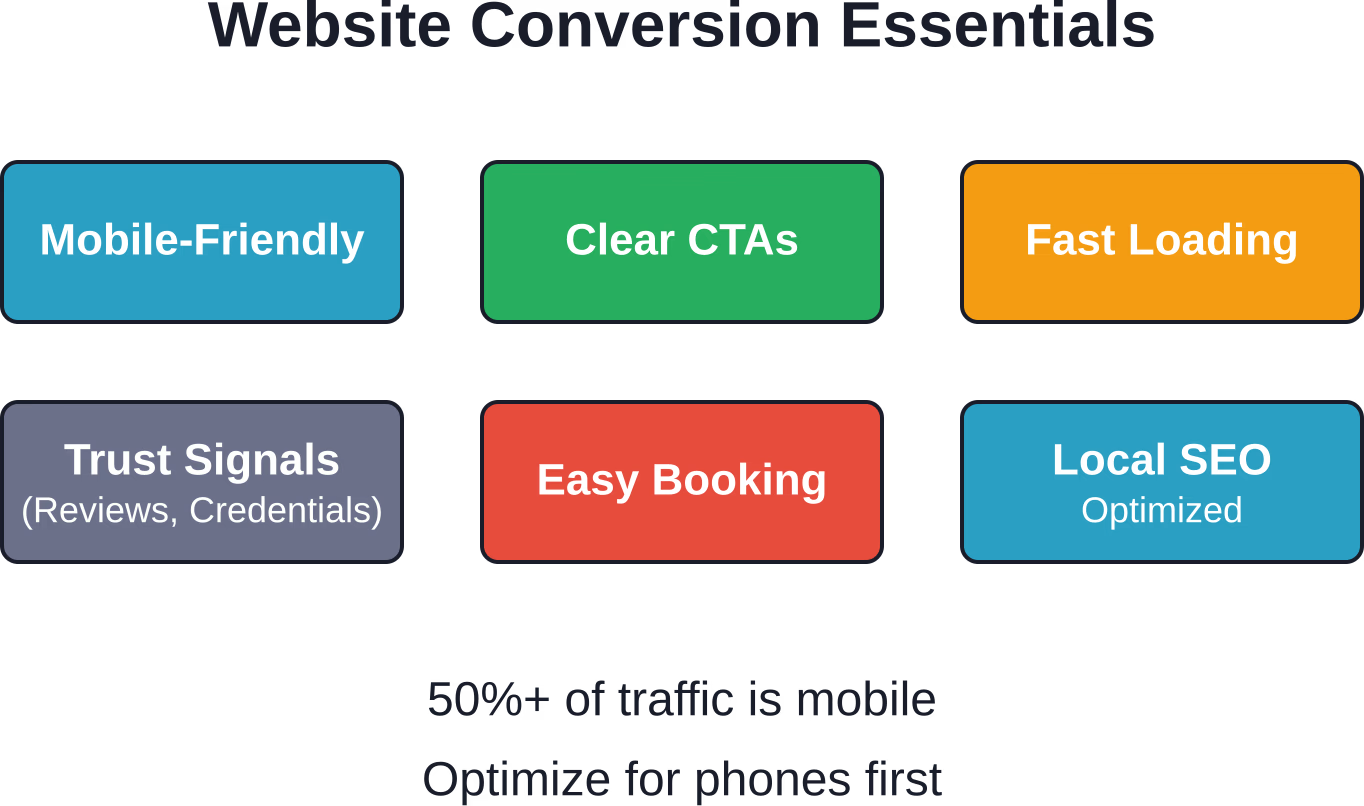
A website isn't just an online business card anymore. It's the digital front door—and for many prospective patients, the deciding factor.
Conversion optimization means designing every element to move visitors toward booking an appointment. Pretty designs don't matter if visitors leave without taking action.
Over 50% of global web traffic comes from smartphones. If a website doesn't load properly on mobile devices, half the potential patient base disappears instantly.
Mobile optimization means fast loading times, readable text without zooming, and buttons large enough to tap easily. Google also prioritizes mobile-friendly sites in search rankings, so this affects visibility too.
Every page needs an obvious next step. "Book Now" buttons, phone numbers, and contact forms should appear multiple times—not buried in a footer.
Research from Forbes indicates that 43% of small businesses plan to invest in their websites. Those investments pay off when sites actively convert visitors into patients rather than passively displaying information.
Visitors abandon slow sites. Aim for load times under three seconds. Compress images, minimize code, and use reliable hosting to keep pages snappy.
Most chiropractic patients search for care near their home or workplace. Local SEO ensures a practice appears when people search for terms like "chiropractor near me" or "back pain relief [city name]."
The Google Business Profile (formerly Google My Business) sits at the heart of local visibility. A complete, optimized profile increases the chances of appearing in the local map pack—those three businesses Google highlights above regular search results.
Claim the listing if it's not already owned. Fill out every section completely: business hours, phone number, website, services offered, photos of the office and staff.
Post regular updates through the profile—health tips, special offers, or announcements. Google favors active profiles over stale ones.
Citations are online mentions of the practice name, address, and phone number (NAP). Consistency matters—ensure NAP information matches exactly across directories like Yelp, Healthgrades, and industry-specific listings.
Inconsistencies confuse search engines and weaken local rankings. One practice might list "123 Main Street" while another shows "123 Main St."—that's enough to create problems.
Incorporate geographic terms naturally into website content. Instead of generic "chiropractic care," use "chiropractic care in [neighborhood]" or "[city] sports injury chiropractor."
Create separate service pages for different locations if the practice operates multiple offices. Each location needs its own optimized page.
Online reviews function as digital word-of-mouth. They build trust, influence decision-making, and even affect local search rankings.
That 75% statistic bears repeating: three-quarters of patients check reviews before choosing a doctor. Practices without a strong review presence lose patients to competitors by default.
Most satisfied patients won't leave reviews unless asked. Build review requests into the patient journey—after successful outcomes, following positive feedback, or at the end of a care plan.
Make it easy. Send follow-up emails with direct links to Google, Yelp, or Facebook review pages. A few extra clicks drastically reduce completion rates.
Both positive and negative reviews deserve responses. Thank patients for positive feedback. Address negative reviews professionally, showing concern and offering to resolve issues offline.
Potential patients read responses as much as reviews themselves. How a practice handles criticism reveals character and commitment to patient satisfaction.
Patients leave reviews across Google, Facebook, Yelp, Healthgrades, and industry-specific sites. Set up alerts or use reputation management tools to track mentions across platforms.
Addressing reviews quickly demonstrates attentiveness. Letting negative reviews sit unanswered for weeks sends the wrong message.
Email remains one of the highest-ROI marketing channels. For chiropractic practices, it excels at patient retention, reactivation, and referral generation.
The key? Personalization and value. Generic newsletters get ignored. Relevant, timely messages get opened and acted upon.
Not all patients need the same message. Segment by factors like visit frequency, condition type, or stage in the care plan.
Active patients might receive health tips and appointment reminders. Lapsed patients get reactivation campaigns. Patients who completed care plans receive maintenance reminders and referral requests.
Set up automated sequences for common scenarios: new patient welcome series, pre-appointment reminders, post-visit follow-ups, birthday greetings, reactivation campaigns for patients who haven't visited in six months.
Automation ensures consistency without demanding daily manual work. Platforms designed for healthcare practices often include HIPAA-compliant email tools.
Every email shouldn't be a sales pitch. Share educational content: stretches for common conditions, ergonomic tips for desk workers, seasonal health advice.
When emails consistently provide value, open rates stay high. Then when promotional messages do arrive—special offers, new services—recipients actually pay attention.
Social media isn't about broadcasting. It's about building relationships and establishing expertise in a more casual environment than a website.
Platforms vary in effectiveness for chiropractic marketing. Facebook and Instagram typically deliver the best results for local practices, while LinkedIn works for targeting physician referrals.
Post tips, exercises, myth-busting content, and explanations of common conditions. Video content performs particularly well—short clips demonstrating stretches or explaining spinal health concepts.
Consistency matters more than perfection. A few posts weekly beats sporadic bursts of activity followed by silence.
With proper consent, share patient testimonials and before/after stories. Real results from real people build credibility faster than any sales copy.
Use varied formats: written testimonials, video interviews, case study graphics. Different formats resonate with different audience members.
Organic reach on platforms like Facebook has declined significantly. Paid advertising fills the gap, and geographic targeting makes it efficient.
Target ads to specific zip codes, age ranges, and interests. For example, target people within five miles interested in fitness, yoga, or health who are experiencing life events like moving (when people often seek new healthcare providers).
Social platforms favor accounts that spark conversation. Respond to comments, answer questions, and acknowledge shares.
Quick response times to direct messages can convert interested prospects into booked appointments. Many platforms now allow appointment booking directly through messaging features.
Building relationships with other healthcare providers creates a steady referral stream. Primary care physicians, orthopedists, physical therapists, and pain management specialists all encounter patients who could benefit from chiropractic care.
Research published by Palmer Center for Chiropractic Research found that medical physicians see value when chiropractic care integrates into multidisciplinary settings. Chiropractors working in medical environments (such as hospitals and integrated medical settings) reported a median full-time annual salary of approximately $125,000, significantly above the overall BLS median of $79,000 (as of May 2024) for the profession—demonstrating the financial value of medical integration.
Not every physician makes a good referral partner. Focus on those who already show openness to complementary approaches or who treat patient populations that frequently develop musculoskeletal issues.
Sports medicine physicians, orthopedists, pain specialists, and primary care doctors treating older adults often see patients who align well with chiropractic care.
Some physicians harbor outdated perceptions of chiropractic care. Share current research, explain modern techniques, and emphasize evidence-based approaches to musculoskeletal conditions.
Offer to provide in-service presentations at medical offices or hospitals. A 15-minute lunch-and-learn can open doors that cold outreach never would.
Physicians are busy. Streamline the referral process: provide simple referral forms, offer direct scheduling assistance, send timely progress reports back to referring providers.
The easier and more professional the referral experience, the more likely physicians will send additional patients.

Artificial intelligence represents a transformative opportunity for chiropractic practices. Research published in the Journal of Chiropractic Care (JCC) explores chatbot potential in clinical settings.
AI tools can handle routine patient communications, answer common questions, and even assist with appointment scheduling—freeing staff to focus on higher-value interactions.
Patients don't only search for care during business hours. A chatbot on the practice website can answer frequently asked questions, provide basic information about services, and capture leads when staff aren't available.
Advanced chatbots integrate with scheduling systems, allowing visitors to book appointments directly through the conversation interface.
AI can deliver personalized educational content based on patient conditions or stages of care. For instance, patients with lower back pain might automatically receive exercise videos and posture tips tailored to their diagnosis.
This level of personalization was previously too labor-intensive for most practices. AI makes it scalable.
More sophisticated AI applications analyze patient behavior patterns to identify those at risk of discontinuing care. Practices can then proactively reach out with retention-focused communications.
As noted by the American Chiropractic Association, understanding and owning digital assets—including patient data that powers these AI tools—becomes increasingly vital for practice success.

Chiropractic clinics often spend too much time testing campaigns that never build enough patient interest. Extuitive helps brands predict likely ad performance before launch using historical campaign data, audience-response signals, and AI-powered consumer intelligence instead of relying only on trial and error. That gives practices a faster way to compare campaign directions and spend more time scaling stronger creatives instead of guessing what might work.
Here’s what Extuitive can help do:
👉Book a demo with Extuitive before scaling your next chiropractic campaign.
Content marketing establishes expertise, improves search rankings, and provides value that attracts prospective patients.
Practices that consistently produce helpful content position themselves as authorities. When people need care, they remember and choose the chiropractor who's been educating them for months.
Blog posts targeting common patient questions naturally attract search traffic. "How to relieve sciatica pain," "best sleeping positions for back pain," or "chiropractic care for headaches" all represent high-intent search terms.
Aim for comprehensive, genuinely helpful articles rather than thin, keyword-stuffed content. Search engines increasingly favor thorough, authoritative resources.
Video engages differently than text. Demonstrating exercises, explaining conditions with visual aids, or touring the office all work better in video format.
Post videos on YouTube, the website, and social media. YouTube functions as the second-largest search engine, making it a valuable discovery channel.
Lead magnets like stretching guides, ergonomic checklists, or pain management worksheets provide value while capturing contact information for email marketing.
Gate premium content behind a simple email signup form. People who download resources demonstrate interest and often convert to patients at higher rates than cold contacts.
Local events build community presence and generate qualified leads. They also provide excellent content for social media and email marketing.
Partner with local businesses to offer workplace wellness presentations. A 30-minute session on desk ergonomics or stress management introduces the practice to dozens of potential patients simultaneously.
Provide attendee handouts with practice information and special offers for employees.
Posture screenings, spinal health assessments, or flexibility evaluations at farmers markets, health fairs, or community centers attract people who might not otherwise seek chiropractic care.
The goal isn't to diagnose or treat on-site, but to identify issues and invite follow-up appointments.
Host evening or weekend workshops on topics like "Managing Chronic Pain Naturally," "Injury Prevention for Athletes," or "Healthy Aging Strategies."
Charge a small fee or offer free attendance with registration. Either approach captures contact information and positions the chiropractor as an expert educator.
According to the American Chiropractic Association's guidance on intellectual property, owning digital assets—websites, email lists, social media audiences—allows practices to fully harness the value of traffic they generate.
Many practices unknowingly cede ownership of critical assets to marketing vendors or website builders. If the relationship ends, they lose everything built on those platforms.
Register the domain in the practice's name, not a marketing company's. Use hosting accounts the practice controls directly.
If a vendor builds the site, ensure contracts clearly specify asset ownership and include provisions for transferring everything if the partnership ends.
Patient email lists represent tremendous value. Ensure they're stored in accounts the practice owns, not locked inside a vendor's proprietary system.
Regularly export and backup contact lists. Losing years of patient contacts because of a vendor dispute is a preventable disaster.
Even when delegating social media management, the practice should retain primary admin access to all accounts. Never give vendors exclusive control.
Marketing without measurement is gambling. Tracking which strategies deliver results and which waste resources allows for data-driven optimization.
Vague aspirations like "get more patients" don't provide actionable targets. Specific goals are: "acquire 25 new patients monthly," "increase patient lifetime value by 15%," or "achieve 50 five-star Google reviews by year-end."
Ensure goals are both measurable and time-bound.
Different marketing channels require different metrics. Website traffic, conversion rates, cost per lead, patient acquisition cost, review volume and average rating, email open and click rates, social media engagement—all provide insight into campaign effectiveness.
Use tools like Google Analytics for website data, native platform analytics for social media, and practice management software reports for patient acquisition sources.
Understanding the lifetime value of a patient makes it easier to justify marketing spend. If the average patient generates $2,000 in revenue, spending $200 to acquire one delivers a 10x return.
Track which channels deliver the highest ROI and allocate budget accordingly. The best marketing strategy isn't the flashiest—it's the one that delivers the most value per dollar spent.
Marketing isn't set-and-forget. Continuous testing reveals what resonates with the target audience.
Try different ad copy, landing page designs, email subject lines, or content topics. Compare results. Double down on winners, eliminate losers.
Marketing isn't a one-time project. It's an ongoing system that attracts new patients, retains existing ones, and generates referrals—the three pillars of sustainable growth.
The most successful chiropractic practices treat marketing as essential infrastructure, not an optional expense. They invest consistently, measure rigorously, and adjust based on data rather than assumptions.
Start with fundamentals: a conversion-optimized website, strong local SEO, systematic review collection, and basic email automation. These form the foundation.
Layer in additional strategies based on resources and goals: social media engagement, physician referrals, content marketing, AI tools, community events. Not every tactic needs immediate implementation. Build systematically.
Most importantly, remember that marketing serves patient care. The goal isn't manipulation—it's making it easier for people who need chiropractic care to discover, choose, and benefit from the services offered.
Practices that align marketing with genuine patient value—education, accessibility, transparency, excellent care—build reputations that compound over time. Shortcuts and gimmicks might generate short-term spikes, but sustainable growth comes from consistently delivering and communicating real value.
Ready to transform how the practice attracts and retains patients? Choose two or three strategies from this guide and commit to implementing them over the next 90 days. Measure results. Refine the approach. Then add the next layer. Marketing excellence, like clinical excellence, develops through consistent focused effort over time.


