The Best Proven AI Marketing Platforms Right Now 2026 ROI Edition
Discover the leading AI marketing platforms that help teams create content, optimize ads, and boost ROI. See which ones deliver real results in 2026.
Mar 24, 2026



Finding reliable dropshipping suppliers requires using verified directories like TopDawg and Inventory Source, connecting with wholesalers through trade platforms, researching manufacturer databases, and vetting suppliers for legitimate inventory, fast shipping, and integration capabilities. The best approach combines multiple sourcing methods while prioritizing U.S.-based suppliers for faster fulfillment.
The dropshipping model promises low startup costs and minimal inventory risk. But here's the thing—none of that matters if the suppliers are unreliable.
Finding quality dropshipping suppliers separates successful online retailers from those constantly dealing with stockouts, shipping delays, and angry customers. The supplier relationship forms the backbone of the entire business model.
This guide breaks down every practical method for sourcing dropshipping suppliers, from verified directories to direct manufacturer outreach. The strategies work whether launching a first store or scaling an established operation.

Finding dropshipping suppliers is one part of the process. The next step is deciding which ads are worth spending on. Extuitive helps teams predict ad performance before launch, so brands can review ad concepts early, compare creative options, and rule out weaker ideas before budget is committed.
Talk with Extuitive to:
👉 Book a demo with Extuitive to review ad concepts before launch.
Not all suppliers deliver the same value. The difference between a reliable partner and a problematic one becomes obvious within the first few orders.
Quality suppliers share specific characteristics. Real-time inventory synchronization prevents selling products that aren't actually in stock. Fast shipping times—ideally 2-5 days for U.S. suppliers—keep customers satisfied and reduce refund requests.
Integration capabilities matter more than most retailers initially realize. Suppliers offering seamless connections to Shopify, WooCommerce, or marketplace platforms eliminate hours of manual order processing.
Transparent pricing structures without hidden fees allow for accurate profit margin calculations. Suppliers who clearly list wholesale costs, shipping fees, and any additional charges upfront build trust from the start.
Several warning signs indicate potential problems. Suppliers requiring large upfront membership fees before revealing their product catalog often disappoint. Legitimate wholesalers typically offer free browsing or modest membership costs.
According to the FTC, online marketplaces must verify information from high-volume third-party sellers under the INFORM Consumers Act, effective as of June 27, 2023. This regulation increases accountability for sellers moving significant product volume through online platforms.
Unrealistic promises about profit margins or "exclusive" products usually signal trouble. The dropshipping business model involves real competition, and legitimate suppliers acknowledge market realities.
Poor communication responsiveness during the vetting stage predicts worse problems after orders start flowing. Suppliers taking days to answer basic questions will likely handle order issues just as slowly.
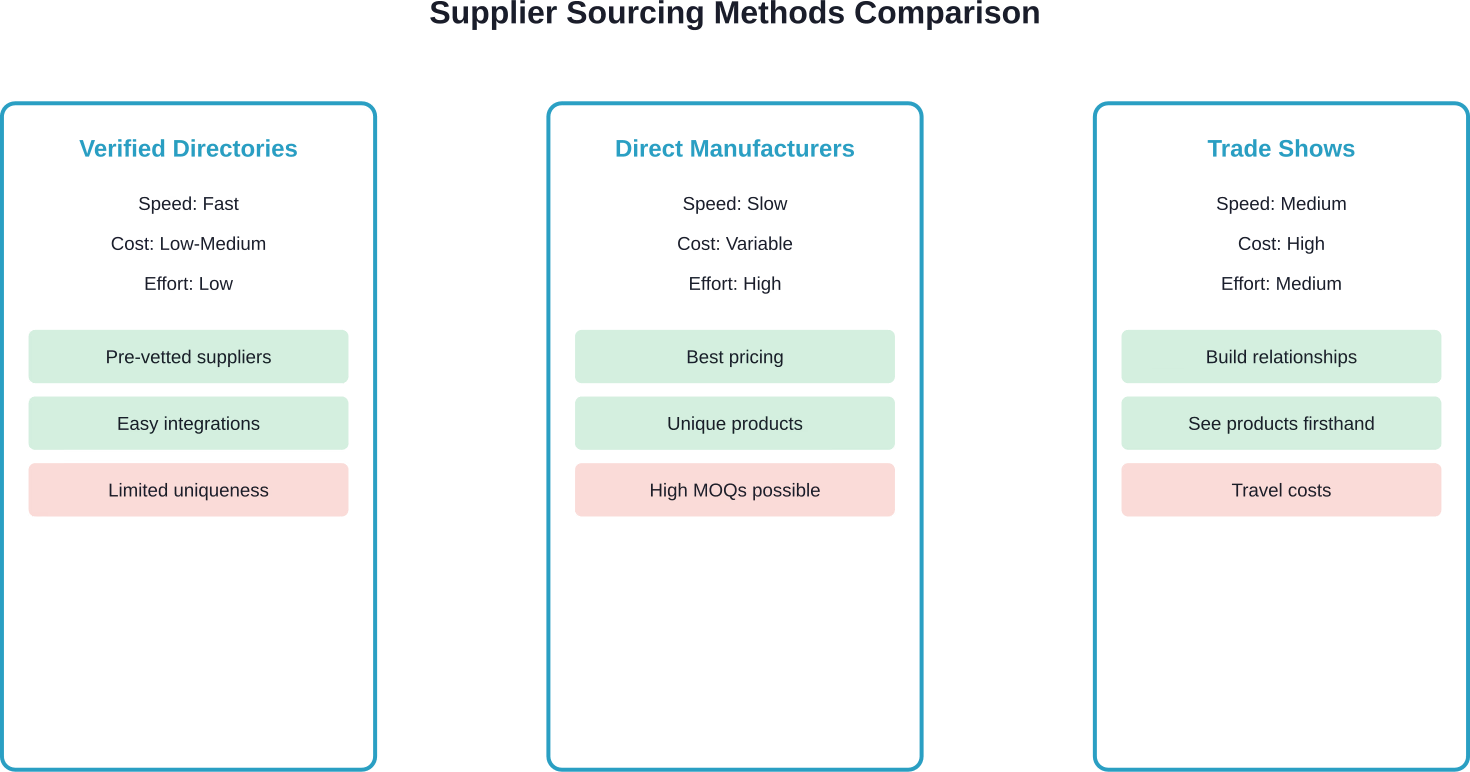
Supplier directories aggregate hundreds or thousands of vetted wholesalers in searchable databases. This approach saves weeks of individual supplier research.
TopDawg connects retailers with 3,000+ verified U.S. dropshippers offering access to 500,000+ wholesale products. The platform emphasizes American suppliers providing fast 2-5 day shipping, which addresses one of the biggest dropshipping challenges.
U.S.-based suppliers offer additional advantages beyond speed. Tariff-proof pricing eliminates unpredictable international trade costs. Communication happens in the same time zones, and product quality standards tend to align more closely with customer expectations.
The platform provides real-time inventory synchronization, preventing the common problem of selling products that suppliers have already sold out. Integration capabilities streamline the technical setup process.
Inventory Source operates as a comprehensive directory featuring 6,500+ wholesalers and dropshippers. The platform includes 100+ pre-integrated dropship suppliers with advanced search functionality across millions of products.
The free access model allows retailers to browse supplier product data and reseller information before committing. This transparency helps evaluate whether specific suppliers carry products aligned with a store's niche.
The directory format works particularly well for retailers exploring multiple product categories or testing different niches before settling on a specialty.
Zendrop positions itself as a comprehensive dropshipping platform rather than just a supplier directory. The platform combines supplier connections with automation tools, order fulfillment services, and product sourcing assistance.
The integrated approach appeals to retailers wanting a single platform managing multiple aspects of the dropshipping operation. Features include auto-fulfillment, fast shipping options, and access to over one million products.
Print-on-demand customizations and U.S. warehousing capabilities expand beyond traditional dropshipping into hybrid fulfillment models. This flexibility supports business evolution as operations scale.
Directories provide convenience, but direct relationships with manufacturers or distributors sometimes offer better margins and more unique product selections.
Manufacturer databases like ThomasNet, Maker's Row, and industry-specific directories list thousands of producers across different product categories. These platforms allow filtering by product type, location, and minimum order quantities.
The outreach process requires more effort than signing up for a supplier directory. Contacting manufacturers directly means explaining the business model, sales projections, and dropshipping capabilities required.
Many manufacturers prefer working with distributors rather than individual retailers. When a manufacturer declines direct partnership, asking for authorized distributor recommendations often opens alternative paths.
Not every manufacturer offers dropshipping services. Traditional wholesalers typically require bulk purchasing with minimum order quantities that don't fit the dropshipping model.
The conversation should clarify several points upfront. Does the manufacturer ship individual orders directly to end customers? What integration options exist for automated order transmission? How are inventory levels communicated?
According to the U.S. Small Business Administration, market research helps understand whether products have sufficient demand and competitive pricing. This same principle applies when evaluating which manufacturers to pursue for partnerships.
Business-to-business marketplaces create connections between suppliers and retailers across global markets.
Alibaba remains the largest B2B marketplace globally, connecting retailers with manufacturers primarily based in China and other Asian countries. The platform lists millions of products across every conceivable category.
International sourcing introduces complexity. Shipping times typically range from 15-30 days or longer, which creates customer satisfaction challenges in markets accustomed to fast delivery. Communication barriers and time zone differences complicate problem resolution.
Product quality varies significantly between suppliers. Ordering samples before committing to a supplier relationship remains essential, even though it delays the launch timeline.
Alibaba.com focuses on bulk wholesale orders, while AliExpress caters to smaller quantity purchases. For dropshipping purposes, AliExpress proves more practical since it supports single-unit orders.
The tradeoff comes in per-unit pricing. AliExpress prices run higher than bulk wholesale rates, which compresses profit margins. Retailers must calculate whether the convenience justifies the additional cost.
Some suppliers on these platforms now offer faster shipping options through warehouses in the United States or Europe. These hybrid arrangements balance lower manufacturing costs with more acceptable delivery times.
Finding potential suppliers represents just the first step. Proper vetting separates reliable partners from those who'll create operational headaches.
Start with basic legitimacy checks. Search for the company name combined with terms like "reviews," "complaints," or "scam" to uncover potential red flags from other retailers' experiences.
Request references from current clients. Legitimate suppliers willingly provide contact information for other retailers they serve. Speaking with existing clients reveals insights about communication quality, shipping reliability, and problem resolution.
Verify business registration and licensing. In the United States, most legitimate wholesalers maintain proper business licenses and tax identification numbers. The FTC's guidance on the INFORM Consumers Act emphasizes that online marketplaces must verify seller information for high-volume third-party sellers.
Place test orders before promoting products to customers. This hands-on evaluation reveals the actual customer experience—packaging quality, shipping speed, product condition, and tracking information accuracy.
Test the supplier's communication throughout the process. How quickly do they respond to questions? Do they proactively communicate about potential delays or issues?
Evaluate the unboxing experience from a customer's perspective. Is the packaging professional? Does the product match the description and images? Would this create a positive impression?
Read supplier agreements completely before signing. Pay particular attention to exclusivity clauses, minimum purchase requirements, and termination conditions.
Understand the return and refund policies thoroughly. When customers request returns, clear procedures prevent disputes. Who pays return shipping? What restocking fees apply? How quickly are refunds processed?
Clarify billing and payment terms. Some suppliers require prepayment, while others offer net payment terms after establishing a track record. Understanding cash flow requirements prevents surprises.
Relying on a single supplier creates vulnerability. Diversification provides backup options when problems arise.
Working with multiple suppliers for different product categories or even overlapping inventory reduces risk. When one supplier experiences stockouts or shipping delays, alternatives keep the business running.
This approach requires more sophisticated inventory management. Tracking which supplier fulfills which products becomes critical, especially when integrating with e-commerce platforms.
The administrative overhead increases, but so does business stability. The investment in managing multiple relationships pays off during disruptions.
Strong supplier relationships develop through consistent communication and mutual respect. Treating suppliers as partners rather than interchangeable vendors improves service quality.
Pay invoices promptly according to agreed terms. Financial reliability makes suppliers more willing to accommodate special requests or prioritize orders during busy periods.
Provide feedback about what's working and what needs improvement. Constructive communication helps suppliers understand specific business needs and adjust their service accordingly.
Face-to-face interactions at trade shows create relationship-building opportunities impossible through online directories alone.
Industry-specific trade shows bring together manufacturers, wholesalers, and retailers in concentrated networking environments. Events like ASD Market Week, ECRM, and category-specific shows provide direct access to hundreds of potential suppliers.
Trade shows allow hands-on product evaluation. Seeing and touching merchandise reveals quality details not apparent in online catalogs or product photos.
The concentrated format enables meeting numerous suppliers within a few days. This efficiency justifies travel and admission costs when actively expanding product lines or sourcing new categories.
Research exhibitor lists before attending. Identify priority suppliers to visit and schedule appointments when possible. Trade shows get crowded, and popular booths attract lines.
Prepare business information to share. Professional business cards, a brief company overview, and current sales data help establish credibility during initial conversations.
Take detailed notes and collect samples. With dozens of conversations happening over a few days, information blurs together without systematic documentation.
Strategic Google searches uncover suppliers that don't advertise heavily in popular directories.
Combine product terms with qualifier phrases like "wholesale," "distributor," "bulk," or "trade." Adding location modifiers like "USA" or specific states narrows results to domestic suppliers.
Search for manufacturers directly by looking for terms like "[product] manufacturer" or "[product] factory." Manufacturer websites often list their authorized distributors or have separate wholesale inquiry sections.
Use advanced search operators for more precise results. Searching for "[product] + 'wholesale application'" finds suppliers with formal application processes, indicating legitimate wholesale operations.
Research where competitors source their products. While suppliers often won't be explicitly listed, packaging details, shipping origin locations, or product descriptions sometimes reveal clues.
Image reverse searches through Google Images can identify where product photos originated. Some retailers use manufacturer-provided images, which can lead back to the source.
This detective work requires patience but occasionally uncovers excellent suppliers operating below the radar of mainstream directories.
General directories cover broad product ranges, but niche-specific networks often provide better-suited suppliers for specialized markets.
Product categories like pet supplies, beauty products, electronics, or outdoor gear often have dedicated wholesale networks or associations. These specialized communities understand category-specific requirements better than generalist platforms.
Fashion and apparel represent one area where niche networks excel. FashionGo, Tundra, and similar platforms focus exclusively on clothing and accessories, offering deeper supplier selections than general directories.
The targeted focus means suppliers understand the specific needs of that market segment. They're familiar with seasonal trends, sizing standards, and other category nuances.
Some suppliers offer private labeling or white labeling, allowing retailers to sell products under their own brand names. This approach builds brand equity rather than promoting generic merchandise.
Private labeling typically requires higher minimum order quantities than standard dropshipping, creating a hybrid model between pure dropshipping and traditional inventory ownership.
The investment increases, but so does differentiation. Branded products face less direct price comparison than generic items available from multiple sellers.
Supplier location significantly impacts business operations, from shipping times to regulatory compliance.
U.S.-based suppliers command premium pricing but deliver faster shipping and simpler logistics. For markets where customers expect quick delivery, domestic sourcing often proves necessary despite higher costs.
International suppliers, particularly in Asia, offer lower per-unit costs but introduce shipping delays, potential quality control challenges, and more complex communication. The cost savings must justify these operational complications.
A hybrid approach uses domestic suppliers for core products where speed matters, while sourcing complementary items internationally where longer delivery times are acceptable.
International sourcing requires understanding import regulations, customs duties, and product safety standards. The FTC enforces consumer protection laws including accurate advertising and product safety requirements.
Product categories like electronics, children's products, and cosmetics face particular regulatory scrutiny. Ensuring suppliers meet all applicable standards prevents costly legal problems.
Documentation requirements vary by product type and country of origin. Proper paperwork prevents shipment delays at customs and ensures smooth delivery to customers.
Manual order processing doesn't scale. Integration and automation become essential as order volume increases.
Most major suppliers now offer direct integrations with Shopify, WooCommerce, BigCommerce, and other popular e-commerce platforms. These connections automate order transmission, inventory updates, and tracking information synchronization.
Integration quality varies significantly. The best implementations provide real-time inventory updates, automatic order submission, and instant tracking number imports. Lower-quality integrations require manual intervention at various stages.
Testing integrations thoroughly before going live prevents order fulfillment disasters. Place test orders through the entire automated workflow to verify everything functions correctly.
For retailers with custom platforms or specific requirements, API access provides maximum flexibility. Application programming interfaces allow developers to build custom integrations tailored to unique business processes.
APIs require technical expertise to implement. Retailers without development resources need to budget for programmer time or stick with pre-built integrations.
The investment in custom integration pays dividends through perfect workflow alignment and reduced manual processing time.
Finding suppliers marks the beginning, not the end, of the relationship. Ongoing management ensures continued performance.
Track key performance indicators for each supplier. Metrics like on-time shipping rate, inventory accuracy, defect rates, and communication responsiveness reveal performance trends.
Regular performance reviews identify problems before they escalate. Addressing issues early maintains relationship quality and prevents customer satisfaction problems.
Data-driven conversations about performance eliminate ambiguity. Suppliers respond better to specific metrics than vague complaints about service quality.
Not every supplier relationship works out. Clear criteria for ending partnerships prevents hanging onto problematic suppliers too long.
Consistent failure to meet agreed standards justifies replacement. When supplier issues regularly create customer service problems, the cost of maintaining that relationship exceeds the switching cost.
The multi-supplier strategy discussed earlier makes transitions smoother. Having alternative sources already established eliminates the scramble to replace a suddenly dropped supplier.
Several predictable mistakes trip up retailers during supplier selection. Awareness helps avoid these pitfalls.
Ordering samples feels like an unnecessary delay when eager to launch. But promoting products sight unseen creates enormous risk.
Product photos and descriptions don't always match reality. Discovering quality issues after customers start ordering damages reputation and creates refund headaches.
The few days and modest cost for sample orders represent cheap insurance against much more expensive problems.
The lowest-cost supplier isn't always the best value. When that supplier creates constant operational problems, the price savings disappear quickly.
Reliable fulfillment, accurate inventory, and responsive communication create customer satisfaction. These factors drive repeat purchases and positive reviews—far more valuable than slightly lower wholesale costs.
Calculate total cost of ownership, not just per-unit price. Factor in the time spent resolving problems, lost sales from stockouts, and customer acquisition cost wasted on poor experiences.
Verbal agreements and informal email exchanges create disputes when memories differ. Formal contracts or detailed written agreements prevent misunderstandings.
Documentation protects both parties. Clear terms about pricing, shipping responsibilities, return policies, and other key issues establish shared expectations.
When suppliers resist formal agreements, consider that reluctance a warning sign about their professionalism.
Finding reliable dropshipping suppliers requires methodical research rather than rushed decisions. The time invested in proper vetting pays returns throughout the business relationship.
Start with verified directories to build a foundation of potential suppliers. TopDawg, Inventory Source, and similar platforms provide pre-screened options that save research time.
Expand research through direct manufacturer outreach, B2B marketplaces, and strategic Google searches. This multi-channel approach uncovers both mainstream and hidden supplier opportunities.
But discovery represents just the beginning. Thorough vetting through sample orders, reference checks, and contract review separates truly reliable partners from merely adequate ones.
The dropshipping model succeeds or fails based on supplier performance. Products arrive at customer doors with supplier packaging. Shipping speed depends on supplier fulfillment. Quality reflects supplier standards.
Building strong supplier relationships through clear communication, prompt payment, and mutual respect creates competitive advantages that pricing alone can't match.
The supplier search never truly ends. Market conditions change, new suppliers emerge, and existing partners sometimes decline in performance. Successful dropshipping businesses continuously evaluate their supplier network and make strategic adjustments.
Ready to start building your supplier network? Begin with verified directories, document your evaluation criteria, and commit to thorough vetting. The foundation built during supplier selection determines everything that follows.


