Best Dropshipping Apps Worth Knowing Right Now
A curated list of popular dropshipping apps and platforms - what’s out there, who they’re built for, and why they keep showing up in real stores.
Apr 15, 2026



Psychologists can grow their practices through ethical marketing strategies including building a professional website with local SEO, developing authority through content creation, fostering referral relationships with other healthcare providers, and maintaining an authentic social media presence. With millions of Americans experiencing mental health disorders, a significant portion of whom do not receive mental health treatment annually, there is considerable market opportunity for practices that implement effective marketing while adhering to ethical guidelines.
Marketing a psychology practice doesn't have to feel uncomfortable or sales-driven. Yet many psychologists struggle with this aspect of running a private practice because the field traditionally avoided competitive advertising practices.
The landscape has shifted. With millions of adults in the United States experiencing mental health disorders, the demand for quality psychological services continues to grow. But demand alone doesn't fill appointment slots.
The challenge? Standing out in a crowded field while maintaining the ethical standards central to the profession. Marketing psychology services require a different approach than selling products—one that builds trust, demonstrates expertise, and respects the vulnerable position of potential clients.
Before implementing any marketing strategy, psychologists must navigate ethical considerations that don't apply to most businesses. The tradition within psychology has been to avoid practices that could be construed as exploitative or misleading.
This doesn't mean psychologists can't market effectively. It means the strategies must prioritize client welfare and honest representation of services.
Research suggests that not all psychiatric treatment adheres to evidence-based practice guidelines. Marketing provides an opportunity to educate potential clients about effective treatment options while building a practice.
Here's what ethical marketing for psychologists looks like: avoiding false or deceptive statements about qualifications, respecting client confidentiality in testimonials, not guaranteeing specific outcomes, and presenting credentials accurately.
The good news? These constraints actually strengthen marketing efforts by building authentic connections with potential clients who value transparency and professionalism.
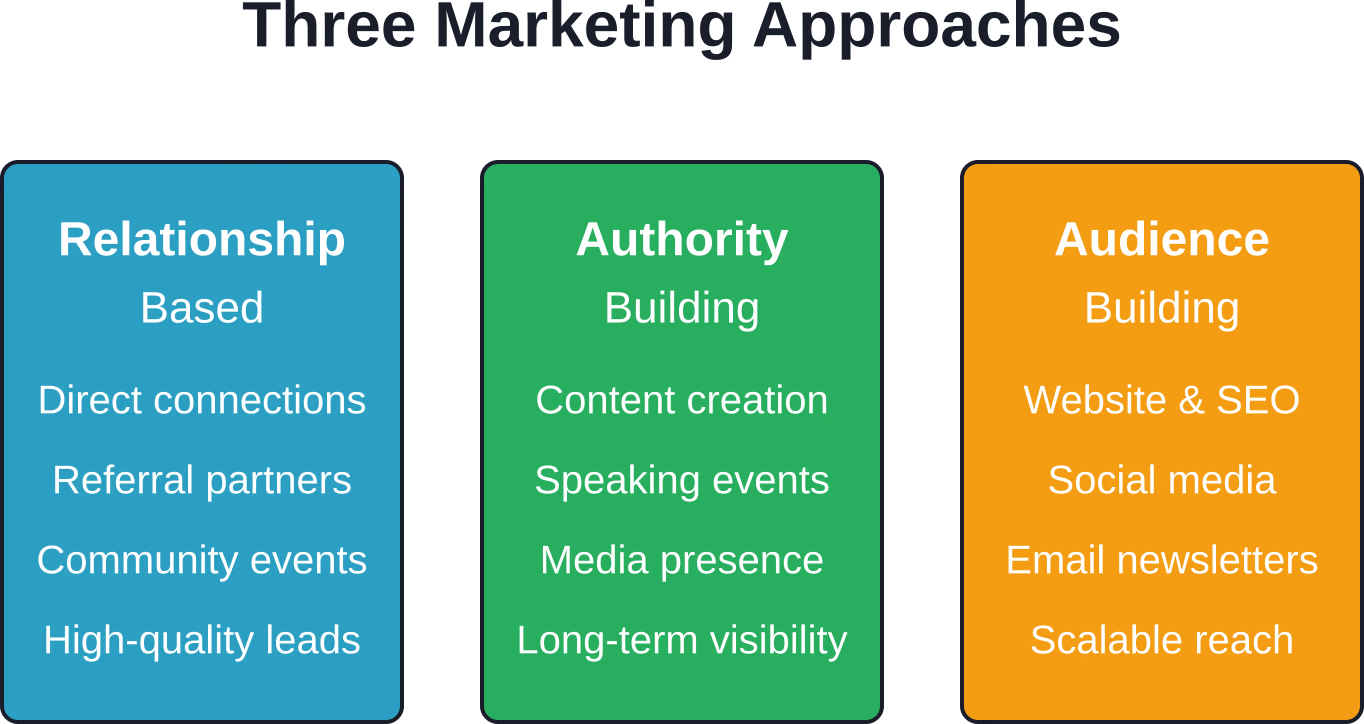
Psychology practice marketing generally falls into three strategic categories, each with different time investments and skill requirements.
This approach focuses on building direct connections with referral sources and community members. It's the most traditional form of practice development.
Real talk: relationship marketing works exceptionally well for psychologists because the field inherently values human connection. Physicians, psychiatrists, school counselors, and other healthcare providers become sustainable referral sources when they trust a psychologist's competence and approach.
The strategy involves attending professional meetings, joining local healthcare networks, scheduling coffee meetings with potential referral partners, and participating in community organizations.
A study on marketing therapy to parents found that a portion of surveyed parents reported therapy-seeking behavior following direct-to-consumer marketing exposure—demonstrating that personal recommendations significantly influence mental health service utilization.
Building these relationships takes time. But they often generate the highest-quality referrals because they come with built-in trust.
This approach establishes expertise through content creation, speaking engagements, and professional contributions. Psychologists become known for specialized knowledge in particular areas.
Authority marketing might include writing articles for local publications, presenting workshops at community centers, creating educational content about mental health topics, or contributing expert commentary to media outlets.
Research examining direct-to-consumer marketing of psychological treatments found that promotional materials emphasizing treatment efficacy and clinician expertise influenced treatment-seeking intentions among study participants.
Authority building creates long-term visibility. Each article, presentation, or media appearance continues generating awareness and referrals months or years later.
This approach uses digital platforms to reach potential clients directly through websites, social media, email newsletters, and online content.
Building an online audience allows psychologists to educate, reduce stigma, and stay visible to people actively searching for mental health services. Research on college students' engagement with university mental health clinic websites found that website features, psychoeducation, and effective information presentation were crucial for engagement.
Digital audience building scales more efficiently than relationship marketing because one piece of content reaches hundreds or thousands of people. But it requires consistency and patience.
A professional website serves as the foundation for nearly all modern marketing efforts. Potential clients research psychologists online before making contact.
The website doesn't need complexity. It needs clarity about who the psychologist helps, what issues they address, and how to take the next step.
Every psychology practice website should include clear information about specializations and treatment approaches, professional credentials and background, contact information and office location, and insurance or payment details.
But here's the thing—technical elements matter as much as content. A website that loads slowly, displays poorly on mobile devices, or confuses visitors won't convert browsers into clients regardless of how impressive the credentials are.
Website engagement research found that clear navigation, accessibility features, and presentation of information significantly influenced engagement with mental health services.
Most psychologists serve specific geographic areas. Local search engine optimization ensures the practice appears when someone searches for "psychologist near me" or "anxiety therapist in [city name]."
Local SEO involves claiming and optimizing a Google Business Profile, ensuring consistent name/address/phone information across online directories, gathering client reviews (with proper consent and ethical considerations), and creating location-specific content on the website.
Geographic targeting matters particularly for therapy services because most clients prefer providers within reasonable driving distance.
Creating educational content serves multiple purposes: demonstrating expertise, improving search visibility, addressing common questions, and reducing stigma around mental health treatment.
Content marketing for psychologists takes several forms.
Regular blog posts about mental health topics, treatment approaches, or coping strategies help potential clients while improving website search rankings.
The key is addressing topics that align with the practice's specialization. A psychologist focusing on anxiety disorders might write about panic attack management, while one specializing in child psychology might address parenting challenges.
Research indicates that substance use disorders often first emerge during adolescence—highlighting how educational content targeting specific demographics can meet genuine information needs while building practice awareness.
Video allows potential clients to get a sense of a psychologist's communication style and approach before scheduling an appointment. This reduces uncertainty and builds comfort.
Video content might include brief introductions to the psychologist and practice, explanations of therapy approaches, answers to frequently asked questions, or recordings of community presentations.
The format doesn't require professional production. Authenticity often resonates more than polish.
Email marketing maintains connection with past clients, referral sources, and interested community members. Regular newsletters might share mental health tips, practice updates, or relevant research findings.
The strategy respects privacy and ethical boundaries while keeping the practice visible to people who have already expressed interest.
Social media creates opportunities to reach potential clients and reduce mental health stigma. But it also presents unique ethical considerations for psychologists.
Maintaining professional boundaries on social platforms requires clear policies about responding to messages, avoiding dual relationships, and protecting client confidentiality.
Not every platform suits every practice. The choice depends on target demographic and content strengths.
Facebook works well for general practice information and community building. Instagram suits visual content about wellness and coping strategies. LinkedIn connects with professional referral sources. TikTok reaches younger demographics with brief educational videos.
Trying to maintain presence on every platform spreads efforts too thin. Focus on one or two platforms where the target clients spend time.
Social media content for psychologists should educate rather than diagnose, maintain professional boundaries, avoid guaranteeing outcomes, and respect confidentiality absolutely.
The content can be valuable without being clinical. Posts might normalize common experiences, share coping strategies, celebrate mental health awareness days, or highlight therapy misconceptions.
Community discussions suggest that psychologists who share authentic, educational content build stronger connections than those who post purely promotional material.

Satisfied clients represent the most credible marketing source. But asking for referrals in mental health services requires sensitivity.
A formal referral program might offer a small token of appreciation for referrals—perhaps a discount on a future session or a small gift card. But the approach must avoid creating pressure or compromising the therapeutic relationship.
Some psychologists simply make it easy for satisfied clients to refer others by providing business cards, maintaining an informative website, or mentioning that they're accepting new clients.
The ethical consideration here is ensuring that referral incentives don't influence clinical decisions or create conflicts of interest.
Building relationships with physicians, psychiatrists, school counselors, and other healthcare providers creates sustainable referral channels.
These professionals regularly encounter people who could benefit from psychological services but may not know which psychologists to recommend.
Effective networking involves introducing yourself to local primary care practices, sending introductory letters with business cards to potential referral sources, attending medical staff meetings at local hospitals, and joining professional organizations that facilitate cross-discipline connections.
The key is making it easy for referral sources to remember what sets the practice apart. A clear specialty focus helps: "I work primarily with adolescents struggling with anxiety" is more memorable than "I'm a general psychologist."
Following up when referral sources send clients—with a thank-you note and (with proper authorization) brief feedback about the referral—strengthens these relationships.
Hosting workshops, speaking at community events, or offering educational presentations builds visibility while serving the community.
Topics might include stress management techniques, parenting strategies, understanding anxiety and depression, or workplace mental health.
These events allow potential clients to experience the psychologist's expertise and communication style in a low-pressure setting. Many attendees who aren't ready for therapy at the time of the workshop remember the psychologist when they or someone they know needs services later.
Community engagement also positions psychologists as local experts, which can lead to media opportunities and additional speaking invitations.
Paid advertising can supplement organic marketing efforts, particularly when launching a new practice or expanding into new specialties.
Google Ads allows psychologists to appear at the top of search results when people look for specific services. The targeting can be highly specific—particular geographic areas, specific search terms, or certain demographics.
But here's where it gets interesting: advertising psychological services requires careful attention to ethical guidelines. The ads must avoid making guarantees about outcomes, misrepresenting qualifications, or exploiting vulnerable populations.
Many psychologists find that a modest advertising budget—perhaps a few hundred dollars per month—generates sufficient visibility while they build organic search rankings and referral networks.
Social media advertising on platforms like Facebook allows even more precise targeting based on interests, demographics, and behaviors. But the same ethical constraints apply.

Psychology practices often end up wasting ad spend testing campaigns that never connect with the right audience. Extuitive helps businesses evaluate ad creatives before launch by analyzing messaging, creative structure, audience response patterns, and historical ad performance. Their platform is built around predicting which campaigns are more likely to improve CTR and ROAS instead of relying only on expensive trial-and-error testing after launch.
With Extuitive, you can:
Book a demo with Extuitive and start validating campaigns before they go live.
Marketing requires ongoing evaluation and adjustment. Not every strategy works equally well for every practice.
Tracking metrics helps identify what's working. Key indicators include number of new client inquiries per month, which referral sources are most active, which website pages receive the most traffic, and what search terms bring visitors to the website.
Simple tracking methods work fine. Asking new clients "How did you hear about us?" during intake provides valuable data. Website analytics tools like Google Analytics show traffic patterns and popular content.
The goal isn't perfect measurement but rather understanding general patterns well enough to make informed decisions about where to invest time and resources.
Several pitfalls trip up psychologists new to practicing marketing.
Trying to market to everyone dilutes messaging. Broad statements like "I help people with all mental health issues" fail to resonate with anyone specifically. Narrower positioning—even if the psychologist has broad competencies—creates clearer marketing.
Inconsistent effort undermines results. Posting on social media intensively for two weeks then disappearing for three months builds no momentum. Better to commit to a sustainable level of activity.
Neglecting the website while focusing on social media creates problems because most potential clients eventually visit the website before making contact. The website needs to be current, professional, and functional.
Failing to claim and optimize the Google Business Profile is perhaps the single biggest missed opportunity. This free listing appears in local search results and on Google Maps.
Ignoring ethical guidelines creates risk. While marketing rules have relaxed over time, psychologists still must avoid deceptive practices, protect client confidentiality, and maintain professional boundaries.
Marketing a psychology practice successfully requires balancing visibility with professionalism, promotion with ethics, and business growth with clinical values.
The strategies outlined here—from building a professional online presence to fostering referral relationships to creating educational content—all work within ethical guidelines while generating sustainable practice growth.
Start with foundational elements: a professional website, local SEO, and relationship building. These create the infrastructure for long-term success. Then layer in content marketing, social media presence, or paid advertising based on available time, budget, and target population.
Remember that marketing psychology services differ fundamentally from marketing products. The goal isn't maximizing sales but rather connecting people who need help with professionals who can provide it.
That purpose makes ethical marketing not just acceptable but valuable—both for practices and for the communities they serve.


