Temu Dropshipping: Why It Doesn't Work (2026 Guide)
Temu dropshipping sounds appealing but has major flaws. Discover why alternatives like AliExpress and 1688 work better for sustainable dropshipping in 2026.
Apr 15, 2026



The most profitable dropshipping products for 2026 combine high perceived value with low shipping costs, focusing on niches like sustainable home goods, phone accessories, pet wellness, and tech gadgets. According to Shopify data, sweatshirt searches jumped 160%, reaching a five-year high 2024/2025 winter, while the Census Bureau reports e-commerce sales increased 5.6% in Q4 2025. Successful dropshippers target specific micro-audiences willing to pay premium prices, typically aiming for 3x markup margins between supplier costs and retail prices.
The dropshipping market continues expanding, but here's the challenge: too many entrepreneurs copy what everyone else already sells. That leads to brutal price wars and margins so thin they barely cover ad spend.
What separates profitable dropshipping stores from the struggling masses? Product selection. Not just trending items, but the right combination of demand, margin potential, and competitive positioning.
According to the U.S. Census Bureau, total e-commerce sales increased 5.6% in Q4 2025 compared to the previous year, while overall retail grew just 2.8%. The shift toward online purchasing continues accelerating, creating opportunities for dropshippers who understand which products actually convert.
This guide breaks down the dropshipping products and niches showing real traction in 2026, backed by search demand data and platform analytics rather than guesswork.
The 3x markup rule remains the industry standard for sustainable dropshipping. If a supplier charges $10, the retail price needs to hit $30 minimum to cover advertising costs, platform fees, payment processing, and still leave profit.
But markup potential alone doesn't guarantee success. The best dropshipping products share four characteristics:
According to platform data from 2026 dropshipping analysis, niche-specific stores outperform general stores by 40-60%. Focused stores build customer loyalty and command premium pricing because they speak directly to dedicated buyer communities.
The Census Bureau's 2022 Economic Census (2017-2022 report) showed the Electronic Shopping and Mail-Order Houses industry grew by $546.7 billion—a 106% increase. Employment in this sector jumped by more than 1.2 million workers, a 215.3% gain. The infrastructure supporting dropshipping has never been stronger.

Most dropshipping products fail for a simple reason – they go live before anyone really knows if people will care. You find a trending item, launch ads, and only then figure out if the angle works. That delay costs time and budget. Tools like Extuitive shift that step earlier. Instead of testing products only after launch, you can check different creatives and positioning upfront and see which ones are more likely to get attention. It’s built around prediction, not trial and error, using data and simulated consumer behavior to estimate what will actually perform before campaigns go live.
In practice, this means you’re not guessing which dropshipping product or creative might work. You can compare variations, filter out weak ideas early, and focus only on the ones with real potential. It doesn’t replace testing completely, but it cuts down how much you waste getting there. If you’re constantly cycling through products and ad angles, it’s worth checking what holds up before you launch the next one with Extuitive.
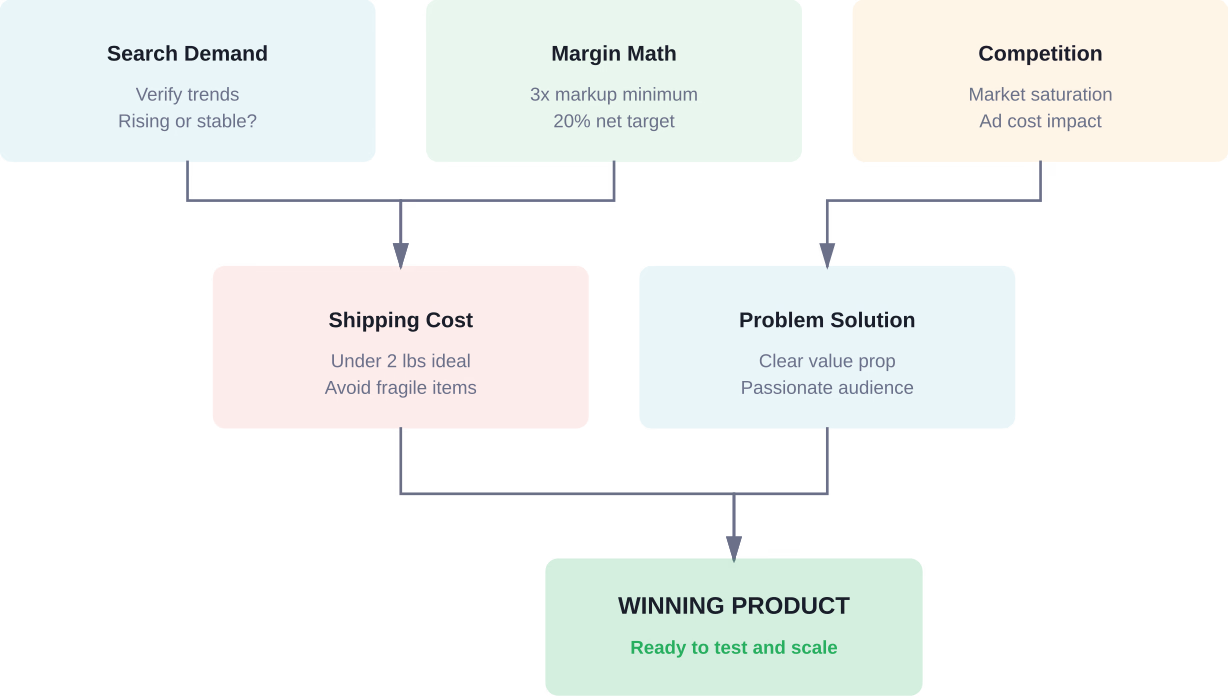
Before diving into specific products, understanding the selection process matters. Most failed dropshipping stores pick products randomly or chase whatever's trending on social media that week.
A systematic approach works better. Start with these validation steps:
Clothing remains one of dropshipping's most reliable categories. According to Shopify's trending products data, sweatshirt searches jumped 160%, reaching a five-year high in the 2024/2025 winter. Searches for camo hoodies also showed significant growth.
The key with apparel dropshipping? Avoid generic basics unless there's a unique angle. Focus on these proven subcategories:
Shopify data identifies these top apparel dropshipping products: basic short-sleeve t-shirts (when part of curated collections), vintage-style t-shirts, pajamas, tank tops, and sweatshirts.
For clothing stores, product pages become powerful cross-selling opportunities. Recommend complementary items as part of curated collections rather than selling individual pieces in isolation.
Phone accessories represent one of dropshipping's most consistent niches. Why? Universal demand, frequent upgrades driving new purchases, and high perceived value relative to actual cost.
MagSafe and magnetic mounting systems dominate current trends. As more consumers adopt compatible devices, demand for magnetic accessories continues climbing.
Top phone accessory products include:
The beauty of phone accessories? Low shipping costs, high margins (often 5x to 10x markup), and impulse purchase behavior. Customers buy multiple accessories per device.
Successful phone accessory stores focus on specific device ecosystems rather than trying to cover every phone model. An iPhone-specific store builds stronger brand identity than a generic phone accessories shop.
Eco-friendly living products represent a profitable niche with passionate buyers willing to pay premium prices. These customers prioritize sustainability over lowest cost.
According to competitor product analysis, modular wall shelf systems priced at €35-€65 perform exceptionally well. People want space optimization without drilling holes. The product solves cluttered walls while triggering desires for control and personalization.
Other sustainable home winners include:
The sustainable angle provides built-in marketing hooks. Content focuses on environmental impact reduction, which resonates strongly on social platforms. These products tell a story beyond their function.
Pet owners represent one of dropshipping's most lucrative audiences. They treat pets as family members and spend accordingly. Premium pet supplies work because emotional purchasing overrides price sensitivity.
Pet wellness specifically—not just toys or basic supplies—creates differentiation. Focus areas include:
Pet wellness products often achieve 4x to 8x markups. A calming bed sourced for $15 easily sells for $60-$80 when marketed with proper positioning around anxiety relief and sleep quality.
According to Shopify's trending products report, tallow moisturizer emerged as a significant trend. This traditional ingredient experienced a renaissance as consumers seek natural skincare alternatives.
Beauty products succeed in dropshipping when they offer unique ingredients or address specific skin concerns. Generic moisturizers face brutal competition, but specialized formulations find devoted audiences.
High-margin beauty categories include:
Beauty products frequently achieve 10x to 18x markups on items costing under $5 to source. A serum purchased for $3 can retail for $35-$50 with proper branding and ingredient storytelling.
The challenge? Regulatory compliance and customer expectations around results. Beauty dropshippers need clear disclaimers and realistic marketing claims to avoid chargebacks and negative reviews.
Smart home integration accessories represent a growing opportunity as households adopt connected devices. The focus shouldn't be on the core smart home hubs—those markets belong to major brands—but on the accessories that enhance them.
Profitable tech accessory niches include:
According to Shopify data on consumer spending, when people splurge on products, they're driven by comfort (21%), relaxation (16%), and practicality (12%). Tech accessories that deliver on these emotional benefits outperform purely functional gadgets.
Home office ergonomic accessories gained permanent traction post-pandemic. Standing desk converters, monitor arms, ergonomic seat cushions, and posture correctors maintain steady search demand.
Fitness recovery represents a specialized niche within the broader wellness market. These products target active individuals willing to invest in performance and injury prevention.
Top fitness recovery products include:
Fitness products benefit from influencer partnerships and user-generated content. Demonstrating the product in action builds credibility that static images can't match.
Niche hobbies with passionate participants create exceptional dropshipping opportunities. Golf training aids and equestrian equipment represent two profitable examples.
These specialized niches work because competition remains lower than mainstream categories. Building authority through content—training tips for golf, care guides for horses—establishes credibility that drives sales.
New parents actively seek solutions to common challenges, making baby products a lucrative dropshipping category. Sleep-related items specifically generate strong demand.
Winning baby product subcategories:
Parents research extensively before purchasing, so detailed product descriptions, safety certifications, and positive reviews matter enormously. Baby products require careful supplier vetting to ensure quality and safety standards.
The emotional purchasing behavior in this category supports higher margins. A sleep solution that promises better rest for exhausted parents easily justifies premium pricing.
Car enthusiasts and organization-focused consumers drive demand for vehicle accessories. These products solve specific frustrations around cleanliness and storage.
Top car accessory products include:
Car products benefit from before/after imagery showing the transformation from cluttered to organized. Visual proof of the solution resonates strongly in advertising.
Seasonal opportunities exist—sunshades in summer, ice scrapers in winter, organization products year-round. Smart dropshippers cycle inventory focus based on weather patterns in target markets.
Not all product categories support the same margin structures. Understanding realistic markup expectations prevents choosing products that can't sustain profitability.
These margins assume moderate advertising efficiency. High-competition niches require higher ad spend, compressing net margins. Lower-competition niches with organic traffic potential maintain healthier bottom lines.
Product launch timing significantly impacts initial success. Seasonal alignment creates tailwinds; fighting seasonal patterns means expensive customer acquisition.
Strategic seasonal launches:
Evergreen products—phone accessories, pet supplies, beauty basics—maintain year-round demand with seasonal fluctuations rather than complete drop-offs.
Understanding what doesn't work saves time and capital. These mistakes appear repeatedly among struggling dropshipping stores:
Not everyone starts with significant capital for product testing. Low-budget validation methods exist:
These methods won't guarantee success, but they filter obvious losers before spending on inventory or ads.
Product selection connects directly to supplier reliability and platform capabilities. The best product idea fails with poor execution infrastructure.
According to 2021 data, in the Americas alone, Shopify sellers dropshipped over 1 million products. Shopify leads as the e-commerce service for dropshipping businesses in this region.
AliExpress remains a primary sourcing option for new dropshippers due to buyer protection and extensive inventory. The AliExpress Business platform specifically helps identify top-ranking items across categories from biking essentials to action figures.
Supplier evaluation criteria:
Diversifying suppliers for successful products reduces risk. Single-supplier dependency creates vulnerability to stockouts or quality issues.
Product quality and pricing matter, but content determines whether potential customers discover and trust the offer. Different product types require different content approaches.
User-generated content outperforms branded content across categories. Encouraging customers to share photos and reviews creates authentic social proof that converts better than professional product shots.
The dropshipping landscape in 2026 rewards specificity over generalization. Broad stores selling everything struggle against focused brands solving particular problems for defined audiences.
Census Bureau data confirms e-commerce growth continues outpacing traditional retail, with Q4 2025 showing 5.6% year-over-year increase. The opportunity exists, but success requires strategic product selection rather than hoping random items convert.
Start with one niche. Test systematically. Validate with real ad spend, not just research. Scale what works. That process remains unchanged despite evolving product trends.
The products highlighted here—from tallow moisturizer to modular shelving, from MagSafe accessories to pet wellness items—represent current opportunities based on search data and platform analytics. But markets shift. Continuous monitoring of trends, competitor activity, and customer feedback separates sustainable stores from flash-in-the-pan operations.
Ready to start? Pick a niche that interests you or where existing knowledge provides advantage. Research three potential products within that niche using the validation framework outlined above. Choose one. Create a simple store. Launch a small test campaign. Learn from the data.
Dropshipping success in 2026 isn't about finding the single perfect product. It's about developing systems for identifying, testing, and scaling products efficiently. Build that capability, and individual product trends become opportunities rather than make-or-break moments.


