Best Accounting Software for Shopify in 2026
Discover top accounting platforms that sync with Shopify. Automate reconciliations and get real-time insights to focus on growth without the guesswork.
Mar 24, 2026



Quick Summary: Indie authors can expand their reach through a blend of organic strategies like newsletter swaps, social media engagement, and reader communities, alongside targeted paid advertising on platforms like Amazon and Facebook. Data from the Alliance of Independent Authors shows 45% of authors now use AI for marketing and research, with 70% reporting positive business impact. Building author platforms through consistent engagement, licensing opportunities, and strategic book launches drives long-term revenue growth.
Marketing remains the single biggest challenge for indie authors. Writing the book? That's the easy part. Getting readers to actually discover it in a marketplace flooded with millions of titles? Now that's where things get complicated.
The good news: self-publishing authors are earning more than their traditionally published counterparts. The Alliance of Independent Authors found that median self-published author income was $13,500, growing at a healthy 6% year-on-year, while traditionally published authors earned only $6k–$8k and was trending down.
But here's the thing—those earnings don't happen by accident. They require strategic, consistent marketing efforts that blend both free and paid tactics. This guide covers the marketing ideas that actually move the needle for indie authors in 2026.
The self-publishing industry continues its steady climb. According to Publishers Weekly, self-published titles with ISBNs rose 7.2% in 2023 over 2022, topping 2.6 million titles. That's more than double the output from a decade ago.
Industry observers estimate annual sales of self-published books reach into the billions of dollars. Amazon maintains that in the 10 years Kindle Unlimited has been active, KDP authors have earned more than $3.5 billion in royalties, with more than $650 million of that coming in just the past 12 months.
What separates earning authors from those who barely break even? Marketing strategy.
Data from the Alliance of Independent Authors reveals some fascinating patterns. Authors who spend 50% or more of their time writing average 14 books in their catalog. And licensing deals correlate strongly with higher revenue.
Not every marketing tactic requires a budget. Some of the most effective long-term strategies cost nothing but time and consistency.
Newsletter swaps let authors cross-promote to each other's subscriber lists. Find authors writing in similar genres whose audiences align with yours, then feature each other's books in upcoming newsletters.
Services like BookFunnel make this process easier by allowing authors to search for newsletter swap partners by genre. Refining searches ensures the audiences genuinely overlap.
Real talk: newsletter swaps won't generate massive sales spikes. But every new reader discovered through a swap represents a potential lifetime fan who might buy the entire backlist.
Group promotions pool multiple authors together for a single promotional push. These work particularly well for limited-time discounts, giveaways, or multi-author bundles.
The math works in everyone's favor. Ten authors each promoting to their individual audiences creates exponentially more reach than any single author could achieve alone. Readers benefit from discovering multiple new authors at once, often at discounted prices.
Platforms like BookFunnel and StoryOrigin facilitate group promotions, handling the technical logistics while authors focus on spreading the word to their audiences.
Social media remains valuable for building author platforms, but the approach matters more than the platform.
IngramSpark recommends the 80/20 content split: 80% of posts should offer value to followers without directly promoting books—industry insights, writing tips, behind-the-scenes content, relevant memes, or engaging conversation starters. Only 20% should focus on book promotion or the publishing journey.
This ratio prevents audiences from tuning out due to constant sales pitches. Building genuine engagement creates audiences who actually care when book launch day arrives.
But does that actually work? Community discussions suggest social media rarely drives direct book sales. Its real value lies in relationship building and long-term platform development rather than immediate conversion.
Platforms like Goodreads, Reddit's writing communities, and genre-specific Facebook groups offer direct access to engaged readers. Participation in these spaces requires authenticity—blatant self-promotion gets shut down quickly.
Contributing genuinely to discussions, answering questions about the writing craft, and engaging as a reader (not just an author) builds credibility. When launch day comes, communities that already know and respect the author are far more likely to give the new book a chance.

Extuitive helps businesses and creators predict how ad creatives may perform before they go live. It compares copy, visuals, offers, and audience angles, then shows which ideas look stronger or weaker before campaign budget is spent.
For indie authors, this can help review book launch, preorder, or reader-focused ad ideas before running them.
Extuitive can help with:
👉 Book a demo with Extuitive to review your ad ideas.
Free strategies build foundations. Paid advertising scales revenue.
Small businesses can start with a modest $500 budget and run a test campaign on Facebook.
That same principle applies to book advertising across all platforms.
Amazon Ads place books directly in front of shoppers already browsing for their next read. Sponsored Product ads appear in search results and on product detail pages, targeting readers based on keyword searches or competitor titles.
The platform's biggest advantage? Intent. Someone searching Amazon for "cozy mystery small town" is actively looking to buy books in that genre right now. Contrast that with social media, where most users aren't shopping—they're scrolling for entertainment.
Starting campaigns requires keyword research, competitive analysis, and careful budget management. But the learning curve pays off. Many successful indie authors report Amazon Ads as their single most profitable marketing channel.
Facebook's advertising platform offers unmatched audience targeting capabilities. Age, location, interests, behaviors—advertisers can narrow audiences with remarkable precision.
For indie authors, this means targeting readers who've liked pages of similar authors, engaged with book-related content, or expressed interest in specific genres. Instagram (part of the Facebook ad ecosystem) adds visual storytelling potential, particularly effective for books with strong cover designs.
The challenge? Book buyers on social platforms aren't in "shopping mode." Ads need to capture attention, build intrigue, and convince someone to leave their social feed to check out a book. That's a higher bar than Amazon, where purchase intent already exists.
Testing different ad creative, copy variations, and audience segments helps identify what resonates. Small test budgets prevent burning through cash on ineffective campaigns.
BookBub remains one of the most coveted promotional opportunities for indie authors. Their Featured Deals email highlights discounted books to millions of subscribers segmented by genre preference.
Getting accepted requires competitive pricing (usually $0.99 or free), strong reviews, and professional presentation. The submission process is competitive—BookBub rejects far more submissions than they accept.
When authors do land a Featured Deal, the sales spike can be dramatic. Thousands of downloads in a single day aren't uncommon. The real value comes from the read-through to subsequent books in a series and the boost in Amazon ranking that generates sustained visibility.
An author newsletter represents the single most valuable marketing asset an indie author can build. Unlike social media platforms (where algorithms control who sees content) or Amazon (where visibility depends on sales velocity), a newsletter provides direct access to readers.
Every subscriber represents someone who actively wants to hear from the author. That's powerful.
Building a list requires offering value in exchange for email addresses. Common lead magnets include free short stories, exclusive chapters, character guides, or early access to upcoming releases. The offer needs to genuinely appeal to the target reader.
Once subscribers join, consistent communication matters. Monthly newsletters work well for most authors—frequent enough to stay top-of-mind without overwhelming inboxes. Content should mirror the 80/20 rule: mostly value (updates, recommendations, behind-the-scenes insights) with occasional book promotions.
Newsletter services like MailerLite, ConvertKit, or MailChimp handle the technical infrastructure. Many offer free tiers for lists under certain subscriber counts, making them accessible for authors just starting out.
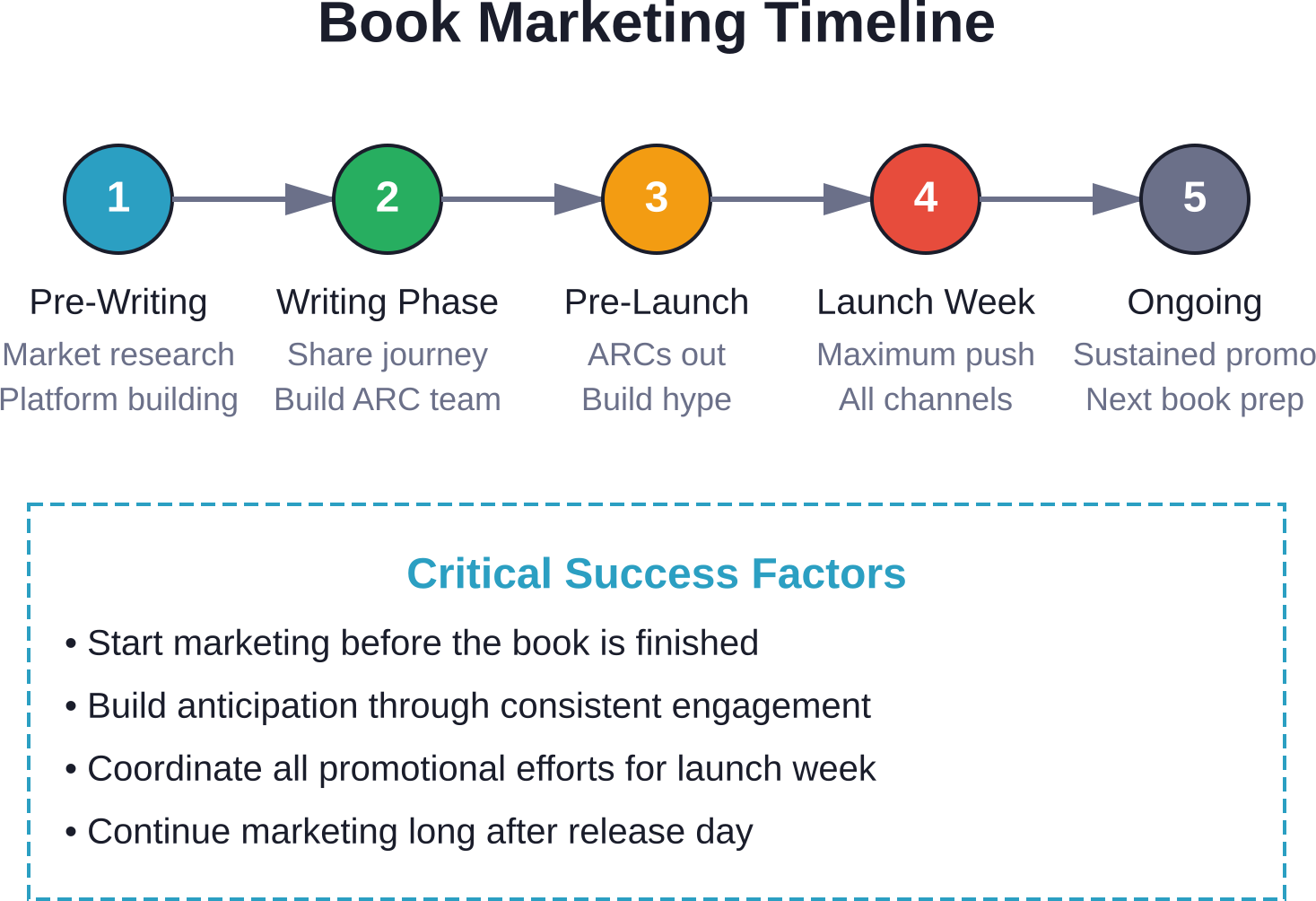
Timing matters in book marketing. Effective campaigns begin months before publication and continue long after release day.
Market research happens before the first word hits the page. Analyzing similar books, understanding reader expectations for the genre, and identifying gaps in the market inform both the writing and eventual marketing strategy.
Building an author platform starts here too. Launching social media accounts, starting a newsletter, and engaging in reader communities establishes presence before the book exists.
Sharing the journey builds anticipation. Behind-the-scenes content, character development insights, and progress updates give future readers reasons to care about the upcoming book.
This period also allows time for building review teams. Recruiting beta readers, identifying potential advance review copy (ARC) readers, and establishing relationships with book bloggers creates a foundation for launch buzz.
The months between finishing the manuscript and publication day are critical. Professional editing, cover design, formatting, and uploading to distribution platforms fill this time.
Marketing efforts intensify. Distributing ARCs to reviewers generates early reviews. Building hype through cover reveals, excerpt releases, and countdown posts maintains momentum. Setting up pre-orders captures early purchases and helps with launch rankings.
Launch week represents the culmination of months of preparation. Coordinating all promotional efforts—newsletter announcements, social media pushes, paid advertising, group promotions—creates maximum visibility during the crucial first few days when Amazon's algorithm pays closest attention.
But marketing doesn't end at launch. Sustained visibility requires ongoing promotion, regular new releases, and continued reader engagement. The most successful indie authors treat marketing as an ongoing business function, not a one-time event.
Artificial intelligence has rapidly become a marketing tool for indie authors. According to the Alliance of Independent Authors, 45% of authors now use AI for marketing and research, with 70% of users reporting positive impact on their business.
AI applications in author marketing include:
The technology handles repetitive tasks, freeing authors to focus on strategy and creative work. But AI tools work best as assistants, not replacements for human judgment. Generated content still requires editing, fact-checking, and brand alignment.
Where books are available matters as much as how they're marketed. Distribution decisions directly impact discoverability and revenue potential.
Amazon's KDP Select program offers exclusivity benefits—enrollment in Kindle Unlimited, access to promotional tools like Countdown Deals, and higher royalty rates in certain markets. The trade-off? Books must remain exclusive to Amazon, unavailable on other platforms.
Wide distribution through services like Draft2Digital or IngramSpark makes books available across multiple retailers—Apple Books, Kobo, Barnes & Noble, and numerous international storefronts. This approach diversifies revenue streams and reduces dependence on a single platform.
Neither strategy is universally superior. Genre matters—romance and science fiction readers heavily use Kindle Unlimited, making KDP Select attractive for those genres. Literary fiction and nonfiction readers more commonly purchase from multiple retailers, favoring wide distribution.
Testing both approaches over time helps authors determine what works best for their specific books and audience.
Library distribution through services like OverDrive and Bibliotheca opens additional revenue streams while expanding readership. Alliance of Independent Authors data shows strong correlation between licensing deals and higher author income.
Among authors with licensing deals, 46% earn $100,000 or more in annual revenue. That jumps to 90% for authors earning $500,000 or more. While licensing alone doesn't guarantee high earnings, it clearly correlates with successful author businesses.
Beyond traditional library lending, licensing opportunities include audiobook rights, foreign language translations, and film/TV adaptation options. Each represents potential passive income from work already completed.
Standard marketing tactics work, but creative approaches can generate buzz and differentiate authors in crowded markets.
Book boxes have become popular among readers—curated packages featuring a book plus themed items like bookmarks, candles, tea, or character-related merchandise. Sites like Etsy showcase many options, some costing sellers $20 or less to assemble.
Creating book boxes featuring a novel, then selling through various platforms, taps into readers' desire for immersive experiences beyond just the story. Limited runs prevent inventory challenges while creating scarcity that can drive demand.
Author interviews on genre-specific podcasts or BookTube channels expose books to engaged, targeted audiences. Unlike paid advertising, these appearances often cost nothing beyond time investment.
The key? Providing genuine value rather than just promoting. Sharing writing craft insights, discussing industry trends, or exploring themes in the work makes for compelling content that audiences appreciate. The book promotion becomes a natural byproduct rather than the sole focus.
Books with strong regional settings can leverage local marketing opportunities. Bookstore readings, library events, local media appearances, and partnerships with area businesses create community connections.
The U.S. Small Business Administration's guide to local marketing strategies emphasizes the importance of targeting prospects within a reasonable geographic radius. For authors whose books prominently feature specific locations, that same principle applies—readers in those areas have built-in interest.
Marketing compliance matters. The Federal Trade Commission requires disclosure of material connections in endorsements and reviews.
The FTC's Consumer Reviews and Testimonials Rule, which went into effect October 21, 2024, addresses deceptive conduct involving reviews and testimonials. The rule authorizes civil penalties for knowing violations.
What does this mean in practice? Authors can't suggest reviews must be positive to obtain promised incentives, even implicitly. Incentivizing reviews is permissible, but conditioning incentives on positive sentiment violates FTC guidelines.
The FTC's Endorsement Guides clarify that disclosures are required whenever material connections exist—even for items worth only a few dollars, contest entries, or coupon codes. Transparency protects both authors and readers.
Data-driven decision making separates successful marketing from throwing money into the void. Tracking key metrics helps identify what's working and what's wasting resources.
Not all metrics carry equal weight. Vanity metrics like follower counts or email list size matter less than engagement and conversion. A newsletter with 500 highly engaged subscribers outperforms one with 5,000 inactive contacts.
Regular analysis of these metrics reveals patterns. Which ad campaigns generate profit? Which social platforms drive actual traffic? Which promotional tactics result in sustained sales versus temporary spikes?
That data informs future marketing decisions, allowing continuous optimization.
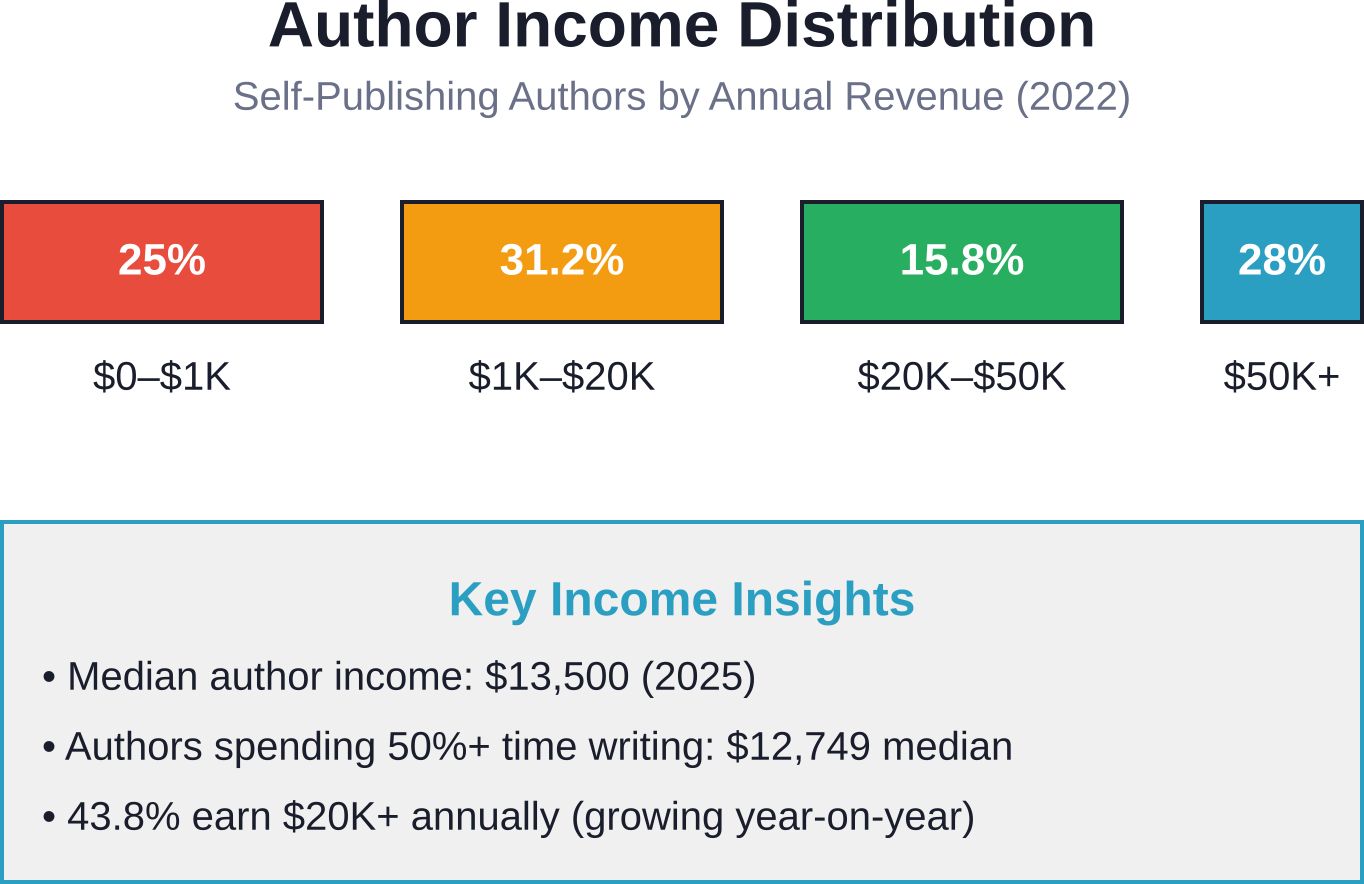
One-off book launches don't build careers. Sustainable author businesses require long-term thinking and strategic planning.
Alliance of Independent Authors data shows authors maintain an average of 14 books in their catalogs. More books mean more entry points for readers, more opportunities for discovery, and compounding visibility across platforms.
Backlist titles continue generating revenue long after publication. A reader who discovers Book 5 in a series often purchases Books 1–4 immediately. That multiplier effect makes each new release more valuable than the last.
Series offer built-in marketing advantages. Readers invested in characters and worlds are pre-sold on subsequent books. Marketing a series book becomes easier because previous readers already want it.
The read-through rate—the percentage of readers who continue from one book to the next—directly impacts profitability. High read-through rates mean marketing dollars spent acquiring readers for Book 1 pay dividends across multiple purchases.
Standalone books face steeper marketing challenges with each release. Every book requires rebuilding audience interest from scratch. That doesn't make them less viable, but the economics differ.
Publishing regularly keeps authors visible in reader feeds and retail algorithms. Gaps of years between releases cause audience attrition and algorithmic invisibility.
Many successful indie authors target 2–4 book releases per year. That pace maintains momentum without sacrificing quality (assuming proper editing and production standards).
Consistency matters more than speed. Authors who can reliably publish one excellent book per year build stronger long-term businesses than those who publish four rushed books one year then disappear for two.
Marketing separates indie authors who build sustainable businesses from those who publish into obscurity. The data is clear—self-published authors who invest in marketing earn more than traditionally published counterparts, with median incomes growing year-on-year while traditional publishing income declines.
No single marketing tactic guarantees success. The most effective approach combines free strategies that build long-term assets (newsletters, social platforms, reader communities) with targeted paid advertising that scales revenue. Testing different tactics, measuring results, and doubling down on what works creates sustainable growth.
The authors earning $50,000, $100,000, or more annually didn't get there through writing alone. They treated marketing as a core business function deserving consistent time, energy, and financial investment.
Start with one or two strategies from this guide. Test them consistently for 90 days. Measure the results. Adjust based on data. Then add the next strategy.
The indie author success stories aren't accidents. They're the result of great books backed by strategic, persistent marketing. Your book deserves that same commitment.


