Top Meta Ads Agencies in Los Angeles: Who’s Leading the Pack in 2026
Discover the leading Meta ads agencies in Los Angeles for high ROAS. Find top performers for Facebook and Instagram growth and precise targeting now.
Mar 24, 2026



Quick Summary: Engineering firms can drive growth through strategic marketing that balances technical credibility with business development. Effective approaches include showcasing project expertise through case studies, establishing thought leadership via technical content, leveraging LinkedIn for B2B networking, optimizing for industry-specific search terms, and building relationships through targeted outreach to decision-makers in complementary sectors.
Marketing an engineering firm presents unique challenges. The technical nature of the work, long sales cycles, and relationship-driven business models demand approaches that differ significantly from consumer marketing.
Many engineers excel at technical problem-solving but find business development uncomfortable. According to sources from the National Society of Professional Engineers, engineers often struggle with business skills development. That's a problem when the ability to bring in work matters at all levels, not just for company principals.
The good news? Engineering firms don't need flashy campaigns or viral content. What works is demonstrating technical competence, building trust, and staying visible to the right decision-makers. Here's how to do it effectively.
Before diving into tactics, recognize what makes engineering marketing different. Business buyers now conduct extensive research independently—74% of business buyers now research at least half of their purchase online before making an offline purchase.
This shift means potential clients evaluate engineering firms long before making contact. They're reviewing project portfolios, reading technical articles, checking LinkedIn profiles, and comparing capabilities. Firms that aren't visible during this research phase simply don't make the shortlist.
The marketing challenge isn't just about visibility, though. It's about demonstrating credibility to highly technical audiences while remaining accessible to executives who control budgets but may lack engineering backgrounds.
Engineering marketing walks a tightrope. Too technical, and business decision-makers tune out. Too simplified, and engineering stakeholders question competence.
Successful firms maintain this balance by creating content for multiple audiences: detailed technical papers for engineers, case studies emphasizing business outcomes for executives, and educational content for those researching solutions.
Generic marketing wastes resources. Engineering firms serve specific industries, project types, and client segments. Clarity here drives everything else.
Start by analyzing existing clients. Which projects were most profitable? Which client relationships run smoothest? Which industries show consistent demand for services? These patterns reveal where to focus.
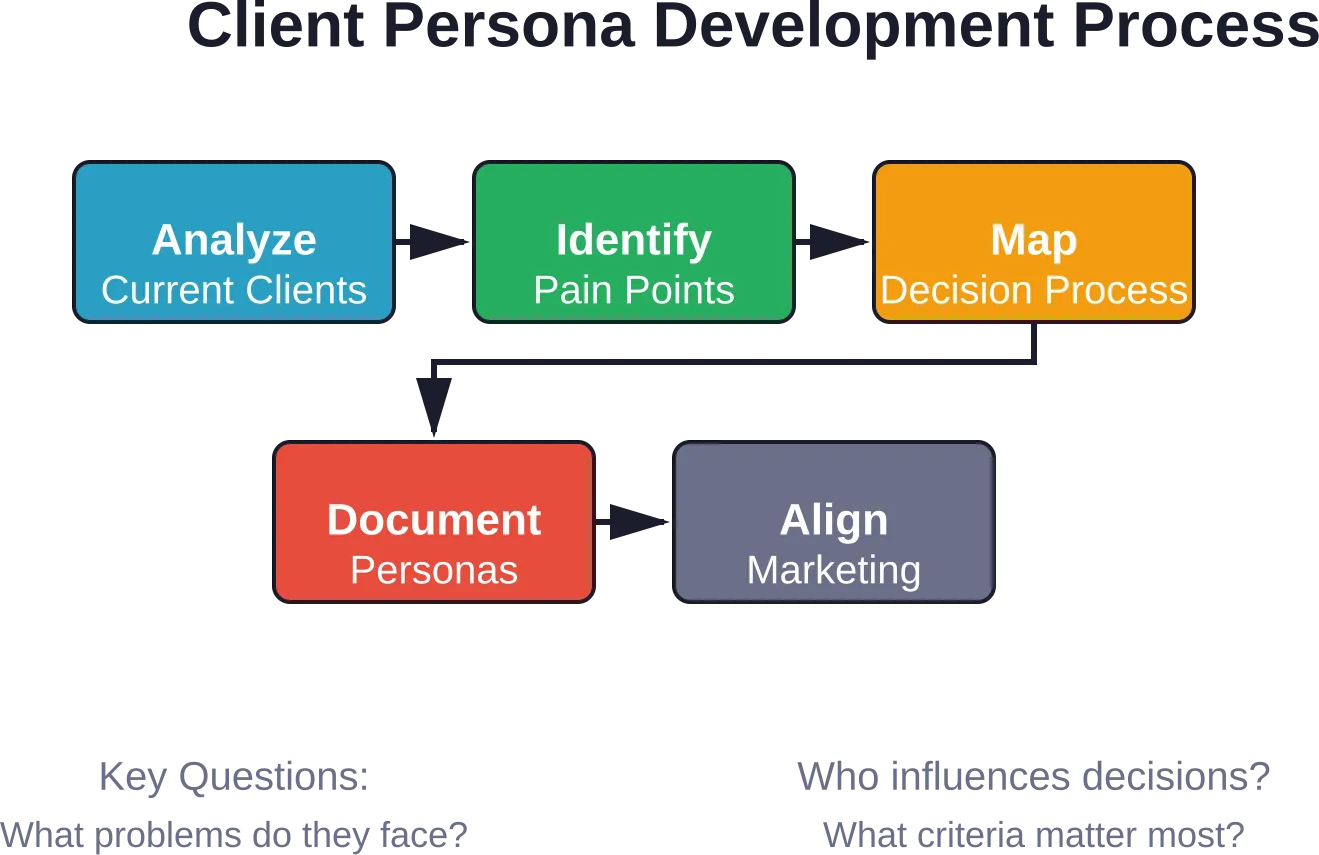
Build detailed personas for each target segment. Include role titles, technical knowledge level, budget authority, project triggers, evaluation criteria, and preferred communication channels. A facilities director at a manufacturing plant evaluates engineering firms differently than a city public works director.
Real talk: this research takes time. But marketing to "anyone who might need engineering" burns the budget without results. Specificity wins.
Vague goals like "increase visibility" or "get more clients" provide no direction. SMART objectives—Specific, Measurable, Achievable, Relevant, Time-bound—create accountability.
Effective marketing goals for engineering firms might include boosting website traffic by 30% within six months, generating 15 qualified leads per quarter from content marketing, or securing three speaking opportunities at industry conferences annually.
Each goal should connect to business objectives. If the firm wants to expand into a new market segment, corresponding marketing goals might focus on publishing thought leadership content in that sector's trade publications or building connections with key decision-makers.
Engineering firms often track vanity metrics that don't correlate with revenue. Social media followers, website visits, and email open rates matter less than qualified lead generation, proposal requests, and ultimately, signed contracts.
Set up tracking systems that connect marketing activities to business outcomes. Which content downloads preceded proposal requests? Which networking events led to project discussions? This data reveals where to invest effort.

Engineering firms often compete in crowded B2B markets where technical campaigns can struggle to hold attention once ads go live. Extuitive helps businesses forecast campaign performance earlier through predictive advertising systems and AI consumer simulations instead of relying only on live testing after launch.
Extuitive can support campaign planning by helping teams:
👉Book a demo with Extuitive to see which engineering campaigns may be worth pushing further.
Content marketing works exceptionally well for engineering firms because it directly addresses the credibility challenge. Publishing detailed technical content demonstrates expertise in ways that advertising claims never could.
Effective content formats include case studies detailing project challenges and solutions, white papers analyzing industry trends or technical topics, how-to guides for common engineering challenges, and technical blog posts addressing specific problems.
The key is consistency. Publishing one case study won't move the needle. Building a library of 20-30 case studies covering various project types, industries, and challenges positions the firm as experienced and capable.
Engineers often struggle to simplify technical concepts without feeling like they're dumbing down. The solution isn't to reduce technical depth—it's to structure content for multiple reading levels.
Start case studies with an executive summary highlighting business outcomes: cost savings, timeline improvements, regulatory compliance achieved. Then dive into technical details for readers who want them. This structure serves both audiences.
Potential clients searching for engineering solutions use specific, often technical search terms. Generic phrases like "engineering firm" attract unqualified traffic. Instead, optimize for terms prospects actually use when they have a need.
Industry-specific terms like "industrial wastewater treatment design," "seismic retrofit structural engineering," or "conveyor system engineering" attract searchers with genuine project needs. These longer-tail keywords have less competition and higher conversion potential.
Local SEO matters tremendously for engineering firms serving regional markets. Optimizing for "structural engineering firm Portland" or "civil engineers Dallas" captures local searches. Maintain complete Google Business Profile listings, gather client reviews, and ensure consistent name, address, and phone information across directories.
The content strategy and SEO strategy aren't separate—they're the same thing. Each technical article, case study, or guide targets specific search terms while demonstrating expertise.
A structural engineering firm might publish detailed articles about seismic design requirements, foundation repair methods, or building code compliance. Each piece targets search terms potential clients use while showcasing technical knowledge.
While consumer-focused social platforms offer limited value for engineering firms, LinkedIn drives real business results. Decision-makers for engineering projects actively use LinkedIn, making it the primary social channel worth investing in.
Effective LinkedIn strategies for engineering firms include maintaining complete, professional company pages, encouraging employees to build personal brands and share company content, publishing articles and posts demonstrating expertise, and engaging in industry group discussions.
Personal profiles matter more than company pages on LinkedIn. When engineers share content, engage in discussions, and publish articles, they build individual credibility that reflects on the firm. Encourage key team members to maintain active, professional presences.
Research on professional services marketing indicates that introverts can succeed at business development by focusing on genuine professional relationships rather than aggressive selling. LinkedIn facilitates this by enabling low-pressure relationship building through content sharing and thoughtful commenting.
Despite digital marketing's rise, engineering remains a relationship-driven business. Strategic networking generates opportunities that no amount of content marketing can replace.
Effective networking for engineering firms targets specific groups: industry associations relevant to target markets, local business organizations and chambers of commerce, complementary professional service providers (architects, contractors, developers), and past clients who might provide referrals.
The goal isn't collecting business cards—it's building genuine professional relationships. Attend events with the mindset of learning about others' businesses and challenges rather than pitching services.
Partnering with complementary firms expands reach efficiently. An engineering firm might collaborate with architectural firms, construction companies, environmental consultants, or equipment manufacturers.
Co-marketing initiatives might include joint webinars or workshops, co-authored technical content, reciprocal referrals, or shared conference exhibits. These partnerships provide access to each other's networks and enhance credibility through association.
Email remains one of the highest-ROI marketing channels for B2B services. The challenge isn't getting emails opened—it's having something worth sending.
Effective email content for engineering firms includes project highlights and case studies, technical insights and industry analysis, relevant regulatory or code updates, invitations to events or webinars, and company news about capabilities or team additions.
Segment email lists by industry, service interest, or relationship stage. A municipal client interested in water infrastructure doesn't need emails about manufacturing facility design.
Frequency matters. Monthly newsletters maintain visibility without overwhelming recipients. More frequent emails work only when there's genuinely valuable content to share.
Speaking at industry conferences, participating in panel discussions, or presenting at local business events positions engineers as recognized experts. This visibility builds credibility faster than almost any other marketing tactic.
Target speaking opportunities at events where potential clients attend. A structural engineer seeking commercial development work should pursue speaking slots at real estate and construction industry conferences, not just engineering association meetings.
Webinars offer lower-barrier entry to thought leadership. Host educational webinars addressing common challenges in target industries. Record and repurpose these as on-demand content.
Not all marketing tactics work for engineering firms. Some waste resources or damage credibility.
Aggressive cold calling typically fails in engineering. Decision-makers resent interruptions, and the complex nature of engineering services doesn't lend itself to phone pitches. If cold outreach makes sense, use personalized emails demonstrating knowledge of the prospect's specific challenges.
Consumer-focused social platforms like Instagram or TikTok rarely justify the effort for B2B engineering firms. Unless targeting residential clients or recruiting young engineers, focus LinkedIn efforts instead.
Generic brand advertising without specific value propositions wastes budget. Broad messages like "quality engineering services" don't differentiate or compel action. Specificity wins.
Engineering firms typically allocate 2-5% of revenue to marketing, though firms seeking growth may invest 7-10%. The specific allocation depends on growth goals, market competitiveness, and current visibility.
Budget across multiple channels rather than over-investing in one tactic. A balanced approach might include website maintenance and SEO (25-30%), content creation (20-25%), LinkedIn and digital advertising (15-20%), networking and events (15-20%), email marketing platform (5-10%), and marketing tools and software (10-15%).
Set realistic timelines. Marketing results for engineering firms take time due to long sales cycles. Expect 6-12 months before seeing significant lead generation from content marketing and SEO. Speaking engagements and networking may produce faster results but require consistent participation.
Track leads and opportunities back to their source. Did a prospect find the firm through search? Attend a webinar? Connect at a conference? This attribution reveals which tactics generate results.
Beyond lead volume, track lead quality. Ten qualified leads beat fifty tire-kickers. Define what constitutes a qualified lead—appropriate project size, right industry, budget authority, realistic timeline—and measure against that standard.
According to IEEE Young Professionals guidance, business owners must understand all aspects of business operation and take responsibility for all enterprise aspects. Marketing falls into this category for most engineers, making it essential to either develop these skills or partner with marketing professionals who understand technical services.
A comprehensive marketing plan documents strategy, tactics, budget, timeline, and success metrics. It doesn't need to be elaborate—clarity matters more than complexity.
Start with situation analysis: current market position, competitive landscape, and growth opportunities. Define target markets and personas clearly. Set specific, measurable goals tied to business objectives.
Outline tactical initiatives: which content will be created, networking events to attend, SEO improvements to implement, LinkedIn strategy to execute. Assign responsibilities and deadlines.
Review progress quarterly. What's working? What isn't? Marketing plans should evolve based on results rather than rigidly following an initial plan that isn't performing.
Most engineering firms face similar marketing obstacles. Recognizing these helps develop strategies to overcome them:
Engineering firms often debate whether to handle marketing internally or hire agencies. The answer depends on firm size, budget, and internal capabilities.
Smaller firms (under 20 people) typically lack bandwidth for full in-house marketing. An agency or fractional marketing professional provides expertise without full-time overhead. Focus their efforts on high-impact activities: website optimization, content creation, and SEO.
Mid-sized firms (20-100 people) might hire one marketing coordinator internally to manage day-to-day activities while engaging agencies for specialized needs like website development, advertising campaigns, or strategic planning.
Larger firms can build internal marketing teams but often still partner with agencies for specific expertise or capacity during growth periods.
When selecting a marketing agency, prioritize those with B2B and professional services experience. Agencies focused on consumer brands or e-commerce won't understand engineering firm marketing dynamics.
Effective marketing for engineering firms isn't about adopting every tactic or maintaining presence on every platform. It's about strategic focus on activities that demonstrate technical credibility, build relationships with decision-makers, and stay visible when prospects need engineering services.
Start with foundations: a professional website optimized for search, active LinkedIn presence, and systematic case study development. Build from there based on results and resources.
The firms that thrive aren't necessarily those with the flashiest marketing. They're the ones that consistently demonstrate expertise, provide value to their target markets, and maintain visibility when decision-makers are ready to engage.
Marketing doesn't replace technical excellence—it ensures that excellence gets recognized. In competitive markets where potential clients research independently before making contact, visibility during that research phase determines who makes the shortlist.
Whether implementing marketing internally or partnering with agencies, commit to consistency. Sporadic efforts produce sporadic results. Systematic, ongoing marketing activities compound over time, building reputation and generating opportunities that drive sustainable growth.


