Top Free AI Agents: Tools, Platforms, and What’s Available
A curated list of free AI agent tools and platforms, plus context to help you understand what’s out there and where they fit.
Apr 10, 2026



IT companies thrive when they combine thought leadership content, SEO-optimized digital presence, and targeted account-based marketing. The most effective strategies include publishing technical case studies, leveraging automation for personalized campaigns, and building visibility through strategic partnerships and community engagement.
The technology sector operates in one of the most competitive, fast-moving markets in existence. IT companies face unique challenges: long sales cycles, highly technical buyers, and decision-makers who demand proof of expertise before engaging.
Traditional marketing approaches fall flat. Tech buyers research extensively before reaching out—technical buyers extensively research company websites as a primary resource during vendor evaluation. That single insight reshapes everything about how IT firms should market themselves.
The marketing landscape for technology services and software has transformed dramatically. Automation tools and AI maturation create tremendous opportunity, but also intensify competition. Standing out requires a strategic approach that goes beyond basic digital presence.
This guide explores marketing ideas that IT companies actually use to generate qualified leads, build brand authority, and accelerate growth in 2026.
Most generic marketing advice misses the mark for technology firms. The B2B tech sales cycle is fundamentally different from consumer products or even other business services.
Buyers are technical. They evaluate architectures, scrutinize security protocols, and demand detailed technical specifications. Surface-level marketing content doesn't cut it.
The evaluation process stretches across months. Multiple stakeholders get involved. A single decision can involve technical leads, security teams, procurement, and C-suite executives.
Here's the thing though—this complexity creates opportunity. IT companies that demonstrate deep expertise through their marketing naturally filter out tire-kickers and attract serious prospects.
Thought leadership represents one of the most powerful marketing strategies for technology companies. Not generic blog posts—substantive content that showcases genuine expertise.
Publishing original research, technical whitepapers, and detailed case studies positions IT firms as authorities. When prospects research solutions, finding your analysis of emerging technologies or detailed implementation guides builds immediate credibility.
The American Marketing Association notes that well-crafted case studies showcase mindful marketing strategy while serving as powerful sales tools. For IT companies, case studies that dive into technical challenges, solution architecture, and measurable outcomes resonate with technical buyers.
Real thought leadership content includes:
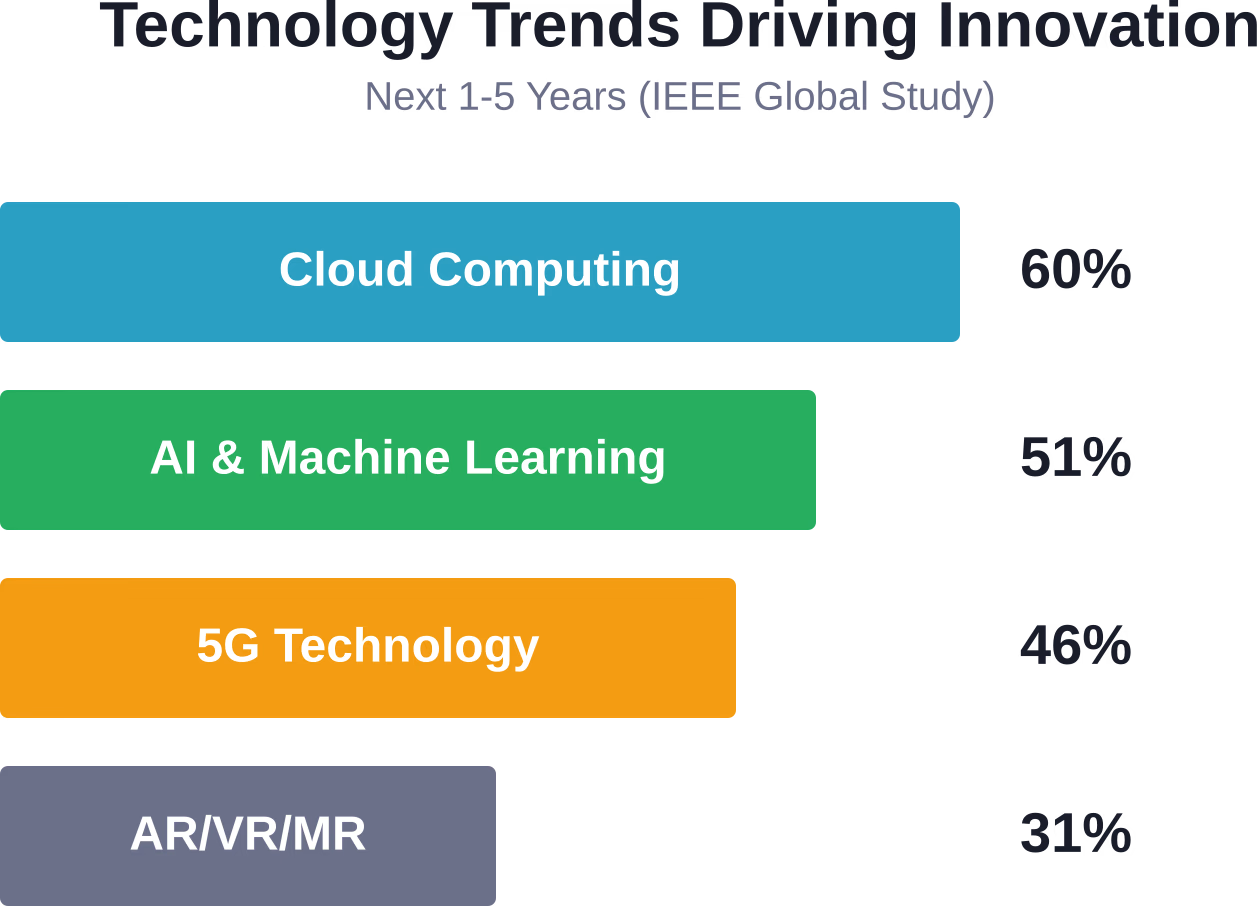
According to IEEE research on technology trends, cloud computing and AI and machine learning are among the technologies identified as most important for driving innovation. IT companies creating content around these trends position themselves where buyer attention already focuses.

Extuitive helps teams review ad concepts before launching campaigns. The platform uses AI models to forecast likely performance, compare creative options, and support better decisions around messaging and targeting.
For IT companies, this can be useful when choosing which service, product, or lead-focused ad concept should go live first.
Extuitive can help with:
👉 Book a demo with Extuitive to review your ad ideas.
Content marketing for IT companies differs significantly from B2C approaches. Technical audiences demand substance over style.
The most effective technology content answers specific technical questions that prospects actively search for. When a DevOps engineer searches for Kubernetes scaling patterns or a CISO researches zero-trust architecture implementation, finding detailed technical content from a vendor builds trust.
Research cited by the American Marketing Association notes that humans process images significantly faster than text. For IT companies, this translates to technical diagrams, architecture visualizations, and data flow charts that help prospects understand complex systems.
The content formats that generate the most engagement for IT companies include:
Video content particularly resonates with technical audiences. Video marketers report strong positive returns on video content investments.
Search engine optimization remains critical for IT companies. Technical buyers start research with search engines, looking for specific solutions to specific problems.
But SEO for technology firms requires a different approach than local businesses or e-commerce sites. The focus shifts to long-tail technical keywords and problem-solution queries.
A managed services provider shouldn't optimize for "IT services"—that's too broad and competitive. Instead, targeting "Azure migration strategy for financial services" or "ransomware recovery for healthcare systems" attracts prospects actively searching for specific expertise.
Site performance directly impacts search rankings and user experience. Research indicates that website load speed significantly impacts visitor retention, with slow-loading sites experiencing substantial abandonment rates.
For IT companies, technical SEO includes:
The technical nature of IT services actually works in favor of SEO. Creating detailed, authoritative content around specific technologies naturally attracts backlinks from industry publications, partner sites, and customer references.
Marketing automation has become essential for B2B technology companies managing complex sales cycles and multiple touchpoints.
Research from the American Marketing Association found that B2B marketers use automation to streamline marketing and sales efforts (38%), improve customer experience (34%), and improve customer engagement (28%), though only 20% report using automation tools to their fullest potential.
For IT companies, automation enables personalized nurture campaigns based on prospect behavior. When someone downloads a whitepaper on cloud security, automated workflows can deliver related case studies, invite them to relevant webinars, and notify sales when engagement reaches threshold levels.
While personalization is widely recognized as valuable, many digital marketing leaders report challenges with implementation and adoption of AI and machine learning for personalization.
That gap represents opportunity. IT companies implementing sophisticated personalization stand out in crowded markets.
A documented campaign used marketing automation to build targeted ad campaigns designed to reach and retarget specific accounts with strategically developed content across multiple channels, resulting in a 58% increase in page views and accelerated prospect progression through the sales funnel.
For IT companies pursuing enterprise accounts, account-based marketing (ABM) delivers better results than broad lead generation.
ABM flips traditional marketing. Instead of casting a wide net and qualifying inbound leads, ABM identifies specific high-value target accounts and creates customized campaigns for each.
A software company targeting Fortune 500 financial institutions might create custom content addressing specific regulatory challenges, industry-specific use cases, and integration requirements for legacy banking systems.
Successful account-based marketing for IT companies follows a structured approach:
The key difference from traditional marketing? Everything gets personalized at the account level. Email campaigns reference the prospect's specific industry challenges. Landing pages showcase relevant case studies from similar companies. Even ad retargeting serves content aligned with where the account sits in the buying journey.
Technology companies accelerate growth through strategic partnerships. Forming alliances with complementary vendors, joining technology ecosystems, and developing channel partner programs extend market reach.
Cloud services providers partner with implementation consultants. Security software vendors work with managed service providers. Enterprise software companies build integration partnerships with established platforms.
These partnerships create mutual marketing opportunities. Co-marketing campaigns, joint webinars, shared case studies, and partner directories generate qualified leads from trusted sources.
IT companies selling through channel partners need robust partner marketing programs. Partners require:
The most successful channel programs treat partners as an extension of the internal marketing team, providing the support needed to effectively represent the technology solution.
For IT companies with developer-focused products, community building serves as both marketing strategy and product development feedback loop.
Active developer communities create organic advocacy. Developers who successfully implement a platform become ambassadors, answering questions in forums, creating tutorials, and recommending the solution to colleagues.
Community building tactics include:
The investment in developer relations pays long-term dividends. Technical communities influence purchasing decisions far beyond individual contributors—developers who prefer certain technologies advocate for them when their organizations evaluate solutions.
IT companies need rigorous analytics to optimize marketing performance. The long B2B sales cycle makes attribution challenging, but tracking the right metrics reveals what works.
Multi-touch attribution models help IT companies understand which marketing activities contribute to closed deals. A prospect might discover the company through organic search, attend a webinar, download a case study, and engage with a retargeting campaign before requesting a demo.
Each touchpoint plays a role. Sophisticated attribution reveals the actual customer journey rather than crediting only the last interaction before conversion.
The marketing landscape continues evolving rapidly. Several trends are reshaping how technology companies approach marketing in 2026.
AI-powered personalization enables hyper-targeted campaigns at scale. Instead of segment-based messaging, AI analyzes individual behavior patterns to deliver precisely timed, relevant content.
Interactive content generates higher engagement than static formats. Calculators, configurators, assessment tools, and interactive demos help prospects evaluate solutions while providing valuable data to marketing teams.
Intent data from third-party providers identifies companies actively researching specific technologies. IT companies use intent signals to prioritize outreach and tailor messaging to active buying cycles.
Data privacy regulations continue tightening globally. IT companies must balance personalization with privacy compliance.
Transparent data practices build trust. Clear privacy policies, explicit consent mechanisms, and respect for user preferences matter more than ever—especially for technology companies where trust in data handling directly impacts buying decisions.
Marketing for IT companies requires a fundamentally different approach than consumer products or traditional services. Technical buyers demand substance, expertise, and proof.
The most effective marketing strategies combine thought leadership content that demonstrates deep technical knowledge, SEO optimization that captures high-intent search traffic, and marketing automation that personalizes engagement at scale.
Account-based marketing accelerates enterprise sales cycles by focusing resources on high-value targets. Strategic partnerships extend market reach through established channels. Developer communities create organic advocacy and long-term competitive advantages.
Success requires patience and consistency. Building search authority takes months. Thought leadership positioning develops over time as content accumulates and expertise becomes recognized. But IT companies that commit to substantive marketing build sustainable competitive advantages that discount-focused competitors cannot replicate.
The technology sector will continue evolving rapidly. AI-powered personalization, privacy-first data strategies, and interactive content formats represent the current frontier. But the fundamentals remain constant—demonstrate expertise, solve real problems, and build trust through transparent, valuable engagement.
Start with content that showcases technical depth. Optimize for the specific problems target customers actively research. Implement automation to nurture relationships efficiently. Measure rigorously and refine based on data.
The IT companies winning market share in 2026 are those that recognized marketing as a strategic growth driver rather than a tactical support function—and invested accordingly.


