Creative Optimization for Facebook Ads: What Matters More Than Ever
How to optimize Facebook ad creatives for real performance. Formats, variations, automation, and what actually moves CTR and ROAS.
Feb 5, 2026



Shopify looks easy. You launch a store, run a few ads, and start selling. But somewhere between setting up your theme and waiting for traffic to show up, reality kicks in. Profit doesn’t just appear. And for many sellers, it’s the gap between breaking even and building a business that sticks.
So, is Shopify profitable? The short answer is yes, but it depends on how you use it. A sleek storefront doesn’t guarantee sales. What matters is how well you pick products, manage costs, and move traffic that converts. This article breaks down where the money actually comes from, what hurts profitability, and what separates a surviving store from a successful one in 2026.
Shopify is not struggling as a company. Revenue keeps growing, transaction volume continues to rise, and millions of buyers shop on Shopify-powered stores every day. That matters, because platforms that are shrinking rarely create healthy ecosystems for sellers.
But growth at the platform level does not automatically translate into profit for individual stores. What it does mean is opportunity. There is traffic. There is buyer trust. There is infrastructure that works. The rest depends on how sellers use it.
The biggest shift in recent years is competition. Shopify is easy to start with, so more people try it. That raises the bar. Stores that rely on luck or copying competitors usually do not last. Stores that treat Shopify like a real business have a much better shot.
Profit is not made in the theme editor. It is made with the product.
The most consistent pattern among profitable Shopify stores is not design or clever ads. It is selling something that makes financial sense. That means margin, demand, and positioning all have to work together.
High-margin products give you room to breathe. They allow for ad testing, shipping mistakes, returns, and occasional discounts without wiping out your earnings. Low-margin products can work, but only at scale, and scale is expensive to reach.
Demand matters just as much. A product can be unique and beautifully presented, but if people are not actively searching for it or responding to it in ads, sales will be slow. This is why product research tools exist. They reduce guesswork. They show what people are already buying, not what might sell someday.
.avif)
A few years ago, intuition and trend-spotting could sometimes carry a store forward. Today, that approach is risky. Competition is heavier, ad costs are higher, and guessing wrong gets expensive fast. In this market, data matters more than confidence.
Relying purely on instinct often leads to products that look promising but fail once money is involved. Research helps replace assumptions with signals.
Tools for analytics are popular for a reason. They give visibility into what is already working. Sellers can see which products are gaining traction, how crowded a niche is, and where competitors are succeeding.
That does not guarantee success. Nothing does. But it removes blind spots. Instead of asking “will this sell?”, sellers can ask “is this already selling, and can I compete?” That shift alone saves time and budget.
Research is not only about finding products. It is about protecting margins.
Testing a product with proven demand is cheaper than trying to manufacture interest through ads. Many unprofitable Shopify stores do not fail because the platform is expensive. They fail because they invested in products nobody actually wanted.
Good research does not eliminate risk, but it narrows it. And in eCommerce, narrowing risk is often the difference between learning cheaply and losing money.
One of the most common Shopify mistakes is focusing on revenue instead of profit. A store can look successful on the surface and still lose money.
Real profitability means accounting for everything:
Shopify itself does not take a cut of your profit, but it does charge fees. Apps add up. Ads are rarely cheap. Sellers who track numbers closely tend to survive longer than those who rely on excitement alone.
Ads are usually the largest expense for Shopify stores. They are also the biggest opportunity.
Paid traffic works when the offer is right. It fails quickly when it is not. Many new sellers lose money because they scale ads before understanding what converts. They see a few sales, increase the budget, and watch margins disappear.
Profitable stores test patiently. They run small experiments. They compare creatives, audiences, and messaging. Only when something shows consistent results do they scale.
This is where smarter ad testing approaches help. Testing messages and visuals before spending heavily reduces wasted budget. Faster feedback means fewer expensive mistakes.

At Extuitive, we work with Shopify sellers who know that advertising is where profit is either made or lost. The issue is not running ads. It’s guessing what will work.
We built Extuitive to reduce wasted ad spend before serious money is on the line. Instead of launching ads blindly and learning through expensive trial and error, we help brands test ad ideas upfront using AI agents modeled on real consumer behavior.
Our platform connects directly to a Shopify store, generates ad concepts based on the store’s products and audience, and tests those concepts against large groups of AI-modeled consumers. This gives early signals on which messages, visuals, and positioning are more likely to drive purchase intent.
For Shopify stores, this means clearer decisions and better efficiency. Sellers can narrow down what works first, then scale ads with more confidence. We are not a media buying agency and we do not manage checkout. Our role is to help brands send better traffic to checkout in the first place.
When ads perform better, margins improve. And better margins make Shopify profitability far more achievable in 2026.
More than half of Shopify traffic comes from mobile devices. For many stores, it is higher.
A store that looks fine on desktop but feels slow or awkward on a phone will struggle. Mobile shoppers are impatient. They scroll fast and abandon quickly.
Fast load times, simple layouts, and frictionless checkout matter more than visual effects. Payment options like Shop Pay, Apple Pay, and Google Pay reduce friction and increase completion rates. Small improvements here often lead to noticeable revenue gains.
Branding is often misunderstood. It is not about fancy graphics or clever slogans. It is about trust.
A branded Shopify store feels intentional. The copy sounds consistent. The visuals match the audience. Policies are clear. Product pages answer questions instead of creating doubt.
Stores without branding feel disposable. Customers hesitate. Refunds increase. Ad performance drops. Branding does not guarantee profit, but lack of it often guarantees struggle.
Dropshipping is not dead, but it is harder than it used to be.
The model still works when done well. That means reliable suppliers, reasonable shipping times, honest product descriptions, and responsive customer support. The days of selling the cheapest product with the longest shipping time are mostly over.
Only a small percentage of Shopify sellers rely on dropshipping today. Those who succeed treat it seriously. They test suppliers, communicate clearly, and think long-term instead of chasing quick wins.
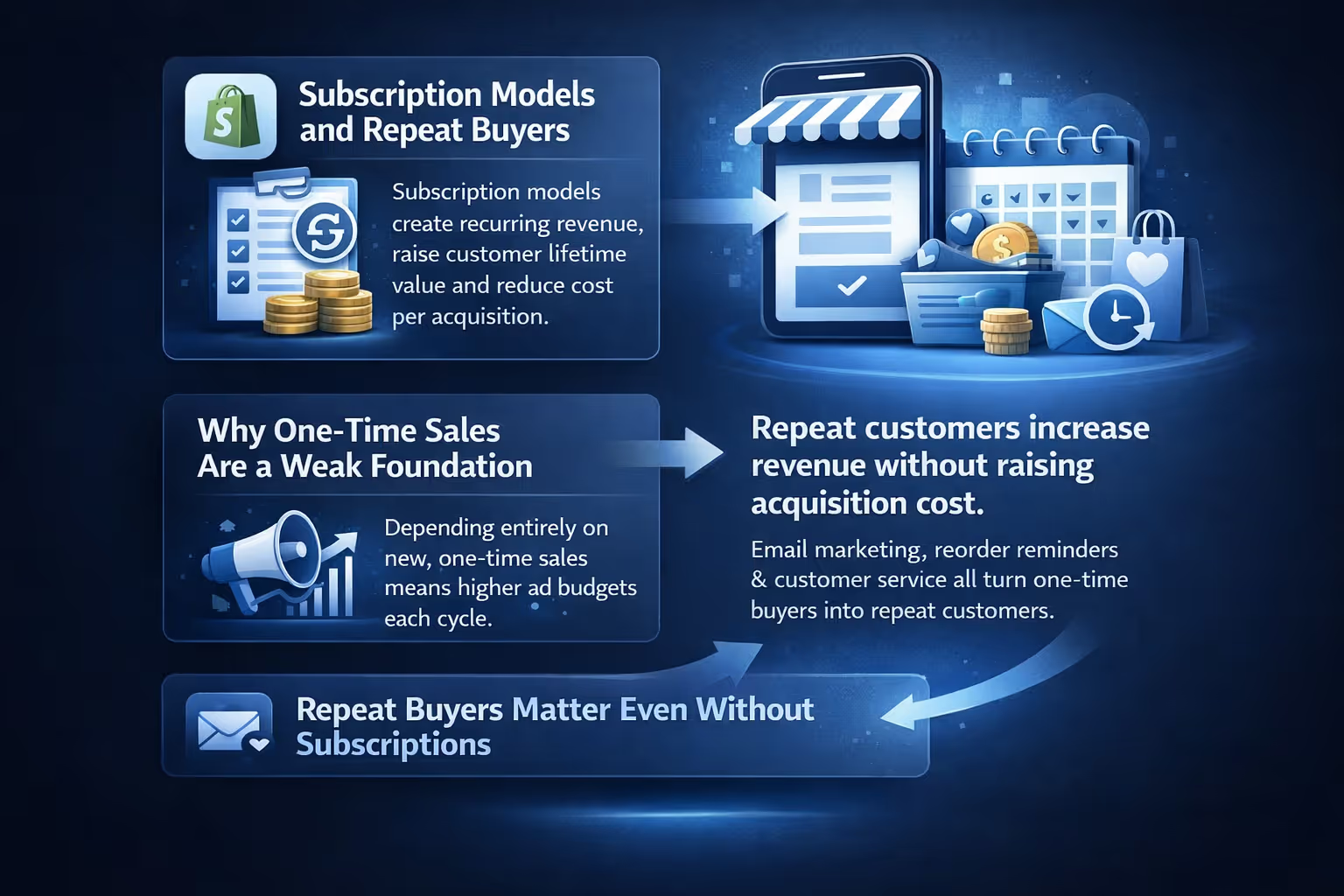
One of the main reasons many Shopify stores struggle is simple: they depend almost entirely on first-time purchases. Every sale starts from zero. New ads, new clicks, new costs. Customer acquisition gets more expensive every year, and stores that rely only on new traffic feel that pressure constantly.
When each order has to cover its own ad spend, margins stay tight. Even good products can feel unprofitable under that weight.
Subscription models shift the balance. Instead of earning once, stores earn repeatedly from the same customer. That creates more predictable revenue and raises customer lifetime value without increasing acquisition costs.
Products that fit routines or replenishment cycles work especially well here. Think consumables, personal care, pet products, supplements, or anything customers already buy on a schedule. With subscriptions, the first sale does the hard work. Everything after that is more efficient.
Not every product suits a subscription, and that’s fine. Repeat customers still matter.
Email marketing, post-purchase follow-ups, reorder reminders, and responsive support all turn single orders into ongoing relationships. Stores that invest in retention often discover that a smaller audience can generate more revenue than a large one that never comes back.
Ignoring repeat buyers usually leads to constant traffic chasing. Stores that build loyalty feel less pressure and more control over growth.
Paid ads get attention, but organic traffic builds stability.
Shopify stores that invest in SEO early often see better margins later. Blog content, optimized product pages, and clear site structure help stores show up in search results. It takes time, but the traffic does not stop the moment you pause ad spend.
SEO is not flashy. It does not create instant spikes. But over months, it reduces dependency on paid channels and smooths out revenue.
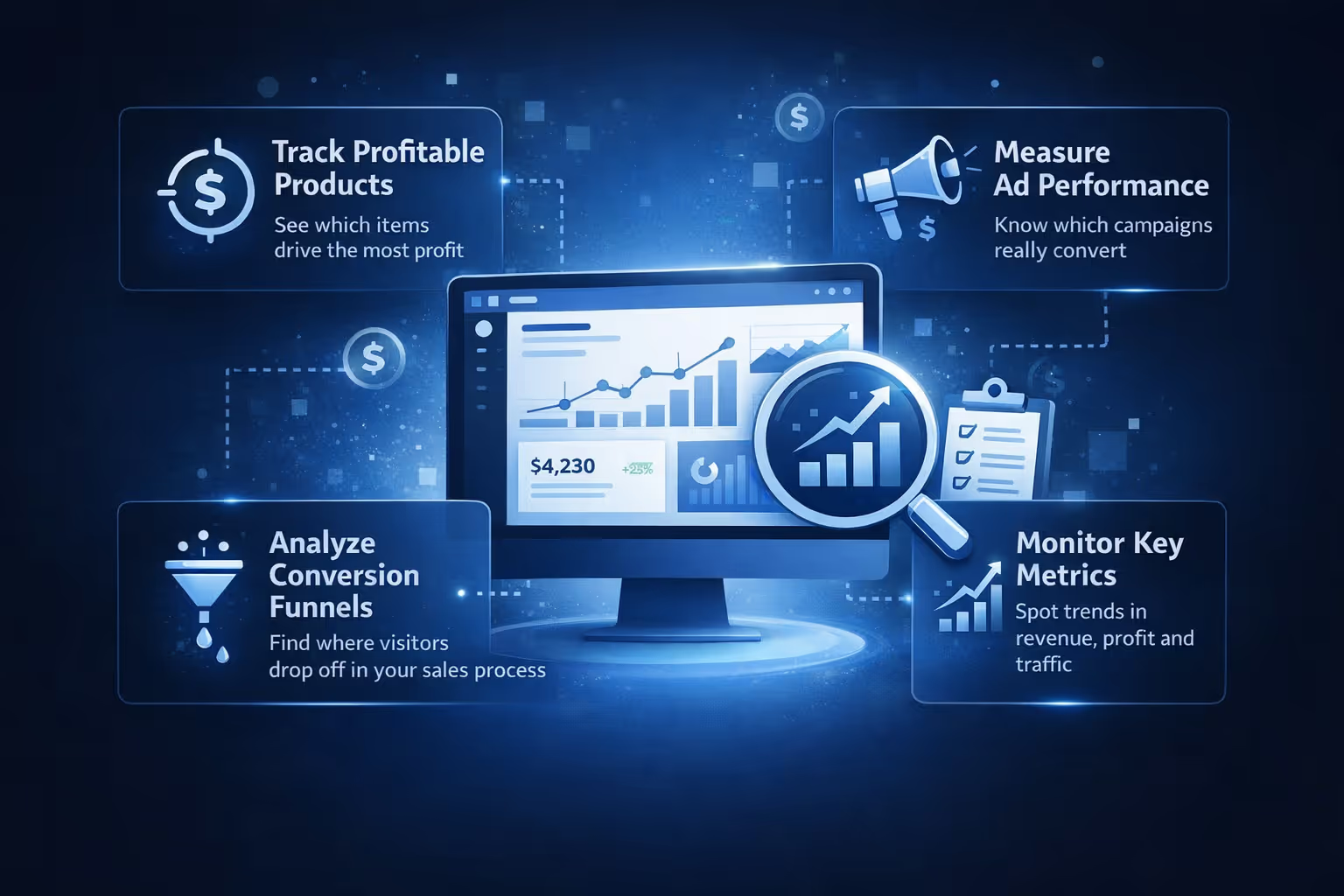
Guessing is expensive. Analytics make decisions cheaper.
Shopify provides solid built-in reporting, and many sellers use additional tools to track performance more closely. Knowing which products generate profit, which ads actually convert, and where customers drop off allows for smarter adjustments.
Profitable stores check numbers regularly. Not obsessively, but consistently. They notice patterns before problems grow.
Shopify is often recommended to beginners because it removes technical barriers. Hosting, security, and payments are handled. That lowers friction.
But ease of use does not mean ease of profit. Beginners who treat Shopify like a learning process tend to do better than those expecting fast returns. Testing small, learning quickly, and adjusting expectations makes the experience far less costly.
So, is Shopify profitable?
Yes, it can be. But it is not automatically profitable, and it is not forgiving of shortcuts.
Shopify rewards sellers who research their products, understand their audience, control costs, and adapt over time. It punishes those who rush, copy blindly, or ignore fundamentals.
The platform is strong. The opportunity is real. The outcome depends on execution.
If you are willing to approach Shopify like a business instead of a lottery ticket, profitability is possible. If not, it will feel expensive very quickly.
That is the real answer.


