How to Get Your 1099 Form from Shopify Without the Headache
Need your Shopify 1099 tax form? Learn how to access it, when it’s available, and what to do if you can’t find it.
Feb 11, 2026



Retirement communities need a multi-channel marketing strategy combining digital tactics (SEO, social media, virtual tours) with traditional approaches (community events, referral programs, print materials). Recent data shows nearly two-thirds (66 percent) of adults 50-plus say technology enriches their lives, making digital presence crucial. Successful campaigns balance emotional storytelling with practical information while addressing both prospective residents and their adult children who often influence decisions.
Marketing retirement communities isn't what it used to be. The demographic that once relied solely on newspaper ads and word-of-mouth now spends significant time online, researches options independently, and expects a digital-first experience before ever scheduling a tour.
According to AARP research, nearly two-thirds (66 percent) of adults 50-plus say technology enriches their lives and makes aging easier. That's not a small niche—that's the majority of your target market expecting a robust online presence.
But here's the thing: while digital matters more than ever, traditional tactics still deliver results when executed properly. The communities seeing the best occupancy rates blend both approaches into a cohesive strategy that meets prospective residents wherever they are in their decision journey.
Before diving into specific tactics, recognize that retirement community marketing requires speaking to two distinct groups simultaneously. You're not just marketing to prospective residents—you're also addressing their adult children, who frequently drive the search process and influence final decisions.
This dual-audience reality shapes everything from messaging to channel selection. Adult children respond to safety features, care quality metrics, and staff credentials. Prospective residents care more about community atmosphere, activity offerings, and maintaining independence.
Understanding your target market demographics helps shape messaging that resonates with their primary concerns and priorities.

Extuitive helps teams review ad ideas before campaigns go live. It compares creative versions, predicts likely performance, and helps show which messages or visuals may be worth running first.
For retirement communities, this can help review sensitive, local, or family-focused campaign ideas before spending more.
Extuitive can help with:
👉 Book a demo with Extuitive to review your ad ideas.
Digital tactics now form the foundation of effective retirement community marketing. Here's where to focus your efforts and budget.
Your website functions as the most important marketing asset you control. Period. It's where prospective residents and their families form first impressions, gather information, and decide whether to take the next step.
Essential website elements include:
Technology adoption among older adults has surged. 55% of caregivers use one or more forms of tech to coordinate caregiving responsibilities, meaning your website needs to serve both tech-savvy researchers and their older family members.
Most retirement community searches include geographic terms—"assisted living near me," "retirement communities in [city name]," or "senior housing in [county]." This makes local SEO critical.
Prioritize these tactics:
The goal isn't just ranking—it's appearing in the local pack (the map results that show at the top of search results for location-based queries).
Social media serves multiple functions for retirement communities. It humanizes your brand, showcases daily life, and keeps families connected to their loved ones after move-in.
Facebook remains the dominant platform for reaching adults 50-plus and their adult children. Focus your efforts there first, then expand to Instagram if resources allow.
Content that performs well includes:
Post consistently—at least 3-4 times per week—and respond to all comments and messages promptly. Social media isn't a broadcast channel; it's a conversation platform.
Organic strategies build long-term value, but paid advertising delivers faster results when occupancy needs a boost. Budget allocation typically breaks down as:
Google Ads targeting high-intent keywords can generate qualified leads efficiently.
Events remain one of the highest-converting marketing tactics for retirement communities. They accomplish multiple objectives simultaneously: generating new leads, re-engaging stalled prospects, nurturing current relationships, and showcasing community culture.
Educational seminars establish your community as a trusted resource while attracting qualified prospects genuinely interested in senior living topics.
High-performing educational event topics include:
Partner with local professionals (estate attorneys, financial advisors, healthcare providers) to add credibility and expand your reach through their networks. These partnerships often generate quality referrals beyond just event attendance.
Social events let prospects experience your community atmosphere firsthand. The goal isn't just showing your facilities—it's demonstrating the vibrant lifestyle residents enjoy.
Effective social event ideas:
Invite prospects to attend alongside current residents. The interactions between guests and residents often prove more persuasive than any sales presentation.
Grassroots community involvement builds brand awareness and positions your community as a valued local institution rather than just a business.
Consider these outreach tactics:
These events rarely generate immediate move-ins. But they build long-term awareness and positive associations that pay dividends when families begin their search process.
Content marketing addresses the extensive research phase most families undergo before considering a retirement community. Quality content builds trust, demonstrates expertise, and improves search visibility.
Blog content should address questions prospective residents and their families actually ask. Keyword research reveals these topics generate significant search volume:
Publish consistently—at least twice monthly—and optimize each post for search engines while keeping the focus on reader value.
Video outperforms every other content type for engagement and conversion. Prospective residents want to see your community, not just read about it.
Priority video content includes:
Video doesn't require expensive production equipment anymore. Smartphone cameras deliver sufficient quality for most content, and authenticity often outperforms polished corporate videos.
Online reviews influence decision-making more than almost any other factor. Families research extensively before scheduling tours, and review sites like Google, Facebook, and specialized senior living directories factor heavily into consideration sets.
The power of positive reviews can't be overstated. They provide social proof, build trust, and improve search visibility (Google's algorithm considers review quantity and quality in local rankings).
Most satisfied families will leave reviews—if asked. Implement a systematic review generation process:
Never offer incentives for reviews—it violates most platform policies and damages credibility. Authentic reviews from genuine experiences carry more weight anyway.
Respond to every review—positive and negative. Thank reviewers for positive feedback and address concerns raised in negative reviews professionally and constructively.
For negative reviews, acknowledge the concern, apologize if appropriate, explain any context (without being defensive), and invite the reviewer to discuss further offline. These responses show prospective families that you take feedback seriously and work to resolve issues.
Current residents, their families, and local professionals represent your most valuable referral sources. They've experienced your community firsthand and carry credibility no advertisement can match.
Satisfied residents gladly refer friends and family members—often without prompting. A structured referral program encourages and increases these valuable introductions.
Effective referral program elements:
Track referral sources diligently. Knowing which residents generate multiple referrals helps identify your strongest advocates and opportunities to deepen those relationships.
Healthcare providers, elder law attorneys, financial advisors, and discharge planners regularly encounter families exploring senior living options. Building relationships with these professionals creates a steady referral stream.
Nurture professional referral sources through:
Real talk: these relationships require ongoing cultivation. A single lunch meeting won't generate sustained referrals. Consistent touchpoints and demonstrated value keep your community top-of-mind.
Digital dominates, but traditional marketing tactics still reach segments of your audience effectively—particularly older prospects who may be less digitally engaged despite growing tech adoption.
Targeted direct mail reaches older adults in their homes with tangible materials they can review at their leisure. Response rates exceed digital channels for certain age segments.
Effective direct mail approaches:
Target your mailings geographically (specific zip codes near your community) and demographically (homeowners in specific age ranges) to maximize ROI.
Local newspapers, regional magazines, and senior-focused publications still reach your target demographic. While readership has declined, the remaining audience often includes exactly the prospects you want to reach.
Focus print advertising on publications with demonstrated readership among adults 65-plus. Frequency matters—single ads rarely generate results, but consistent presence builds awareness over time.
Sponsoring local organizations, events, and causes builds brand visibility while demonstrating community commitment.
High-value sponsorship opportunities include:
Evaluate sponsorships based on audience alignment and visibility opportunities, not just cost.
Marketing without measurement wastes resources. Track key metrics to understand what's working, what's not, and where to adjust your strategy.
Review these metrics monthly at minimum. Quarterly deep dives allow for strategic adjustments based on trends and performance patterns.
Attribution—determining which marketing touchpoint deserves credit for a move-in—proves challenging because senior living decisions involve multiple touchpoints over extended timeframes.
Someone might discover your community through a Google search, attend an event, research reviews, schedule a tour via Facebook, and finally decide to move in after a family referral. Which channel gets credit?
Track first touch (how prospects first heard about you) and last touch (what prompted them to take final action) at minimum. More sophisticated multi-touch attribution provides fuller understanding but requires robust systems.
Certain missteps undermine even well-intentioned marketing efforts. Watch for these common pitfalls.
Every inquiry costs money to generate—whether $50 or $1,000. Yet many communities take days to respond to new leads, allowing competitors to engage prospects first.
Research consistently shows that speed matters enormously. Leads contacted within an hour convert at dramatically higher rates than those contacted a day later. Implement systems ensuring same-day response to all inquiries.
Most families research retirement communities months or even years before seriously considering a move. Dismissing prospects who aren't immediately ready wastes valuable opportunities.
Nurture long-term prospects through email newsletters, event invitations, and periodic check-ins. When they reach their decision point, you want to be the community they know and trust.
Your website, social media, print materials, and verbal communications should tell a cohesive story about your community. Contradictory messages or varying brand presentation creates confusion and diminishes trust.
Develop clear brand guidelines covering messaging, visual identity, and tone. Ensure all staff and vendors understand and apply these guidelines consistently.
The outdated assumption that older adults don't use technology has become demonstrably false. Health-tracking apps are used by 71 percent of adults 50-plus and fitness classes by 59 percent.
Communities that fail to meet digital expectations—robust websites, virtual tour options, online inquiry forms, text communication capabilities—disadvantage themselves significantly.
The senior living landscape continues evolving. Smart marketing strategies anticipate and adapt to emerging trends.
AI adoption and interest has increased among older adults in recent years. For marketers, this suggests opportunities around AI chatbots for website visitors, AI-assisted personalization in email campaigns, and AI-powered content creation—as long as human oversight ensures quality and appropriateness.
Families researching senior living options increasingly expect transparency about pricing, staffing, safety records, and resident satisfaction. Communities that proactively share this information build trust faster than those requiring multiple conversations before revealing details.
Consider making more information publicly available: sample pricing for different floor plans, staff-to-resident ratios, activity calendars, and even inspection reports if your community performs well.
The narrative around retirement communities has shifted from "care facilities" toward "lifestyle communities" emphasizing wellness, purpose, and continued growth.
Marketing messaging should reflect this shift. Highlight opportunities for learning, fitness, social connection, and meaningful engagement rather than focusing solely on medical care and safety features.
Effective marketing requires strategic planning, not just tactical execution. A documented marketing plan keeps efforts focused and measurable.
Start with specific, measurable goals tied to business objectives. "Increase brand awareness" isn't specific enough. "Generate 40 qualified leads per month" or "achieve 92% occupancy by Q4" provides clear targets.
Goals should be ambitious but realistic based on historical performance, market conditions, and available resources.
Budget allocation depends on your community's situation. New communities need heavy investment in awareness-building (digital advertising, events, PR). Established communities with strong reputations can shift budget toward retention and referral programs.
Review budget allocation quarterly and adjust based on performance data. If Google Ads consistently outperform print advertising, reallocate accordingly.
Consistent marketing requires planning. A content calendar maps out blog posts, social media content, email campaigns, events, and advertising for the coming months.
Plan at least one quarter ahead while leaving flexibility for timely, reactive content. Balance promotional content with educational and entertaining material to keep audiences engaged.
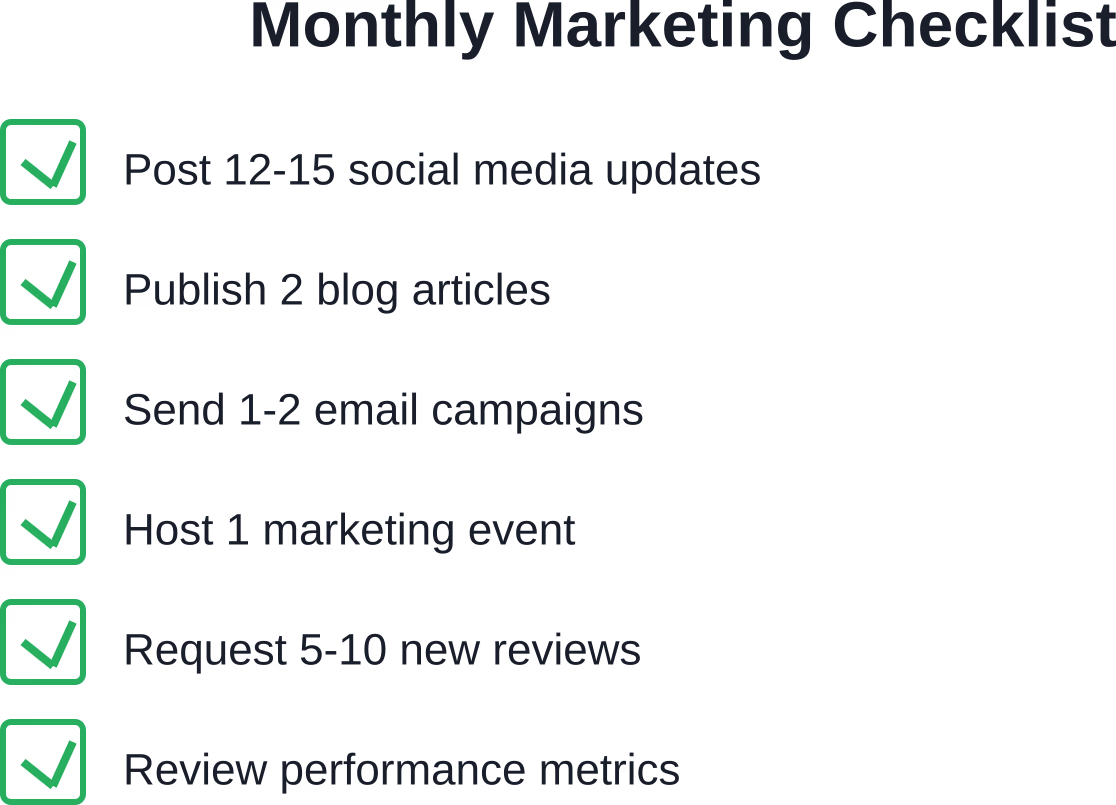
Marketing retirement communities successfully requires balancing multiple channels, audiences, and timelines. Digital strategies build awareness and drive initial research. Events and tours convert interest into decisions. Referrals and reviews provide the social proof that accelerates the decision process.
Start by auditing your current marketing efforts. Which channels generate the most qualified leads? Where are prospects dropping off in the conversion process? What feedback do families give about their research and decision experience?
Use those insights to prioritize improvements. Maybe your website needs virtual tour capabilities. Perhaps your follow-up process leaves prospects waiting too long for responses. Your review profile might need systematic attention.
The communities seeing the strongest occupancy rates in 2026 embrace both emerging digital trends and time-tested relationship marketing. They recognize that families researching senior living options want transparency, authenticity, and evidence that residents thrive in the community.
Pick three high-priority tactics from this guide and implement them over the next 90 days. Measure results, adjust based on performance, and continue building a comprehensive marketing strategy that drives sustained occupancy growth.


