Top Facebook Digital Marketing Agencies
Explore top Facebook digital marketing agencies, what they offer, and how to choose the right team for ads, strategy, and campaign growth..
Mar 20, 2026



Staffing companies need multi-channel marketing that combines digital strategies like content marketing and SEO with traditional tactics like local event sponsorship. Successful campaigns leverage AI-powered recruitment marketing, optimize careers sites, and build authentic employer brands while tracking ROI through data analytics. Focus on both client acquisition and candidate pipeline development through platforms where your audiences actively spend time.
The staffing industry stands at a crossroads in 2026. Economic uncertainty, rapid AI adoption, and shifting workforce demographics have transformed how agencies attract clients and candidates alike.
According to the American Staffing Association, Many staffing agencies now use AI tools for recruitment. The Bureau of Labor Statistics projects 5.2 million jobs will be added to the U.S. economy from 2024 to 2034, yet growth is slowing compared to the previous decade.
What does this mean for staffing companies? Competition is fiercer. Traditional marketing won't cut it anymore.
But here's the thing—agencies that embrace integrated marketing strategies are seeing remarkable results. Research suggests that recruitment marketing techniques can generate significant improvements in leads and conversion rates compared to traditional approaches.
This guide breaks down the most effective marketing ideas for staffing companies in 2026, from foundational strategies that every agency needs to advanced tactics that separate market leaders from the rest.
Before throwing money at marketing tactics, staffing agencies need to understand their competitive landscape. This isn't optional—it's foundational.
Look at what local and regional competitors are doing. Visit their websites. Follow their social media. Sign up for their email lists. Check their Google Ads and job board presence.
What industries are they specializing in? What's their messaging? How fast do they respond to inquiries?
Now identify the gaps. Maybe every competitor focuses on manufacturing but healthcare staffing is underserved. Perhaps their websites look dated or their content hasn't been updated since 2023.
Those gaps are opportunities. The agencies that win aren't always the biggest—they're the ones that position themselves most strategically.
Document everything in a simple spreadsheet: competitor names, their apparent strengths, visible weaknesses, pricing hints, and market positioning. Update this quarterly.

Extuitive helps businesses predict which ads are more likely to get clicks and conversions before launch. It can test creative options at scale, compare them against performance signals, and help teams avoid putting budget behind weak ideas.
For staffing companies, this can support hiring, employer, or candidate-focused campaigns without relying only on guesswork.
Extuitive can help with:
👉 Book a demo with Extuitive to review your ad ideas.
Poor website design costs staffing agencies dearly. Research indicates that careers sites may lose significant percentages of visitors due to poor user experience, with some sources citing figures between 30-50%—clunky navigation, confusing application processes, or slow load times.
That's not just lost candidates. That's lost revenue.
The careers site is often the first touchpoint for both clients and job seekers. It needs separate, optimized pathways for each audience.
For clients, highlight industry specializations, placement success metrics, and clear calls-to-action like "Request Talent" or "Schedule Consultation." Case studies and client testimonials build credibility fast.
For candidates, streamline the application process ruthlessly. Every extra form field increases abandonment. Mobile optimization isn't optional—most job seekers browse openings on phones during breaks or commutes.
Include transparent job descriptions with salary ranges. According to SHRM's 2025 Talent Trends report, A significant portion of organizations now voluntarily include pay ranges in job postings (48% according to SHRM 2025 Talent Trends), and many candidates expect it.
Speed matters too. Sites that load in under 2 seconds have significantly higher conversion rates. Compress images, minimize plugins, and use a reliable hosting provider.
Most staffing agencies serve specific geographic markets. Local SEO ensures they appear when businesses search "staffing agency near me" or "temp workers [city name]."
Claim and optimize the Google Business Profile. Keep the NAP (name, address, phone) consistent across all directories. Gather client reviews consistently—they signal trust to both Google and potential clients.
Create location-specific landing pages for each market served. If the agency operates in three cities, build three dedicated pages with unique content about local market conditions, industries served, and community involvement.
Add structured data markup (Schema.org) for local business information. This helps search engines understand and display business details in rich results.

Content marketing is no longer trendy—it's necessary. Agencies that consistently publish valuable content attract both clients and candidates organically while establishing thought leadership.
But here's where most staffing firms stumble: they publish generic, shallow content that nobody wants to read.
Generic staffing advice is everywhere. Specialized insights are rare and valuable.
If the agency focuses on healthcare staffing, publish content about nursing shortage solutions, credentialing best practices, or regulatory changes affecting medical facilities. Interview placement specialists about trends they're seeing.
For IT staffing, cover emerging skill gaps, programming language trends, or remote work management strategies. Create salary guides for technical roles in specific markets.
Manufacturing staffing agencies should write about workforce training programs, safety certification requirements, or seasonal hiring strategies.
The depth matters more than frequency. One comprehensive, well-researched 2,000-word guide per month outperforms eight shallow 300-word posts.
Written blog posts are foundational, but diversification amplifies reach.
Create downloadable salary guides or hiring trend reports. These work as lead magnets—visitors exchange email addresses for valuable data. Research suggests downloadable resources such as salary guides can significantly increase lead generation.
Video content performs exceptionally well. Record client testimonials, workplace tours, or "day in the life" candidate stories. Post them on YouTube, LinkedIn, and the agency website.
Webinars position agencies as industry experts. Host sessions on topics like "Navigating the 2026 Labor Market" or "Skills-Based Hiring Strategies." Promote them heavily and repurpose recordings into blog content, social clips, and email campaigns.
Podcasts offer another channel. Interview clients about their hiring challenges, successful placements about career growth, or industry experts about workforce trends. Even modest listener numbers build relationships and brand awareness.
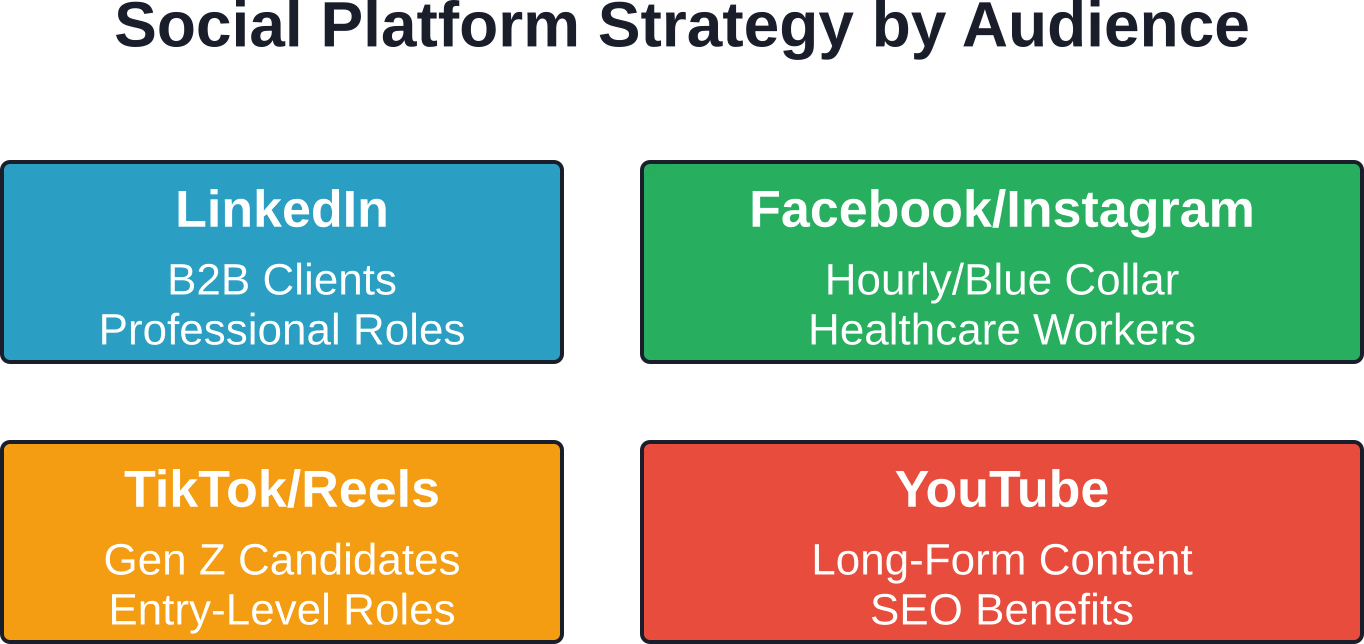
Social media serves dual purposes for staffing agencies: candidate attraction and client relationship building. The platforms and strategies differ for each audience.
LinkedIn dominates B2B staffing marketing. It's where hiring managers and HR professionals spend time, making it ideal for thought leadership content, client success stories, and industry insights.
Post consistently—at least three times weekly. Share original content, comment on industry news, and engage with client posts. LinkedIn articles allow longer-form content that establishes expertise.
Join and participate in relevant LinkedIn Groups. Answer questions, share insights, and build relationships without overt selling.
Facebook and Instagram work better for candidate attraction, particularly for blue-collar, healthcare, and hospitality roles. Share job openings, workplace culture content, and employee success stories.
Run targeted Facebook ads for hard-to-fill positions. The platform's demographic targeting reaches passive candidates who aren't actively job searching but might be open to opportunities.
TikTok and Instagram Reels connect with younger candidates. Short videos showcasing workplace culture, quick hiring tips, or "we're hiring" announcements perform well. Authenticity matters more than production quality on these platforms.
Follow the 80/20 rule: 80% valuable content, 20% promotional content.
Valuable content includes industry news, career advice, workplace tips, employee spotlights, and community involvement. Promotional content covers job openings and service offerings.
According to research on effective social media strategies for temporary staffing agencies, platforms should be diversified but not spread too thin. Focus on 2-3 platforms done well rather than maintaining weak presences across six platforms.
Timing optimization matters. Post when the target audience is most active. LinkedIn engagement peaks Tuesday through Thursday during business hours. Facebook and Instagram see higher engagement during evening hours and weekends.
Email remains one of the highest-ROI marketing channels for staffing agencies. It maintains relationships with clients during slow periods and keeps candidates warm for future placements.
Generic blast emails to entire databases perform poorly. Segmentation dramatically improves open rates and conversions.
Create separate lists for active clients, prospective clients, placed candidates, active job seekers, and passive candidates. Each segment needs different messaging.
Active clients receive newsletters with industry insights, labor market updates, and success stories. Prospective clients get educational content that demonstrates expertise and case studies showing ROI.
Placed candidates receive check-ins, career development resources, and referral requests. Active job seekers need regular job alerts and interview tips. Passive candidates get occasional "thinking of you" messages with market updates and career opportunities.
Subject lines determine open rates. Test different approaches: questions ("Struggling to find qualified welders?"), curiosity ("3 hiring mistakes we see constantly"), or value propositions ("March labor market report inside").
Keep emails concise. Busy hiring managers and candidates don't read lengthy emails. Get to the point in the first two sentences.
Always include a clear call-to-action. What should recipients do next? Schedule a call? Review open positions? Download a resource? Make it obvious.
Automation saves time while maintaining personalization. Set up workflows that trigger based on actions: welcome series for new subscribers, re-engagement campaigns for inactive contacts, or post-placement follow-ups.
Test sending times. B2B emails to clients often perform best Tuesday through Thursday mornings. Candidate emails can work better during evening hours when people browse on personal time.
Artificial intelligence is transforming staffing agency marketing faster than any previous technology. The adoption rate tells the story—61% of staffing agencies now use AI tools, up from 48% just last year.
But AI adoption isn't about jumping on a trend. It's about operational efficiency and competitive advantage.
Conversational AI adoption among staffing agencies has increased, according to staffing industry data. These tools handle initial candidate screenings, answer common questions 24/7, and schedule interviews automatically.
Chatbots on careers sites can dramatically reduce response time. When candidates visit at 10 PM on a Saturday, they get immediate engagement rather than waiting until Monday morning—by which time they've often moved on.
For clients, chatbots can qualify leads, collect requirements for open positions, and route inquiries to appropriate account managers. This speeds up response times and captures opportunities that might otherwise slip through.
AI tools can draft job descriptions, create social media posts, and even generate blog content outlines. While human oversight remains essential, these tools accelerate content production significantly.
AI-powered resume parsing and database cleanup tools have seen adoption among staffing agencies. They standardize candidate data, identify skill matches, and flag outdated information—work that previously consumed countless hours.
Predictive analytics identify which candidates are most likely to accept offers, which clients might need additional staffing soon, and which job postings will perform best on specific platforms.
AI handles data processing, pattern recognition, and routine communications exceptionally well. But relationship building, nuanced judgment calls, and strategic decision-making still require human expertise.
As one industry expert noted in the American Staffing Association's 2026 trends analysis, the human components of recruiting "are going to stay absolutely and squarely on the human side, but in order to do that we need to have the same tools as our peers and better tools."
The winning approach combines AI efficiency with human touch. Use AI for initial screening and data management, but ensure recruiters handle meaningful conversations and relationship building.
While digital marketing dominates discussions, local marketing tactics deliver measurable results for staffing agencies, particularly those focused on specific geographic markets.
Sponsoring local events builds brand awareness and positions the agency as a community partner. Consider job fairs, charity events, youth sports teams, or industry conferences.
The visibility extends beyond the event itself. Sponsor logos appear on promotional materials, websites, and social media—multiplying impressions.
Choose events aligned with target industries. A healthcare staffing agency might sponsor a nursing school scholarship fund. An industrial staffing firm could support manufacturing association events.
Building relationships with local schools, community colleges, and vocational programs creates candidate pipelines while contributing to workforce development.
Offer to speak at career days. Provide resume workshops. Create internship or apprenticeship programs. Host facility tours for students.
These programs rarely generate immediate placements, but they build long-term talent pools and enhance the agency's reputation as an employer partner rather than just a transactional service.
Active participation in local chambers of commerce and business associations provides networking opportunities with potential clients.
Attend monthly meetings consistently. Volunteer for committees. Sponsor chamber events. These activities build relationships that lead to client contracts.
Word-of-mouth referrals from other chamber members often convert at higher rates than cold outreach because they come with built-in credibility.
Organic marketing builds long-term assets, but paid advertising delivers faster results when executed strategically.
Google search ads capture high-intent traffic—people actively searching for staffing services or jobs. This makes them valuable despite higher costs compared to social advertising.
Target specific searches like "[industry] staffing agency [city]" or "[job title] jobs [location]." Use location extensions to show the physical address and phone number directly in ads.
Create separate campaigns for client acquisition and candidate attraction. The keywords, ad copy, and landing pages need to align with each audience's needs.
Remarketing campaigns re-engage website visitors who didn't convert initially. These ads follow them across the web, keeping the agency top-of-mind.
LinkedIn ads excel for reaching decision-makers at target client companies. Use demographic targeting to reach HR managers, operations directors, or business owners in specific industries and company sizes.
Sponsored content performs better than traditional display ads on LinkedIn. Share valuable content—whitepapers, webinars, case studies—rather than direct sales pitches.
Facebook and Instagram ads work well for candidate recruitment, particularly for high-volume hiring. Create video ads showing workplace environments or employee testimonials.
Set up conversion tracking religiously. Measure cost per lead, cost per application, and cost per placement to calculate true ROI rather than just monitoring clicks and impressions.
Online reputation directly impacts both client acquisition and candidate attraction. Businesses research staffing agencies before making contact, and candidates check reviews before applying.
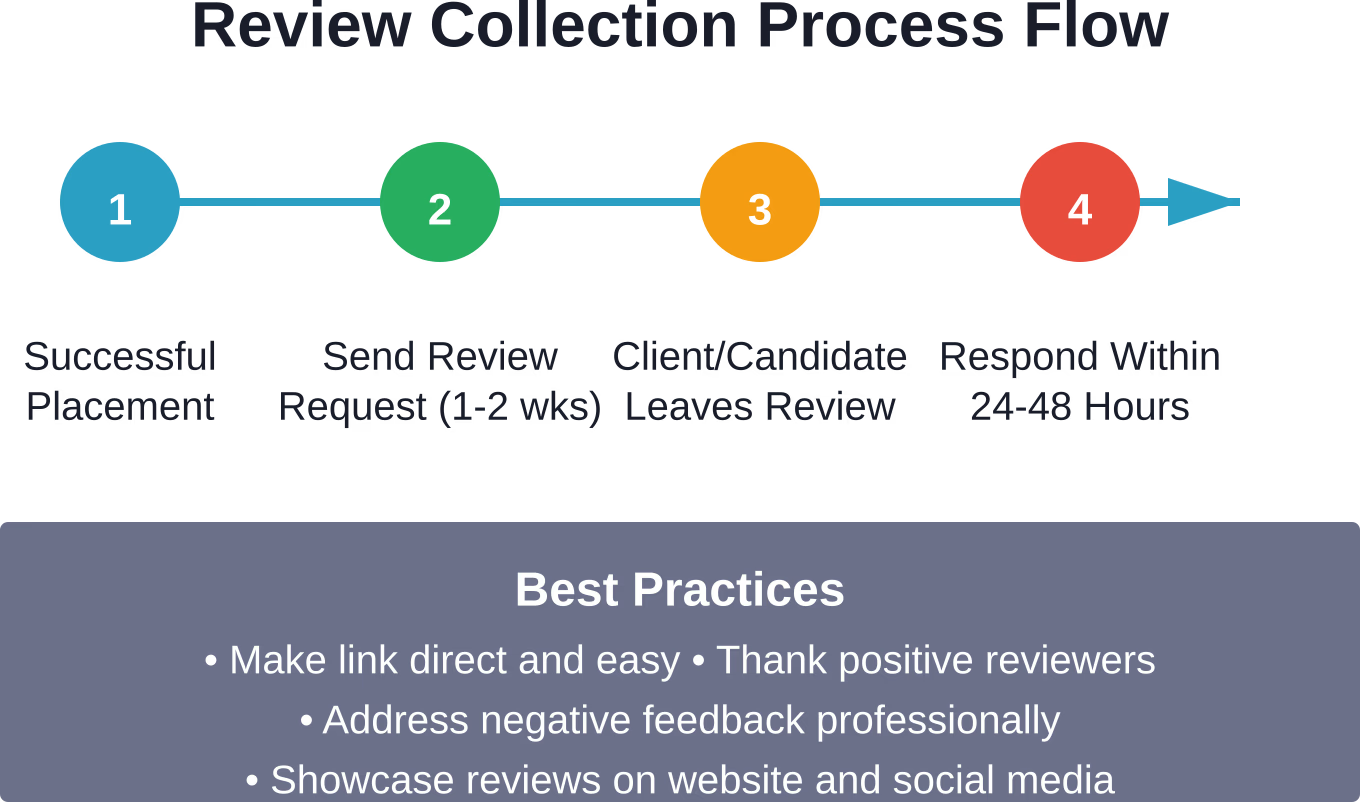
Proactively request reviews from satisfied clients and successfully placed candidates. Timing matters—ask when the positive experience is fresh, typically within two weeks of a successful placement or project completion.
Make it easy. Send direct links to review platforms like Google, Facebook, or industry-specific sites. The fewer steps required, the higher the completion rate.
Respond to every review, positive and negative. Thank reviewers for positive feedback. Address concerns in negative reviews professionally, offering to resolve issues offline.
Negative reviews hurt, but how agencies respond matters more than the reviews themselves. Potential clients and candidates evaluate response quality and professionalism, not just star ratings.
Monitor brand mentions across social media, review sites, and forums. Set up Google Alerts for the agency name and key personnel.
Maintain accurate, consistent business information across all directories and platforms. Inconsistent addresses or phone numbers confuse potential clients and hurt local SEO.
Showcase positive reviews on the website and social media. With permission, create case studies from particularly successful client relationships or candidate placements.
Marketing without measurement is guesswork. Staffing agencies need clear metrics to understand what's working and what's wasting budget.
Track metrics that directly connect to business outcomes, not vanity metrics like social media follower counts.
For client acquisition, monitor cost per lead, lead-to-client conversion rate, client acquisition cost, and client lifetime value. These reveal which marketing channels deliver actual business value.
For candidate attraction, track cost per application, application-to-interview ratio, application-to-placement ratio, and time-to-fill for open positions.
Website analytics reveal user behavior. Which pages do clients visit before requesting consultations? Where do candidates drop off in the application process? How do visitors find the site—organic search, paid ads, social media, or direct traffic?
Attribution determines which marketing touchpoints deserve credit for conversions. This gets complex because most clients and candidates interact with multiple touchpoints before converting.
Someone might see a LinkedIn ad, visit the website, read three blog posts over two weeks, receive an email, and then finally request a consultation. Which channel gets credit?
First-touch attribution credits the initial interaction. Last-touch credits the final touchpoint. Multi-touch attribution distributes credit across the journey.
The right model depends on the sales cycle. For staffing agencies with longer sales processes, multi-touch attribution provides more accurate insights.
Continuous testing separates good marketing from great marketing. Test different ad copy, landing page designs, email subject lines, and call-to-action buttons.
A/B test one variable at a time to isolate what drives improvement. Change the headline on a landing page but keep everything else constant. Measure conversion rate differences over a statistically significant sample size.
Document results systematically. What worked? What failed? What surprised the team? Build an institutional knowledge base that guides future decisions.
The staffing industry continues evolving rapidly. Agencies that anticipate trends position themselves advantageously.
According to workforce development research, companies are increasingly considering eliminating degree requirements. That trend is accelerating in 2026 as employers focus on demonstrable skills rather than credentials.
Staffing agencies that adapt assessment methods, build skills-based candidate profiles, and educate clients about this shift gain competitive advantages.
SHRM's 2025 Talent Trends research shows 61% of organizations now offer flexible work arrangements as a recruitment strategy. Candidates increasingly prioritize flexibility over compensation.
Staffing agencies marketing this flexibility—hybrid roles, flexible schedules, project-based work—attract larger candidate pools. But flexibility must be genuine, not just marketing spin.
Data privacy regulations continue expanding. Agencies must handle candidate and client data responsibly, maintain GDPR and CCPA compliance, and communicate privacy practices transparently.
This isn't just legal compliance—it's a trust issue. Candidates and clients increasingly evaluate how businesses handle personal information.
Individual tactics deliver limited results. Integrated strategies amplify effectiveness by creating consistency and synergy across channels.
Start with clear objectives. What does success look like? More client contracts? Larger candidate database? Faster time-to-fill? Higher profit margins?
Map the customer journey for both audiences. How do clients typically find and evaluate staffing agencies? What questions do candidates ask during their job search? Design marketing touchpoints for each journey stage.
Create a content calendar that coordinates across channels. When launching a new service line, the announcement shouldn't just appear in one email. Coordinate blog posts, social media content, paid ads, and sales outreach simultaneously for maximum impact.
Allocate budget strategically. Generally speaking, agencies should invest more heavily in channels that generate measurable leads and placements. But some brand-building activities that don't generate immediate ROI still matter for long-term positioning.
Review performance monthly. What's working? What needs adjustment? Marketing isn't set-it-and-forget-it—it requires constant optimization based on results.
Learning from others' mistakes saves time and money.
Marketing for staffing companies in 2026 requires balancing traditional relationship-building with modern digital strategies. The agencies that thrive combine foundational tactics—optimized websites, consistent content creation, and strong local presence—with emerging technologies like AI-powered recruitment marketing and data-driven optimization.
Success doesn't require massive budgets. It requires strategic focus, consistent execution, and willingness to test and adapt.
Start with competitive intelligence. Build a conversion-optimized website. Create valuable, industry-specific content. Leverage social media strategically for both audiences. Implement email nurturing. Consider AI tools that improve efficiency. Track performance religiously.
Most importantly, remember that staffing is fundamentally a relationship business. Technology amplifies reach and improves efficiency, but human connection drives placements and builds client loyalty.
The question isn't whether to invest in marketing—it's whether to invest strategically or watch competitors capture market share. The Bureau of Labor Statistics projects 5.2 million new jobs through 2034, but growth is slowing compared to previous decades. Competition for both clients and candidates will intensify.
Agencies that build integrated marketing strategies now position themselves to win regardless of market conditions. Those that delay give competitors unrecoverable advantages.
What marketing initiative will drive the greatest impact for your agency this quarter? Pick one, execute it fully, measure results, and iterate. That's how market leaders separate themselves from everyone else.


