AI Agents Commerce News: 2026 Industry Transformation
Latest AI agents commerce news: How autonomous shopping is reshaping retail in 2026. Real deployments, safety standards, and what merchants need to know now.
Apr 10, 2026



Quick Summary: Loan officers can grow their business through targeted social media marketing, email campaigns, community engagement, and strategic partnerships. Success comes from consistent content creation, local market involvement, relationship building with realtors, and leveraging video marketing to educate potential clients about the mortgage process.
The mortgage industry keeps getting more competitive. Loan officers who rely solely on referrals or walk-in clients won't last long in today's market.
Marketing has become non-negotiable. But here's the thing—most loan officers don't have massive budgets or dedicated marketing teams. What they need are practical, cost-effective strategies that actually generate leads.
This guide covers actionable marketing ideas specifically designed for loan officers working in 2026's competitive landscape. Some tactics are digital, others are old-school relationship-building. All of them work when executed consistently.
Social media isn't optional anymore. Homebuyers research mortgage options online long before they contact a loan officer. Being visible where potential clients spend their time matters.
The key is consistency over perfection. Post regularly on platforms where your target audience hangs out—Facebook, Instagram, and LinkedIn typically deliver the best results for mortgage professionals.
Educational content performs better than sales pitches. Share mortgage rate updates, explain different loan types, break down the home buying process into digestible steps. People appreciate when loan officers simplify complex financial topics.
Video content deserves special attention. Analysis shows that 86% of marketers use video as a marketing tool, and the same percentage believes video successfully generates leads. Online video is expected to make up 82.5% of all web traffic, making it impossible to ignore.
Go live on Facebook to answer common mortgage questions. Create short Instagram Reels explaining first-time homebuyer programs. Record YouTube videos walking through pre-approval checklists.
Share client success stories (with permission, obviously). Post about local market trends. Celebrate closings without violating privacy. Show the human side of the mortgage process.
Each social platform serves a different purpose. LinkedIn works well for connecting with real estate agents and building professional relationships. Facebook and Instagram reach potential homebuyers directly.
Complete profiles on every platform. That means professional photos, accurate contact information, and bios that clearly explain what services are offered and which areas are served.
Engage with community posts, not just mortgage-related content. Comment on local business pages, share neighborhood news, participate in community group discussions. This builds visibility and positions loan officers as local experts invested in the community.


A lot of loan campaigns lose budget early because teams do not know which messaging will actually connect. Extuitive helps businesses analyze ad creatives before launch using predictive campaign forecasting and AI consumer simulations. For loan officers, this can help narrow down stronger campaign directions before ads go live.
What Extuitive helps businesses evaluate before launch:
👉Book a demo with Extuitive and review your next loan campaign before launch.
Email remains one of the highest-ROI marketing channels available. Building and maintaining an email list gives loan officers direct access to potential clients without algorithm changes or platform restrictions.
Start by creating an email signature for all outgoing messages. Include name, title, contact information, license number, and a call-to-action link to schedule consultations or access mortgage calculators.
Collect emails at every opportunity. Add signup forms to the website. Ask for emails when providing quotes. Offer valuable lead magnets—first-time homebuyer guides, mortgage checklists, rate alert signups.
Segment the list based on where people are in the buying process. Pre-qualified buyers need different content than people just starting to research mortgages.
Send home maintenance tips to past clients quarterly. This keeps loan officers top-of-mind for referrals without being pushy.
Share monthly market updates with rate trends and local housing statistics. Provide seasonal content—spring buying tips, year-end financial planning, tax considerations for homeowners.
Keep emails short and scannable. Most people check email on mobile devices. Long blocks of text don't get read.
Real estate agents remain the top referral source for most loan officers. But the relationship needs to be mutually beneficial, not one-sided.
Bring value to agent partners. Share market data they can use with clients. Provide co-branded content they can post on their social channels. Respond quickly when they send referrals—speed matters in competitive markets.
Host educational sessions teaching financial advisors about mortgage products. Many financial planners don't fully understand lending options, creating opportunities for referral partnerships.
Connect with other professionals in the home buying ecosystem—home inspectors, insurance agents, moving companies, interior designers. Cross-referrals benefit everyone involved.
Community involvement builds credibility and visibility. Sponsor local sports teams, participate in charity events, attend chamber of commerce meetings.
Post regularly on community forums and neighborhood social media groups. Answer housing-related questions without being salesy. Genuine helpfulness builds trust and recognition.
Local search drives significant mortgage lead volume. A complete Google Business Profile improves visibility when people search for loan officers in specific areas.
Add accurate business hours, contact information, service areas, and categories. Upload professional photos. Encourage satisfied clients to leave reviews—ratings heavily influence local search rankings.
Post updates to the Google Business Profile weekly. Share rate changes, new programs, helpful tips. These posts appear in local search results and Google Maps.
A well-maintained blog establishes expertise and improves website search visibility. Write about topics potential clients actually search for—FHA vs. conventional loans, credit score requirements, down payment assistance programs.
Focus on local content. Write neighborhood guides, school district overviews, local market analyses. This content ranks well for location-specific searches and provides value real estate partners can share.
Write guest posts for local publications, real estate blogs, and community websites. Each guest post builds backlinks, expands reach, and positions the author as an expert.
Digital tactics dominate modern marketing conversations, but traditional approaches still produce results when targeted correctly.
Vehicle wraps turn daily commutes into mobile advertising. People see the branding repeatedly, building familiarity and recognition throughout the service area.
Direct mail works for specific campaigns—refinance offers when rates drop, seasonal homebuyer programs, congratulations cards for new homeowners in the neighborhood.
Housewarming gifts create memorable closing experiences that lead to referrals. A thoughtful gift—not generic branded junk—leaves lasting positive impressions.
Marketing effectiveness means nothing without ethical compliance. Loan originators face strict regulations governing advertising and client interactions.
According to Consumer Finance regulations (including the TILA-RESPA Integrated Disclosure (TRID) rule and Regulation Z), loan originators must clearly understand prohibited acts and practices when marketing credit secured by a consumer’s dwelling. Transparency in fee structures is critical—for example, the only fee that may generally be charged to a consumer before they receive the Loan Estimate is a bona fide and reasonable fee for obtaining their credit report (which must reflect the actual cost from the third-party provider and cannot be marked up for profit).
Never make promises that can't be guaranteed. Interest rates, approval odds, and closing timelines depend on multiple factors outside direct control. Overpromising creates compliance risks and damages credibility when reality doesn't match marketing claims.
Protect client privacy religiously. Don't share details about specific loans, client finances, or transactions without explicit written permission. Even celebratory social posts require careful consideration of privacy boundaries.
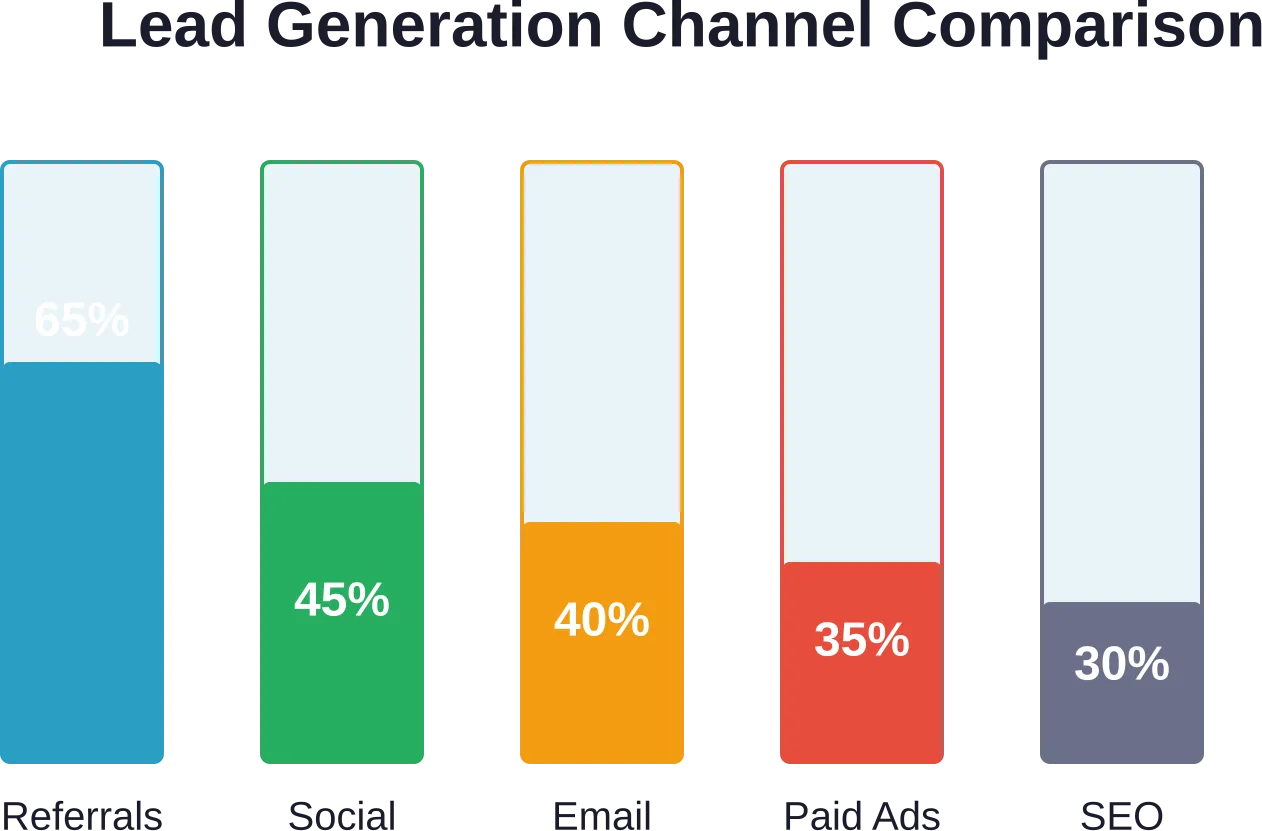
Marketing without measurement wastes resources. Track which channels generate actual loan applications, not just website visits or social media likes:
Effective loan officer marketing isn't about implementing every tactic simultaneously. Start with fundamentals—build social media presence, develop email lists, strengthen referral partnerships.
Pick three strategies from this guide that align with existing strengths and target market needs. Master those before expanding into additional channels.
Marketing consistency beats sporadic intensity. A simple strategy executed reliably outperforms complex campaigns that launch with fanfare but fade within weeks.
The mortgage industry rewards loan officers who stay visible, provide genuine value, and build authentic relationships. Marketing amplifies those qualities—it doesn't replace them.
Start implementing one new marketing idea this week. Track results, adjust based on performance, and keep building momentum. The loan officers who thrive in competitive markets aren't necessarily the most talented—they're the ones who stay consistently visible to the people who need their services.


