Top Facebook Ads Agencies in West Virginia Worth Knowing
A practical look at Facebook ads agencies in West Virginia, what they do, and how to choose the right partner for your business goals.
Mar 24, 2026



Quick Summary: Concrete lifting companies need a blend of digital marketing tactics to generate consistent leads: a mobile-optimized website, local SEO to dominate geographic searches, Google Ads for immediate visibility, and job-site marketing (photos, reviews, yard signs) that turns every project into a lead-generation asset. Combining these strategies creates a sustainable pipeline independent of shared lead directories
Most concrete lifting contractors rely on shared lead directories like Angi or HomeAdvisor. The problem? Those platforms sell the same lead to multiple competitors, driving up costs and turning every inquiry into a bidding war.
Smart contractors build their own lead pipelines. That means owning the marketing channels that bring customers directly to their door—no middleman, no markup, no competition.
Here's how the best concrete lifting businesses generate consistent, high-quality leads without burning cash on shared directories.
Before spending a dollar on advertising, the website needs to work. Not just exist—work.
Most homeowners searching for concrete lifting services do it from their phone, standing in the driveway staring at a cracked slab. If the site takes five seconds to load or looks broken on mobile, they're gone.
A solid website for concrete lifting contractors should include:
According to data from concrete contractor marketing case studies, companies that started with a conversion-optimized website saw their cost per acquisition drop by over 50% once other channels kicked in. The website is the foundation—everything else drives traffic to it.
Local SEO is how concrete lifting companies show up when someone types "concrete lifting near me" or "mudjacking [city name]" into Google.
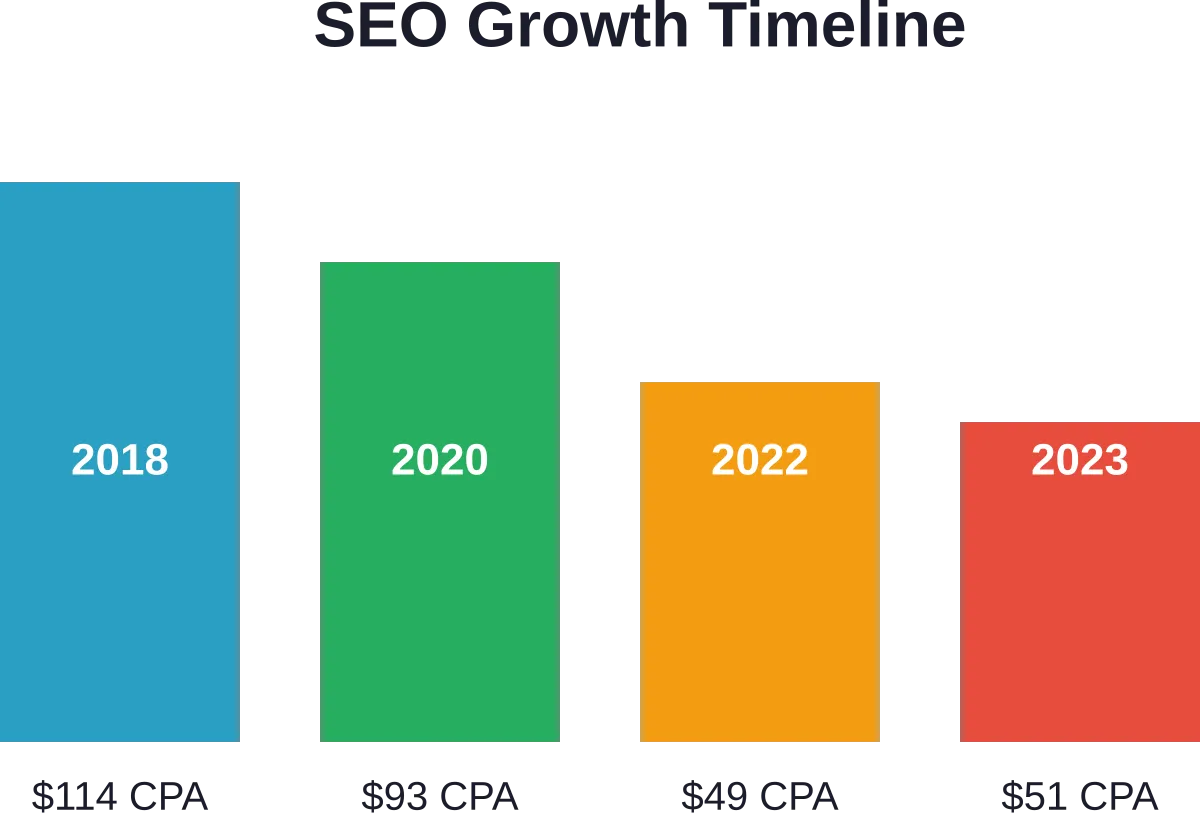
Here's the thing though—local SEO isn't a quick win. It compounds over time. One concrete contractor tracked their SEO performance from 2018 to 2023 and saw organic sessions jump 1,208% (or 635% total traffic increase). That's not a typo. Cost per acquisition dropped from $114 in 2018 to $51.45 in 2023.
But it takes consistency.
Google Business Profile optimization is non-negotiable. Claim the listing, verify it, and fill out every field—hours, services, service area, photos. Post updates monthly.
Service pages targeting city-specific keywords help too. Don't just have a generic "Concrete Lifting" page. Create separate pages for "Concrete Lifting in [City]," "Mudjacking [City]," and "Foam Jacking [City]."
Reviews matter. A lot. Ask every happy customer to leave a Google review. The more five-star reviews stacked up, the higher the local pack ranking climbs.
SEO takes months. Google Ads takes hours.
Paid search puts concrete lifting companies at the top of search results instantly. When someone searches "concrete lifting company" or "fix sunken driveway," the ad appears before organic results.
The trick is targeting the right keywords and excluding the wrong ones.
Focus on high-intent keywords like "concrete lifting cost," "mudjacking near me," "fix sunken concrete patio," and "polyurethane foam lifting." These searchers are ready to hire, not browsing.
Avoid broad terms like "concrete repair" unless paired with negative keywords. Speaking of which—
Negative keywords block ads from showing for irrelevant searches. Add these to every concrete lifting campaign:
One concrete contractor reduced their cost per lead by 30% just by refining their negative keyword list every week. Small tweak, big impact.
Don't send ad traffic to the homepage. Send it to a dedicated landing page that matches the ad copy—same headline, same offer, one clear call to action.
For a "Free Estimate" ad, the landing page should have a bold headline ("Get Your Free Concrete Lifting Estimate"), a short form, and before-and-after photos. That's it. No navigation menu, no distractions.
Facebook ads work for concrete lifting when targeted hyper-locally. Radius targeting around specific neighborhoods, homeowner demographics (ages 40-65, homeowners), and interest targeting (home improvement, DIY, real estate) narrow the audience.
But the creative matters more than the targeting. Before-and-after photo carousels outperform generic stock images every time. Video of the foam injection process gets even better engagement.
Real talk: Facebook ads won't deliver the same intent-driven leads as Google Ads. But they're cheaper per click and excellent for building brand awareness in the local area.

Concrete lifting campaigns often perform best when businesses understand which offers, visuals, and local promotions are more likely to connect before launch. Extuitive helps businesses forecast campaign performance earlier through predictive advertising technology and AI-powered consumer simulations, giving teams clearer signals before budget starts moving.
With Extuitive, you can:
👉Book a demo with Extuitive and explore which concrete lifting campaigns may carry stronger lead potential before launch.
Here's where concrete lifters have a built-in advantage: every job is a billboard.
Yard signs, truck wraps, and crew shirts turn active job sites into advertising. Neighbors notice. They walk over and ask questions. Some schedule estimates on the spot.
But the best contractors take it further with a simple system: photos, reviews, and follow-up.
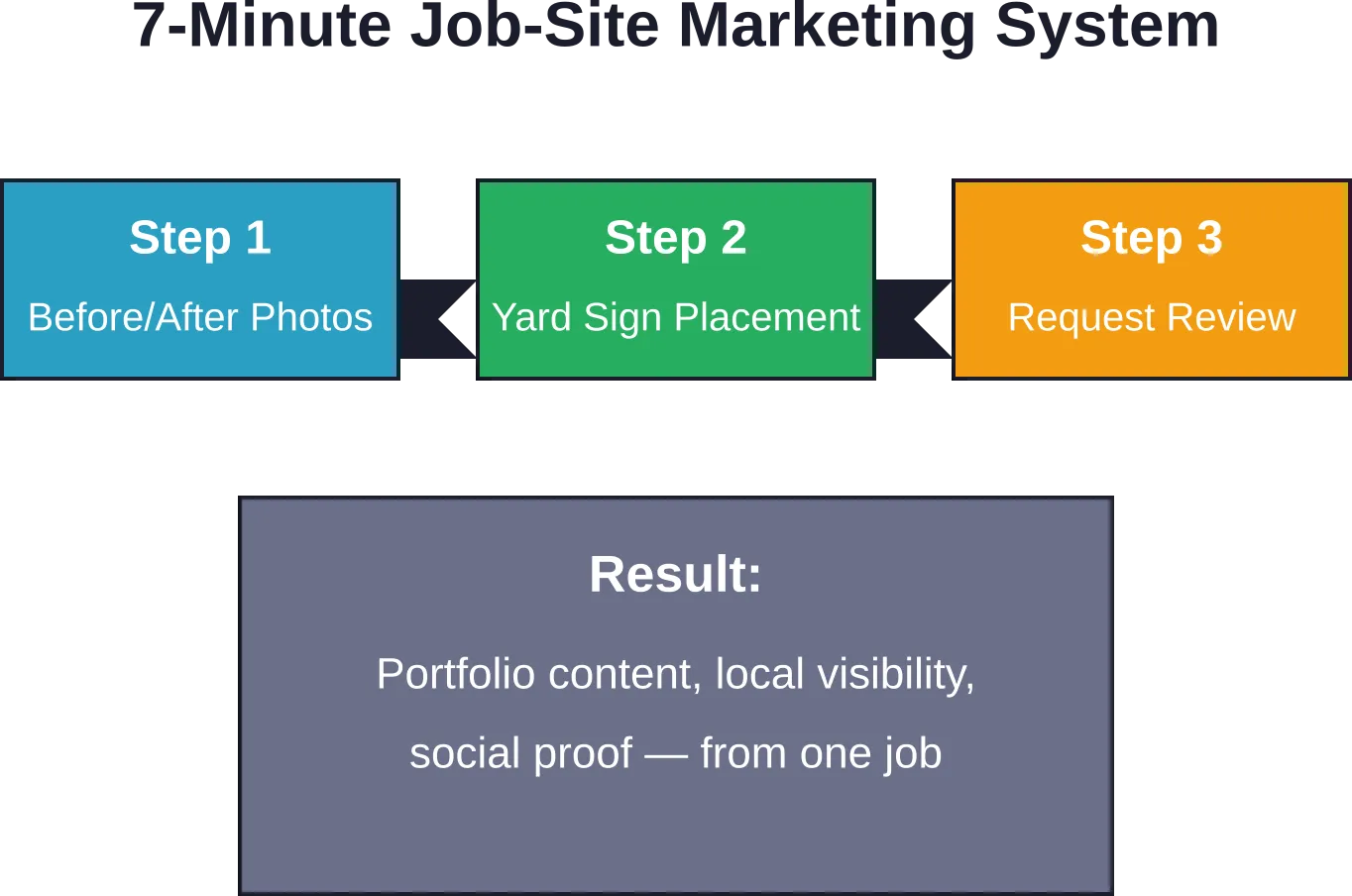
Take before-and-after photos at every job. Same angle, same lighting if possible. These photos go on the website, Google Business Profile, Facebook, and email newsletters.
High-quality project photos build trust faster than any sales pitch.
Ask for a Google review before leaving the job site. Don't email a link later—do it in person. Hand the customer a card with a QR code that links directly to the review page.
Timing matters. Ask right after the customer inspects the finished work and nods approval. That's peak satisfaction.
Most concrete lifting jobs are one-time fixes. The customer won't need another lift for years—if ever.
But they know people who do.
Email marketing keeps the business top-of-mind for referrals. Send a quarterly newsletter with seasonal maintenance tips, recent project photos, and a referral incentive ("Refer a neighbor, get $50").
It's not about selling to the same customer twice. It's about staying visible when their coworker mentions a sunken patio at lunch.
Platforms like Angi and HomeAdvisor sell the same lead to three or four contractors. The customer gets bombarded with calls, and the job goes to whoever answers first or bids lowest.
That's not sustainable.
Contractors who build their own marketing systems control the lead flow. They don't compete on price because they're the only option the customer found. The close rate goes up, the cost per lead goes down, and profit margins improve.
It takes time to build that system. But once it's running, it's a compounding asset that generates leads for years.
Concrete lifting marketing isn't complicated. It's a mix of digital tactics (SEO, Google Ads) and boots-on-the-ground execution (yard signs, photos, reviews).
The companies that win are the ones that treat every job like a marketing opportunity—because it is. Every completed project generates content, builds local visibility, and creates social proof.
Start with a fast website. Layer on local SEO. Run Google Ads for immediate leads. Document every job with photos and reviews. Rinse and repeat.
That's the system. Build it once, benefit for years.


