Marketing Ideas for Logistics Company: 2026 Success Guide
Discover proven marketing ideas for logistics companies: SWOT analysis, buyer personas, digital strategies, and sustainability messaging that drive B2B growth.
May 15, 2026



Effective venue marketing combines digital presence optimization, visual storytelling, strategic partnerships, and data-driven tactics to attract more bookings. According to the U.S. Bureau of Labor Statistics, the events and hospitality sector continues growing, with meeting and event planners numbering 155,800 professionals in 2024—all potential clients for venues. Success requires showcasing your space through high-quality media, leveraging SEO and social platforms, building referral networks, and using analytics to refine your approach.
Standing out in the venue marketplace requires more than just a beautiful space. With competition intensifying across wedding venues, conference centers, and event spaces, strategic marketing separates fully-booked calendars from empty ones.
The challenge? Event planners and clients now research venues primarily online. Industry reports suggest that most booking decisions start with digital discovery—whether through search engines, social media, or specialized platforms.
That's why smart venue operators invest in proven marketing tactics that meet clients where they already spend their time. The right approach doesn't just fill dates—it builds a reputation that commands premium pricing and generates referrals.
Here's what actually works in venue marketing today.
The venue business sits at the intersection of hospitality, events, and real estate. According to the U.S. Bureau of Labor Statistics, median annual wages for meeting, convention, and event planners was $59,440 in May 2024, with employment projected to grow 5% from 2024 to 2034 (approximately 7,500 additional jobs). These professionals represent a significant market actively searching for venues.
But the landscape extends beyond professional planners. Couples researching wedding venues, corporate event coordinators, and individuals planning celebrations all follow similar research patterns—they start online, evaluate options visually, and prioritize venues that demonstrate professionalism through their digital presence.
Entertainment and recreation managers, another key venue client segment, earned a median annual wage of $77,180 in May 2024, according to the Bureau of Labor Statistics. With 43,200 jobs in this category and projected 8% growth through 2034 (3,300 employment change), this represents a healthy target market with purchasing power.
The hospitality sector itself shows consistent demand. Here's the thing though—knowing your market exists doesn't automatically translate to bookings. Venues need strategic visibility where these decision-makers look.
Every venue marketing strategy starts with digital infrastructure. Without a solid online presence, even the most stunning physical space remains invisible to potential clients.
A venue's website serves as the primary conversion tool. Organizations using analytics report improvements in customer acquisition and decision-making effectiveness.
The website must answer key questions immediately: What types of events does the venue accommodate? What's the capacity? Where is it located? What does it look like?
Technical performance matters too. Slow-loading pages lose potential clients before they ever see the venue's features. Mobile responsiveness isn't optional—most initial venue research happens on smartphones.
Clear calls to action guide visitors toward inquiry forms, virtual tours, or booking calendars. Every page should make the next step obvious.
When event planners search for "wedding venue near downtown" or "corporate event space with parking," proper SEO determines whether a venue appears in results.
Local SEO carries particular importance. Claiming and optimizing Google Business Profile listings ensures appearance in map results and local packs. Accurate business information, categories, and regular updates signal relevance to search engines.
On-page optimization incorporates relevant keywords naturally into page titles, headings, and content. Venues should target specific event types they host—wedding receptions, corporate retreats, milestone celebrations, nonprofit galas—rather than generic terms.
Location-specific keywords help too. "Event venue in [neighborhood]" or "conference center near [landmark]" captures searches from planners seeking specific geographic areas.
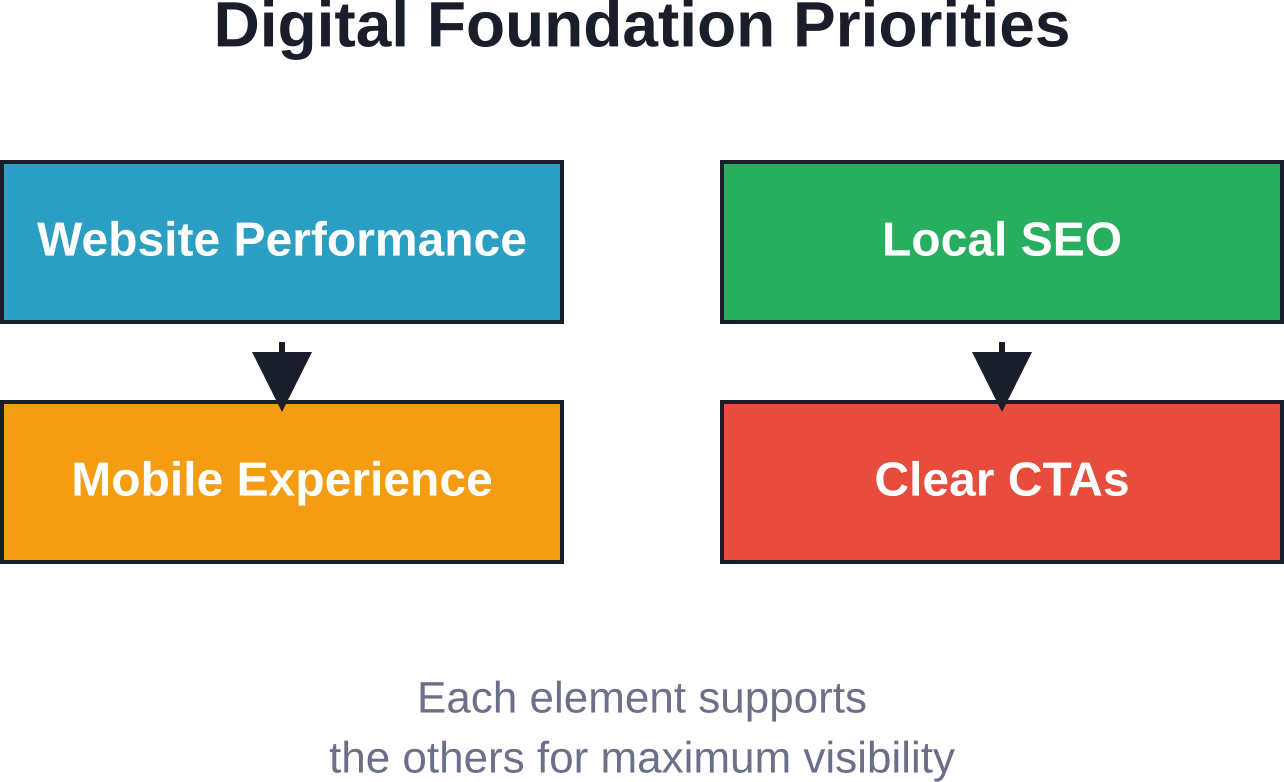
With the foundation in place, these tactical approaches drive measurable results for venue bookings.
Generic venue descriptions don't convert. Compelling narratives do.
Every venue has a story—the historic building renovated with modern amenities, the family-owned space that's hosted generations of celebrations, the architectural marvel designed specifically for memorable gatherings.
This narrative differentiates commoditized event spaces. It gives clients emotional connection points beyond square footage and pricing.
Share the venue's history, design philosophy, or the vision behind its creation. Stories stick in memory when specifications blur together.
Visual content carries enormous weight in venue selection. Data from industry platforms shows that 86% of users who visit a venue profile browse the venue's photos extensively.
Professional photography isn't optional—it's foundational. High-quality images showcase the space in optimal lighting, from flattering angles, captured during actual events that demonstrate real-world use.
Invest in multiple photo shoots: empty spaces highlighting architectural features, styled shoots demonstrating setup possibilities, and candid shots from real events showing the venue in action.
Different photo types serve different purposes. Empty room shots help planners envision their vision. Styled shoots inspire aesthetic possibilities. Real event photos provide social proof.
Virtual tours have transformed venue marketing. They allow distant clients to experience spaces without travel, reduce unnecessary site visits to only serious prospects, and provide 24/7 availability for exploration.
Interactive 360-degree tours let viewers navigate through spaces at their own pace, examining details that matter to their specific needs. They answer spatial questions—how does the ceremony space connect to the reception area? Where do caterers set up? How does natural light enter throughout the day?
Platform usage remains high, with 1.9 billion logged-in users visiting YouTube every month—an ideal distribution channel for video walkthroughs and virtual tours.
Video brings venues to life in ways static images cannot. Movement through spaces, transitions from one area to another, and the atmosphere during actual events all communicate better through video.
Create multiple video assets: a 2-3 minute venue tour highlighting key features, short social media clips showcasing specific spaces or amenities, event recap videos demonstrating successful gatherings, and testimonial videos from satisfied clients.
Distribution across platforms maximizes reach. The same core content can be edited into different formats for Instagram Reels, YouTube, website embedding, and email campaigns.
Social platforms serve dual purposes for venue marketing: discovery channels for new prospects and inspiration sources for clients already researching.
Instagram and Pinterest work particularly well for visually-driven venue marketing. Regular posts showcasing different setups, seasonal decorations, and real events maintain visibility.
But consistency matters more than frequency. Better to post high-quality content twice weekly than mediocre content daily. Each post should provide value—inspiration, useful information, or beautiful imagery.
Engagement extends beyond posting. Responding to comments, sharing user-generated content from clients' events, and participating in local community conversations builds relationships that lead to referrals.
Word-of-mouth remains incredibly powerful in the venue business. Customer retention spending generally yields higher returns than acquisition spending.
Structured referral programs incentivize past clients, vendors, and partners to recommend the venue. Incentives might include discounts on future bookings, finder's fees, or reciprocal referral agreements with complementary businesses.
Event vendors—caterers, florists, photographers, DJs, planners—represent particularly valuable referral sources since they work across multiple venues and influence client decisions.
The key is making referrals easy. Provide partners with digital materials they can share: photos, one-sheet descriptions, website links, and contact information.
Social proof influences booking decisions significantly. Prospective clients trust peer experiences more than marketing claims.
Actively request reviews from satisfied clients on Google, wedding-specific platforms, and social media. Timing matters—ask while the positive experience remains fresh, typically within a week of their event.
Display testimonials prominently on the website, ideally with photos of the clients or their events. Specific testimonials ("The built-in AV system saved us thousands") carry more weight than generic praise ("Great venue!").
Respond to all reviews, positive and negative. Gracious responses to criticism demonstrate professionalism and commitment to improvement.
Organic reach has limits. Strategic paid advertising accelerates visibility among specific audiences.
Google Ads capture high-intent searches—people actively looking for venues right now. Local targeting ensures ads appear only for relevant geographic searches.
Social media advertising allows precise demographic targeting. Facebook and Instagram ads can reach engaged couples, corporate event planners, or individuals planning milestone celebrations based on life events, interests, and behaviors.
Industry analysis suggests allocating 10% to 15% of total event budgets for marketing recurring events, and 15% to 20% for new events—guidance that applies to venue marketing as well.
Specialized venue sourcing platforms connect venues with event planners actively seeking spaces. These platforms aggregate venue options, allow filtering by capacity and amenities, and facilitate the RFP process.
Industry data shows significant volume on these platforms. In 2019 alone, the Cvent Supplier Network was utilized to source 2.9 million RFPs valued at over $18 billion, representing enormous opportunity for venues with strong profiles.
Maintaining updated, comprehensive profiles on these platforms ensures visibility when planners search. High-quality photos, detailed amenity lists, accurate capacity numbers, and quick RFP responses improve conversion rates.
Educational content establishes venues as helpful resources rather than just spaces for rent. Blog posts, guides, and resources answer common client questions and improve SEO.
Content topics might include: event planning timelines, budgeting guides for specific event types, seasonal decoration ideas, vendor coordination tips, or behind-the-scenes looks at venue setup.
Research indicates that content marketing improves new product launch accuracy by 66%—a principle that applies to venue feature launches and promotional campaigns as well.
This content shouldn't be overly promotional. The goal is providing genuine value that builds trust and positions the venue as an expert resource.
Digital floor plans, capacity calculators, and interactive space planners help clients visualize their events before site visits.
Floor plans showing dimensions, furniture layouts, and flow between spaces answer practical questions. Capacity information for different setup styles (theater, banquet, cocktail) helps planners determine fit.
Some venues offer interactive planning tools that let clients experiment with table arrangements, estimate guest counts, or visualize different configurations. These tools engage prospects and move them closer to booking.
Collaboration with event vendors creates mutual referral opportunities. Caterers, photographers, florists, rental companies, and entertainment providers all influence venue selection.
Preferred vendor lists provide value to clients while strengthening vendor relationships. Some venues host vendor showcases, allowing partners to demonstrate their services to prospective clients touring the space.
These partnerships often evolve into co-marketing opportunities—joint social media posts, bundled promotions, or collaborative content that benefits both businesses.

Effective venue marketing requires measurable objectives. Vague aspirations like "get more bookings" don't provide direction or accountability.
SMART goals—Specific, Measurable, Achievable, Relevant, and Time-bound—create clarity. Examples include: increase monthly venue inquiries by 20% within six months, grow Instagram followers by 30% in three months, boost website traffic by 15% in one quarter, or improve inquiry-to-booking conversion rate from 15% to 20% by year-end.
Different metrics matter for different business stages. New venues prioritize awareness metrics like website traffic and social media followers. Established venues focus on conversion metrics like inquiry quality and booking rates.
Regular tracking reveals what's working. Monthly reviews of key performance indicators inform budget allocation and strategy adjustments.
Not all potential clients are equal. Different event types attract different decision-makers with distinct priorities.
Segmented marketing speaks to each audience's specific needs. Website content, social media messaging, and advertising creative should address what matters most to each segment.
Wedding content emphasizes romance and beauty. Corporate messaging highlights professionalism and technical capabilities. Nonprofit outreach demonstrates value and community commitment.
Hospitality research confirms that data-driven approaches deliver results. Organizations using analytics report 45% improvement in customer acquisition, 51% better decision-making, and 66% more accurate campaign launches.
Website analytics reveal how prospects discover and interact with venue information. Which pages receive the most traffic? Where do visitors drop off? Which content leads to inquiry form submissions?
Social media analytics show which content types generate engagement. Do behind-the-scenes videos outperform styled photoshoots? Do testimonials drive more saves than space highlights?
Email marketing metrics indicate message effectiveness. Open rates, click-through rates, and inquiry conversions all provide feedback on messaging and offer relevance.
This data should inform ongoing strategy refinement. Double down on what works. Adjust or eliminate what doesn't.
Limited budgets require strategic allocation across channels that deliver the best return on investment.
A balanced venue marketing budget might allocate: 30-40% to visual content creation (photography, videography, virtual tours), 20-25% to paid advertising (search, social, marketplace placement), 15-20% to website maintenance and optimization, 10-15% to content marketing and SEO, 10-15% to partnership development and events.
These percentages vary based on venue maturity. New venues invest more heavily in initial content creation and awareness campaigns. Established venues focus more on conversion optimization and relationship marketing.
Track return on investment by channel. Cost per inquiry, cost per booking, and revenue per marketing dollar spent all inform future budget decisions.

Venue marketing budgets disappear quickly when teams spend heavily on campaigns that never turn into real inquiries or bookings. Extuitive helps businesses evaluate ad creatives before launch using predictive advertising models trained on historical campaign performance and AI consumer simulations.
Extuitive gives ability to:
👉Book a demo with Extuitive before launching your next venue campaign.
Even well-intentioned marketing efforts fall short when common pitfalls aren't avoided:
Venue demand fluctuates seasonally. Smart marketing anticipates and capitalizes on these patterns.
Wedding season typically peaks in spring and fall in most climates. Ramping up wedding-focused marketing 12-18 months before these seasons aligns with couples' planning timelines.
Corporate events concentrate around conferences, annual meetings, and holiday parties. Marketing to corporate planners intensifies in late winter for spring events and late summer for year-end gatherings.
Holiday events create opportunities for themed marketing. Event data shows significant engagement for specialty events—Nashville Sound's Faith Night games saw attendance spike by 93% over their average season draw for non-Faith Night dates in 2006, demonstrating the power of targeted niche marketing.
Slow seasons require creative approaches. Off-season promotions, discounted weekday rates, or partnerships with vendors for bundled packages help fill the calendar during typically quiet periods.
What gets measured gets improved. Tracking the right metrics separates effective marketing from wasted effort:
The ultimate metric is return on investment—revenue generated divided by marketing spend. Positive ROI doesn't guarantee optimal performance, though. The goal is continuously improving ROI through strategic refinement.
The venue business rewards strategic marketing. While competition remains fierce, smart approaches consistently outperform scattered efforts.
Start with digital infrastructure—an optimized website, strong local SEO, and compelling visual content. These foundational elements support every other marketing tactic.
Layer in the tactical approaches that match specific audiences and business goals. Not every venue needs every tactic immediately. Focus on the channels and strategies most likely to reach target clients effectively.
Measure everything. Data reveals what works, what doesn't, and where refinements create improvement. Marketing shouldn't be guesswork—it should be an ongoing process of testing, measuring, and optimizing.
Build genuine relationships with past clients, vendors, and community partners. These connections generate referrals and repeat business that compound over time.
The venues that thrive aren't necessarily those with the most beautiful spaces or the lowest prices. They're the ones that make it easy for the right clients to find them, understand what they offer, and envision their events happening there.
That's what effective venue marketing accomplishes. It bridges the gap between empty calendars and fully-booked schedules through strategic visibility, compelling storytelling, and consistent execution.
Ready to fill your venue calendar? Start implementing these proven marketing strategies today. Focus on one or two tactics first, execute them well, measure the results, and expand from there. Consistent effort in the right directions produces consistent bookings.


