The Best AI Content Marketing Software Tools Right Now
Discover top AI content marketing platforms to create, optimize, and scale high-performing content faster with better SEO and brand consistency in 2026.
Mar 24, 2026



Automated dropshipping uses specialized software to handle repetitive ecommerce tasks like product imports, order processing, inventory updates, and price monitoring without manual intervention. This business model allows online store owners to scale operations efficiently while reducing time spent on routine tasks, though it requires careful supplier selection and ongoing monitoring to maintain quality standards.
The dropshipping business model has evolved considerably. What once required hours of manual work—importing products, updating prices, processing orders—can now happen automatically while store owners focus on marketing and customer relationships.
But here's the thing: automation isn't a magic solution that guarantees passive income. The Federal Trade Commission has taken action against multiple e-commerce business opportunity schemes that promised unrealistic returns. According to the FTC, these operations cost consumers millions by overpromising automated profits without disclosing the real work involved.
That said, legitimate dropshipping automation software does exist and can significantly streamline operations. The key is understanding what automation actually handles, which tools deliver real value, and how to avoid common pitfalls.

Automated dropshipping can simplify operations, but it does not solve the question of which ads are worth running. Extuitive helps teams predict ad performance before launch, compare creative options, and spot weaker ideas before campaigns go live.
Talk with Extuitive to:
👉 Book a demo with Extuitive to compare ad concepts before launch.
Automated dropshipping refers to using software platforms that connect online stores with suppliers and handle operational tasks without constant manual input. These tools manage product catalog updates, inventory synchronization, order forwarding to suppliers, tracking number imports, and price adjustments.
The automation doesn't eliminate all work. Store owners still need to select products, manage marketing campaigns, handle customer service escalations, and monitor supplier performance. What changes is the reduction of repetitive administrative tasks.
Think of it this way: instead of manually checking supplier websites for stock levels and pricing changes, automation software does this continuously. When a customer places an order, the system forwards it to the supplier automatically rather than requiring manual processing.
According to the Small Business Administration, more than a third of small businesses currently outsource at least some of their operations. The global IT outsourcing market is expected to hit $639 billion in 2026, demonstrating how businesses increasingly rely on automated solutions and external providers.
In dropshipping specifically, these functions typically get automated:
Real talk: not all automation platforms handle these tasks equally well. Some excel at product research while others focus on order fulfillment efficiency.
The market offers numerous automation tools, each with different strengths. Community discussions and user experiences reveal that AutoDS frequently appears as a comprehensive option, while platforms like Ordoro focus specifically on inventory and shipping automation.
Here's what sets the best dropshipping automation software apart from mediocre options.
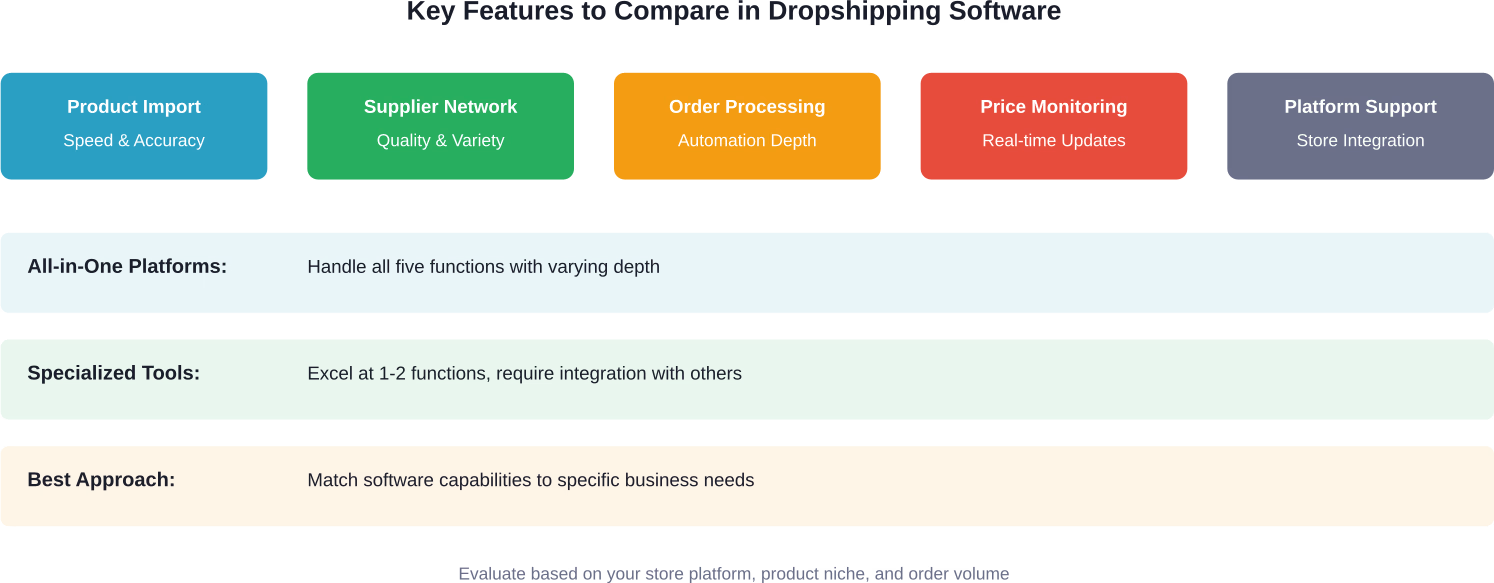
Platforms like AutoDS offer comprehensive solutions that handle product research, imports, inventory management, and order fulfillment in a single interface. These tools typically support multiple suppliers and integrate with major ecommerce platforms.
The advantage? Everything works within one ecosystem. The drawback? Pricing structures can become complex, and businesses may pay for features they don't actively use.
Check current pricing on official websites, as subscription costs and feature availability change frequently. What matters more than price is whether the platform supports the specific suppliers and sales channels relevant to a particular business model.
Ordoro exemplifies specialized platforms that focus on inventory and shipping automation. These tools excel at specific functions like multi-channel inventory synchronization or dropship order routing to various suppliers.
Specialized tools often integrate with existing ecommerce platforms and provide deeper functionality in their focus areas than all-in-one solutions. Businesses running complex multi-supplier operations frequently prefer this approach.
So, how does someone actually implement automation? The process involves more than just signing up for software.
First comes supplier selection. Automated tools work best with reliable suppliers who maintain accurate inventory data and provide consistent product information. The automation can only be as good as the supplier feeds it relies on.
Then there's the technical integration. Most automation platforms connect to stores through APIs or apps. Shopify, WooCommerce, and other major platforms have established integration processes, but custom stores may require additional development work.
The initial configuration determines whether automation actually saves time or creates new problems. Here's what requires attention during setup:
Now, this is where it gets interesting. Many new dropshippers enable every automation feature immediately, then discover issues weeks later when customers complain about incorrect products or shipping delays.
A better approach involves gradual implementation. Start with product imports and inventory monitoring. Once those work reliably, add order automation. Only after the entire flow operates smoothly for several weeks should marketing efforts scale up.
Automation fundamentally changes how dropshipping businesses operate, but understanding both advantages and constraints prevents unrealistic expectations.
Time savings represent the most obvious benefit. Tasks that previously consumed hours—updating hundreds of product prices, checking inventory across multiple suppliers, forwarding orders individually—happen automatically and continuously.
Accuracy improves when systems handle repetitive data entry. Humans make transcription errors, especially when tired or processing high volumes. Automated systems apply consistent rules without fatigue.
Scalability becomes feasible. Managing 50 products manually is reasonable. Managing 5,000 products across 10 suppliers requires automation. The operational complexity doesn't increase linearly when systems handle the administrative load.
Multi-channel selling expands reach. Syncing inventory and orders across multiple marketplaces manually creates chaos. Automation platforms manage this complexity, though they charge accordingly for the capability.
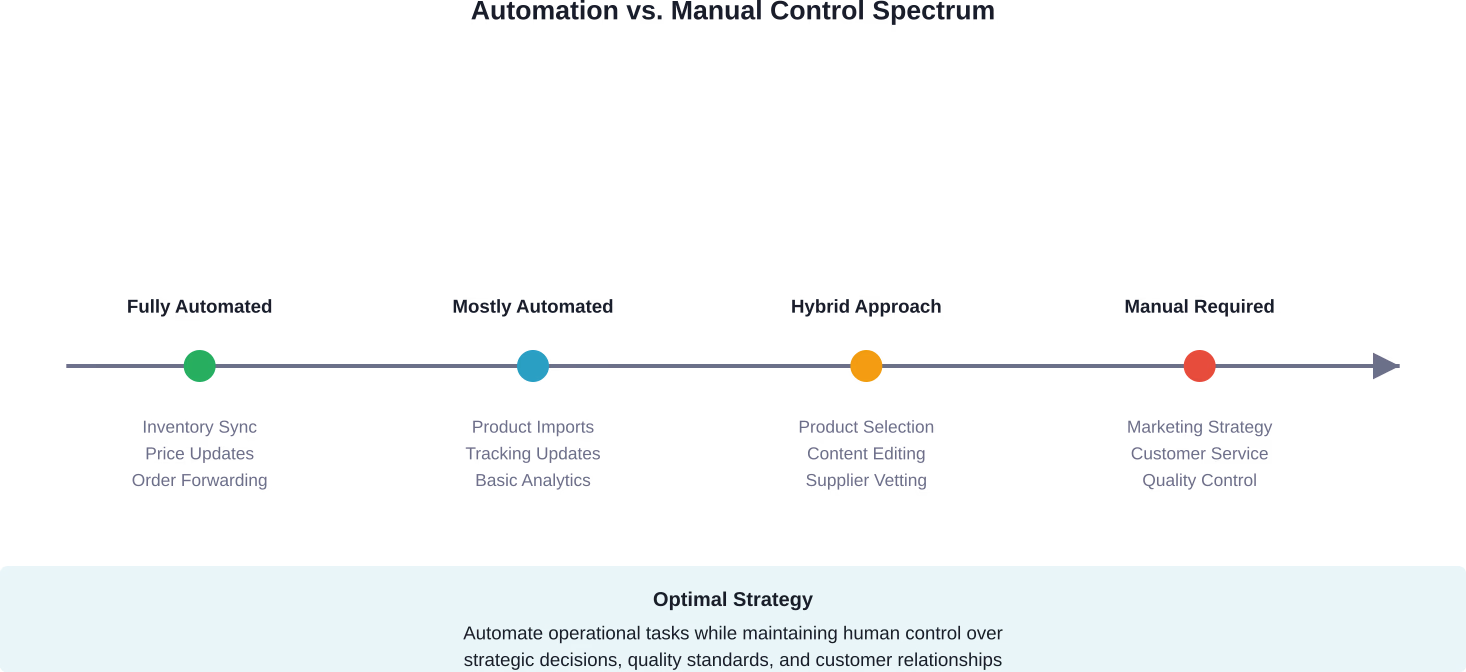
Here's what automation software can't fix: poor supplier relationships, bad product selection, weak marketing, or subpar customer service.
Product research still requires human judgment. Algorithms can identify trending items, but understanding market positioning, profit margins, and competitive dynamics requires strategic thinking.
Customer service remains largely manual. While some support tickets can be handled with canned responses, resolving shipping issues, handling returns, and managing complaints require human intervention.
Marketing and traffic generation sit completely outside automation scope. The software doesn't bring customers to the store—that requires advertising, content creation, SEO, or social media efforts.
Quality control demands ongoing attention. Automated systems import whatever suppliers provide. If supplier product descriptions are poor, images are low-quality, or specifications are inaccurate, automation perpetuates these problems at scale.
The FTC has repeatedly warned about e-commerce business opportunity schemes. In October 2024, the FTC took action against an online business opportunity scam. In July 2025, an FTC action resulted in defendants agreeing to surrender cash and property worth millions. In August 2025, additional operators faced permanent bans from the industry under a proposed settlement. These cases share common patterns worth recognizing.
Red flags include:
Legitimate automation software provides tools that reduce manual work. Scams promise wealth with little effort. The distinction matters.
Real dropshipping businesses require product research, supplier vetting, marketing investment, customer service systems, and ongoing optimization. Automation handles administrative tasks within that framework—it doesn't eliminate the business fundamentals.
What separates successful automated dropshipping operations from failed attempts? Based on community discussions and user experiences, several patterns emerge.
Broad product catalogs seem appealing but create problems. Automated imports from general suppliers result in stores with no clear identity, making marketing nearly impossible.
Successful stores typically focus on specific product categories where they can develop expertise, understand customer needs, and differentiate from competitors. Automation works better when applied to a curated product selection rather than random imports.
Not all suppliers integrated with automation platforms deliver equivalent quality. Shipping times, product consistency, packaging quality, and customer service responsiveness vary dramatically.
Testing suppliers with sample orders before enabling full automation prevents customer disappointment. The automation software can't assess supplier reliability—that requires manual evaluation.
Automation doesn't mean hands-off operation. Successful store owners track key metrics weekly: order fulfillment times, supplier stock-out rates, customer service ticket volume, return rates, and profit margins per product.
These indicators reveal problems before they escalate. A supplier with increasing fulfillment delays needs replacement. Products with high return rates should be removed despite automated imports continuing to add them.
Automated product imports often include poorly written descriptions, low-resolution images, or incorrect specifications. Taking time to edit and enhance product listings improves conversion rates significantly.
Some operators automate imports but manually review and enhance each product before making it live. This hybrid approach balances efficiency with quality standards.
Here's the uncomfortable truth: automation doesn't bring traffic. The most efficient dropshipping operation fails without customers.
Successful businesses allocate substantial resources to marketing—whether through paid advertising, content creation, social media engagement, or SEO efforts. Automation creates operational capacity to scale; marketing creates the demand that fills that capacity.
Certain product categories suit automated dropshipping better than others. The ideal candidates share specific characteristics.
Standardized products with consistent specifications work well. Items that don't require size fitting, have straightforward use cases, and generate few customer questions before purchase automate easily.
Trending products that suppliers reliably stock allow stores to capitalize on demand without inventory risk. Fashion accessories, phone cases, and home decor items often fall into this category.
Products with healthy profit margins accommodate advertising costs while remaining competitive. Low-margin items require such high volume that customer service demands offset automation benefits.
Non-fragile items with simple shipping reduce damage claims and returns. Complicated products requiring careful packaging create supplier quality issues that automation can't prevent.
Even well-implemented automation encounters obstacles. Understanding common issues helps prepare appropriate responses.
Suppliers don't always update inventory in real-time. Automation platforms sync on schedules—hourly, daily, or somewhere between. This creates windows where items appear available but are actually out of stock.
Solution: Configure stock buffers that remove items from the store when supplier inventory drops below a threshold rather than waiting for zero. Set sync frequencies based on product turnover rates.
Supplier prices change. Automated markup rules maintain margins, but significant price increases can make products uncompetitive overnight.
Solution: Implement price change alerts that flag significant variations for manual review. Some platforms offer conditional pricing rules that cap maximum prices or maintain competitive positioning.
API connections occasionally fail. Payment processing issues occur. Supplier systems go offline. When automation breaks, orders don't get fulfilled.
Solution: Set up monitoring systems that alert when orders haven't been forwarded to suppliers within expected timeframes. Maintain backup manual processing procedures for emergencies.
Suppliers sometimes ship products that don't match descriptions or images. Automated systems forward orders without checking actual quality.
Solution: Order samples regularly to verify quality maintenance. Monitor customer feedback and returns data to identify quality problems early. Switch suppliers when standards slip.
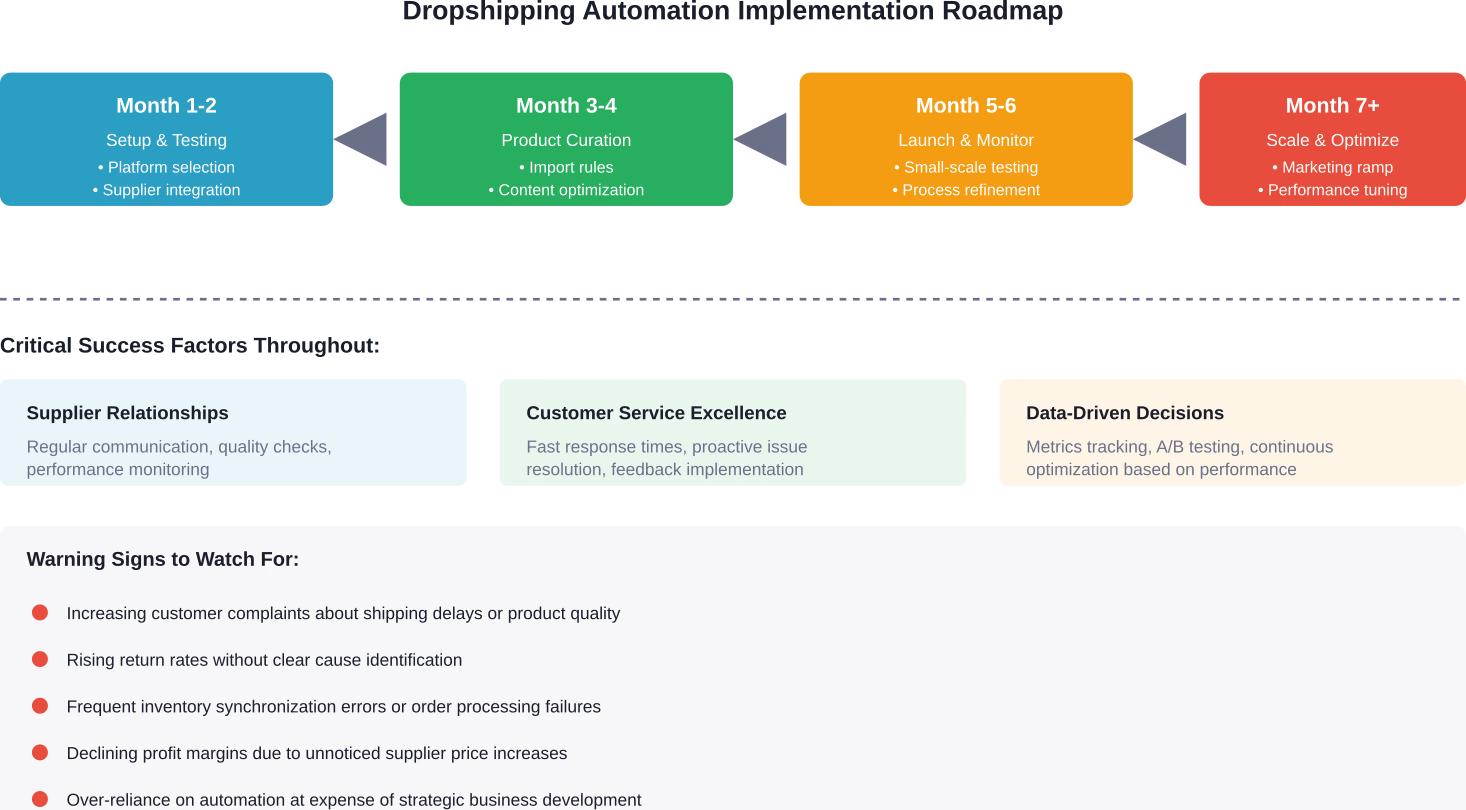
Automation transforms dropshipping from a labor-intensive manual process into a more scalable operation. But scaling a flawed business model just creates larger problems faster.
The businesses that succeed combine automation's operational efficiency with strong fundamentals: genuine product-market fit, reliable supplier relationships, effective marketing, and excellent customer service. The software handles the administrative burden; human strategy drives growth.
Start with thorough research. Understand the market, identify underserved niches, and vet suppliers carefully. Implement automation gradually, testing each component before moving to the next. Monitor performance metrics religiously. Invest substantially in marketing.
And remember the FTC warnings about business opportunity scams. If someone promises specific income with minimal effort, they're selling a fantasy, not a business opportunity. Real dropshipping requires work—automation just makes that work more productive.
The tools exist to build legitimate automated dropshipping operations in 2026. Whether those operations succeed depends less on the automation itself and more on the strategic decisions surrounding it. Choose the right niche, find quality suppliers, deliver genuine value to customers, and automation becomes the efficiency multiplier that supports sustainable growth.


