Free AI Marketing Tools Worth Using in Real Life
A practical look at free AI marketing tools you can actually use for content, ads, SEO, and daily marketing tasks without fluff.
Jan 7, 2026



Shopify provides a solid SEO foundation out of the box, but ranking well requires deliberate optimization across multiple areas. The platform handles many technical details automatically, yet stores that treat SEO as an ongoing process consistently outperform those that rely only on default settings.
Effective Shopify SEO begins with understanding what potential customers actually type into search engines. Keyword research identifies terms with sufficient volume and commercial or transactional intent.
Start by building a seed list of core products and categories. Expand this list using tools that show real search volume and difficulty metrics. Focus on three main keyword types:
Search intent has become the dominant ranking factor. A term like "best running shoes" signals comparison intent, while "buy Nike Air Zoom black size 11" indicates immediate purchase intent. Map keywords to the correct page type based on this intent rather than forcing high-volume head terms onto product pages that cannot satisfy the searcher.
Review competitor rankings for target keywords. Identify content gaps where existing top results fail to answer specific questions or lack detailed specifications. These gaps represent realistic ranking opportunities for new or mid-sized stores.

At Extuitive we live in Shopify stores every day. We see owners who have done the hard SEO work - perfect titles, unique descriptions, clean structure, fast pages - and still need revenue this month, not in six months. Organic traffic is the goal, but paid campaigns are usually the bridge.
So we built a tool that removes the biggest pain point in paid ads: guessing which creative will work. You connect your Shopify store, our app pulls your products, and in minutes our AI generates dozens of ad variations - images, videos, reels, headlines, copy, everything. Before you spend a cent, every variation gets tested against 100,000+ consumer agents trained on real purchase behavior. Our platform ranks them by predicted purchase intent and tells you exactly which ones to launch.
Most of our users go live the same day with creatives that are already pre-validated. Campaigns start profitable instead of bleeding budget while you figure out what resonates. The best part for SEO-focused stores: the winning messages and visuals almost always become the exact phrasing you should strengthen on your product and collection pages. Paid traffic stops being a separate channel and starts feeding your organic strategy with real conversion data.
That is how we look at it: SEO builds the foundation, paid traffic accelerates everything, and Extuitive makes sure the paid side is no longer a gamble. If you are happy with your SEO progress but want faster, more predictable growth right now, come talk to us.
A logical site hierarchy improves crawling efficiency and user navigation. Shopify collections function as category pages, while individual products sit one level deeper. Keep the structure flat when possible - avoid nested collections deeper than two levels unless absolutely necessary for large catalogs.
URL slugs should remain short, descriptive, and keyword-relevant. Shopify automatically generates slugs from page titles, but manual editing prevents issues with special characters or overly long strings. Use hyphens to separate words and remove stop words when they add no value.
Implement breadcrumb navigation on all collection and product pages. Breadcrumbs reinforce internal linking and provide additional context for search engines about page relationships within the site.
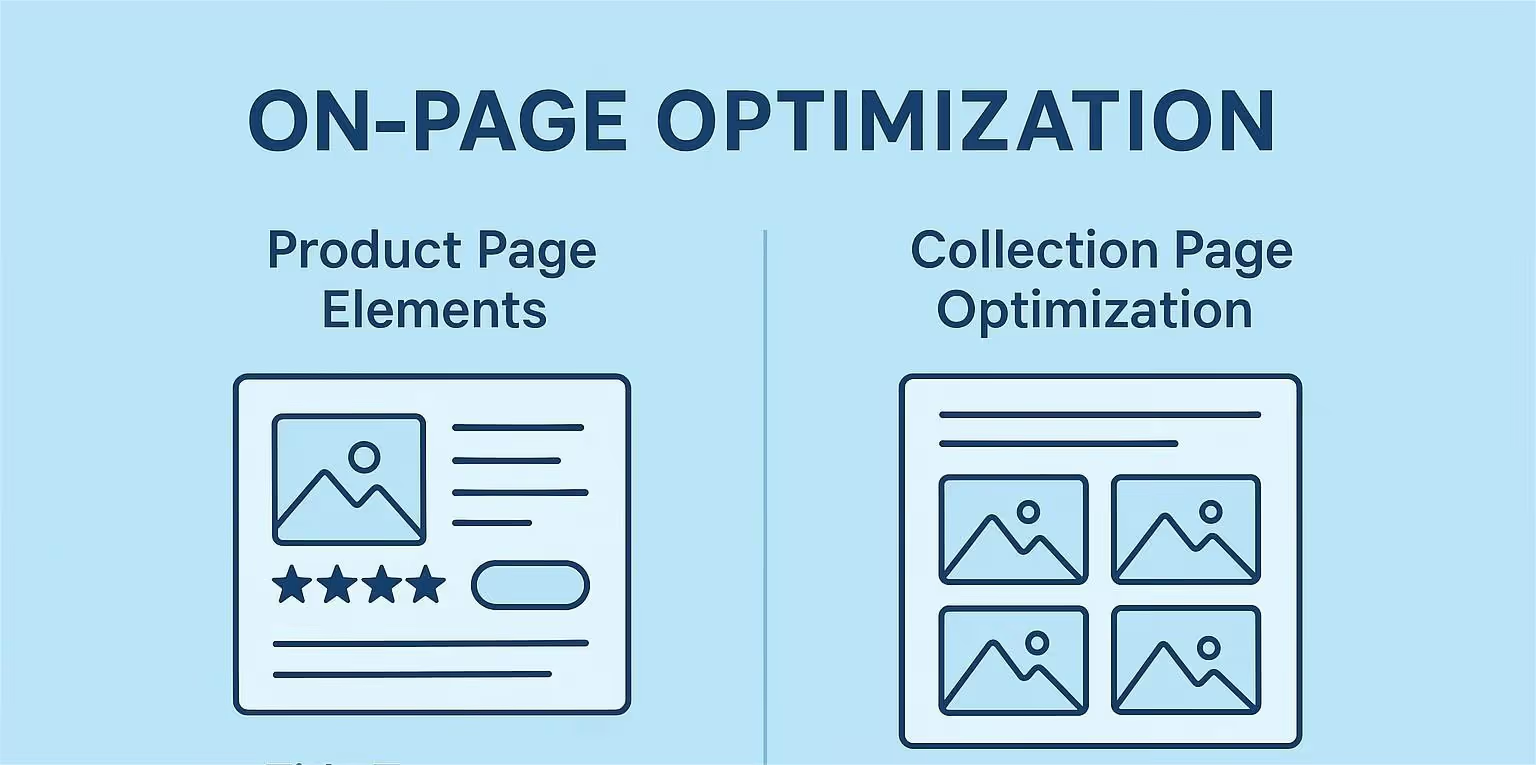
Product and collection pages are the primary revenue drivers, so on-page optimization here delivers the highest return. Every element from titles to descriptions must support both search engines and buyers.
Product titles serve as the primary H1 tag and carry significant ranking weight. Place the most important keywords at the beginning of the title while keeping the full string under 60 characters to prevent truncation in search results.
Write unique product descriptions for every item. Manufacturer copy creates duplicate content issues across thousands of stores. Focus descriptions on benefits, use cases, and technical specifications that match searcher intent. Include target keywords naturally in the first paragraph.
Use bullet points for key features and specifications:
Treat collection pages as landing pages rather than simple product lists. Add 300-500 words of unique content above the product grid that targets the main collection keyword. Include secondary keywords in subheadings and naturally throughout the text.
Many high-ranking collection pages function as buying guides. They compare options within the category, highlight best sellers, and address common buyer questions. This approach satisfies informational intent while keeping visitors on the page longer.
Shopify allows full control over title tags and meta descriptions for all pages. Write unique meta titles that differ slightly from H1 tags to provide additional context. Keep titles between 50-60 characters to display fully in search results.
Meta descriptions do not directly influence rankings but significantly affect click-through rates. Include the primary keyword, highlight unique selling points, and add a clear call to action. Test different variations over time to identify which versions generate higher CTR in Search Console data.
Images represent a major portion of page weight and create additional ranking opportunities through Google Image search.
Compress all product images before upload. Use WebP format when browser support allows, or ensure JPEG compression stays below 100 KB for most product photos while maintaining visual quality.
Name image files descriptively with hyphens separating words. Include the primary product keyword and relevant modifiers:
Write specific alt text for each image. Alt text should describe exactly what appears in the photo rather than stuffing keywords. For variant images, include color or angle information when relevant.
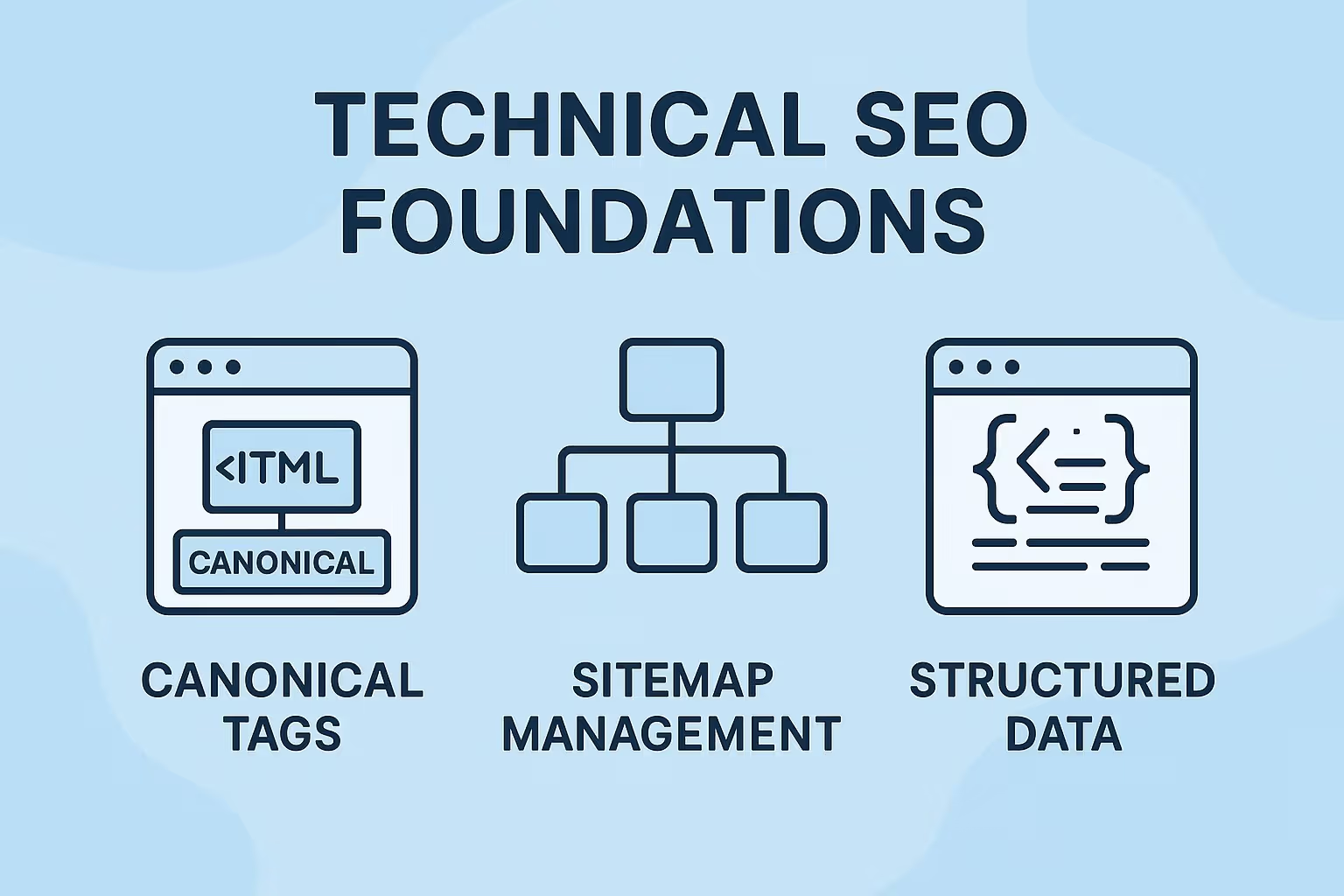
Technical SEO ensures search engines can discover, crawl, and index the store correctly. Shopify handles many of these elements automatically, but understanding and monitoring them prevents common issues.
Shopify automatically generates canonical tags, but multiple URL variations can still create issues. Products accessible through collections and direct product URLs require proper canonicalization to consolidate ranking signals.
Set up permanent 301 redirects for discontinued products rather than deleting pages. Redirect to the closest relevant category or similar product to preserve link equity.
Shopify maintains a custom robots.txt file that blocks certain administrative paths by default. The platform cannot be fully edited without code modifications, but the default configuration works well for most stores.
Submit the automatically generated sitemap.xml to Google Search Console. The sitemap includes all indexable pages and updates automatically when new products or collections are added.
Add JSON-LD structured data for products, reviews, and organization information. Many modern themes include basic product schema, but additional markup improves rich result eligibility.
Required product schema fields include:
Test structured data implementation regularly using Google's Rich Results Test. Common errors include missing required fields or incorrect data types that prevent rich snippets from appearing.
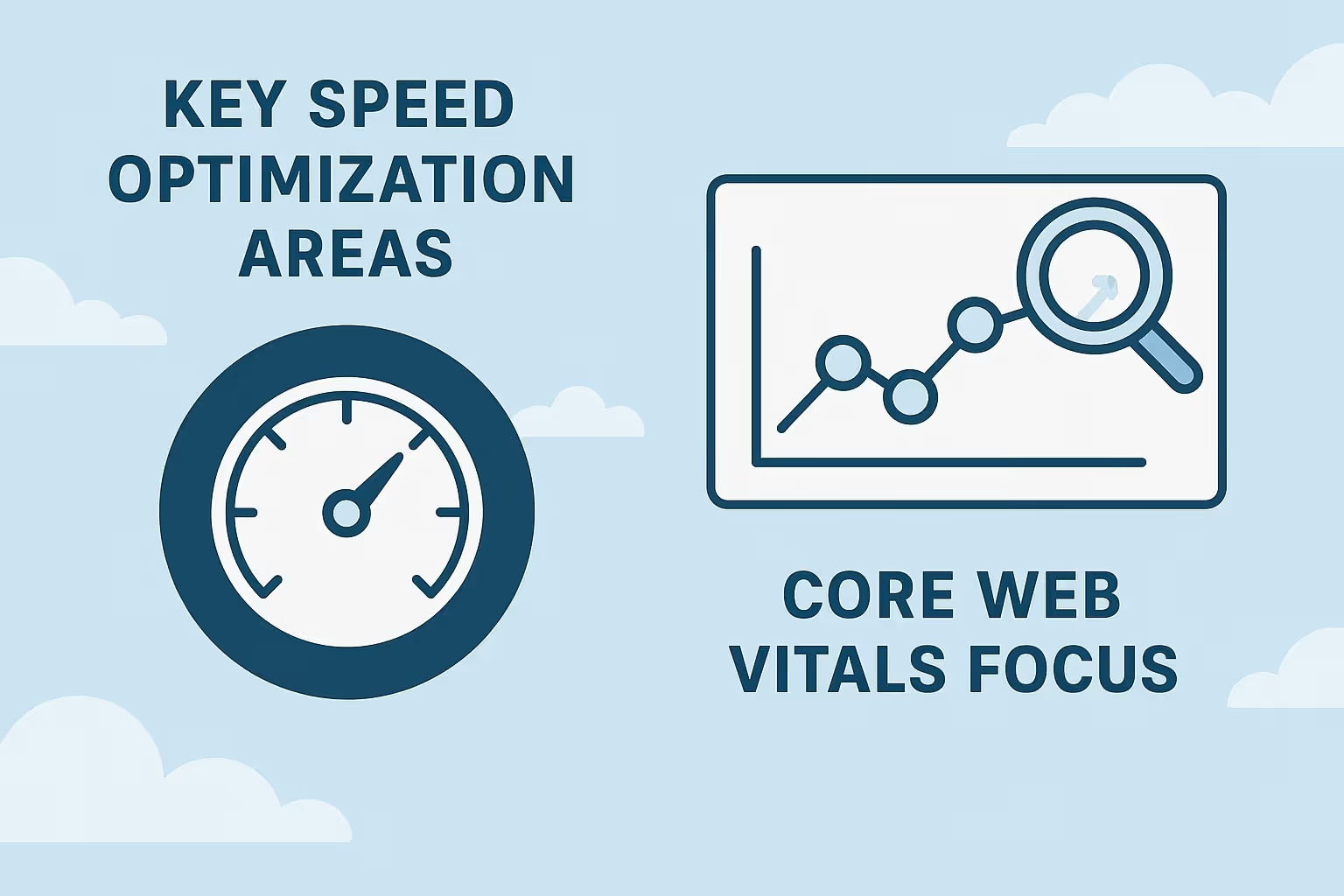
Page speed remains a confirmed ranking factor and directly impacts conversion rates. Shopify hosts stores on fast infrastructure, but theme code, apps, and unoptimized assets frequently reduce performance.
Largest Contentful Paint (LCP) measures main content loading time. Optimize server response, critical CSS delivery, and hero image loading to improve LCP scores.
Cumulative Layout Shift (CLS) occurs when elements move during loading. Set explicit width and height attributes for images and avoid inserting content above existing elements dynamically.
First Input Delay (FID) or Interaction to Next Paint (INP) measures interactivity. Minimize JavaScript execution time and break up long tasks.
Internal links distribute authority throughout the site and guide visitors toward conversion paths.
Add contextual links from product descriptions to related categories or complementary products. Use descriptive anchor text that includes relevant keywords when natural.
Include "related products" and "frequently bought together" sections on product pages. These sections create automatic internal links and improve average order value.
Link from blog posts to relevant products and collections. This strategy passes authority from content pages to commercial pages while providing clear next steps for readers.
The built-in blog functionality enables content marketing without third-party tools. Regular publishing targets informational keywords that product pages cannot rank for effectively.
Create pillar pages that comprehensively cover broad topics within your niche. Link from these pillar pages to supporting cluster content and relevant product categories.
Publish comparison articles, buying guides, and how-to content that addresses common customer questions. This content attracts visitors earlier in the buying journey and builds trust before asking for the sale.
External links remain a major ranking factor. Focus on strategies that generate natural editorial links rather than low-quality directory submissions.
Create linkable assets such as original research, detailed guides, or interactive tools related to your product niche. These assets attract links from industry publications and bloggers.
Contribute guest posts to relevant industry sites. Provide genuine value rather than thinly veiled promotional content.
Monitor competitor backlinks to identify linking patterns and opportunities. Tools that show newly acquired links help spot realistic targets for outreach.
Set up Google Analytics 4 and Google Search Console immediately after launch. These tools provide the data needed to measure SEO performance and identify issues.
Track rankings for core keyword sets weekly. Look for sudden drops that may indicate technical problems or algorithm updates.
Review Search Console data for crawl errors, mobile usability issues, and Core Web Vitals reports. Address critical issues immediately.
Analyze behavior flow reports to identify high-exit pages that may need content improvements or better internal linking.
Shopify SEO success in late 2026 and beyond depends on consistent execution across technical foundations, on-page optimization, content strategy, and performance monitoring. The platform removes many traditional e-commerce SEO barriers, but stores that implement structured keyword research, maintain clean site architecture, optimize for speed and mobile, and build topical authority through content will separate themselves from competitors.
Treat optimization as an iterative process rather than a one-time setup. Regular auditing, performance tracking, and adaptation to new search engine requirements remain essential. Stores that combine Shopify's built-in capabilities with disciplined SEO practices continue to achieve sustainable organic growth even in competitive niches.
Significant ranking improvements typically appear within 3-6 months for new stores following proper optimization. Established stores implementing major changes may see movement in weeks, but sustainable positioning requires ongoing work.
Yes. Using manufacturer descriptions creates duplicate content issues across hundreds of identical stores. Unique descriptions improve ranking potential and provide better information for customers.
Yes, Shopify generates self-referential canonical tags for all pages by default. This prevents most duplicate content issues caused by URL parameters and multiple paths to the same content.
Completely safe and recommended. Unused apps continue loading scripts on every page view, reducing performance even when not actively used.
No fixed number exists, but 5-15 contextual internal links to related products, categories, and supporting content represents a reasonable target. Prioritize natural placement over forced linking.
Meta descriptions influence click-through rates from search results. Higher CTR can indirectly improve rankings over time, making well-written descriptions valuable despite not being a direct ranking factor.
Always use 301 redirects for discontinued products or removed collections that previously ranked or received external links. Deletion loses all accumulated authority and creates 404 errors for visitors.


