Marketing Ideas for Ophthalmology: Proven 2026 Strategies
Discover 12 powerful ophthalmology marketing ideas that attract patients, build trust, and grow your practice. Data-driven strategies for 2026 success.
Jun 8, 2026



Effective marketing for plastic surgeons combines digital strategies like search engine optimization, social media presence, and content creation with patient-centric approaches like reviews management and email campaigns. Successful practices balance professional ethics with modern marketing techniques, focusing on education, transparency, and building trust with prospective patients.
The cosmetic surgery market has changed dramatically. Patients now research procedures extensively online before ever contacting a practice. They compare reviews, scrutinize before-and-after photos, and evaluate surgeon credentials across multiple platforms.
But here's the thing—traditional marketing approaches don't cut it anymore. The surgeons who thrive understand that marketing in this field requires a careful balance between visibility and professionalism, between promotion and education.
This guide covers practical marketing strategies that work right now, based on what's generating results for plastic surgery practices across the country. No fluff, no outdated tactics—just actionable ideas you can implement.
Contrary to popular belief, cosmetic surgery isn't exclusively for the affluent.
Though 90% of cosmetic surgery procedures are performed on women, men are increasingly choosing surgical options. That demographic shift matters for marketing strategy.
The most sought-after procedures include breast augmentation, eyelid surgery (blepharoplasty), and body contouring. But patient priorities vary significantly based on age, location, and cultural factors.
Understanding who seeks specific procedures helps tailor messaging. Someone researching rhinoplasty has different concerns than someone exploring post-weight-loss body contouring.

Extuitive helps businesses predict how ad creatives may perform before they go live. It compares copy, visuals, offers, and audience angles, then shows which ideas look stronger or weaker before campaign budget is spent.
For plastic surgeons, this can help review service, consultation, or local campaign concepts before running ads.
Extuitive can help with:
👉 Book a demo with Extuitive to review your ad ideas.
Your website serves as your digital storefront. Most prospective patients will judge your practice within seconds of landing on your homepage.
Site design directly impacts conversion rates. Clean, professional layouts with clear navigation build trust. High-quality photography—particularly before-and-after galleries—proves capability.
Load speed matters more than most surgeons realize. Slow sites frustrate visitors and hurt search rankings. Compress images, minimize plugins, and test performance regularly.
Mobile optimization isn't optional anymore. Most people browse from phones, so responsive design that works seamlessly across devices is critical.
Clear calls-to-action throughout the site guide visitors toward booking consultations. Make contact information prominent on every page.
Certain features separate effective plastic surgery websites from mediocre ones. Board certification credentials should be prominently displayed. Patients want reassurance they're choosing a qualified surgeon.
Detailed procedure pages educate visitors about what to expect. Cover benefits, risks, recovery times, and typical results—transparency builds credibility.
An online booking system removes friction from the scheduling process. When someone's ready to book, make it effortless.
HIPAA-compliant contact forms protect patient privacy while allowing secure communication.
SEO determines whether prospective patients find your practice or your competitors' when searching online. Organic search drives consistent, high-quality traffic without ongoing ad spend.
Local SEO is particularly valuable for plastic surgeons. Most patients prefer surgeons within reasonable driving distance. Optimize for location-specific terms like "plastic surgeon in [city]" or "[procedure] near me."
Google Business Profile optimization significantly impacts local visibility. Keep your listing current with accurate hours, photos, and practice information. Encourage satisfied patients to leave reviews.
Content creation supports SEO efforts. Blog posts answering common patient questions establish expertise while targeting valuable search terms.
Technical SEO elements—site structure, meta descriptions, header tags, image alt text—help search engines understand and rank your content properly.
Research shows patients search using both clinical terms ("blepharoplasty") and common phrases ("eyelid lift"). Target both to capture the full spectrum of searchers.
Long-tail keywords like "best breast augmentation surgeon in [city]" often convert better than broad terms. They signal higher intent.
Procedure-specific landing pages optimized for relevant keywords perform better than generic service pages.
Educational content positions surgeons as trusted authorities while addressing patient concerns preemptively. Quality content attracts organic traffic and keeps visitors engaged.
As the American Society of Plastic Surgeons notes in their social media guidance, physicians must maintain appropriate professionalism even while marketing online. Balance educational value with ethical standards.
Social media has become a primary channel for plastic surgery marketing. According to recent data, the average daily social media usage increased to 141–150 minutes per day by 2026.
Instagram and Facebook dominate for visual-focused plastic surgery content. Before-and-after photos, procedure videos, and patient testimonials perform particularly well.
However, the American Society of Plastic Surgeons emphasizes maintaining professionalism on social platforms. Physicians have unique ethical obligations even in marketing contexts.
Consistent posting schedules keep practices visible in followers' feeds. Mix educational content with practice updates and patient success stories.
Engagement matters as much as posting. Respond to comments and messages promptly. Answer questions thoughtfully to demonstrate expertise and accessibility.
Instagram works best for visual content showcasing results. Stories provide behind-the-scenes glimpses that humanize the practice.
Facebook allows longer-form content and community building. Patient support groups or Q&A sessions foster engagement.
YouTube suits longer educational videos explaining procedures in detail. Video content also supports SEO when optimized properly.
TikTok reaches younger demographics interested in preventive procedures or minimally invasive treatments.
Strategic paid advertising generates immediate visibility while organic strategies build momentum. Google Ads targets people actively searching for plastic surgery services.
Search campaigns capture high-intent traffic. Someone searching "breast augmentation surgeon near me" is likely ready to schedule consultations.
Display ads work for brand awareness and retargeting. Show ads to people who've visited your website but haven't booked.
Facebook and Instagram ads allow precise demographic and interest targeting. Reach people who follow beauty influencers, luxury brands, or wellness content.
Budget allocation matters. Current 2026 benchmarks for highly competitive aesthetic markets suggest an allocation of 12% to 15% of total revenue to marketing, especially considering the increased CAC (Customer Acquisition Cost) in saturated digital channels.
Track conversions carefully. Know which campaigns drive consultation bookings, not just website visits.
Email marketing delivers exceptional returns—email marketing is known to deliver strong returns on investment.
Seasonal promotions align procedures with timing. Target body contouring before summer, facial rejuvenation before holidays.
Post-procedure follow-up emails check on recovery and encourage reviews from satisfied patients.
Referral incentive campaigns leverage existing patients to attract new ones. Offer modest incentives for successful referrals.
Reviews significantly influence patient decisions. Medical research on patient preferences shows that referral method ranks among the most important factors when choosing a surgeon.
Google reviews impact both reputation and local search rankings. Encourage satisfied patients to share experiences.
RealSelf, Healthgrades, and Vitals specifically focus on medical providers. Maintain active profiles on relevant platforms.
Respond to all reviews—positive and negative. Thank patients for positive feedback. Address concerns in negative reviews professionally and offer to discuss privately.
Never offer incentives for positive reviews specifically. Under the FTC’s 2024-2026 Final Rule on Consumer Reviews and Testimonials, offering incentives for any review (not just positive) without clear disclosure, or suppressing negative reviews, can result in penalties up to $51,744 per violation.
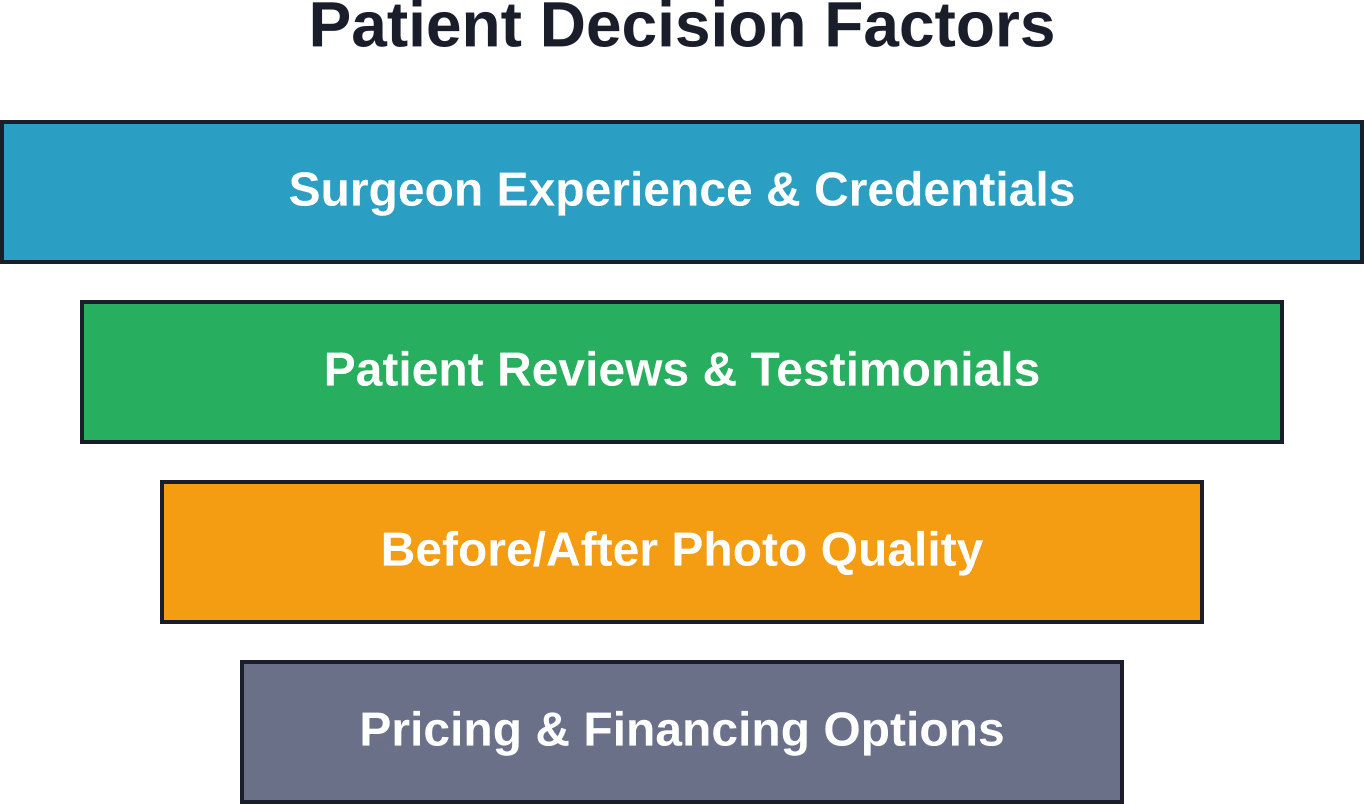
Referrals from existing patients represent some of the highest-quality leads. Satisfied patients naturally recommend trusted surgeons to friends and family.
Formal referral programs provide structure and incentives. Offer rewards like service discounts, complimentary products, or referral bonuses.
Partner with complementary providers. Dermatologists, aestheticians, and fitness professionals serve overlapping patient bases. Cross-referrals benefit both practices.
Medical spa partnerships expand service offerings. Many patients interested in minimally invasive treatments eventually consider surgical options.
Primary care physician relationships generate surgical referrals. Establish credibility through professional networking and quality patient outcomes.
Visual content quality directly impacts perceived surgeon skill. Professional photography makes a substantial difference in marketing effectiveness.
Before-and-after photos require consistent lighting, angles, and settings. Standardization allows fair comparisons and demonstrates results accurately.
Video testimonials create emotional connections. Hearing patients describe their experiences in their own words builds trust more effectively than written reviews.
Procedure videos educate while showcasing expertise. Explain techniques, show the surgical environment, and demystify the process.
Office tour videos familiarize prospective patients with the environment. Reducing anxiety about the unknown encourages consultation bookings.
The Federal Trade Commission regulates health-related advertising claims. All marketing claims must be truthful and substantiated by evidence.
According to FTC guidance on health claims, companies must support advertising claims with solid proof. This applies equally to medical practices.
The American Society of Plastic Surgeons maintains specific advertising policies. Members must ensure advertisements aren't deceptive or misleading.
Patient privacy protection is paramount. HIPAA regulations govern how patient information and images can be used in marketing. Always obtain explicit written consent before using patient photos or testimonials.
Board certification claims require verification. Only advertise certifications actually held from recognized boards.
Before-and-after photos should represent typical results, not exceptional outcomes. Disclose when photos are digitally enhanced.
Track metrics that matter for practice growth. Website traffic indicates visibility, but consultation bookings measure actual results.
Cost per acquisition reveals campaign efficiency. Calculate how much marketing spend generates each new patient.
Conversion rates show website effectiveness. What percentage of visitors schedule consultations?
Patient lifetime value helps determine sustainable acquisition costs. Patients who return for multiple procedures or refer others provide compounding value.
Analytics platforms like Google Analytics track website behavior. See which pages visitors view, how long they stay, and where they exit.
Call tracking software attributes phone inquiries to specific campaigns. Know which marketing efforts drive calls.
Effective marketing for plastic surgeons balances multiple strategies working together. No single tactic generates sustainable growth—successful practices combine digital presence, patient education, reputation management, and strategic advertising.
Start with foundational elements. Ensure the website converts visitors effectively, establish local search visibility, and create systems for generating patient reviews.
Then layer in content creation and social media presence to build authority. These efforts compound over time as content accumulates and audiences grow.
Paid advertising accelerates results while organic strategies mature. Test campaigns, track performance rigorously, and optimize based on data rather than assumptions.
Most importantly, maintain the ethical standards that distinguish medical practice from commercial business. The Federal Trade Commission and American Society of Plastic Surgeons provide clear guidance—following these standards protects both patients and professional reputation.
The plastic surgeons who thrive in competitive markets focus relentlessly on patient education, transparency, and building genuine trust. Marketing simply amplifies those fundamental strengths.
Ready to elevate your practice's marketing? Begin by auditing current efforts against the strategies covered here. Identify the biggest gaps, prioritize based on potential impact, and implement systematically. Sustainable practice growth comes from consistent execution, not sporadic campaigns.


