How to Change Your Shopify Theme
Learn how to safely change your Shopify theme without losing content. Avoid broken layouts or SEO drops with our complete instructions for a smooth switch.
Mar 24, 2026



Quick Summary: Effective marketing for architects focuses on building relationships with ideal clients through strategic channels like website optimization, content marketing, email campaigns, and social media. With over 50% of the profession involved in practice management, architects need marketing strategies that showcase design expertise while generating consistent leads. The highest ROI comes from targeted approaches that position firms as trusted advisors rather than transactional service providers.
Marketing for architecture firms isn't about shouting louder than competitors. It's about reaching the right clients at precisely the moment they're searching for design expertise.
The challenge? Most architects entered the profession to design buildings, not to master digital marketing campaigns. But here's the reality: practice management now involves over 50% of the profession, according to RIBA data. Whether working as sole principals or managing partnerships, architects can't escape the business side of architecture.
The good news is that effective marketing doesn't require enormous budgets or full-time marketing teams. What it does require is strategic focus on channels that actually generate architect leads and build lasting client relationships.
Before diving into specific marketing ideas for architects, it's essential to understand how potential clients move through their decision-making process.
The client demand pyramid illustrates that only a small percentage of prospects are ready to hire immediately. The vast majority—91% according to Business of Architecture research—are still gathering information about their project, exploring options, and building knowledge.
This pyramid changes everything about marketing strategy. Instead of only targeting the 9% ready to hire right now, successful firms create content and touchpoints for each stage of the journey.
The bottom tier needs educational resources. The middle tier wants answers to specific project questions. Only the top tier is comparing firms and requesting proposals.

Stop spending money testing campaigns without clear signals first. Extuitive helps businesses forecast ad performance before launch using AI models trained on campaign data and large-scale consumer simulations. Instead of relying only on trial and error, teams can identify which creatives and messaging angles are more likely to drive stronger engagement and better ROAS before ads go live.
What Extuitive helps marketing teams do:
Book a demo with Extuitive and see which ads are more likely to perform before you spend your budget.
An architecture firm's website serves as the foundation for nearly every other marketing effort. Whether potential clients discover a firm through search engines, social media, or referrals, they'll visit the website to evaluate expertise and credibility.
But most architect websites make critical mistakes. They showcase beautiful project photography without explaining the problem-solving process behind each design. They bury contact information or make it difficult to understand which project types the firm specializes in.
Effective website optimization for architects includes:
The website shouldn't just display completed work. It should demonstrate expertise and build confidence that this firm understands the specific challenges the prospect faces.
When someone in a specific city or region searches for architectural services, appearing in those local search results can generate consistent, high-quality leads.
Local SEO differs from general search engine optimization because it prioritizes geographic relevance. Google's local search algorithm considers proximity, relevance, and prominence when deciding which architecture firms to display.
Key local SEO strategies for architects:
Local search captures prospects at a critical moment—when they're actively looking for an architect in their area. That intent makes these leads particularly valuable.
Content marketing for architects means creating valuable resources that answer prospect questions, solve common problems, and showcase deep expertise in specific project types or building challenges.
This strategy works because it aligns perfectly with the client demand pyramid. 91% of prospects gathering information need exactly this kind of educational content.
Effective content marketing ideas for architects include:
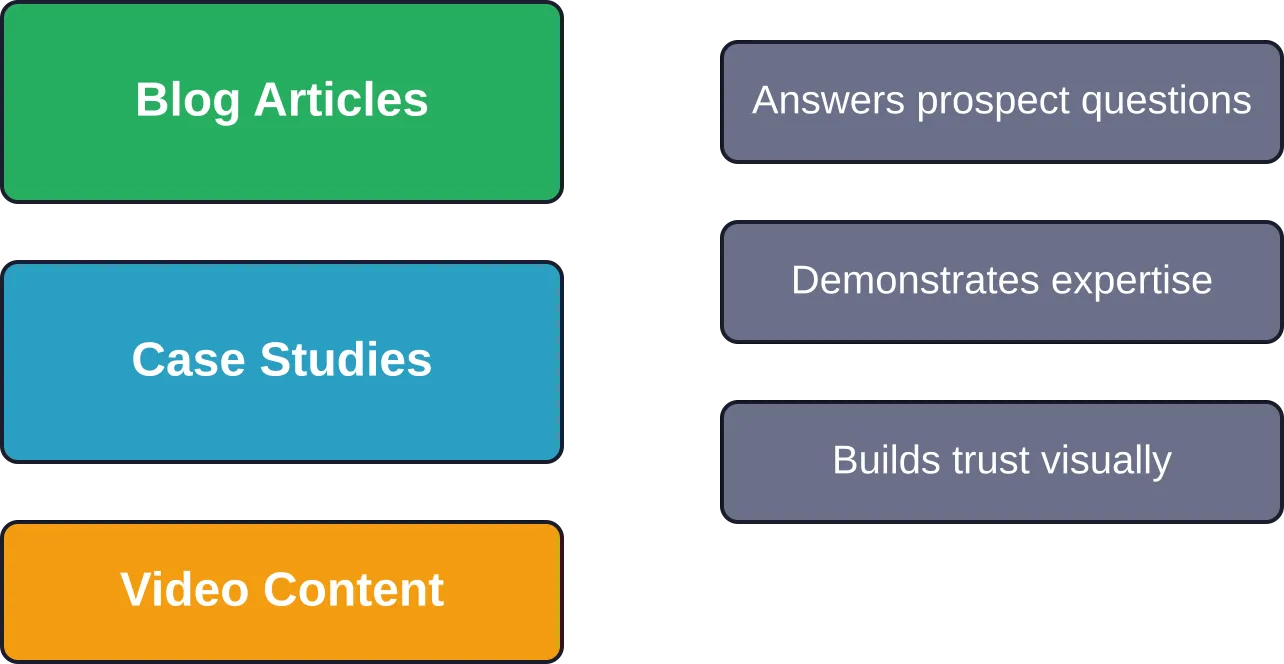
The key is consistency. Publishing one article won't generate results. Creating a steady stream of valuable content over months establishes the firm as a trusted resource.
Email marketing consistently delivers exceptional returns for different firms. Research shows that for every $1 spent on email marketing, there's a $36 return—according to email marketing company Litmus—making it one of the most cost-effective marketing channels available.
For architects, email serves multiple strategic purposes. It nurtures relationships with prospects who aren't ready to hire immediately, keeping the firm top-of-mind for months or even years until a project materializes. It maintains connections with past clients who might need future services or provide referrals. And it positions the firm as an ongoing source of expertise rather than a one-time vendor.
Effective email marketing strategies for architects:
The key to email success is permission-based lists built through website signups, downloadable resources, and event registrations. Purchased lists or cold outreach generate poor results and damage sender reputation.
Social media for architects isn't about posting on every platform. It's about choosing channels where ideal clients actually spend time and creating content that resonates with their interests and needs.
Different platforms serve different purposes for architecture marketing:
But here's what doesn't work: treating social media as a one-way broadcast channel. The "social" part matters. Responding to comments, engaging with other accounts, participating in relevant conversations—these activities build relationships that eventually generate referrals and leads.
Consider creating focused content series rather than random posts. "Design Detail Fridays" highlighting interesting project solutions, or "Client Question Tuesdays" answering common prospect concerns. Consistency and recognizable patterns help build audience habits.
Some of the most valuable marketing for architects doesn't look like traditional advertising at all. Strategic alliances with complementary professionals create referral pipelines that generate pre-qualified leads.
Real estate agents, builders, developers, interior designers, landscape architects, and structural engineers all encounter clients who need architectural services. Building genuine relationships with these professionals creates mutual referral opportunities.
Effective partnership strategies include:
International partnerships become increasingly important for firms pursuing growth across multiple markets.
Active participation in professional organizations like AIA provides marketing benefits beyond continuing education credits. These organizations offer networking opportunities, speaking platforms, awards programs, and visibility that can significantly boost firm reputation.
According to AIA's 2024 Business of Architecture report, three-quarters of all U.S. architectural firms have fewer than 10 employees. For these small and emerging practices, industry organization involvement provides credibility and connections that would be difficult to build independently.
Marketing opportunities through professional organizations:
Local chambers of commerce and business associations provide similar benefits for firms targeting local markets, particularly those focused on commercial or institutional work.
Without tracking results, it's impossible to know which marketing ideas for architects actually generate returns. Effective measurement requires defining clear metrics for each marketing channel and regularly reviewing performance.
The most important metric is qualified leads—not just website traffic or social media followers. A marketing channel that generates 10 serious project inquiries matters more than one producing 1,000 followers who never become clients.
Track where leads originate. Ask new prospects "How did you find us?" and record responses systematically. Over time, patterns emerge showing which marketing investments generate actual business versus which just consume time and budget.
Marketing technology continues evolving rapidly, with AI tools creating new opportunities for architecture firms. These technologies also enhance marketing efficiency for firms looking to streamline their marketing operations.
AI applications in architect marketing include:
The key is viewing AI as a productivity tool, not a replacement for human expertise and judgment. These technologies can handle repetitive tasks, freeing architects to focus on relationship-building and strategic thinking that truly differentiates firms.
Small firms can't compete with large practices on marketing budgets. But they can compete on focus, authenticity, and responsiveness.
For practices with limited budgets, prioritize these high-impact, relatively low-cost marketing ideas:
Start with website and local SEO optimization—these create a foundation for all other marketing. Then build an email list through valuable content offers. Develop strategic partnerships that cost nothing but relationship-building time. Finally, create consistent content that demonstrates expertise.
Paid advertising—whether Google Ads, social media advertising, or industry directory sponsorships—can accelerate results but requires careful tracking to ensure positive returns. Start with small test budgets and scale only what proves profitable.
Understanding what doesn't work helps avoid wasted effort and budget. Common marketing mistakes among architecture firms include:
Marketing ideas only create value when implemented consistently. The most successful architecture firms don't try to execute every strategy simultaneously—they select a few high-impact approaches aligned with their ideal client and commit to sustained effort.
Start with these priorities: optimize the website for clear positioning and lead capture, claim and enhance local search listings, begin building an email list through valuable content, and identify three strategic partnership opportunities to develop.
Track results monthly. Review which channels generate qualified leads versus which consume time without returns. Double down on what works and eliminate what doesn't.
Remember that with over 50% of the profession involved in practice management, business development isn't optional—it's essential to sustainable practice. The architects who master marketing alongside design create resilient firms that thrive regardless of economic cycles.
Whether working as a sole principal or managing a growing practice, effective marketing creates a consistent project pipeline that allows focus on what matters most: exceptional design work that solves client problems and creates lasting value.


