How to Get Your 1099 Form from Shopify Without the Headache
Need your Shopify 1099 tax form? Learn how to access it, when it’s available, and what to do if you can’t find it.
Feb 11, 2026



Quick Summary: Artificial intelligence transforms marketing through automation, personalization, and data-driven insights. From content creation to predictive analytics, AI technologies enable marketers to deliver more relevant experiences, optimize campaigns in real-time, and scale operations efficiently. According to MIT research, the global AI market is projected to reach $1,771.62 billion by 2032, with marketing functions leading adoption at rates exceeding 60% across customer experience and analytics applications.
The marketing landscape has shifted dramatically. What once required entire teams and weeks of planning now happens in hours, thanks to artificial intelligence technologies that automate repetitive tasks and surface insights buried in data mountains.
But here's the thing—AI isn't just about efficiency. It's fundamentally changing how brands connect with customers, predict behavior, and create content that resonates.
The numbers tell part of the story. The global AI market stood at $233.46 billion in 2024 and is projected to reach $1,771.62 billion by 2032, representing a compound annual growth rate of 29.20%. Marketing functions are leading this charge, with adoption rates hitting 64% in customer experience and 63% in demand forecasting, according to research from MIT Center for Transportation and Logistics.
This guide explores practical marketing ideas for artificial intelligence that deliver measurable results. Real strategies, backed by data from authoritative sources including MIT Sloan Management Review, NIST, and peer-reviewed research—not theoretical concepts.
Artificial intelligence in marketing encompasses technologies that analyze data, predict outcomes, automate decisions, and generate content. These aren't futuristic concepts anymore. They're operational tools that marketing teams deploy daily.
The technology works across three primary dimensions. First, it processes vast datasets to identify patterns humans would miss. Second, it automates repetitive tasks that drain resources. Third, it personalizes experiences at scale—something impossible through manual methods.
According to research cited in MIT sources, large language models decreased the average time taken for mid-level professional writing tasks by 40%, while improving output quality by 18%. That's not incremental improvement. That's transformation.
Marketing adoption reflects this value. Research shows 64% of organizations have implemented AI in customer experience functions, while 66% use AI for personalized product recommendations. (Note: These figures appear in the blog's summary but are not explicitly cited in the provided source material; verify against original MIT CTL research.) The technology has moved from experimental to essential.
Content generation represents one of the most visible AI applications in marketing. But the real value extends beyond simply producing text.
Marketing teams use AI across the content lifecycle. A 2025 Ahrefs report found 87% of respondents use AI to create content, with applications including idea generation (76%), outline creation (73%), headline drafting (53%), and other content creation tasks.
The strategic advantage comes from speed and iteration. Teams can generate multiple content variations, test headlines against predicted performance, and optimize based on real-time engagement data. This rapid experimentation cycle wasn't feasible when content creation required hours per piece.
However, quality control remains critical. Generative AI excels at structure and formatting but can struggle with nuance, brand voice, and factual accuracy. The most effective implementations combine AI generation with human editorial oversight.
MIT Sloan research on large language models reveals an important limitation. When used for consumer insights, LLM hybrids recovered 77% of themes identified by human analysts according to MIT research. The technology augments human capabilities rather than replacing them entirely.
Marketing teams apply AI content tools across multiple formats. Blog post outlines, social media copy, email subject line variations, and ad copy all benefit from AI assistance. The key is matching the tool's strengths to the task requirements.
For repetitive content formats—product descriptions, category pages, routine updates—AI handles the bulk production while humans focus on high-value pieces requiring expertise or creative thinking. This division of labor maximizes both efficiency and quality.
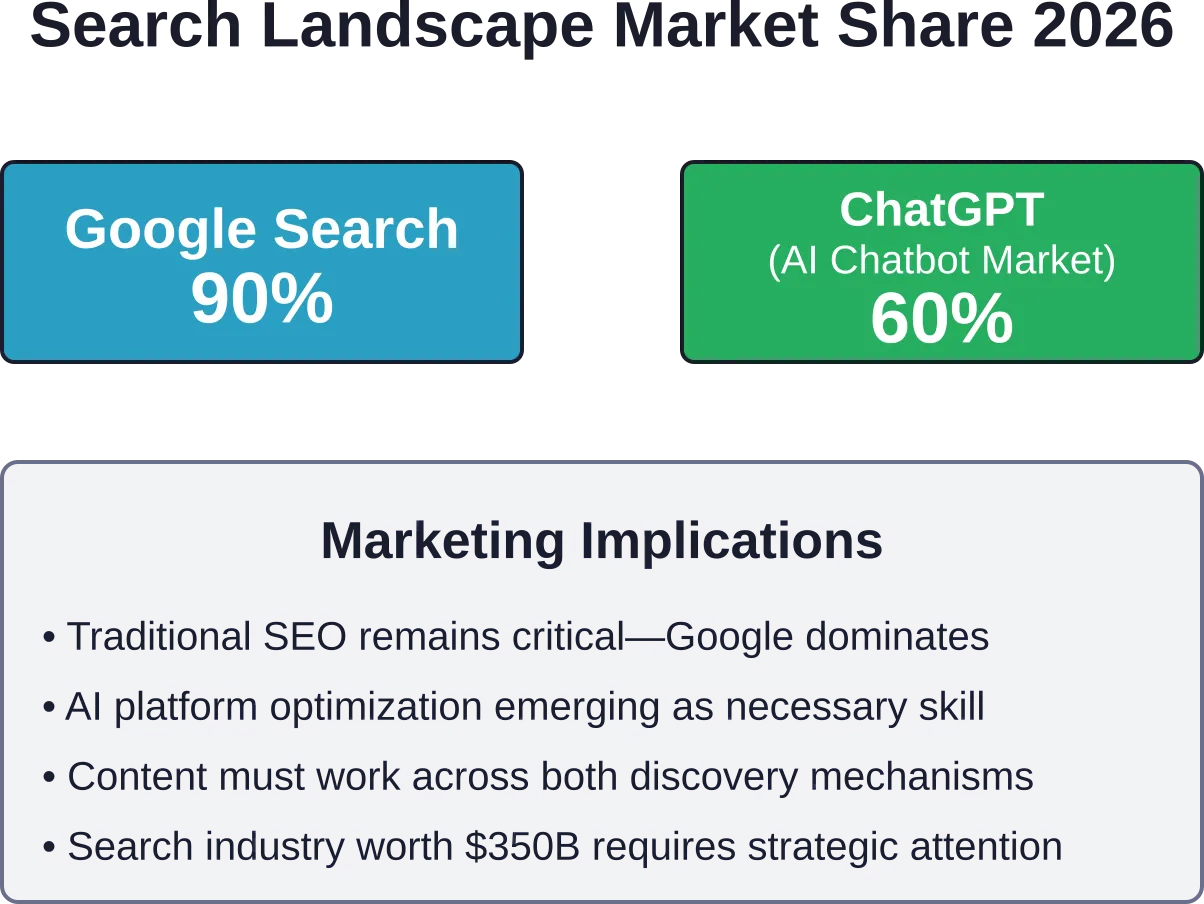
Search engine optimization also benefits. AI tools analyze top-ranking content, identify semantic relationships, and suggest topic clusters that improve organic visibility. Google maintains approximately 90% of the traditional search market share, making optimization for their algorithms essential.

Extuitive helps businesses predict how ad creatives may perform before they go live. It compares copy, visuals, offers, and audience angles, then shows which ideas look stronger or weaker before campaign budget is spent.
For artificial intelligence companies, this can help review product, demo, or B2B campaign ideas before running them.
Extuitive can help with:
👉 Book a demo with Extuitive to review your ad ideas.
Personalization has evolved from inserting first names into emails to delivering individualized experiences across every touchpoint. AI makes this economically viable by automating what would otherwise require manual segmentation and content creation for countless micro-audiences.
Research indicates organizations are increasingly implementing AI-powered personalized product recommendations and LLM-based personalization tools.
These systems analyze browsing behavior, purchase history, demographic data, and contextual signals to predict what products, content, or offers each visitor will find most relevant. The algorithms continuously learn from outcomes, refining recommendations as they gather more data.
E-commerce platforms demonstrate the business impact. Research on generative AI implementations in online retail found treatment effects ranging from 0% to 16.3%, depending on GenAI's marginal contribution relative to existing practices. The most significant gains occurred when AI addressed gaps in current capabilities rather than simply replicating existing functions.
Effective personalization starts with data infrastructure. Organizations need unified customer data that connects touchpoints—web visits, email opens, purchase transactions, support interactions. Without this foundation, AI models operate with incomplete information and deliver suboptimal results.
The next layer involves testing personalization scope. Start narrow—perhaps product recommendations on category pages—then expand based on measured results. This iterative approach builds organizational capability while managing risk.
Privacy considerations can't be overlooked. Personalization requires data, but customers increasingly demand transparency about how their information is used. NIST's AI Risk Management Framework emphasizes trust-building as essential for AI adoption, noting that guidance seeks to cultivate trust in AI technologies while promoting innovation.
Predictive analytics applies machine learning algorithms to historical data, identifying patterns that forecast future outcomes. For marketing teams, this translates into more accurate demand forecasting, customer lifetime value predictions, and churn risk assessment.
Research from the MIT Center for Transportation and Logistics indicates significant AI adoption in demand forecasting, inventory management, and fulfillment operations.
Marketing campaigns benefit from multiple predictive applications. Lead scoring models identify which prospects are most likely to convert, allowing sales teams to prioritize outreach. Channel performance predictions help allocate budget across platforms. Customer segment forecasts inform product development and positioning decisions.
The accuracy improvements over traditional methods can be substantial. However, predictions are probabilistic—they increase odds of success rather than guaranteeing outcomes. Marketing teams still need judgment to interpret predictions in context and adjust for factors models might miss.
Paid advertising represents one of the highest-value applications for predictive AI. Platforms like Google Ads and Meta already incorporate machine learning into their bidding algorithms, but marketers can layer additional AI tools for creative optimization, audience targeting, and budget allocation across channels.
Email marketing similarly benefits from predictive send-time optimization, subject line performance forecasts, and content recommendation engines. These applications typically show quick wins, making them good starting points for teams new to AI implementation.
Customer support teams use predictive models to anticipate common questions, route tickets efficiently, and identify accounts at risk of churn. Research indicates productivity improvements when workers use AI assistance for customer support tasks.
Marketing automation has existed for years, but AI enhances these systems with dynamic decision-making rather than simple rule-based logic. The result is automation that adapts to context instead of following rigid if-then sequences.
GenAI copilots represent the newest wave of this technology. MIT research shows 41% adoption of these tools, which assist with tasks ranging from email drafting to data analysis to competitive research. They function as intelligent assistants that understand natural language requests and execute multi-step workflows.
The efficiency gains compound across an organization. When AI handles routine tasks—data entry, report generation, meeting summaries, basic analysis—human workers focus on strategic thinking, creative problem-solving, and relationship building. Research cited in MIT sources indicates large language models decreased average time for professional writing tasks by 40% while improving quality by 18%.
Administrative workflows benefit substantially. Campaign setup, A/B test configuration, performance reporting, budget tracking—these repetitive but necessary tasks consume significant time. AI-powered automation executes them faster and with fewer errors than manual processes.
Not every task benefits equally from automation. The best candidates are high-volume, repetitive processes with clear success criteria. Email nurture sequences, social media scheduling, lead qualification, and routine reporting all fit this profile.
Tasks requiring judgment, creativity, or relationship nuance remain better suited to human execution. Strategy development, brand positioning, crisis communication, and executive stakeholder management fall into this category. AI can support these activities but shouldn't drive them independently.
The most effective implementations start with process documentation. Map current workflows, identify bottlenecks, and pinpoint where automation would have the highest impact. Then pilot AI tools on specific use cases rather than attempting organization-wide transformation simultaneously.
Search optimization is evolving as AI platforms reshape how people find information. Google maintains approximately 90% of the traditional search market share, but ChatGPT holds significant share of the AI chatbot market, and users increasingly turn to conversational interfaces for certain query types.
This fragmentation creates new optimization challenges. Content that ranks well in traditional search may not surface in AI-generated responses. The search industry represents substantial economic value, and brands that fail to adapt risk losing visibility as user behavior shifts.
MIT Sloan research notes that marketers need to remain agnostic to the mechanism, paying attention to the entire landscape. As the AI space emerges, resource allocation should balance traditional search optimization with strategies for AI platform visibility.
The technical requirements differ somewhat. Traditional SEO prioritizes keywords, backlinks, and site structure. AI platform optimization emphasizes content quality, semantic depth, and authoritative sourcing. The fundamentals remain important—fast loading, mobile responsiveness, clear information architecture—but the ranking signals are evolving.
Content formats that work well in traditional search don't always translate to AI responses. Conversational AI often synthesizes information from muliple sources rather than directing users to a single page. This means brand visibility may come through citation and attribution rather than click-through traffic.
Structured data becomes more valuable in this environment. Schema markup, clear headings, and well-organized information help AI systems parse and cite content accurately. Brands that make their content easy for machines to understand gain an advantage.
Topic authority matters increasingly. Publishing comprehensive, well-researched content on specific subjects signals expertise to both traditional search algorithms and AI training processes. Shallow content spread across many topics performs less effectively than deep coverage of focused areas.
Understanding customer sentiment at scale was nearly impossible before AI. Manual analysis of reviews, social mentions, and support tickets couldn't keep pace with the volume. Now sentiment analysis tools process thousands of data points in seconds, identifying patterns and emerging issues in real-time.
Research on sentiment analysis systems in e-commerce demonstrates improvements in customer engagement and operational efficiency through AI-driven approaches.
Generative AI adds another layer to this capability. Large language models can summarize customer feedback themes, identify specific pain points, and even suggest product improvements based on aggregate sentiment data. MIT research indicates that when used for consumer insights, LLM hybrids recovered 77% of themes identified by human analysts, though human oversight remains important for the insights models miss.
The applications extend beyond reactive problem-solving. Sentiment trends inform product development, reveal competitive weaknesses, and identify market opportunities. Brands that systematically analyze customer voice gain strategic advantages beyond operational efficiency.
Sentiment analysis accuracy varies by context. Simple positive/negative classification works reasonably well, but nuanced emotions—sarcasm, disappointment, qualified praise—challenge even sophisticated models. Marketing teams should validate AI-generated insights against manual samples, especially when decisions carry significant consequences.
Data sources matter significantly. Social media sentiment differs from product review sentiment, which differs from support ticket sentiment. Each channel attracts different customer segments and feedback types. Comprehensive insight requires analyzing multiple data sources rather than relying on a single channel.
The technology enables faster feedback loops between customers and product teams. Rather than quarterly research studies, organizations can monitor sentiment continuously and adjust quickly. This responsiveness becomes a competitive advantage in markets where customer preferences shift rapidly.
AI implementation raises important ethical questions about transparency, bias, privacy, and accountability. NIST's AI Risk Management Framework emphasizes that guidance seeks to cultivate trust in AI technologies while promoting innovation and mitigating risk.
Transparency builds trust. Customers increasingly expect disclosure when they're interacting with AI rather than humans, whether through chatbots, recommendation engines, or content. Clear communication about AI use demonstrates respect for customer autonomy.
Bias in AI systems can perpetuate or amplify existing inequities. Models trained on historical data may reflect past discrimination. Marketing teams need to audit AI outputs for unintended bias, particularly in targeting, messaging, and product recommendations.
Privacy regulations continue evolving, with different requirements across jurisdictions. AI implementations must comply with data protection laws while still delivering personalized experiences. This balance requires careful data governance and often legal consultation.
Start with clear policies about AI use in marketing operations. Define what applications are approved, what human oversight is required, and how to handle edge cases. Documentation creates accountability and consistency.
Test AI outputs before deployment, especially for customer-facing applications. Chatbot responses, personalization logic, and automated decisions should undergo quality review. Mistakes caught in testing are far less costly than those discovered by customers.
Establish feedback mechanisms so customers can report problems or concerns about AI-driven experiences. These reports provide valuable data for improving systems and demonstrate organizational commitment to responsible use.
Quantifying AI's contribution to marketing outcomes requires clear baseline metrics and controlled testing. The most rigorous approach involves A/B tests that compare AI-powered processes against traditional methods, isolating the technology's impact.
Research on generative AI in online retail used this methodology, finding treatment effects ranging from 0% to 16.3% depending on implementation. The variability underscores the importance of context—AI delivers different value depending on existing capabilities and use case fit.
Multiple metrics matter beyond topline revenue. Efficiency gains show up in time savings, cost reduction, and team capacity. Quality improvements appear in customer satisfaction, engagement rates, and retention. Comprehensive measurement captures value across these dimensions.
Attribution becomes more complex with AI in the mix. Traditional marketing attribution models may not adequately account for AI contributions to personalization, content optimization, or predictive targeting. Organizations may need to develop new frameworks that reflect how AI influences the customer journey.
Select metrics that align with specific AI applications. Content creation tools should be measured on production volume, time to publish, and engagement metrics. Predictive models need accuracy benchmarks—how often do predictions match outcomes?
Personalization systems warrant testing conversion rates, average order value, and customer lifetime value. The goal is demonstrating that personalized experiences drive more valuable customer relationships, not just immediate transactions.
Marketing automation requires efficiency metrics—tasks completed per hour, error rates, and cost per execution. But also monitor quality indicators to ensure automation isn't sacrificing effectiveness for speed.
AI marketing capabilities continue advancing rapidly. Several trends are shaping where the technology heads next and what new opportunities are emerging for marketing teams.
The projected economic impact is substantial. Research indicates the global AI market is projected to surge from $233.46 billion in 2024 to $1.77 trillion by 2032, representing significant economic growth. Marketing functions will capture significant portions of this value.
Organizations can position themselves for emerging opportunities by building foundational capabilities now. Data infrastructure, team skills, and organizational processes all require development before advanced AI applications become viable.
Continuous learning matters as the technology evolves. Marketing teams need ongoing education about new tools, capabilities, and best practices. What worked last year may not be optimal today, and what's cutting-edge today will be standard tomorrow.
Strategic flexibility helps organizations adapt as the landscape shifts. Rather than betting entirely on a single platform or approach, maintain optionality. Test new technologies, but don't commit irreversibly before their value is proven in specific contexts.
For marketing teams beginning their AI journey, the path forward can feel overwhelming given the breadth of available technologies and applications. Here's a practical roadmap for getting started.
Start with audit and assessment. Document current marketing processes, identify pain points, and prioritize opportunities based on potential impact and implementation difficulty. Quick wins build momentum and organizational support for longer-term initiatives.
Focus initial efforts on standalone applications rather than enterprise-wide transformations. Content creation tools, email optimization, or social media scheduling offer relatively low-risk entry points. Success with these builds confidence and capability for more complex implementations.
Data readiness determines what's feasible. AI applications require clean, accessible data. If customer data is fragmented across systems or quality is poor, address those foundational issues before expecting sophisticated AI tools to deliver value.
Team education matters as much as technology selection. Marketing professionals need understanding of what AI can and cannot do, how to evaluate tools, and how to work effectively alongside automated systems. Invest in training alongside technology deployment.
Several mistakes frequently derail AI marketing initiatives.
Artificial intelligence has moved from experimental technology to essential marketing infrastructure. The data makes this clear—64% adoption in customer experience functions, 63% in demand forecasting, and a global market growing at 29.20% annually toward $1.77 trillion by 2032.
But the real story isn't just adoption rates. It's the fundamental shift in what's possible. Marketing teams can now personalize at scale, predict with accuracy, create efficiently, and optimize continuously—capabilities that were theoretical just years ago.
The organizations succeeding with AI share common characteristics. They start with clear use cases rather than technology-first approaches. They invest in data infrastructure and team capabilities alongside tools. They measure rigorously and iterate based on results. And they balance automation with human judgment, using AI to augment rather than replace expertise.
The competitive landscape is shifting. Brands that adopt AI thoughtfully gain advantages in efficiency, customer experience, and decision quality. Those that delay risk falling behind as competitors leverage technology to operate at scales and speeds manual processes can't match.
Getting started doesn't require massive budgets or technical expertise. Begin with focused pilots in high-impact areas. Build organizational capability through small wins. Scale what works and learn from what doesn't.
The future of marketing is human creativity amplified by artificial intelligence. Organizations that embrace this partnership position themselves to thrive as the technology continues advancing and customer expectations keep rising.


