Best Facebook Ads Analytics Tools Marketers Actually Use
A practical look at Facebook ads analytics tools that help you understand performance, spot patterns, and make smarter ad decisions.
Feb 10, 2026



Quick Summary: Spa marketing in 2026 requires a blend of digital strategies and offline tactics to consistently fill appointment calendars. According to the International SPA Association, 85% of spa-goers view visits as self-care, while 67% seek stress reduction, creating a huge opportunity for spas that market authentically. Successful marketing goes beyond social media posts—it includes optimized online booking, local partnerships, targeted promotions, and building genuine client loyalty through personalized experiences.
The wellness industry is booming. Data from academic hospitality research shows that wellness tourism is growing significantly, with strong demand for mental wellness products and services. For spa owners, this presents both opportunity and challenge.
More potential clients are looking for stress relief and self-care. But competition is fierce. New day spas and wellness centers open constantly, all fighting for the same local clientele.
Success doesn't happen by accident. Your spa needs marketing strategies that actually work—tactics that bring new clients through the door and keep existing ones coming back. Not just random social media posts or occasional email blasts.
This guide covers 43 practical marketing ideas that spa professionals use to grow their businesses. Some take minutes to implement. Others require more planning but deliver substantial returns. All of them are proven in real spa operations.
Before diving into tactics, it's worth understanding what drives people to book spa services in 2026. According to the International SPA Association's 2025 Consumer Snapshot study, 85% of spa-goers view spa visits as essential self-care, not luxury indulgences.
That's a fundamental shift in how people perceive wellness services.
Research indicates that stress reduction is a primary motivation for many spa visits. People aren't just looking for pampering—they're seeking legitimate solutions to mental and physical stress.
Here's what makes this even more interesting: Research suggests significant interest among non-spa-goers in trying massage services and wellness classes. The potential market extends far beyond your current client base.
According to hospitality research, hotel spas experienced revenue increases, with urban spas showing particularly strong growth. In 2025, all hotel spas averaged a 4.2% increase in revenues.
The takeaway? People want wellness services. They're willing to pay. The challenge is reaching them with the right message at the right time.
Look, if someone has to call during business hours to book an appointment, you're losing clients. Period.
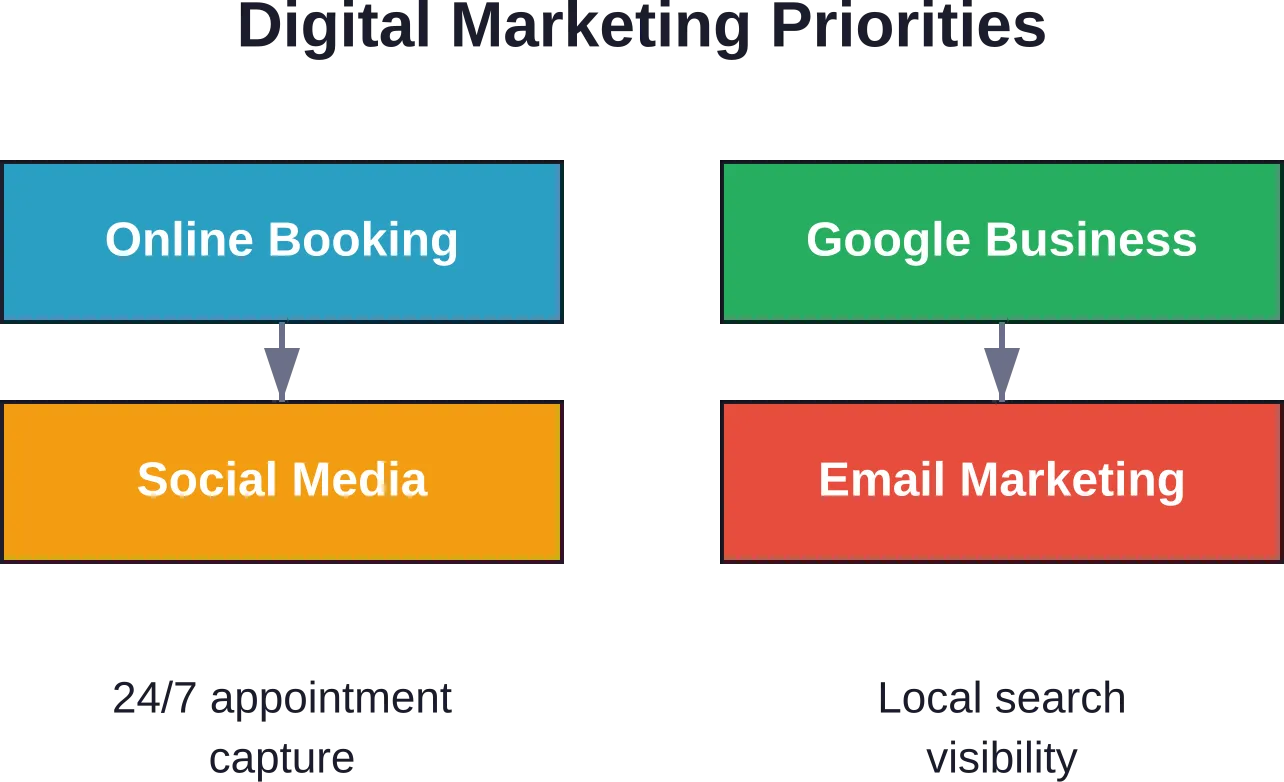
Online booking systems capture appointments 24/7. Someone browsing Instagram at 10 PM can book their massage right then—when they're most motivated—instead of thinking "I'll call tomorrow" and never following through.
Place your booking link everywhere potential clients might find you. That means your Google Business profile, Instagram and Facebook bios, email signatures, newsletters, and prominently on your website homepage.
Pair online booking with automated confirmations and reminders. A confirmation message immediately after booking reassures clients. A reminder 24 hours before the appointment significantly reduces no-shows.
The math is simple: fewer no-shows mean more revenue without acquiring additional clients.
When someone searches "spa near me" or "massage in [your city]," your Google Business profile often appears before your website. This free tool is absurdly powerful for local spa marketing.
Research from BrightLocal indicates that 85% of consumers look for a high average star rating when booking local services. Your Google profile directly influences whether someone chooses your spa or a competitor.
Complete every section of your profile. Add accurate business information, upload high-quality photos of your facilities and treatment rooms, keep operating hours current, and list all services you offer.
Fresh photos matter more than most spa owners realize. Potential clients want to see your space before committing. Upload new images quarterly showing seasonal decorations, new treatment rooms, or behind-the-scenes staff moments.
Respond to every review—positive and negative. Thank people for five-star reviews. Address concerns in negative reviews professionally. Prospective clients read your responses to gauge how you handle problems.
Social media works best when it directly connects to revenue, not just "engagement." Every platform offers tools to make booking frictionless.
Instagram and Facebook let you add booking buttons directly to your profile. TikTok allows link-in-bio tools. As of now, they support native 'Book Now' API integrations that sync directly with major spa management software without leaving the app. Use them.
Content strategy matters, though. Don't just post promotional offers. Mix in educational content about skincare routines, stress management tips, or explanations of different massage techniques. Show before-and-after results when clients consent. Share quick video tours of your facilities.
Behind-the-scenes content humanizes your business. Short clips of staff preparing treatment rooms, mixing custom aromatherapy blends, or explaining product ingredients build trust and interest.
User-generated content is gold. When clients post about their visits, ask permission to share their content on your profiles. Real customer experiences are more persuasive than any promotional content you create yourself. In fact, research indicates that referrals from people customers know significantly influence purchasing decisions.
Extuitive helps businesses predict how ad creatives may perform before they go live. It compares copy, visuals, offers, and audience angles, then shows which ideas look stronger or weaker before campaign budget is spent.
For spas, this can help review service, package, or seasonal ad ideas before running them.
Extuitive can help with:
👉 Book a demo with Extuitive to review your ad ideas.
Referral programs work when both the existing client and the new client benefit. One-sided incentives don't generate the same momentum.
Structure it simply: existing clients get a discount or credit when someone they refer books their first appointment. The new client also receives a first-visit discount or upgrade.
Make it effortless to refer. Provide clients with digital referral cards they can text to friends. Create a unique referral link for each client. The easier you make it, the more referrals you'll receive.
Track everything. Know which clients refer the most people. Thank your top referrers with special recognition or exclusive perks.
Discounts can be dangerous. Deep discounts attract bargain hunters who never return at full price. But strategic promotions that lower the barrier for first-time visitors work differently.
Test new services with limited-time introductory offers. If you're considering adding a new treatment, measure customer interest before fully committing. Industry practices suggest offering something like "Book this treatment by December 15th to receive 30% off your next service."
Pay attention to response rates. That data tells you whether the new service has genuine market demand.
Package deals work well for first-time clients. A "first visit experience" that bundles a massage with a facial at a slight discount introduces people to multiple services. They're more likely to return for full-price treatments they've already experienced.
Seasonal promotions align with natural buying cycles. Mother's Day packages, Valentine's couples massages, post-holiday stress relief specials—these tap into existing consumer mindsets.
Organic reach is valuable, but paid advertising puts your spa in front of people actively searching for services right now.
Google Ads targeting local search terms captures high-intent traffic. Someone searching "deep tissue massage near me" is ready to book. Show up at the top of those results.
Facebook and Instagram ads let you target by geography, demographics, and interests. You can show ads specifically to people within 10 miles of your spa who follow wellness accounts and are in your target age range.
Start with small budgets and test different offers. Track which ad copy and which services generate the most bookings. Double down on what works.
Retargeting ads follow people who visited your website but didn't book. They're already interested—sometimes they just need a reminder or a small incentive to complete the booking.
Cross-promotion with non-competing businesses expands your reach without additional ad spend.
Email remains one of the highest-ROI marketing channels, especially for service businesses with repeat customers.
Sending the same email to everyone ignores the reality that different clients want different things.
Segment by service preference. Clients who book massages regularly might want information about new massage techniques or therapist spotlights. Facial clients want skincare tips and product recommendations.
Segment by visit frequency. Loyal regulars deserve different communication than someone who visited once six months ago. VIP clients might get early access to new services or special event invitations.
Segment by booking patterns. Someone who books monthly should receive different messaging than someone who only visits quarterly or during specific seasons.
Email is powerful for filling last-minute cancellations or slow periods.
Mid-week specials can boost Monday through Thursday bookings if weekends are consistently full. Send a Tuesday morning email offering a modest discount for appointments booked that same week.
Weather-based campaigns work surprisingly well. A cold, rainy forecast? Send a "rainy day relaxation special" promoting warm stone massage or heated aromatherapy treatments.
Anniversary and birthday emails feel personal while driving bookings. Automated emails triggered by a client's birthday or their one-year anniversary of their first visit, offering a special gift or discount, generate strong response rates.
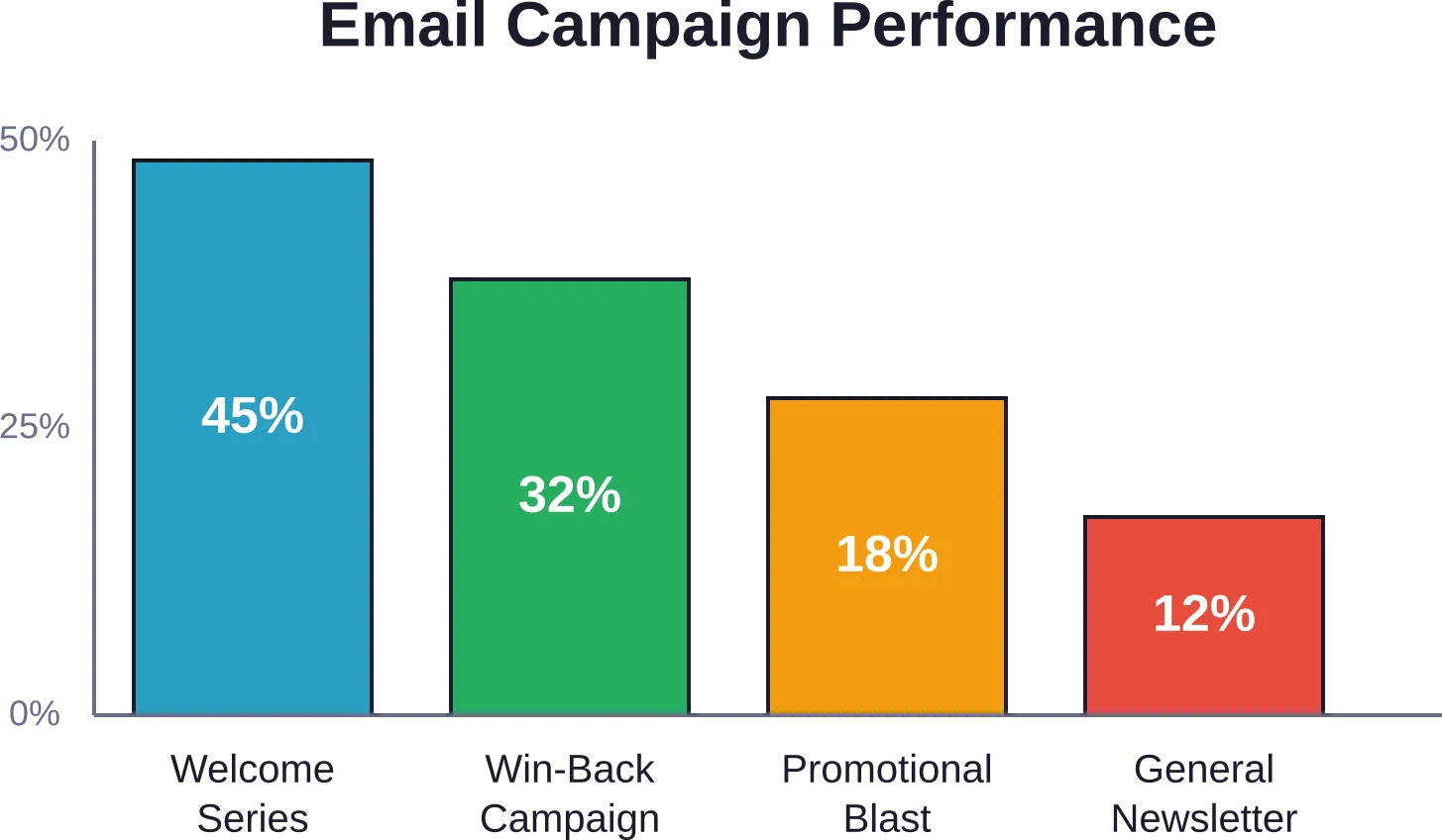
Winning back a lapsed client costs less than acquiring a new one.
Create an automated sequence for clients who haven't booked in 90+ days. The first email might share a valuable skincare tip with no sales pitch. The second email, sent a week later, offers a "we miss you" discount. The third provides a client success story and testimonial.
Make it easy to return. Remove barriers. Acknowledge the time gap without making clients feel guilty. Welcoming, not desperate.
Acquiring new clients is expensive. Keeping existing clients is dramatically more cost-effective. Research consistently shows that retaining customers costs far less than finding new ones.
Membership models transform occasional visitors into regular clients with predictable monthly revenue.
Structure tiers based on visit frequency. A basic tier might include one service per month at a discounted rate. Premium tiers could offer two services monthly plus discounts on additional bookings and retail products.
The psychology works because people who pay upfront for a membership feel compelled to use it. They won't let their monthly massage "go to waste," so they book consistently.
Points-based loyalty programs work differently but achieve similar results. Clients earn points for every dollar spent, redeemable for future services or products. Gamification encourages repeat visits to reach reward thresholds.
Small personalization touches create emotional connections that keep clients coming back.
Remember client preferences. Note their preferred massage pressure, favorite aromatherapy scents, room temperature preferences, and whether they like conversation or silence during treatments. Recording these details in client profiles lets any staff member provide personalized service.
Send personalized follow-up messages. A text or email 24 hours after a service asking how they're feeling shows genuine care. If they mentioned a specific issue (shoulder pain, stress about an event), reference it specifically.
Recognize milestones. Celebrate a client's 10th visit, one-year anniversary, or birthday with a handwritten note or small gift. These gestures cost little but create lasting impressions.
Client testimonials build trust with prospective customers more effectively than any marketing copy you write.
Educational content positions your spa as an authority while attracting organic search traffic.
Every question a client asks is a potential blog topic that hundreds of other people are searching for online.
Write about topics like "How often should you get a massage?", "What's the difference between Swedish and deep tissue massage?", "How to prepare for your first facial," or "Benefits of hot stone therapy."
These educational articles rank in search engines and attract people researching services before booking. They enter your website as informed prospects already interested in specific treatments.
Include clear calls-to-action in every article. After explaining the benefits of hot stone massage, prompt readers to "Book your first hot stone massage" with a prominent booking button.
Video content dramatically increases engagement on social media and your website.
Facility tours help potential clients visualize their visit, reducing anxiety for first-timers. Show your reception area, treatment rooms, relaxation spaces, and amenities.
Treatment explainer videos demystify unfamiliar services. A 60-second video showing what happens during a typical facial or body wrap makes the service less intimidating.
Meet-the-team videos humanize your business. Short introductions to massage therapists, estheticians, and front desk staff help clients feel connected before they arrive.
Educational wellness tips position you as experts. Quick videos about stretching routines, stress management techniques, or skincare basics provide value while keeping your spa top-of-mind.
Lead magnets capture email addresses from website visitors not ready to book immediately.
Create guides like "The Complete Guide to Choosing Your First Massage," "10 Daily Self-Care Rituals for Stress Relief," or "Seasonal Skincare: What Your Routine Needs This Fall."
Offer these as free downloads in exchange for email addresses. Now you have permission to nurture these leads through email campaigns until they're ready to book.
Digital marketing dominates discussions, but offline strategies still deliver strong results for local spa businesses.
Community involvement builds brand awareness and positions your spa as a wellness leader in your area.
Host open houses or wellness workshops at your location. Offer mini treatments, facility tours, and consultations. Let people experience your space and meet your team without the commitment of booking a full service.
Sponsor local 5K runs, yoga festivals, wellness fairs, or charity events. Your business name on event materials reaches hundreds or thousands of health-conscious local residents—your ideal demographic.
Collaborate with fitness studios or wellness practitioners for joint events. A "wellness day" featuring yoga classes, nutrition consultations, and spa demonstrations benefits all participating businesses.
Corporate wellness programs represent a massive opportunity for consistent, high-volume bookings.
Approach local businesses about employee wellness partnerships. Offer corporate massage days where you bring massage therapists to their office for chair massages during lunch breaks.
Create corporate gift card programs. Companies frequently purchase gift cards as employee recognition rewards or client gifts. Make bulk purchasing easy with special corporate rates.
Propose on-site wellness days for special occasions. Many companies host employee appreciation events or holiday celebrations. Offer package pricing for multiple treatment stations at their location.
Direct mail still works in local markets, especially when targeted properly.
Send postcards to specific ZIP codes surrounding your spa. A compelling offer to households within a 3-mile radius can generate significant first-time bookings.
Create beautiful brochures showcasing your services, facilities, and pricing. Place them in complementary businesses: boutique hotels, upscale gyms, hair salons, bridal shops, and health food stores.
Local magazine advertising reaches affluent local residents. Small display ads or listings in community lifestyle magazines maintain awareness among your target demographic.
Consumer behavior shifts with seasons. Smart spa marketing adapts to these patterns.
Major holidays represent predictable booking spikes when planned properly.
Valentine's Day: Couples packages are obvious, but also market to people treating themselves or friends. Singles self-care promotions tap into an often-overlooked segment.
Mother's Day: Start promoting 6-8 weeks in advance. Gift certificates sell heavily in the two weeks before. Create special mother-daughter packages or group experiences.
End of Year: November and December see high gift certificate sales. Make purchasing easy online. Promote spa packages as corporate gifts and stocking stuffers.
New Year: January is perfect for "new year, new you" wellness packages. People are motivated to prioritize self-care and stress management after holiday chaos.
Seasonal messaging resonates because it aligns with what people are already thinking about.
Summer campaigns emphasize preparation and recovery. "Get your skin summer-ready" facials in spring. "Recover from sun exposure" treatments in late summer. "Cool down" promotions during heat waves.
Winter positioning focuses on warmth and escape. Hot stone massages, heated aromatherapy treatments, and "escape the cold" messaging work well. Holiday stress relief becomes relevant November through January.
Marketing without measurement is just expensive guessing.
Identify which metrics actually matter for your business. Vanity metrics like social media followers don't pay bills; bookings do.
Essential KPIs include new client acquisition (how many first-time clients monthly), client retention rate (percentage who rebook), average booking value, cost per acquisition (marketing spend divided by new clients), and monthly revenue growth.
Track these consistently. Monthly reviews identify trends before they become problems.
Know which marketing channels generate actual bookings, not just traffic or engagement.
UTM parameters added to URLs let you track exactly where bookings originate. You'll know whether that Facebook ad campaign or email newsletter actually generated revenue.
Unique phone numbers or promo codes for different campaigns serve the same purpose. "Mention code SUMMER20 when booking" tells you precisely which clients came from which promotion.
Not all marketing activities deliver equal returns. Calculating ROI identifies where to invest more and where to cut.
Simple ROI calculation: (Revenue generated from campaign - Campaign cost) / Campaign cost × 100 = ROI percentage.
A paid ad campaign that costs $500 and generates $3,000 in bookings has 500% ROI. An email campaign that costs $100 and generates $800 has 700% ROI. Even though the email generated less total revenue, it was more efficient.
Prioritize high-ROI activities. Scale back or eliminate low-performers.
Not all appointment times are created equal. Dynamic pricing optimizes revenue by adjusting rates based on demand.
Off-peak discounts fill slower time slots. Tuesday morning appointments might be 15% off while Saturday afternoon books at full price.
Last-minute booking incentives reduce the cost of empty slots. A same-day appointment discount is better than an unbooked therapist.
Premium pricing for peak times maximizes revenue during high-demand periods. If Saturday afternoons always book out, consider premium pricing for those slots.
Unique signature services differentiate your spa from competitors and create marketing focal points.
Develop exclusive treatments combining techniques or incorporating local elements. A "mountain herb ritual" featuring locally sourced ingredients tells a story and feels special.
Name treatments memorably. Generic "aromatherapy massage" is forgettable. "Alpine Renewal Ritual" or "Desert Moon Treatment" creates intrigue.
Train staff to deliver signature treatments consistently. The experience should be repeatable, not dependent on which therapist clients book with.
Retail sales add revenue streams beyond services while extending your brand into clients' homes.
Partner with manufacturers to create private label skincare, aromatherapy products, or wellness items featuring your spa's branding.
Train staff to recommend products based on client needs, not pushy sales tactics. After a facial, suggest the cleanser and moisturizer that would maintain results at home.
Create retail displays near checkout and in treatment rooms. Attractive merchandising prompts impulse purchases.
Learning from others' mistakes is cheaper than making your own.
Sporadic campaigns don't build momentum. Posting on social media for two weeks then going silent for a month trains clients to ignore you.
Consistency matters more than perfection. Regular, good-enough marketing outperforms occasional brilliant campaigns.
Most spas sit on valuable client data they never use strategically.
Booking history reveals service preferences, visit frequency, spending patterns, and seasonal trends. This data should inform email segmentation, promotional offers, and inventory decisions.
Client management systems contain goldmines of information. Use it.
Race-to-the-bottom pricing attracts price-sensitive clients who lack loyalty and expect constant discounts.
Compete on experience, expertise, atmosphere, and results instead. Premium positioning attracts better clients willing to pay fair rates for exceptional service.
Discounts should be strategic tools, not your default marketing message.
No amount of marketing fixes poor service. The client experience is your real competitive advantage.
Staff training, facility cleanliness, ambiance, attention to detail, and genuine care for clients matter more than any advertisement.
Satisfied clients become walking marketing campaigns through word-of-mouth and reviews. Disappointed clients do the same—just in the opposite direction.
The spa industry presents enormous opportunity. Consumer interest in wellness, self-care, and stress reduction continues growing, with wellness tourism expanding at 16.6% annually according to hospitality research. The International SPA Association reports that 85% of spa-goers now view visits as essential self-care, not luxury indulgences.
But opportunity alone doesn't guarantee success. The spas that thrive implement strategic, consistent marketing across multiple channels. Digital foundations—Google Business optimization, online booking, email campaigns—work alongside offline tactics like local partnerships and community events.
The good news? Most of these strategies require more consistency than money. A well-optimized Google Business profile costs nothing. Building a referral program costs only the incentives you provide. Email marketing platforms start at minimal monthly fees.
Start with one or two high-impact tactics from this guide. Nail those before adding more. Marketing momentum builds from consistent execution, not trying everything simultaneously and burning out.
Which strategy will you implement first? Pick one, commit to it for 30 days, measure the results, and adjust. Your calendar—and revenue—will thank you.


