How to Run A/B Tests for Facebook Ads Without Wasting Budget
Learn how to run effective Facebook Ads A/B tests to boost performance, reduce waste, and make smarter marketing decisions in 2026.
Feb 4, 2026



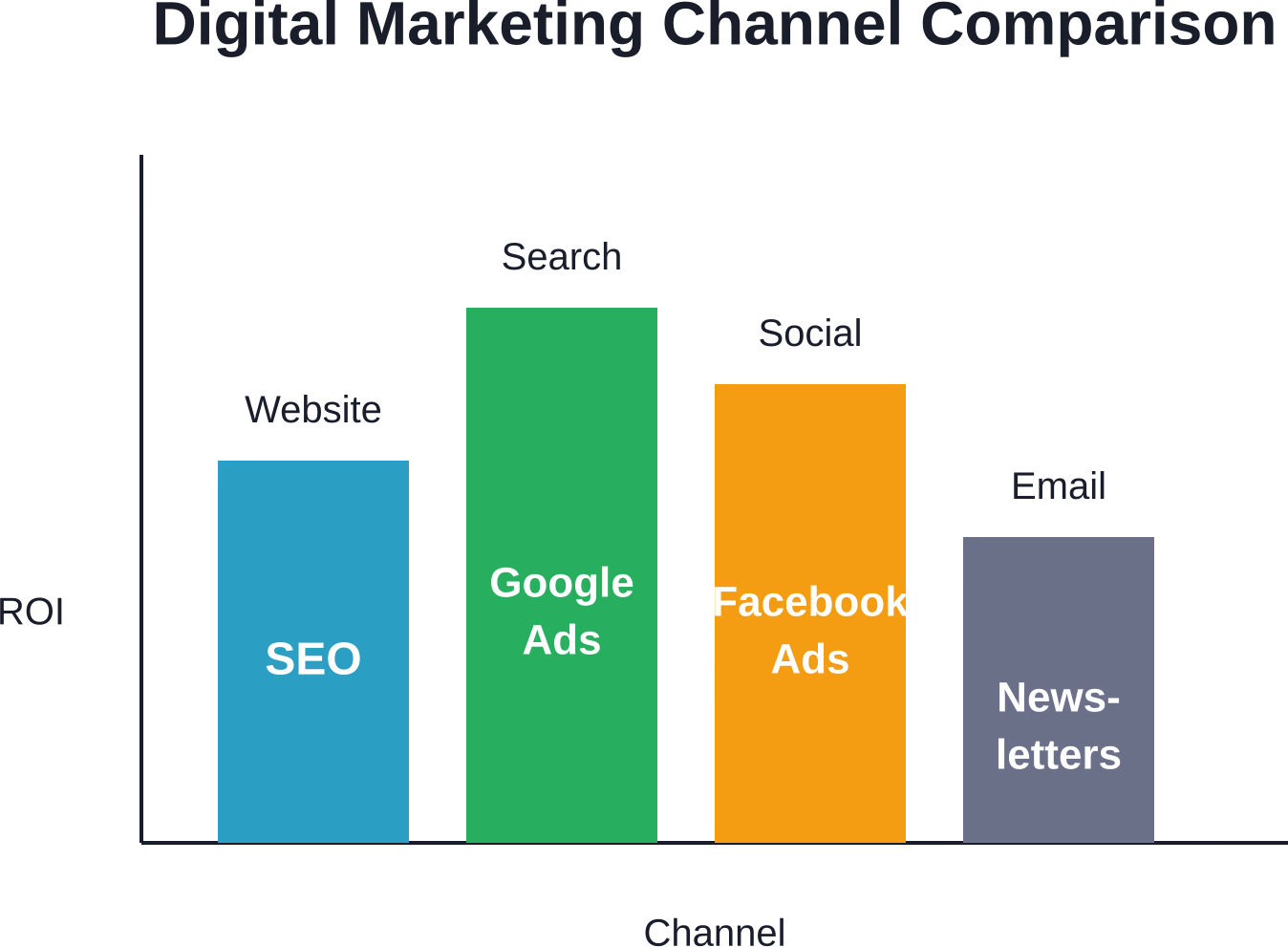
Charter schools face intense competition for enrollment and need strategic marketing to stand out. Effective approaches include optimizing school websites for search, running targeted social media and Google ads, creating compelling content that showcases unique programs, and building local community presence through events and partnerships. Digital marketing now delivers the highest ROI for charter school recruitment.
Charter schools operate in a competitive educational landscape where families have more options than ever. Public schools, private institutions, magnet programs, and hybrid models all compete for the same students. Standing out requires more than reputation and word-of-mouth referrals.
Since 2020, charter schools have shifted marketing budgets away from print materials and door-to-door campaigns toward digital strategies. The schools seeing enrollment growth have one thing in common: they've built comprehensive marketing plans that reach families where they already spend time—online.
Here's the thing though—not all marketing tactics deliver equal results. Some charter schools waste thousands on strategies that generate minimal applications. Others invest smartly in a few high-impact channels and see enrollment waiting lists.
This guide breaks down what's actually working right now.
The demographics of public school enrollment have shifted significantly. According to the National Center for Education Statistics, White student enrollment in public schools dropped from 51% in fall 2012 to 44% in fall 2022. During the same period, Hispanic enrollment increased from 24% to 29%.
Demographic trends suggest continued shifts in student enrollment composition. What does this mean for charter schools? Marketing messages need to resonate with increasingly diverse family populations. Outreach materials, website content, and advertising campaigns must reflect the communities schools serve.
The challenge isn't just demographic. It's also digital. Families research schools online before ever visiting in person. If a charter school doesn't appear in those initial searches, it's already lost half the battle.

Extuitive helps businesses predict which ads are more likely to get clicks and conversions before launch. It can test creative options at scale, compare them against performance signals, and help teams avoid putting budget behind weak ideas.
For charter schools, this can support enrollment or awareness campaigns without relying only on guesswork.
Extuitive can help with:
👉 Book a demo with Extuitive to review your ad ideas.
School websites serve as digital front doors. First impressions matter—research shows 94% of first impressions are tied to design. A poorly designed site signals outdated programs and lack of resources, regardless of the reality.
But design alone won't drive enrollment. Conversion optimization matters more.
Every charter school website needs clear navigation to these pages: admissions process, application deadlines, academic programs, extracurricular offerings, parent testimonials, and contact information. Families shouldn't hunt for how to apply.
The apply-now button should appear in the top navigation and again prominently on the homepage.
Mobile optimization isn't optional. More than half of school website traffic comes from phones. If the site doesn't load quickly or display properly on mobile devices, families bounce to competitor schools.
Generic descriptions of "rigorous academics" and "supportive environment" don't differentiate schools. Specific details do. Instead of saying "we offer strong STEM programs," showcase student robotics competition wins, science fair achievements, or partnerships with local tech companies.
Video content performs exceptionally well. Virtual tours, teacher introductions, and day-in-the-life student features help families experience the school before visiting. These videos don't need Hollywood production—authentic smartphone footage often resonates more than polished marketing videos.
When parents search "charter schools near me" or "best elementary schools in [city]," appearing on the first page is critical. Sites ranking on the first Google search results page capture 91.5% of traffic share. Second-page rankings might as well be invisible.
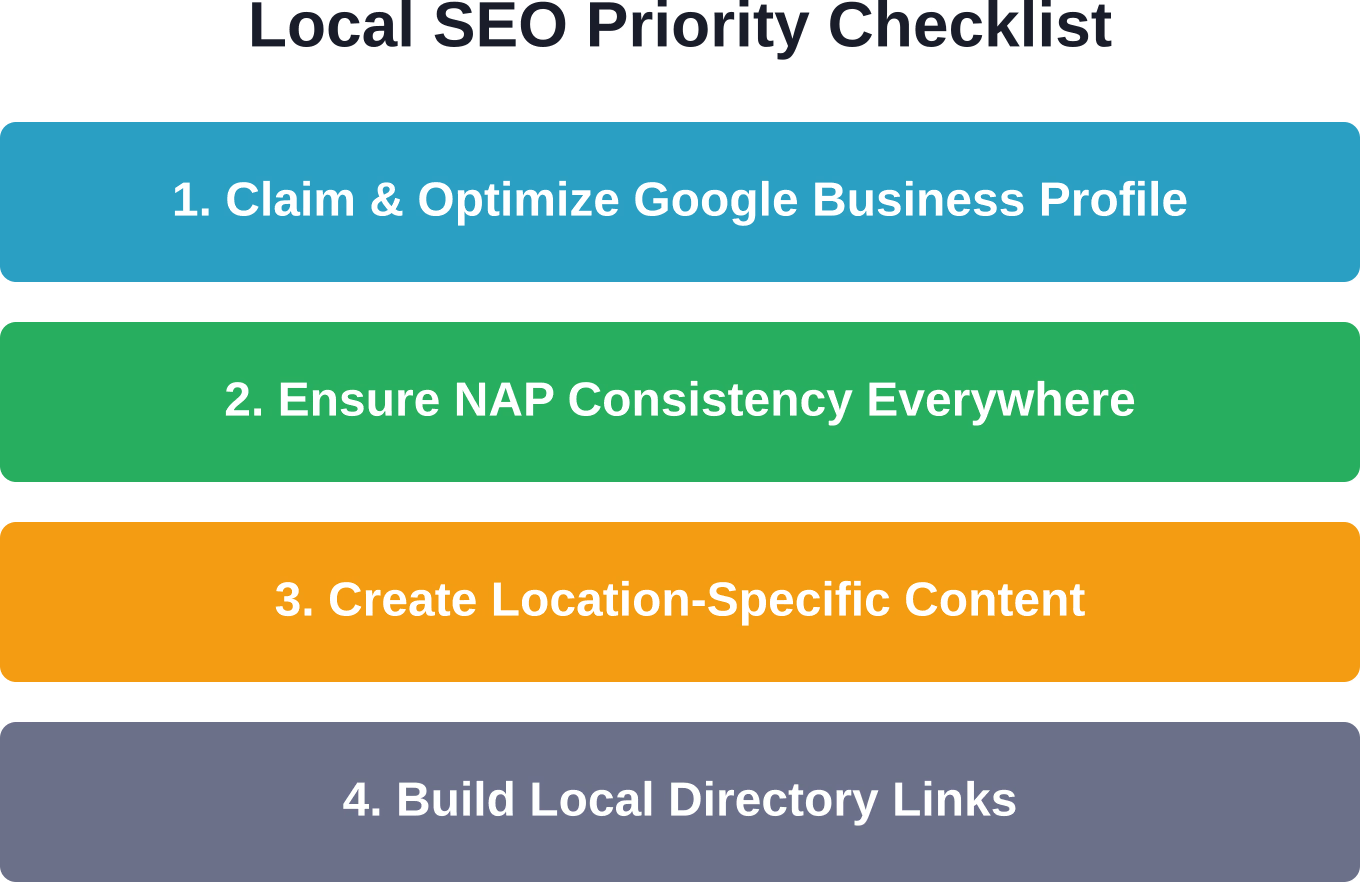
Claiming and optimizing a Google Business Profile (formerly Google My Business) is the fastest way to improve local visibility. This free tool lets schools manage how they appear in Google Maps and local search results.
Complete every section: add accurate hours, upload photos of facilities and events, post updates about enrollment periods, respond to reviews, and include relevant categories like "Charter School" and "Elementary School" or "Middle School."
Regular posts keep the profile active. Share upcoming open houses, academic achievements, new program launches, and community events. Schools that post weekly see significantly higher engagement than those updating monthly.
Search engine optimization determines whether schools appear in organic search results. Local SEO focuses specifically on geographic searches.
Start by ensuring the school name, address, and phone number appear consistently across the website, Google Business Profile, social media accounts, and directory listings. Inconsistent information confuses search engines and hurts rankings.
Create location-specific content. A blog post titled "After-School Programs in [Neighborhood]" or "Why Families Choose Charter Schools in [City]" signals relevance to local searches. Include neighborhood names, nearby landmarks, and district information naturally throughout website content.
Build local backlinks by getting listed in community directories, partnering with local businesses, and earning mentions from local news outlets covering school events or achievements.
Organic social media posts help maintain community connections, but paid advertising drives enrollment. Facebook and Instagram ads let charter schools target specific demographics with precision traditional advertising can't match.
Social media platforms collect extensive user data. Charter schools can target ads to parents within specific zip codes, with children of certain ages, who've shown interest in education topics, and who match other relevant criteria.
Geographic targeting ensures marketing budgets reach families who can actually attend. Demographic targeting focuses on parents of age-appropriate children rather than wasting impressions on users without kids or with children already in high school.
The most effective school ads don't feel like ads. They showcase authentic moments: students engaged in project-based learning, teachers providing individualized attention, or alumni discussing how the school prepared them for college.
Video ads typically outperform static images. Even short 15-second clips showing classroom activities or student testimonials generate higher engagement rates.
Clear calls-to-action matter. "Schedule a Tour," "Download Our Program Guide," or "Apply for Fall 2026" give parents specific next steps rather than vague "Learn More" buttons.
Budget doesn't need to be massive. Even $500-$1,000 monthly spent strategically on Facebook ads can generate dozens of qualified leads during enrollment season.
Google Ads places charter schools at the very top of search results when families actively look for educational options. Unlike social media ads that interrupt users, search ads appear when parents demonstrate intent by searching education-related terms.
Target keywords like "charter schools in [city]," "best elementary schools near me," "school enrollment [neighborhood]," and similar phrases. These searches signal active school shopping rather than casual browsing.
Landing pages need to match search intent. Someone searching "charter school application deadline" should land on a page with clear deadline information and an application link—not a generic homepage where they need to hunt for details.
Google Ads campaigns require ongoing optimization. Monitor which keywords drive applications versus which generate clicks but no conversions. Adjust bids, pause underperforming keywords, and invest more in high-converting search terms.
Blog content serves multiple purposes: improving SEO, demonstrating expertise, addressing parent concerns, and showcasing school culture. Schools publishing regular content rank better in search engines and provide families more touchpoints during the decision process.
Write about questions families actually ask. "How Does Our Project-Based Learning Approach Work?" answers concerns about non-traditional teaching methods. "Supporting English Language Learners at [School Name]" speaks to families from diverse backgrounds. "Our Approach to School Safety" addresses universal parent priorities.
School achievement stories work well—but frame them around student benefits rather than institutional bragging. Instead of "We Won District Science Fair," write "How Our 5th Graders Developed Award-Winning Environmental Projects."
Publishing content means nothing if no one sees it. Share blog posts across social media channels, include links in email newsletters, and feature recent articles prominently on the website homepage.
Email newsletters keep current families engaged while nurturing prospective family leads. Segment email lists—current parents want different content than families just beginning their school search.
Subject lines matter significantly for email open rates. Keep them under 50 characters and make them personal. Emails with personalized subject lines see a 26% increase in open rates compared to generic ones.
Digital marketing reaches families online, but in-person events convert interest into applications. Open houses, campus tours, and community events let families experience school culture firsthand.
Structure open houses to highlight differentiators. If project-based learning defines the school, have students present current projects rather than just touring empty classrooms. If arts integration matters, showcase student performances or artwork.
Make events accessible. Offer multiple tour times including evenings and weekends. Provide childcare so parents can focus. Consider language interpretation for non-English speaking families in communities with significant immigrant populations.
Community events build local presence beyond enrollment. Hosting a neighborhood carnival, participating in local festivals, or offering free family literacy nights positions the charter school as a community asset rather than just an institution seeking students.
Partnerships amplify marketing reach and enhance program offerings simultaneously. Local businesses, community organizations, and cultural institutions all make valuable partners.
Educational partnerships add credibility. Collaborating with universities on teacher training programs or STEM enrichment signals academic rigor. Partnering with museums or theaters for arts integration demonstrates commitment to well-rounded education.
Business partnerships can provide resources while expanding visibility. A local tech company might sponsor a coding program while mentioning the partnership in their communications, reaching families who work there.
Community organization partnerships help reach specific populations. Partnering with immigrant support organizations, housing authorities, or family service agencies builds trust within communities that might otherwise hesitate to consider charter options.
Prospective families trust current parent experiences more than any marketing message. Testimonials serve as social proof that the school delivers on promises.
Don't just collect generic "great school!" quotes. Ask parents specific questions: What surprised them most? How has their child grown? What differentiates this school from others? Specific details make testimonials credible.
Video testimonials outperform written ones. Parents speaking authentically on camera convey emotion and sincerity text can't match. Again, professional production isn't necessary—smartphone videos feel more genuine anyway.
Feature testimonials prominently on the website, in social media posts, and in email campaigns. Different testimonials resonate with different audiences, so maintain a library highlighting various aspects: academic growth, special needs support, extracurricular opportunities, school culture.
Marketing without measurement wastes money. Schools need to know which channels drive applications and which consume budget without results.
Google Analytics provides most of this data free. Set up goal tracking for key actions: application submissions, tour requests, brochure downloads. This shows which traffic sources convert rather than just which generate clicks.
One charter school tracked a 203% year-over-year increase in website visits after implementing a comprehensive digital strategy. That same school saw 8,780 views of their "apply now" landing page and 756 "apply now" call or form completions.
Review metrics monthly during off-season and weekly during active enrollment periods. Adjust budgets toward high-performing channels and pause underperforming tactics.
Families researching charter schools often have specific concerns: academic quality, transportation, lottery systems, or whether charter schools serve special needs students effectively. Address these concerns directly in marketing rather than avoiding them.
Create FAQ pages that answer real questions honestly. If transportation is limited, explain clearly which areas receive bus service rather than leaving families to discover this during enrollment. If special education services differ from district schools, explain the model transparently.
Academic transparency builds trust. Share assessment data, college acceptance rates, or other outcomes that demonstrate results. If the school is new without established track records, share growth metrics or other indicators of progress.
Enrollment marketing isn't seasonal—it's year-round. Families research schools months before application deadlines. Schools that only market during enrollment windows miss families early in their decision process.
Build a recruitment calendar mapping marketing activities across twelve months. Fall might focus on open houses and campus tours. Winter could emphasize deadline reminders and application support. Spring might showcase student achievements and end-of-year events. Summer stays connected with families through program highlights and fall enrollment preparation.
Year-round presence keeps schools top-of-mind when families enter active decision mode. Consistent communication through email newsletters, social media posts, and blog content maintains awareness even during off-peak periods.
Not every charter school has in-house marketing expertise. Budget constraints and small administrative teams mean marketing often falls to already-overloaded staff.
Specialized education marketing agencies understand school recruitment specifically. They know compliance requirements, family decision timelines, and which tactics work for schools versus general businesses.
Even schools handling most marketing internally might benefit from specific services: website design, SEO optimization, or ad campaign management. Outsourcing specialized tasks frees internal staff to focus on community relationships and event coordination where personal touch matters most.
Evaluate potential partners carefully. Ask for case studies from other charter schools, not just general education experience. Request specific metrics: enrollment increases, website traffic growth, application volume changes.
The charter school enrollment landscape has become increasingly competitive, but schools with strategic marketing plans continue thriving. Success doesn't require massive budgets—it requires focused investment in channels that actually drive applications.
Start with foundations: a well-designed website optimized for search, claimed Google Business Profile, and clear application processes. Build from there with targeted advertising, content marketing, and community engagement.
The schools seeing enrollment growth share common traits. They understand their unique value propositions. They reach families through multiple channels. They measure results and adjust based on data. And they maintain year-round marketing presence rather than scrambling during enrollment windows.
Marketing isn't separate from the educational mission—it's how schools connect families with educational opportunities that transform students' lives. Done well, charter school marketing doesn't just fill seats. It builds communities.
What marketing channels will the school prioritize this year? The enrollment results depend on decisions made today.


