How to Refund Shipping on Shopify Without Making Costly Mistakes
Learn how to refund shipping on Shopify for full or partial orders, what limits apply, and what to watch out for to avoid costly mistakes.
Jan 26, 2026



Quick Summary: Valentine's Day 2026 presents a record-breaking $29.1 billion opportunity, with 54.6% of consumers planning to celebrate. Successful campaigns target diverse audiences beyond romantic couples—including friends, family, pets, and self-care shoppers—through early promotions, personalized gift guides, exclusive offers, and last-minute solutions that drive conversions across multiple channels.
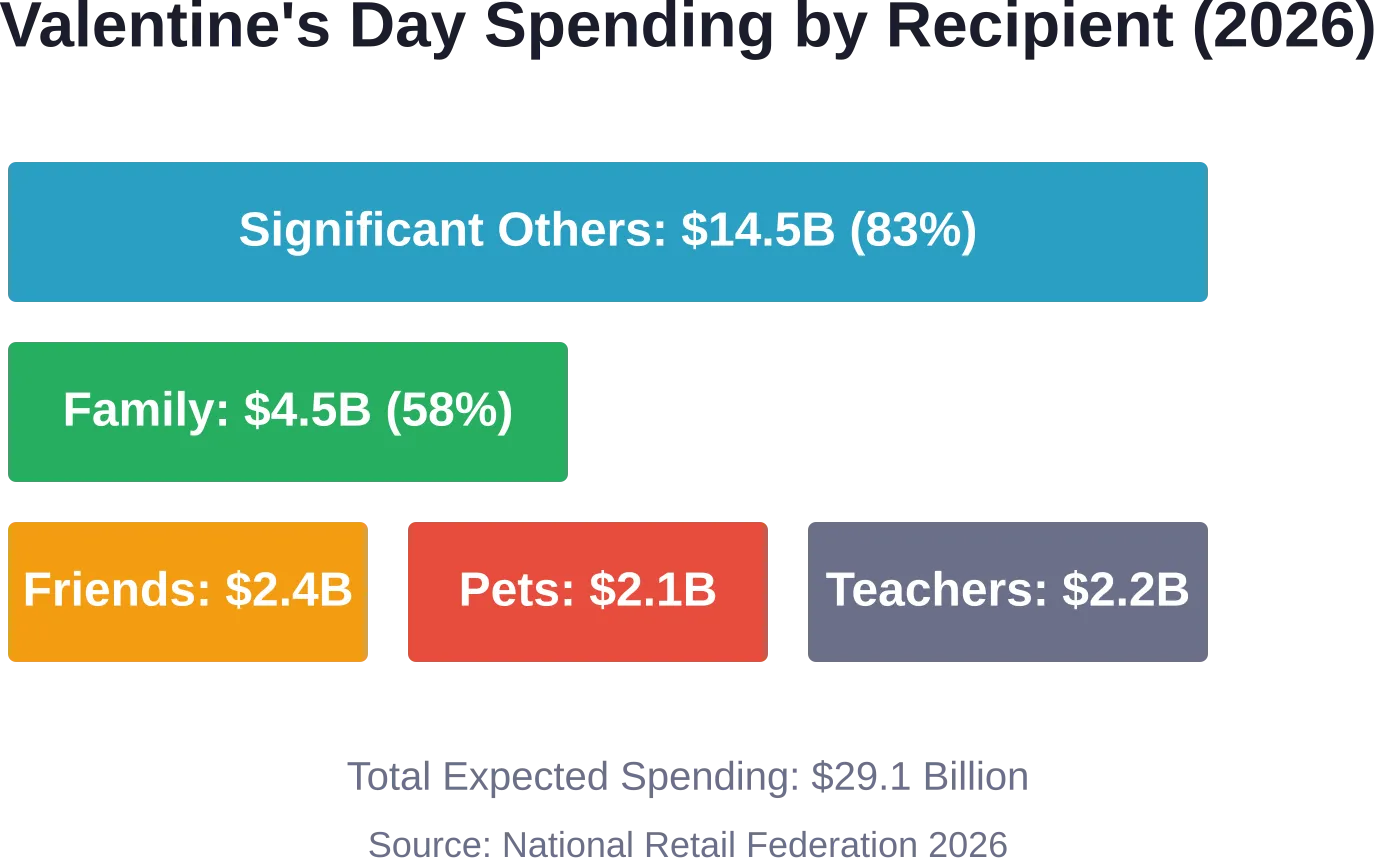
Valentine's Day isn't just about roses and chocolate anymore. According to the National Retail Federation, consumer spending is expected to reach a record $29.1 billion in 2026, with the average person spending around $199.78. That's a massive opportunity for brands willing to think beyond traditional romantic marketing.
Here's the thing though—only 54.6% of consumers actually plan to celebrate Valentine's Day. That means campaigns need to be strategic, targeted, and creative enough to capture attention in a crowded marketplace. The brands winning this holiday season aren't just selling products; they're selling experiences, solving problems, and making it dead simple for shoppers to find the perfect gift.
So how do smart marketers capitalize on this billion-dollar holiday? Let's break down the strategies that actually work.
Before diving into tactics, it's critical to understand who's buying and what they're purchasing. The data reveals some surprising shifts in consumer behavior that savvy marketers can exploit.
While 83% of celebrators plan to purchase gifts for significant others (totaling $14.5 billion in expected spending), that's just one segment. An additional 58% of those celebrating plan to purchase gifts for other family members such as kids, parents or siblings, for a total of $4.5 billion in expected spending. One-third (33%) of consumers plan to purchase gifts for friends, and here's a fun one: US consumers are expected to spend $2.1 billion on their pets for Valentine's Day this year.
The gift categories tell an interesting story too. Candy leads at 56%, followed by flowers and greeting cards at 40% each. But the big-ticket items drive serious revenue—jewelry is expected to account for $6.5 billion in spending, while an evening out accounts for $5.4 billion.
Real talk: these numbers reveal that Valentine's Day marketing shouldn't just target couples. The most successful campaigns speak to multiple audiences simultaneously.
According to survey data, 60.7% of celebrators begin planning in February, with 41.8% planning during the week leading up to Valentine's Day. But early shoppers who plan well in advance tend to spend more.
Start promoting Valentine's products and offers in late January. Create anticipation through teaser campaigns, early-access sales for email subscribers, or limited pre-order offerings. This approach accomplishes two things: it captures high-intent shoppers before competitors flood the market, and it extends your selling window beyond the frantic final week.
Consider offering exclusive perks for early shoppers. Free shipping, bonus items, or guaranteed delivery by February 14 work as powerful incentives. The goal is to segment your audience early and move committed buyers through the funnel while they're still in research mode.
Launch a Valentine's Day-themed email or SMS sign-up unit offering an immediate discount or gift guide download. New subscribers acquired during this period are high-value—they're actively shopping for Valentine's gifts and receptive to your messaging.
Make the value proposition crystal clear: "Join now and get 15% off Valentine's gifts plus free shipping." Then segment these subscribers into a dedicated Valentine's campaign flow with gift guides, countdown reminders, and last-chance alerts as February 14 approaches.

Extuitive helps teams review ad concepts before launching campaigns. The platform uses AI models to forecast likely performance, compare creative options, and support better decisions around messaging and targeting.
For Valentine’s Day campaigns, this can help when there are several offer, product, or creative ideas to choose from.
Extuitive can help with:
👉 Book a demo with Extuitive to review your ad ideas.
Analysis of consumer behavior shows that shoppers struggle most with finding the right gift. Your marketing can solve this problem while driving sales.
Develop multiple gift guides segmented by recipient type, price point, and personality. Think "Gifts for Him Under $50," "Luxury Valentine's Experiences," "Galentine's Day Friend Gifts," or "Show Your Pet Some Love." Each guide should feature 4-8 curated products with clear descriptions of who they're perfect for.
But wait. Don't just list products—add personality. Use language like "For the coffee obsessive who claims they're 'not a morning person'" or "When you need to impress without saying 'I forgot until yesterday.'" This editorial approach makes guides shareable on social media and genuinely helpful.
Email these guides to your subscriber list in early February, promote them on social media, and feature them prominently on your homepage. Track which guides get the most engagement to inform future product development and marketing focus.
With 33% of consumers buying Valentine's gifts for friends, there's substantial opportunity in non-romantic marketing angles. Galentine's Day (February 13) has grown from a TV show joke into a legitimate commercial occasion.
Create campaigns celebrating friendship, self-love, and community. Brands can tap into this market by reframing Valentine's products in platonic contexts. That fancy chocolate box? Perfect for your best friend who's been there through everything. Those candles? Ideal for treating yourself after a tough week.
The messaging shift is subtle but powerful. Instead of "Surprise your sweetheart," try "Celebrate the people who make life sweet." This inclusive approach expands your addressable market while still capturing traditional romantic shoppers.
Personalized products consistently outperform generic alternatives during gift-giving occasions. If your business can offer customization—engraving, monogramming, custom messages, gift wrapping—promote these services heavily in Valentine's campaigns.
Highlight personalization options in product photography, email campaigns, and social media content. Show the before-and-after: a plain item versus the same item with a heartfelt message engraved. This visual storytelling helps shoppers imagine their specific use case.
For digital products or services, personalization might mean custom playlists, photo books, or experience packages tailored to recipient interests. The key is making the shopper feel like they're giving something unique rather than something pulled from a shelf.
Interactive quizzes that ask about the recipient's interests, relationship type, and budget can guide shoppers to perfect products while collecting valuable zero-party data. Tools like "Find the Perfect Valentine's Gift in 60 Seconds" reduce decision fatigue and increase conversion rates.
The quiz results also provide segmentation data for retargeting campaigns. Someone who took a quiz for "anniversary gifts for her" is a prime candidate for jewelry or experience retargeting ads.
Urgency drives Valentine's Day purchasing decisions, especially as the date approaches. Strategic flash sales create buying triggers at critical decision points throughout the campaign period.
Structure offers in waves: an early-February "Plan Ahead" sale (15% off), a mid-February "Last Week" flash sale (20% off select items), and a final "We'll Get It There" promotion (February 12-13) emphasizing expedited shipping.
Each sale serves different shopper segments. Early sales capture planners. Mid-campaign sales nudge fence-sitters. Last-minute promotions convert procrastinators who need reassurance that gifts will arrive on time.
Email marketing remains one of the highest-ROI channels, with research showing segmented and personalized campaigns increase revenue by as much as 760%.
Build a multi-touch email sequence starting in late January. The first email announces Valentine's offerings and sets expectations. Subsequent emails feature gift guides, highlight specific products, share customer testimonials, and create countdown urgency.
SMS works brilliantly for time-sensitive offers. Send a text on February 12 with "Last day for guaranteed Valentine's delivery" or on February 13 with "E-gift cards delivered instantly—perfect for tomorrow."
Customers who purchased Valentine's gifts last year should receive different messaging than first-time holiday shoppers. Past buyers get "Your favorites are back" or "New arrivals we think you'll love." New shoppers receive education-focused content like gift guides and product explanations.
This behavioral segmentation dramatically improves open rates, click-through rates, and conversions compared to one-size-fits-all blasts.
Social platforms become Valentine's content machines in early February. Brands need to show up with creative, shareable content that cuts through the noise.
User-generated content campaigns work exceptionally well. Ask customers to share photos of past Valentine's gifts or their celebration plans using a branded hashtag. Repost the best submissions to your feed and stories. This builds community while providing authentic social proof.
Run Valentine's-themed contests or giveaways requiring engagement actions like tagging a friend, sharing to stories, or commenting with gift ideas. These mechanics boost visibility through organic reach while collecting engaged followers likely to convert.
Platform-specific strategies matter too. Instagram favors visually stunning product photography and behind-the-scenes stories. TikTok rewards creative, trend-aligned content like "Valentine's gift unboxing" or "How we make [product]." Facebook still drives conversions for older demographics through targeted ads and community engagement.
Not everyone celebrates Valentine's Day romantically, but that doesn't mean they won't spend. The self-care market during Valentine's week represents a growing opportunity.
Create campaigns around "treating yourself" or "self-love" that remove the romantic framing entirely. Messaging like "Be your own Valentine" or "Love yourself first" resonates with singles and anyone prioritizing personal wellness.
Products positioned for self-purchase during Valentine's include skincare sets, luxury home goods, indulgent foods, books, spa services, and fitness memberships. The same products marketed to gift-givers can be reframed for personal use.
Fresh Step's 2026 campaign promoting cat adoption over traditional dating represents a clever twist on this approach—acknowledging the holiday while subverting its romantic expectations to appeal to pet lovers.
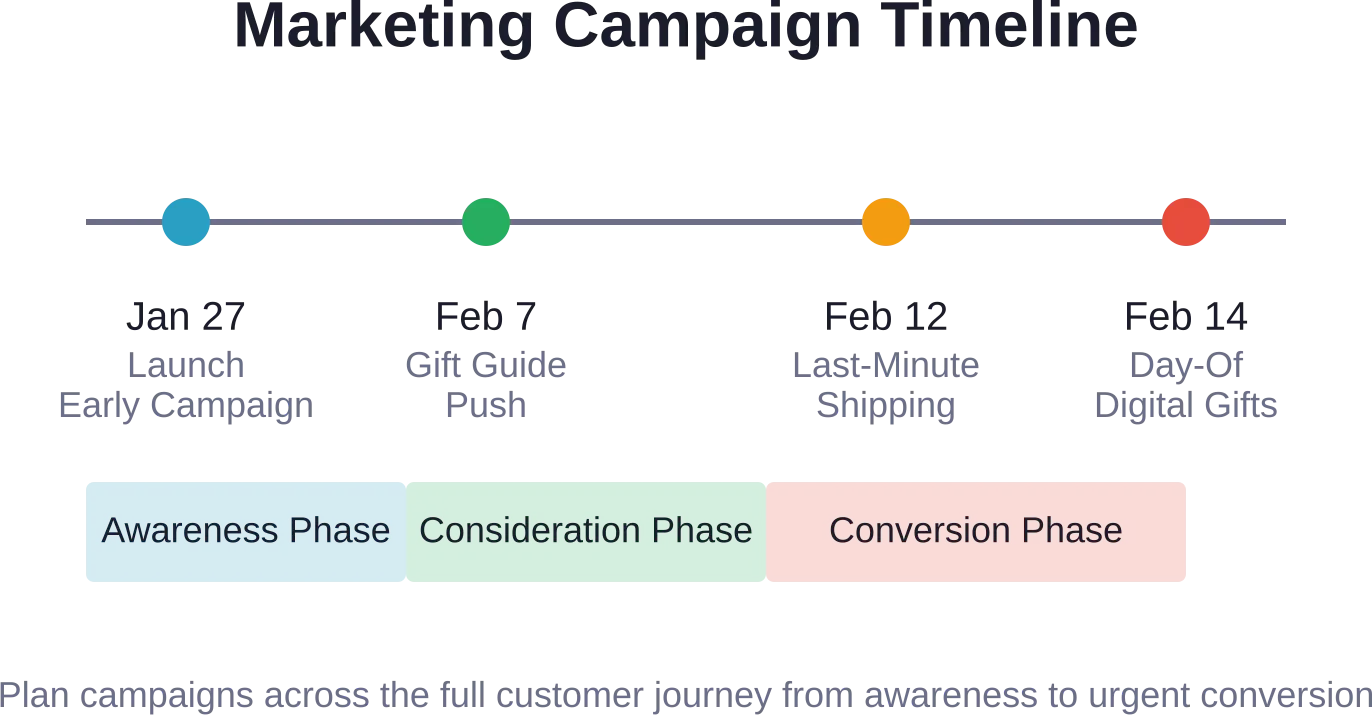
Despite best intentions, many shoppers wait until the final days. Rather than ignoring this segment, smart brands create specific solutions for late purchasers.
Promote digital products and gift cards heavily on February 12-14. These items deliver instantly via email, solving the procrastinator's biggest problem: time. Market them as "arrives in minutes" or "perfect when you need a gift now."
For physical products, clearly communicate cutoff times for different shipping methods. "Order by 3 PM PST on Feb 13 for guaranteed Feb 14 delivery" removes uncertainty and drives same-day conversions.
Local businesses can leverage "buy online, pick up in store" for last-minute shoppers. Promote this option prominently starting February 12, emphasizing convenience and immediate availability.
Collaborative marketing campaigns expand reach while splitting costs. Find non-competing brands that share your target audience and create joint Valentine's promotions.
A chocolatier might partner with a wine shop for a "Perfect Pairing" gift bundle. A jewelry brand could team up with a restaurant for a "Dinner and Diamonds" promotion. A bookstore and coffee roaster could offer "Cozy Valentine's Night In" packages.
These partnerships work because they solve a customer problem—finding multiple coordinated gifts—while each brand accesses the other's customer base. Promote the collaboration through both companies' email lists, social channels, and websites for maximum exposure.
For brick-and-mortar retailers, Valentine's Day offers opportunities to create memorable in-store experiences that drive foot traffic and sales.
Host Valentine's shopping events with complimentary gift wrapping, personal shopping assistance, or product demonstrations. Promote these events through email, social media, and local advertising as exclusive perks for in-store shoppers.
Pop-up shops dedicated to Valentine's products can generate buzz and urgency. According to industry data, the pop-up shop market represents significant opportunity for retailers to test products, clear inventory, and create Instagram-worthy shopping moments that customers share organically.
In-store exclusives—products or offers available only to physical shoppers—create compelling reasons to visit rather than order online. These might include limited-edition items, special packaging, or enhanced services.
Valentine's Day marketing doesn't end on February 14. Post-holiday strategies can capture additional revenue and set up future success.
Launch a "Day After Valentine's Day" sale on February 15 targeting anyone who forgot, had plans fall through, or simply wants to extend the celebration. Position it as a smart shopping opportunity with deeper discounts on remaining inventory.
Track key metrics throughout the campaign: email open rates, click-through rates, conversion rates by traffic source, average order value, and revenue by product category. This data informs next year's strategy and helps optimize ongoing campaigns.
Send post-purchase follow-up emails asking for product reviews, photos of gifts in use, or feedback on the shopping experience. This content becomes valuable social proof for future campaigns while strengthening customer relationships.
Valentine's Day represents one of the year's biggest commercial opportunities, with spending reaching record levels year after year. But success requires more than decorating your website with hearts and running a generic sale.
The winning approach combines strategic timing, audience segmentation, personalized messaging, and multi-channel execution. Start early to capture planners. Create helpful gift guides that solve decision paralysis. Market to friends, family, pets, and self-care shoppers alongside romantic couples. Use urgency strategically as deadlines approach. And don't forget last-minute shoppers who need instant solutions.
Track performance throughout the campaign, optimize based on what's working, and document insights for next year. The brands that dominate Valentine's Day treat it as a month-long strategic initiative rather than a single-day promotion.
Ready to capture your share of $29.1 billion? Start planning now, test your messaging, and remember that successful Valentine's marketing makes shopping easier, not harder. When campaigns genuinely help people celebrate the relationships and experiences they value, conversions follow naturally.


