Marketing Ideas for Photographers: 26 Strategies for 2026
Discover proven marketing ideas for photographers. Learn strategies to attract dream clients, grow your business, and boost revenue with tactics that work.
May 18, 2026



Shopify is not the reason most dropshipping stores fail. That might sound surprising given how often the platform gets blamed, but in practice, Shopify usually does exactly what it promises. It lets you build a store, list products, take payments, and manage orders without touching code or dealing with servers.
Where things go wrong is everything wrapped around those basics.
New sellers often try to solve problems they do not have yet. They stack apps, copy complex strategies, chase trends they barely understand, or expect automation to replace judgment. Shopify makes all of that easy to do, which can quietly push people in the wrong direction.
Dropshipping on Shopify works best when you keep the early setup boring, deliberate, and a little restrained. This guide focuses on that approach. Not shortcuts. Not hype. Just a clear way to build a dropshipping store that has a chance to last.
At its core, Shopify dropshipping is simple. You sell products you do not physically stock. When a customer places an order, a supplier ships the product directly to them. Shopify sits in the middle, handling the storefront, checkout, and order flow.
What often gets glossed over is what Shopify does not do.
Shopify does not choose your products. It does not vet or guarantee your suppliers, regardless of the apps you use. It does not protect you from slow shipping, low quality items, or unclear product pages. Those responsibilities stay with you.
That is why two stores can use the same platform and have completely different outcomes. One feels clean and trustworthy. The other feels rushed and disposable. The difference rarely comes down to software. It comes down to decisions.

Once a Shopify dropshipping store is live, the next real challenge is not setup. It is knowing which ads are actually worth spending money on. That is exactly where we built Extuitive to help. Instead of guessing, copying competitors, or burning budget on unproven ideas, we let you validate ads before you launch them.
We connect directly to your Shopify store and use AI agents modeled after more than 150,000 real consumer profiles to test creatives, messages, and audiences in minutes. Our platform simulates how different customer segments react to your ads, predicts purchase intent, and highlights what resonates before a single dollar goes live. What used to take weeks of manual testing or expensive panels now happens thousands of times faster and at a fraction of the cost.
For dropshippers, this changes the rhythm of growth. You can generate ad concepts, validate them against realistic buyer behavior, and launch with confidence instead of hope. Whether you are testing your first product or scaling paid traffic, Extuitive helps you focus spend on ads that are already proven to connect, convert, and make sense for your store.
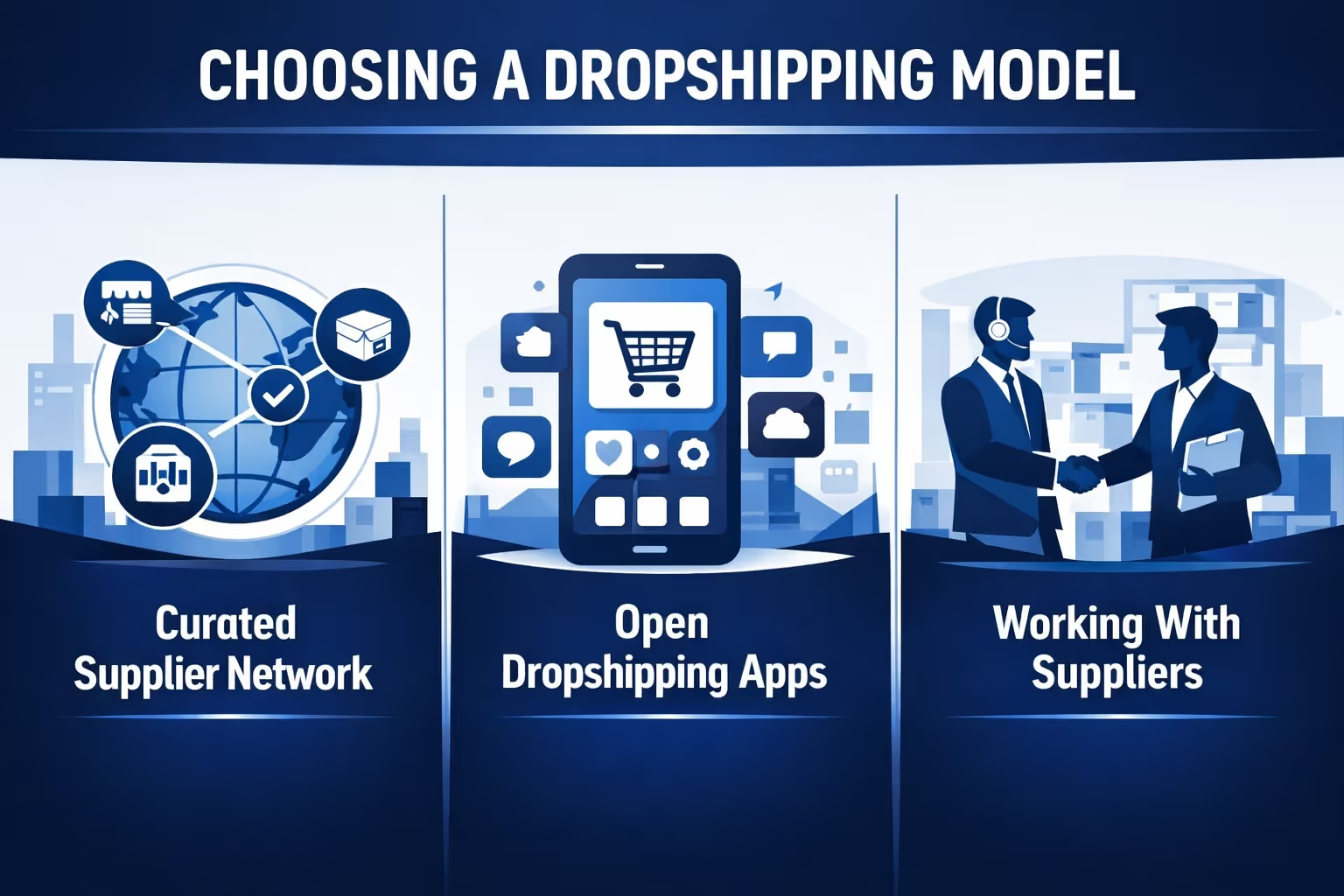
Before installing apps or importing products, it helps to understand the three main ways people dropship on Shopify today.
Some sellers use supplier networks that connect Shopify stores with brands already operating on the platform. These networks usually sync inventory, pricing, and order flow automatically.
The upside is control and consistency. Products are often higher quality, shipping times are clearer, and returns are handled in a more structured way.
The downside is selection and margins. You are usually limited to what the network offers, and pricing is less flexible.
This model works well for stores that want to feel more like retailers than experiments.
This is the most common path. Dropshipping apps connect your Shopify store to large supplier marketplaces, often global ones.
The appeal is obvious. Huge product selection, low entry cost, and fast setup. You can test ideas quickly and replace products without much friction.
The tradeoff is competition and risk. Many sellers list the same items. Shipping times can vary. Product quality is not always consistent. This model requires more attention to product selection and customer communication.
Some sellers skip apps and build direct relationships with suppliers. Orders still flow through Shopify, but everything else is managed more manually or through custom processes.
This approach offers the most control. Pricing, packaging, branding, and fulfillment terms can be negotiated.
It also requires more effort and experience. For beginners, it often makes sense later rather than at the start.
The key point is this. Your dropshipping model shapes every decision that follows. Pick the model first. Then choose tools that support it.
Creating a Shopify account takes minutes. That part is easy. What matters is how you treat the store during the first setup.
Many new sellers choose names that are either too generic or too narrow. A name that locks you into a single product trend can become a problem if that trend fades.
Aim for something neutral, readable, and flexible. It does not need to explain everything you sell. It needs to be easy to remember and easy to trust.
If you need inspiration, tools can help, but judgment still matters. Say the name out loud. Imagine it on a receipt. Picture it six months from now if the product lineup changes.
A custom domain is not just cosmetic. It signals intent.
A store running on a default subdomain often feels temporary, even if the products are solid. A simple domain helps establish legitimacy and makes your store easier to share and remember.
You do not need a clever domain. You need a clean one.
Shopify themes are one of the easiest places to lose time.
Choose a well supported theme that looks clean on mobile. Test basic navigation. Then stop.
Early success in dropshipping does not come from visual polish. It comes from clarity. Can a visitor understand what you sell, why it matters, and how to buy within a few seconds.
If the answer is yes, the theme is doing its job.
Product research is often presented as a hunt for secrets. In reality, it is more about filtering out bad ideas than finding perfect ones.
A workable dropshipping product usually has a few things going for it:
None of this requires viral appeal. Many sustainable stores sell products that look unexciting on social media but make sense in real life.
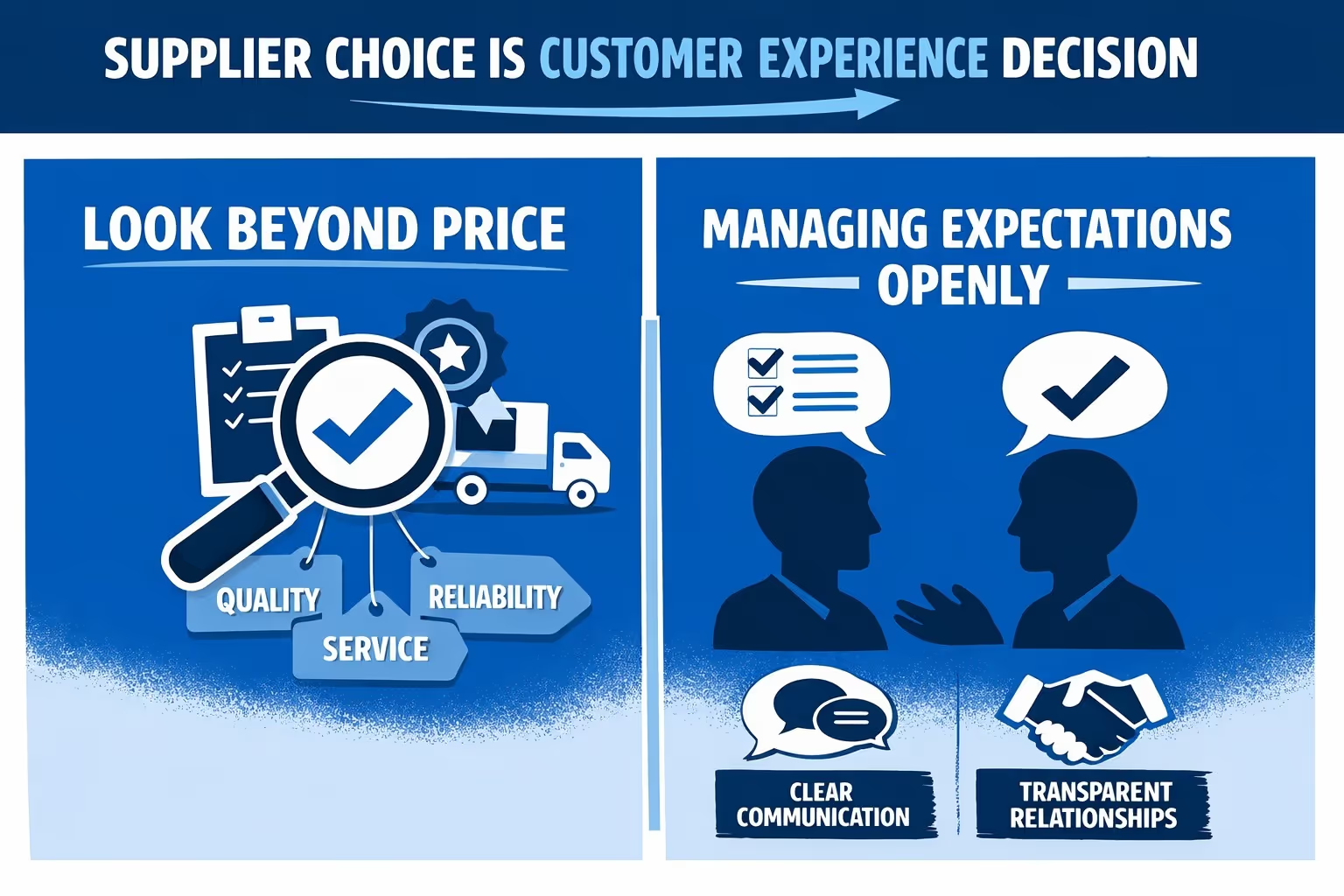
Customers do not separate your store from your supplier. They experience both as one.
Slow shipping, missing tracking, or inconsistent quality will always come back to you. That is why supplier choice matters more than most beginners expect.
Price matters, but it is rarely the deciding factor over time. A slightly cheaper product does not help if shipping timelines change without warning, stock disappears mid-sale, or communication breaks down when something goes wrong. Those issues always surface eventually, and when they do, they show up as support tickets, refunds, and lost trust.
Reliable suppliers tend to be consistent rather than fast on paper. They ship when they say they will, keep inventory updated, respond when problems arise, and have a clear process for handling returns. That reliability is not always obvious from a product listing, which is why ordering samples and testing communication early makes such a difference.
Seeing the product arrive the way your customer would often tells you more than any supplier description ever could.
If shipping takes longer, say so. Clear expectations reduce frustration more than optimistic promises.
Many disputes come from silence, not delays. Shopify gives you tools to communicate shipping policies clearly. Use them.
Automation tools are powerful, but they are often misunderstood.
Automation works best after you understand the process it replaces. If you automate confusion, you get faster confusion.
For most dropshipping stores, automation is useful for:
These tasks are repetitive and error prone. Automating them frees attention for decisions that still require judgment.
Automation does not fix bad products, unclear positioning, or weak customer communication. It also does not replace testing.
Use automation to reduce friction, not to avoid thinking.
Pricing is often treated like a simple formula, but in real stores it rarely behaves that way. What looks reasonable on a spreadsheet can fall apart once real customers, real questions, and real problems enter the picture. Pricing sits at the intersection of perception and operations. It shapes how trustworthy the store feels and how much flexibility you have when things do not go exactly as planned.
Your price needs to cover more than the product itself. Refunds happen. Ads underperform. Support takes time. Mistakes cost money. A margin that feels acceptable on day one can disappear quickly once those factors stack up. Leaving breathing room is not about being expensive. It is about giving the business space to adjust, learn, and survive long enough to improve. You can always refine pricing later. Starting too tight usually closes that option early.
Shopify’s checkout works well straight out of the box. Most issues appear only after unnecessary customization is layered on top. Adding too many fields, forcing account creation, or limiting payment options creates friction without adding real value. A simple checkout with widely used payment methods does more to support conversions than visual tweaks ever will.
Friction at checkout is rarely about design. It is usually about doubt. Clear pricing, visible contact options, and an obvious path to completion reduce hesitation far more effectively than visual polish.
Shipping is where assumptions meet real-world expectations. Rates that feel disconnected from product value or delivery timelines that are unclear can stop a purchase quickly. Shipping zones should reflect where you actually sell, and checkout should be tested from different locations to catch issues before customers do.
Free shipping can work, but only when it is built into pricing and explained clearly. Most customers care less about how shipping is calculated and more about whether the total cost feels fair and predictable.
Store policies are not just legal requirements. They quietly shape how safe a store feels. Returns, refunds, and delivery timelines should be written in plain language and reflect how the business actually operates.
Copying templates without reading them often creates promises you cannot realistically keep. Strong policies do two things at once. They set clear boundaries and reassure customers that problems will be handled reasonably if something goes wrong.
Growth introduces pressure in places that were easy to manage at low volume. More orders mean more opportunities for small issues to turn into real problems. Delays compound, communication slips, and minor inefficiencies become visible fast. This is usually where stores feel stretched, not because demand is bad, but because systems have not caught up yet.
Scaling works best when improvements happen gradually. Add suppliers only when volume justifies the complexity. Introduce automation when manual work becomes a clear bottleneck, not as a precaution. If support issues start to increase, it is often a signal to slow down and fix the underlying process before pushing harder. Sustainable growth rarely looks dramatic, but it tends to last longer than fast wins built on fragile systems.
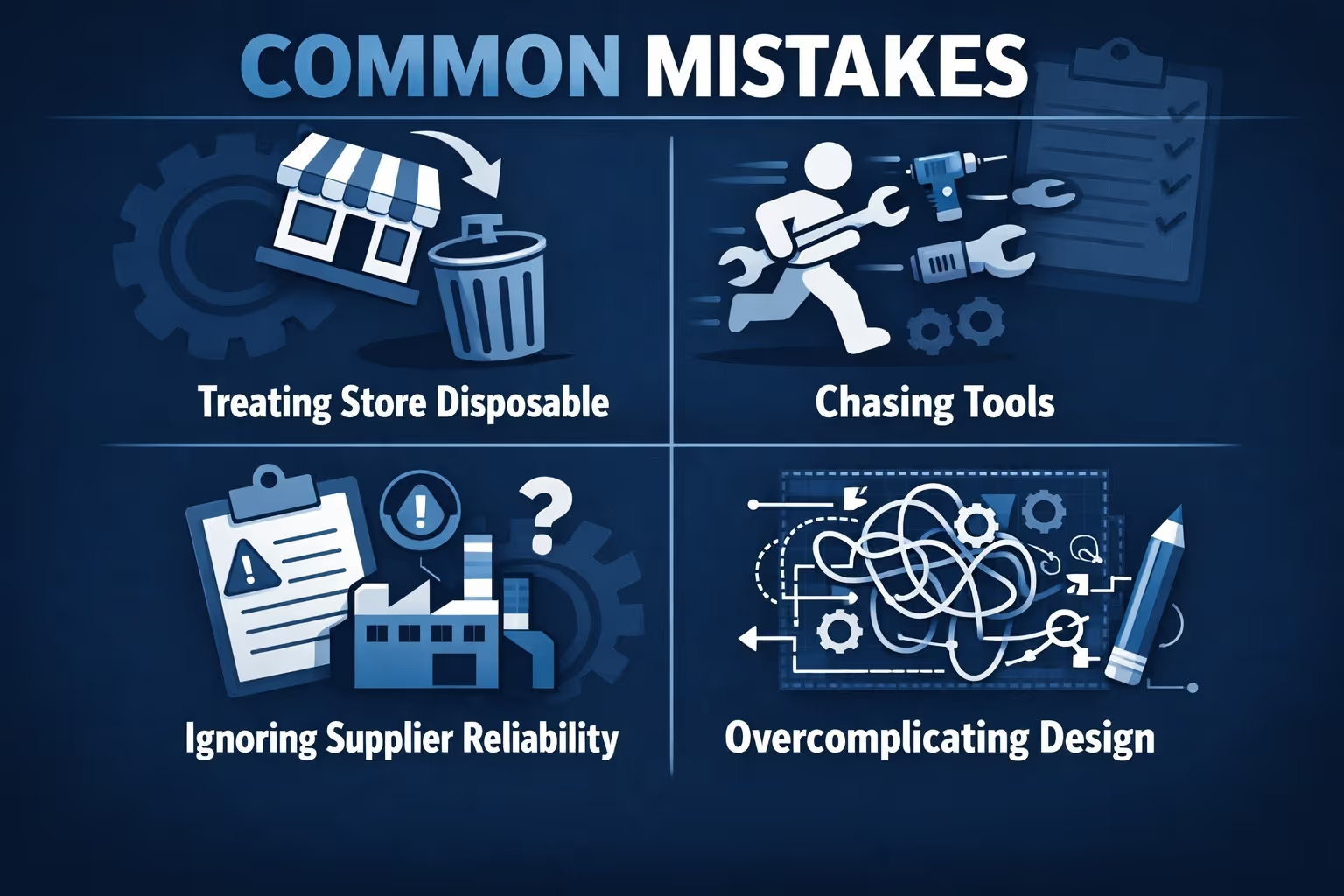
A few patterns show up again and again, even among sellers who start with solid intentions.
Avoiding these mistakes does not guarantee success, but it removes many unnecessary risks. More importantly, it keeps the store grounded in decisions you can actually control.
Dropshipping on Shopify is not about doing more. It is about doing fewer things well.
Clear products, reliable suppliers, honest communication, and restrained use of tools go further than complicated setups ever will.
Shopify gives you the infrastructure. What you build on top of it determines whether the store feels temporary or intentional.
If you keep things simple on purpose, you give yourself room to learn, adjust, and grow without burning out early.


