Best AI Tools for Marketing That Actually Make a Difference
A practical look at AI marketing tools used for ads, content, and analytics. No hype, just what they actually help you do.
Apr 13, 2026



Garden centers can boost sales and visibility through strategic digital marketing (social media, email campaigns, local SEO), seasonal promotions, customer loyalty programs, educational content (workshops and demonstrations), and enhanced in-store experiences. Successful marketing combines year-round online engagement with compelling events that position the center as a community resource, not just a retail outlet.
The U.S. nursery and garden store industry hit $54.4 billion in market size in 2026, yet the landscape remains fiercely competitive. With approximately 8,973 businesses fighting for attention, independent garden centers face pressure from big-box retailers and shifting consumer behaviors.
The pandemic created an unprecedented gardening surge—80% of households jumped into lawn and garden activities. But the boom cooled as discretionary budgets tightened. Many independents who expanded capacity now struggle with softer demand.
So what separates thriving garden centers from those barely holding on? Strategic, consistent marketing that goes beyond seasonal push periods.
Today's garden center shoppers aren't just buying plants. They're seeking experiences, expertise, and community connection. Research on consumer behavior reveals that 68% of all purchases happen on impulse—a crucial insight for merchandising and promotional strategy.
Plant selection behavior falls into distinct patterns. Some customers plan purchases meticulously, researching varieties and growing requirements ahead of time. Others make emotional, spontaneous decisions based on visual appeal and in-store presentation.
Both groups respond to promotions, but differently. Planned shoppers engage with email campaigns, online advertisements, and advance-notice sales. Impulse buyers react to in-store displays, immediate discounts, and compelling point-of-sale presentations.
The key? Design marketing campaigns that address both segments simultaneously. Create content that educates planners while maintaining visual merchandising that captures impulse attention.
With an estimated 72% of consumers using social media platforms, digital presence matters. But posting pretty plant photos won't cut it anymore.
Instagram stories deserve special attention for garden centers. Unlike feed posts that remain on profiles indefinitely, stories last just 24 hours—creating urgency and encouraging frequent engagement. However, they can be saved to 'Highlights' on your profile to remain visible indefinitely. Authentic farm experiences shown through stories build stronger connections than polished promotional content.
Educational content outperforms pure promotion. Show customers how to plant, troubleshoot common problems, and select varieties for specific conditions. Behind-the-scenes content—receiving shipments, caring for inventory, staff expertise—humanizes the business.
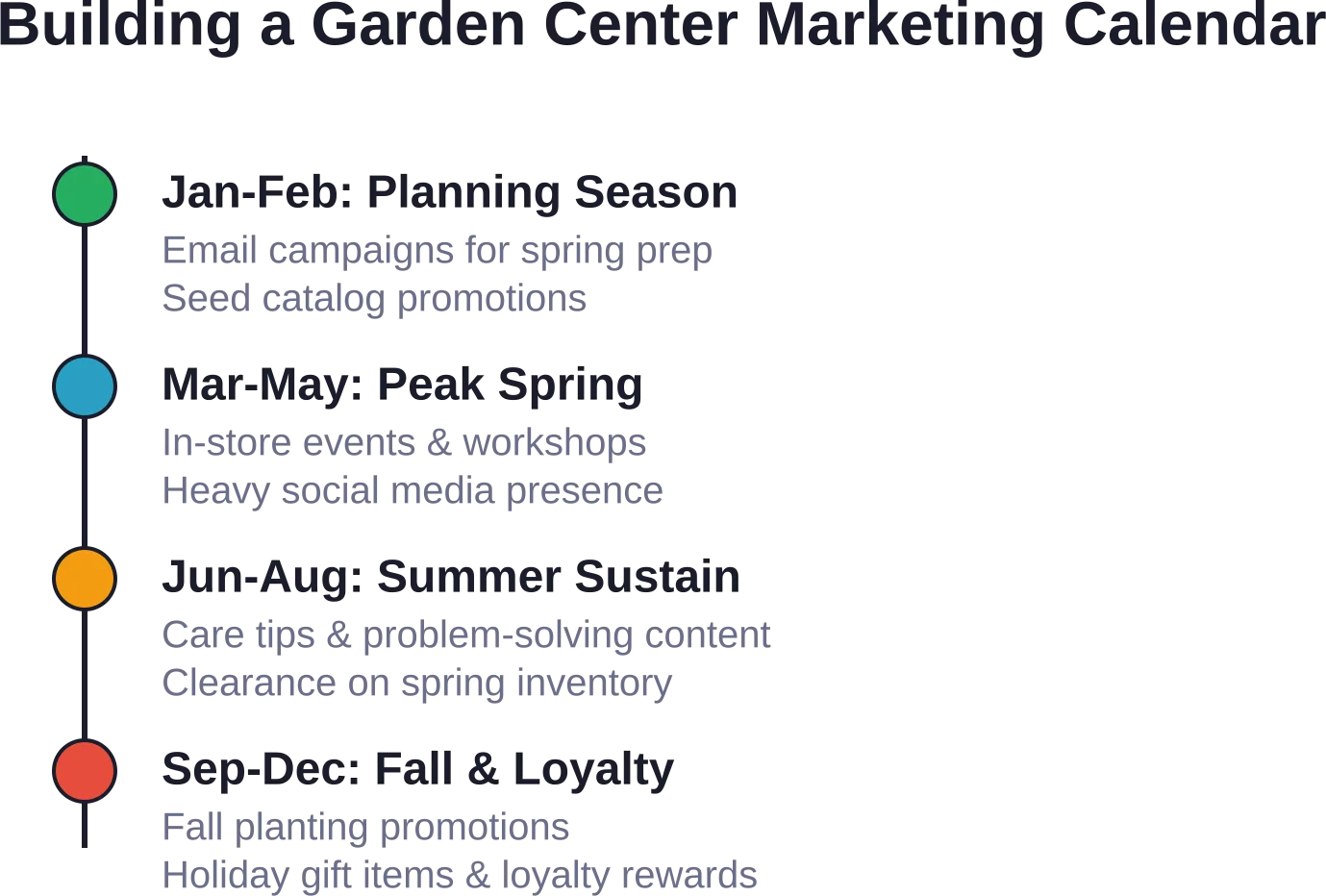
Seasonal timing matters enormously. Start spring marketing in winter. When customers finally get the gardening itch in March, they'll already know where to go because you've stayed visible during dormant months.
User-generated content provides social proof without production costs. Encourage customers to tag your location and share their garden successes. Repost their content (with permission) to build community and demonstrate real-world results.
Organic reach continues declining on major platforms. Paid advertising fills the gap, particularly for local businesses. Facebook and Instagram ads allow precise geographic targeting—essential for garden centers serving specific communities.
Budget allocation doesn't need to break the bank. Even modest monthly spending generates measurable results when campaigns target local zip codes with compelling offers: seasonal discounts, workshop announcements, or new inventory arrivals.

Seasonal campaigns can waste budget fast when stores test promotions only after launch. Extuitive gives teams a way to assess campaign potential before budget gets spent.
Extuitive can help marketing teams:
👉Book a demo with Extuitive and see which seasonal campaigns may be worth prioritizing before launch.
Email remains one of the highest-ROI marketing channels available. For garden centers, it's particularly effective because purchasing patterns follow seasonal rhythms—customers need timely reminders about what to plant when.
Building an email list starts at checkout. Offer a small incentive (5-10% discount on next purchase) for joining. Position it as receiving gardening tips and seasonal advice, not just promotional emails.
Segmentation dramatically improves results. Separate customers by interest: vegetables, ornamentals, landscaping supplies, or indoor plants. Send targeted content that matches demonstrated preferences rather than blasting identical messages to everyone.
Seasonal campaigns should start before peak demand. January emails about spring planning generate February and March traffic. August messages about fall planting prepare customers for September purchases.
Strategic pricing moves inventory while protecting margins. Bulk differential pricing encourages larger purchases—a technique farm-direct marketers have used successfully for years.
Consider berry pricing strategies adapted for retail garden centers: price individual units at standard rates ($3 per plant), but offer discounts for multiple purchases ($8.50 for three, $30 for twelve). The psychology works—customers perceive value and buy more than they originally intended.
Another effective approach: promotional pricing with clear savings communication. A three-for-$1 offer on small items saves customers $0.056 per unit compared to individual $0.39 pricing (or a total of $0.17 savings for all three units). Customers notice these savings.
Timing matters with seasonal promotions. Spring pre-orders with early-bird discounts generate January and February revenue during traditionally slow periods. End-of-season clearance sales (substantial markdowns on remaining inventory) clear space for incoming stock while recouping investment.
When potential customers search "garden center near me," does your business appear? Local SEO determines whether you capture that high-intent traffic.
Google Business Profile optimization forms the foundation. Complete every field: accurate hours, phone number, website, categories, attributes. Upload high-quality photos regularly—Google prioritizes businesses with fresh visual content.
Customer reviews directly impact local rankings. Actively request reviews from satisfied customers. Respond to all reviews, positive and negative, demonstrating engagement and customer service commitment.
Location-specific content on your website helps too. Create pages for neighborhoods served, local delivery areas, or community involvement. Mention local landmarks, events, and geographic features naturally in content.
Positioning your garden center as an educational resource builds loyalty that transcends price competition. Customers return to businesses where they've learned and received expertise.
In-person workshops generate multiple benefits. They drive foot traffic, showcase products in use, and create networking opportunities among customers. Topics like "Starting Seeds Indoors," "Container Garden Design," or "Organic Pest Management" attract engaged audiences.
Charge modest fees to ensure commitment and cover materials. Free workshops suffer from high no-show rates. Small fees attract serious participants who show up and often make purchases after learning.
Digital educational content extends reach beyond workshop attendees. Short how-to videos, blog posts answering common questions, and seasonal planting guides establish authority while improving SEO through content richness.
Acquiring new customers costs significantly more than retaining existing ones. Loyalty programs formalize repeat-purchase incentives while collecting valuable customer data:
Garden centers thrive when embedded in their communities. Strategic partnerships amplify marketing reach while providing value to customers.
Local food trails and agritourism networks offer collaborative marketing opportunities. Requirements vary—some programs require minimum local sourcing percentages (specific sourcing requirements vary by program)—but listing benefits include shared marketing, website traffic, and tourist discovery.
Partner with complementary businesses: landscapers who need reliable plant sources, real estate agents staging homes, restaurants with herb gardens, or schools developing outdoor learning spaces. These relationships generate B2B revenue streams and referral traffic.
Sponsoring community events (farmers markets, garden tours, Earth Day celebrations) builds brand visibility among target audiences. The investment typically costs less than equivalent advertising while generating stronger community goodwill.
Even brilliant marketing fails if the in-store experience disappoints. Merchandising strategies directly impact whether browsers become buyers:
Garden centers sell living products—leverage that. The smell of herbs, visual impact of color displays, and tactile experience of touching foliage create emotional connections that online retailers can't replicate.
Design spaces that invite lingering. Comfortable pathways, inspirational display gardens, and seating areas encourage customers to spend time (and money). The longer customers stay, the more they typically purchase.
Staff expertise represents your most valuable asset. Knowledgeable employees who offer advice rather than just ringing up sales build customer relationships. Training investment pays dividends in customer satisfaction and average transaction values.
Not every effective marketing strategy requires substantial investment. Creativity often trumps budget.
Community discussions and user experiences reveal cost-effective tactics. Distributing coupons at home and garden shows costs only printing expenses—potentially just a few cents per $10 certificate. In-house design keeps costs minimal while generating measurable traffic.
Cross-promotion with non-competing businesses extends reach without media buying. Place flyers or business cards at coffee shops, hardware stores, or community bulletin boards. Offer to do the same for their business at your location.
Leverage existing customers for word-of-mouth marketing. Referral incentives (give $10, get $10 programs) turn satisfied customers into active promoters. The acquisition cost stays low because you only pay when new customers actually purchase.
Marketing without measurement wastes resources. Track what works to allocate budget effectively:
Modern POS systems, inventory management software, and CRM platforms streamline operations while supporting marketing efforts. But technology should enhance, not replace, personal customer relationships that distinguish independent garden centers from big-box competitors.
Inventory systems prevent stockouts by triggering reorder alerts. CRM platforms track purchase history, enabling personalized recommendations. Email automation sends seasonal reminders without manual effort.
The SBA offers resources for small businesses navigating technology adoption, including Small Business Development Centers providing counseling and training. For garden centers exploring expansion or equipment investment, financing options like the SBA 7(a) Loan Program provide flexible terms for a wide range of business needs. Businesses engaged in international trade or affected by imports may also qualify for specialized programs such as the International Trade Loan Program.
Yet the human element remains irreplaceable. Technology handles routine tasks, freeing staff to provide expertise, answer questions, and build relationships—the competitive advantages independent garden centers hold over online retailers and impersonal chains.
Winter slowdowns challenge northern garden centers particularly. Going quiet during off-season means losing momentum just when spring ramp-up needs it most.
Maintain visibility through off-season content focused on planning, indoor gardening, and gift items. Holiday promotions on tools, gift certificates, and indoor plants generate winter revenue while keeping the brand active.
Use slow periods for strategic planning. Analyze previous season data, adjust inventory plans, and develop next year's marketing calendar. Staff training and facility improvements proceed more easily without peak-season customer demands.
Year-round engagement builds customer relationships that transcend transactions. Share staff stories, facility improvements, or industry trends. Customers who feel connected to your business think of you first when spring arrives.
Marketing success for garden centers comes down to differentiation. What makes customers choose your business over competitors?
Expertise and education position independent garden centers as problem-solvers, not just plant vendors. Customers pay premium prices for knowledge, convenience, and quality—emphasize what makes your business unique.
Consistency matters more than perfection. Regular social media posting, seasonal email campaigns, and maintained community presence build cumulative advantage over competitors who market sporadically.
The garden centers thriving in today's market combine digital sophistication with old-fashioned customer service. They use technology to streamline operations while investing in staff expertise. They market year-round rather than just during peak seasons. They build community relationships that generate loyalty transcending price competition.
Start with fundamentals: claim and optimize local listings, build an email database, establish consistent social media presence, and train staff to provide exceptional knowledge. Layer additional tactics as resources allow.
Marketing isn't an expense—it's an investment that determines whether your garden center merely survives or genuinely thrives in an increasingly competitive landscape. The strategies that work share common threads: consistency, authenticity, customer focus, and strategic execution aligned with business goals.


