Run OpenClaw Free: Complete Guide (No API Costs)
Learn how to run OpenClaw completely free using local LLMs, AMD/NVIDIA cloud credits, and zero-cost API endpoints. Full setup guide with Docker and Ollama.
Mar 20, 2026



A creative testing strategy for Meta and TikTok ads involves systematically evaluating different ad variations to identify top performers while maintaining campaign optimization. The most effective approach combines isolated concept testing with budget allocation tactics, leveraging platform-specific features like Meta's Creative Testing tool and TikTok's sound-on environment to maximize ROAS and eliminate ad fatigue.
Creative testing separates winning campaigns from wasted budget. It's that simple.
But here's where most advertisers get it wrong: they treat creative testing like a checkbox exercise instead of the continuous optimization system it needs to be. Platforms like Meta and TikTok have fundamentally changed how ad delivery works, and creative testing strategies need to match that evolution.
The data backs this up. According to TikTok Ads guidelines, 21% of top-performing ads use trends or music, and authentic content consistently drives stronger engagement. Meanwhile, Meta's algorithm increasingly rewards ads based on creative resonance rather than traditional targeting parameters.
Creative testing means comparing different versions of ads to determine what actually works. Headlines, visuals, video edits, calls to action—every element gets evaluated to stop wasting budget and start getting better results.
The advertising landscape has shifted dramatically. According to eMarketer research, 70% of Gen Z consumers say user-generated content from everyday users is very helpful to their buying journey. That's not just a preference—it's a buying signal.
Ad fatigue happens faster than ever. Audiences scroll through hundreds of pieces of content daily, and repetitive creative burns out quickly. Testing ensures fresh angles keep reaching potential customers before performance drops.
Meta and TikTok operate on fundamentally different principles, and creative testing strategies need to reflect those differences.
On Meta, creative essentially functions as targeting. The algorithm finds buyers based on who resonates with the message, visuals, and angles. Interests and lookalikes matter less than they used to—creative drives distribution.
TikTok operates in a sound-on environment where 21% of top performers leverage trending audio. The platform rewards content that feels native, not advertorial. Problem-solution storytelling performs particularly well, with brands positioning products as answers to audience challenges.
According to Tinuiti Q3 2025 data reported by eMarketer in January 2026, Smart+ adoption in TikTok campaigns had increased significantly, up from just 9% at the start of 2025. That rapid shift reflects how platform dynamics are changing.

A creative testing strategy usually starts with deciding which ads should go live in the first place. Extuitive helps with that by predicting ad performance before launch. Teams can use it to compare creatives earlier and review likely winners and losers before testing begins.
Use Extuitive to:
👉 Book a demo with Extuitive to see how it predicts ad performance before launch.
Creative drives targeting on Meta now. That's not marketing speak—it's how the delivery system actually works.
The algorithm rewards ads that earn distribution. It identifies buyers by analyzing who engages with specific messages, visuals, and angles. This means testing creative isn't just about finding pretty images—it's about discovering which concepts unlock audience segments.
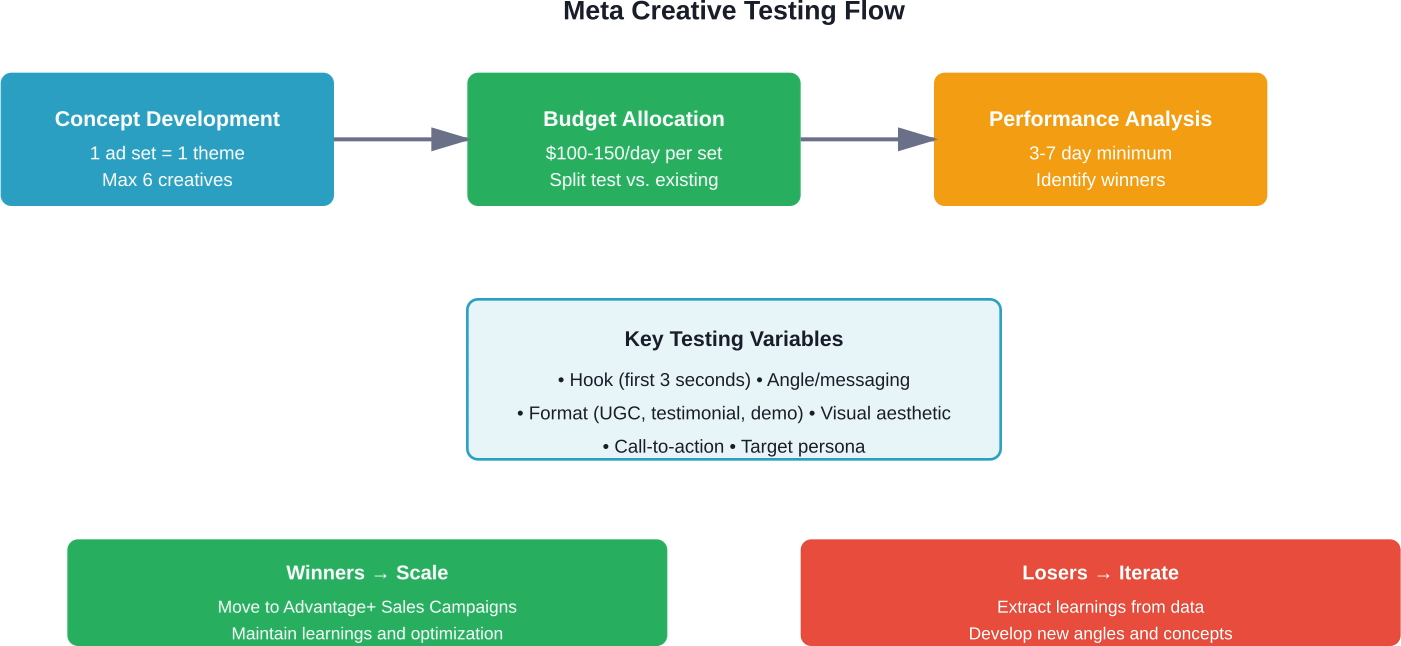
The most effective Meta testing structure uses Ad Set Budget Optimization (ABO) with specific parameters:
Each ad set should represent one distinct concept. Not six random creatives thrown together—one cohesive theme tested through multiple executions.
This structure isolates variables properly. When testing angle versus format versus hook, separating them into dedicated ad sets reveals which elements drive performance.
Meta introduced a Creative Testing feature that changes how new ads get evaluated. Previously, adding new creatives to existing ad sets meant they'd struggle for delivery against established winners.
The new feature ensures new creatives get fair distribution. Advertisers can compare up to five creative versions within an ad set, allocating a specific test budget while existing ads continue optimizing for performance.
Here's how it works: if a campaign has a $50 daily budget, allocate $25 to test ads and $25 to existing ads. Meta spends evenly at first but may favor better performers as the test progresses. When testing ends, top performers continue running with delivery learnings intact.
The system maintains optimization while testing. Best ads keep their distribution and accumulated data, eliminating the old trade-off between testing and performance.
TikTok demands a different approach. The platform rewards content that feels native, not like traditional advertising.
According to TikTok Ads guidelines, authentic content drives stronger engagement. Problem-solution storytelling works particularly well—highlighting an audience challenge and positioning products as solutions.
TikTok is a sound-on platform. That's not optional context—it's a fundamental testing requirement.
Testing different text overlays, trending sounds, and voiceovers reveals significant performance differences. TikTok's data shows 21% of top-performing ads leverage trending sounds or music
Iterate across these elements systematically. A product demo with trending audio might outperform the same visual with original sound by 3x or more.
Spark Ads let brands boost existing creator content while maintaining the original post's engagement and comments. This format performs exceptionally well because it preserves authenticity.
According to TikTok's creative advertising guide, According to TikTok's creative advertising guide, MySmile used Spark Ads to promote whitening kits through creator videos, achieving $1M+ GMV, 3x ROAS, and 80% lower CPA than traditional web ads
The authenticity factor matters. Audiences trust creator content more than brand-produced ads, and Spark Ads leverage that dynamic without sacrificing campaign control.
Budget determines testing velocity. Too little, and data takes weeks to accumulate. Too much, and inefficient tests waste spend.
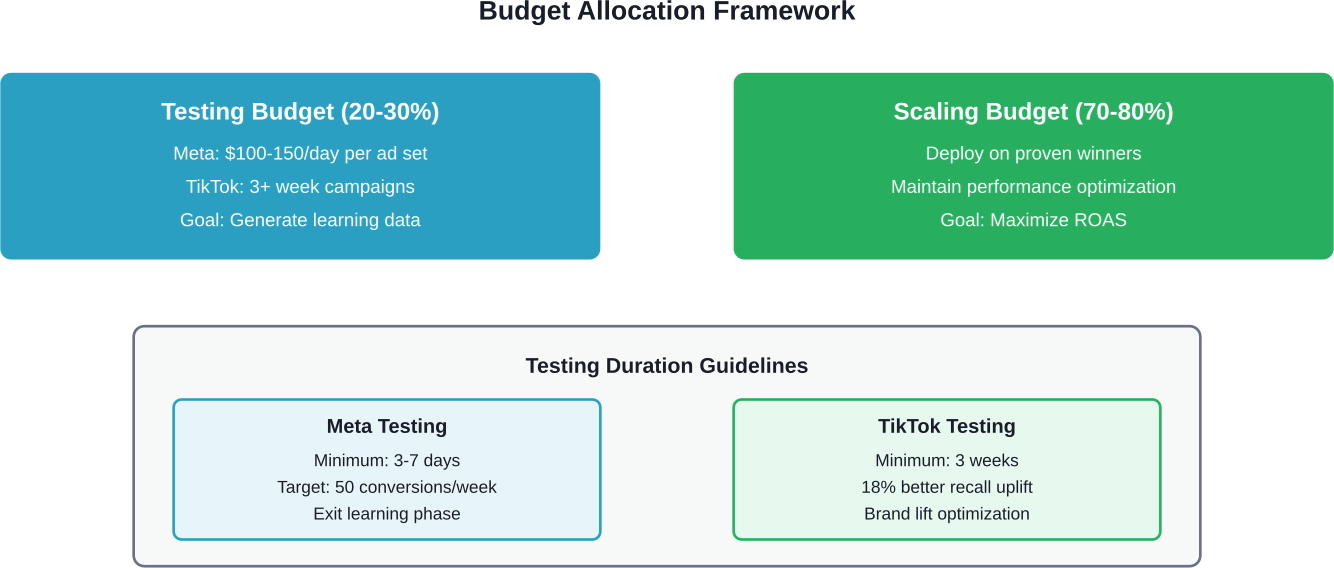
For Meta, allocate $100-$150 per day per ad set during testing phases. That budget allows the algorithm to exit the learning phase and generate statistically significant results within 3-7 days.
TikTok campaigns benefit from longer testingwindows. According to TikTok's analysis of 101 Reach & Frequency campaigns in APAC that conducted Brand Lift Studies, campaigns running for three weeks or more were 18% more likely to achieve significant ad recall uplift.
The testing-to-scaling ratio matters too. Generally speaking, allocate 20-30% of total ad budget to testing and 70-80% to scaling proven winners. This balance maintains innovation while maximizing returns from validated creative.
Both platforms need data to optimize effectively. Meta's learning phase typically requires 50 conversion events per ad set per week. Meta's learning phase typically requires 50 conversion events per ad set per week. Insufficient budget means extended learning phases and unreliable data.
TikTok's automated solutions like Smart+ require less manual intervention but still benefit from adequate budget. According to eMarketer data from January 2026, 42% of US TikTok performance campaigns now use Smart+, reflecting growing confidence in automated optimization.
Testing without clear success metrics wastes money. Each platform provides specific performance indicators that reveal creative effectiveness.
For Meta, track these primary metrics:
TikTok requires slightly different metrics due to platform behavior:
Return on ad spend matters most, but it's a lagging indicator. Leading indicators like hook rate and engagement rate signal creative effectiveness before conversion data accumulates.
Many advertisers declare winners too early. A creative that performs well on day one might regress by day five once audience saturation occurs.
Run tests long enough to exit Meta's learning phase—typically requiring 50 conversion events. TikTok campaigns need even longer windows, with three-week minimums showing significantly better brand lift results.
Sample size matters too. Testing with insufficient budget produces unreliable data where random variance looks like performance differences.
The most expensive mistake? Testing too many variables simultaneously. When an ad set contains six creatives with different hooks, formats, and angles, identifying which element drove performance becomes impossible.
Isolate variables properly. Test hooks in one ad set, formats in another, and messaging angles in a third. This structure reveals which specific elements deserve scaling.
Adding all new creatives to one massive ad set seems efficient but kills testing velocity. The algorithm struggles to distribute budget fairly across numerous ads, and poor performers drag down overall ad set performance.
Separate concept testing from scaling campaigns entirely. Testing happens in dedicated ad sets with controlled budgets. Winners graduate to scaling campaigns with larger budgets and proven optimization.
Even winning creatives eventually fatigue. Frequency increases, engagement drops, and costs rise. Monitor frequency metrics closely—when an ad exceeds 3-4 impressions per user per week, performance typically declines.
Build a creative pipeline that continuously introduces fresh concepts. The best advertisers test new creative weekly, maintaining a steady flow of validated options before current winners fatigue.
One-off tests don't build competitive advantages. Sustainable creative testing systems do.
The most successful advertisers establish regular testing rhythms—launching new creative concepts weekly, evaluating results systematically, and scaling winners rapidly. This consistency compounds over time as learning accumulates.
Document everything. Which hooks performed best? Which messaging angles resonated with which audience segments? What visual styles drove engagement? These insights inform future creative development and accelerate testing velocity.
Cross-platform learning matters too. Concepts that succeed on Meta often translate to TikTok with platform-appropriate execution. Creative winning on TikTok reveals messaging angles worth testing on Meta.
According to IAB research from August 2025, over half of marketers already use GenAI for creative content, with nearly all planning to expand AI use. But adoption is outpacing safeguards—over 70% of marketers have encountered AI-related incidents in advertising efforts, yet less than 35% plan to increase investment in AI governance
AI tools accelerate creative production, enabling higher testing velocity. However, authenticity still wins. The same research shows According to eMarketer data from February 2026, 60% of all consumers consider UGC the most genuine form of advertising
Use AI to increase volume, but maintain authentic creative principles. Generated images and copy can supplement testing pipelines without replacing the human insight that identifies resonant messaging.
Creative testing isn't optional anymore—it's the foundation of profitable advertising on Meta and TikTok. The algorithms reward relevance, authenticity, and resonance more than traditional targeting ever could.
Start with proper structure: isolated concept testing, adequate budgets, and clear success metrics. Build systematic testing rhythms that continuously introduce fresh creative before existing ads fatigue. Document learnings that compound over time.
The platforms keep evolving. Meta's Creative Testing feature and TikTok's Smart+ automation represent just the beginning of platform-native testing tools. Advertisers who master these systems now will maintain advantages as capabilities expand.
Ready to build a creative testing system that actually drives results? Start with one platform, establish the testing fundamentals, then expand. The data will guide everything else.


