Top Shopify Translation Apps to Expand Your Store Globally
Reach customers worldwide with ease. Discover the top Shopify translation apps that make multilingual stores simple, fast, and effective.
Dec 29, 2025



Quick Summary: Educational institutions thrive when they combine proven digital strategies with data-driven enrollment tactics. Social media engagement, SEO-optimized content, video marketing, and personalized student outreach now drive enrollment success, while AI-powered tools help institutions target diverse demographics more effectively. The key lies in demonstrating career outcomes, building authentic community connections, and maintaining consistent brand visibility across platforms.
The education landscape has transformed dramatically. Higher education institutions face enrollment challenges while competing for a shrinking pool of traditional students. In the US, between 2010 and 2021, male enrollment decreased by 17 percent (from 7.8 million to 6.5 million students) and female enrollment decreased by 13 percent (from 10.2 million to 8.9 million students).
But here's the thing—some institutions are thriving.
The difference? Strategic marketing that speaks to today's digitally-native students. Over 80% of students now use AI-powered search tools to evaluate programs, fundamentally changing how institutions need to approach visibility and engagement.
This guide breaks down the marketing strategies that actually move the enrollment needle. Not theoretical frameworks or corporate jargon—practical tactics backed by enrollment data and real institutional results.
Educational marketing has evolved far beyond open house flyers and radio spots. The sector now operates in a complex digital ecosystem where prospective students conduct extensive online research before ever contacting an admissions office.
These shifts demand targeted, culturally-aware marketing approaches. A one-size-fits-all strategy won't cut it anymore.
Real talk: institutions that fail to adapt their marketing to demographic realities leave significant enrollment opportunities on the table. The data shows clear growth segments—the question is whether marketing teams are positioned to reach them effectively.
Content marketing forms the foundation of effective educational marketing. It's not just about cranking out blog posts—it's about creating valuable resources that answer genuine questions prospective students are asking.
Educational institutions that invest in quality content benefit from long-term organic traffic growth. The key lies in addressing student concerns at every stage of their decision journey.
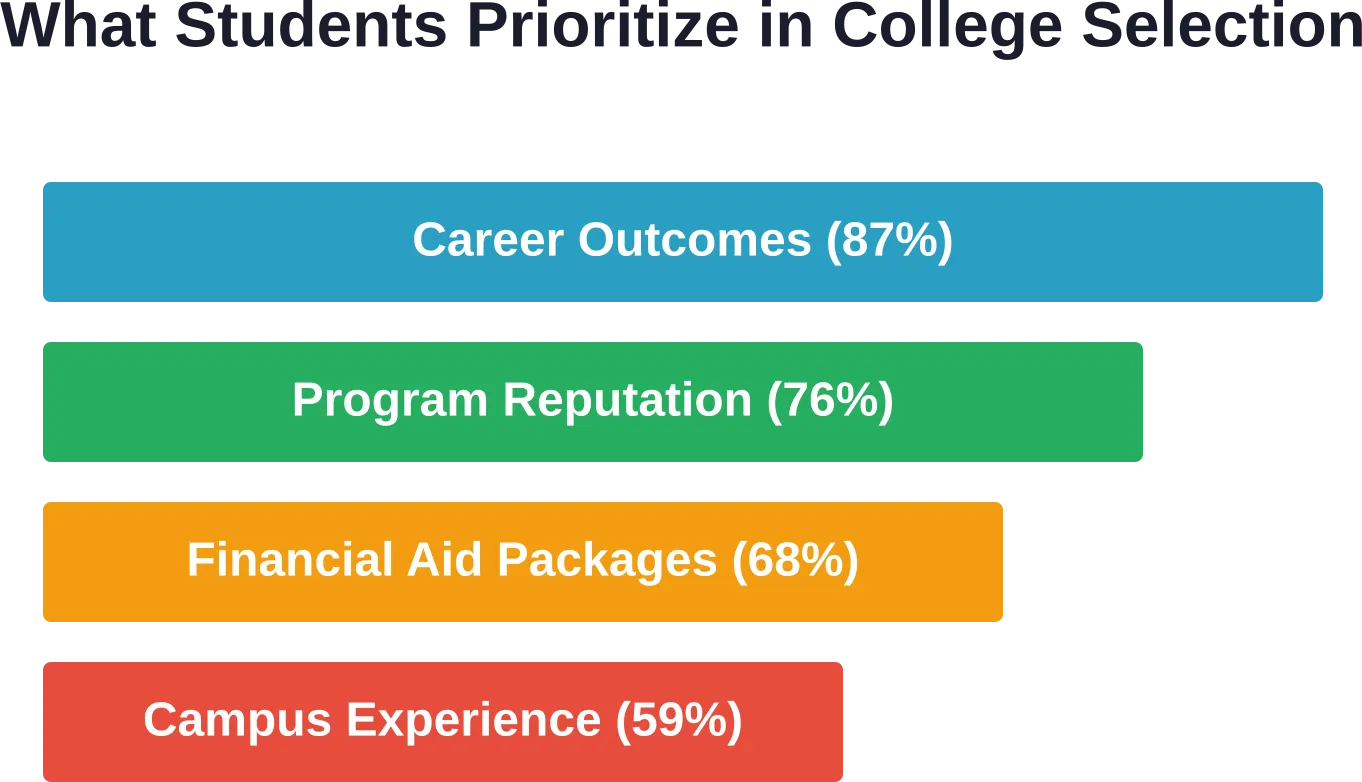
Start by mapping the questions prospective students actually ask. What do they worry about? Career outcomes, campus safety, financial aid, housing, academic support, and post-graduation employment prospects consistently rank as top concerns.
Develop detailed guides, comparison articles, and explainer content around these topics. A comprehensive financial aid guide that breaks down scholarships, grants, work-study programs, and loan options provides genuine value—and positions the institution as helpful and transparent.
Quality matters more than quantity. Poorly crafted content drives potential students away, while engaging material fosters trust and encourages return visits.
Approximately 91% of companies use video marketing, and educational institutions need to prioritize video content optimization. Video serves multiple purposes: campus tours, student testimonials, faculty introductions, program overviews, and day-in-the-life narratives.
Short-form video particularly resonates with Generation Alpha and younger millennials. Platform-specific content performs best—vertical videos for Instagram and TikTok, longer documentary-style pieces for YouTube, and quick highlight reels for Facebook.
Don't overlook the accessibility angle. Add captions to every video, both for SEO purposes and to serve students with hearing disabilities or those watching in sound-sensitive environments.
SEO determines whether prospective students find an institution during their research phase. With AI-powered search tools changing how students discover programs, traditional SEO tactics alone won't capture these assisted searches.
Answer Engine Optimization now plays a vital role in institutional visibility. When students ask AI tools "What's the best nursing program in the Midwest?" or "Which universities offer strong cybersecurity programs with internship opportunities?", institutions need content structured to appear in those AI-generated responses.
Students rarely search for "good college." They search for specific programs, outcomes, and experiences: "mechanical engineering programs with co-op placements," "liberal arts colleges with study abroad in Spain," or "nursing schools with high NCLEX pass rates."
Create dedicated, comprehensive pages for every program. Include curriculum details, faculty credentials, career outcomes, admission requirements, and student testimonials. These pages should target long-tail keywords that reflect how real students search.
Local SEO matters tremendously for community colleges and regional universities. Optimize for "community college near [city name]" and similar location-based queries. Claim and optimize Google Business Profile listings, ensuring accurate information about campus locations, hours, and contact details.
Page speed affects both search rankings and user experience. Students abandon slow-loading pages, particularly on mobile devices where most initial research happens.
Ensure mobile responsiveness across all content. Test application processes on various devices—a clunky mobile application experience kills conversions even when marketing succeeds in driving traffic.
Structure data markup helps search engines understand content context. Schema markup for courses, events, and FAQs can generate rich snippets in search results, improving click-through rates.
Social media serves multiple functions in educational marketing: brand building, community engagement, student recruitment, and current student retention. According to a 2024 literature review on social media marketing for student recruitment, institutions must develop algorithmically-informed strategies to become more competitive and meet enrollment goals.
Platform selection matters. The most effective approach concentrates efforts on platforms where target demographics actually spend time, rather than maintaining a mediocre presence everywhere.
Instagram works exceptionally well for visual storytelling. Share campus life snapshots, student achievements, event highlights, and behind-the-scenes glimpses of campus operations. User-generated content from current students carries particular weight—repost student photos and stories (with permission) to showcase authentic experiences.
TikTok reaches younger demographics with short-form, authentic content. Universities finding success on the platform embrace trends while maintaining institutional voice. Student takeovers, quick campus tips, study hacks, and "day in the life" content perform well.
LinkedIn serves graduate programs, executive education, and professional development offerings. Share faculty research, alumni success stories, industry partnerships, and thought leadership content.
Facebook remains relevant for parent audiences and community engagement. Parents often influence college decisions, particularly for traditional-age students. Content addressing parent concerns—safety, support services, financial transparency—resonates on this platform.
Social media isn't a megaphone—it's a conversation. Respond to comments, answer questions, and engage with prospective students who interact with content. Quick response times signal that the institution values communication and accessibility.
Research on e-marketing by universities shows that engagement directly impacts student loyalty and enrollment intention. Active social media presence, combined with positive electronic word-of-mouth, strengthens brand perception and drives enrollment decisions.
Students and families increasingly view higher education through a return-on-investment lens. Demonstrating clear career value has become essential, not optional.
Transparency builds trust. Share employment statistics, average starting salaries, graduate school acceptance rates, and career placement data. Break down outcomes by program when possible—aggregated institutional data doesn't help a prospective engineering student understand their specific career prospects.
Alumni testimonials provide social proof and demonstrate long-term value. Feature graduates in various career stages—recent grads in their first positions, mid-career professionals, and established leaders in their fields.
Connect alumni stories to specific programs and experiences. "I succeeded after attending University X" carries less weight than "The cybersecurity lab experience and internship connections through University X's computer science program directly led to my role at [company]."
Video testimonials outperform text. Seeing and hearing a successful graduate describe their journey creates emotional connection and credibility that written testimonials can't match.
Industry partnerships, internship programs, co-op placements, and research opportunities differentiate institutions. Market these aggressively—they represent tangible career preparation that resonates with outcome-focused students.
Quantify when possible: "Students complete an average of two internships before graduation" or "89 percent of engineering students participate in industry-sponsored capstone projects."
Email remains one of the highest-ROI marketing channels for educational institutions. The key lies in segmentation and personalization—generic blast emails generate minimal engagement.
Segment prospects by program interest, academic level, geographic location, engagement level, and demographic characteristics. A prospective graduate student in business needs entirely different messaging than a high school junior exploring undergraduate liberal arts programs.
Automated nurture campaigns move prospects through the enrollment funnel systematically. Map typical decision timelines for different student segments, then build email sequences that provide relevant information at appropriate intervals.
Early-stage prospects need awareness content: program overviews, campus culture, student life, and general admission information. Mid-funnel leads want specifics: detailed curriculum, faculty bios, career outcomes, and financial aid details. Late-stage prospects require conversion content: application deadlines, admitted student events, housing information, and enrollment next steps.
Timing matters. Research shows that personal selling by faculty and email outreach proved most effective for creating awareness and increasing event attendance at higher education institutions. Coordinate email campaigns with other touchpoints for maximum impact.
Subject lines determine open rates. Test different approaches: questions, statistics, benefit-focused statements, and urgency-driven messages. Avoid spam triggers and maintain authenticity—misleading subject lines damage institutional credibility.
Keep email content scannable. Use short paragraphs, subheadings, bullet points, and clear calls-to-action. Mobile optimization isn't optional—most recipients check email on phones.
Student ambassadors provide authentic peer perspectives that institutional marketing can't replicate. Current students sharing genuine experiences carry more credibility than polished marketing copy.
Structure ambassador programs with clear expectations and support. Provide content guidelines, brand assets, and incentives. Some institutions offer scholarships, others provide stipends or professional development opportunities.
Diverse representation matters. Ambassador programs should reflect the full spectrum of student experiences—different programs, backgrounds, activities, and perspectives.
Look for students who genuinely love the institution and communicate well. Forced enthusiasm reads as inauthentic. The best ambassadors share honest experiences, including challenges and how the institution helped them navigate obstacles.
Micro-influencers within specific communities can extend reach into target demographics. A student involved in campus sustainability initiatives might effectively reach environmentally-conscious prospects. An engineering student active in professional organizations connects with similar prospective students.
Organic reach has limitations. Strategic paid advertising amplifies content and targets specific demographics that align with enrollment goals.
Google Ads captures high-intent searches. Students actively searching for "biology programs in California" or "affordable online MBA programs" demonstrate clear interest. Bid on program-specific keywords and location-based queries that match institutional strengths.
Facebook and Instagram ads enable precise demographic targeting. Specify age ranges, geographic locations, interests, and behaviors to reach ideal prospects. Lookalike audiences help find new prospects similar to enrolled students.
Retargeting campaigns re-engage website visitors who didn't convert. Someone who spent time exploring engineering program pages but didn't apply represents warm interest—retargeting keeps the institution top-of-mind as they continue their search.
Video ads generally outperform static images. Short testimonials, campus highlights, or quick program overviews capture attention in crowded social feeds.
Track meaningful metrics: cost per lead, application conversion rates, and enrollment outcomes—not just clicks and impressions. A campaign generating high traffic but zero enrollments wastes the budget.
A/B test continuously. Test ad creative, targeting parameters, landing pages, and calls-to-action. Small improvements in conversion rates compound significantly across large campaigns.
Educational campaigns often waste budget on messaging that never connects with students or parents. Extuitive helps teams evaluate ad creatives before launch using AI-powered campaign forecasting and consumer simulations.
With Extuitive, you can:
👉Book a demo with Extuitive before launching your next campaign.
Driving traffic accomplishes nothing if landing pages don't convert. Every campaign needs dedicated landing pages aligned with specific audience segments and messaging.
Match message to source. A student who clicked an ad about nursing programs expects to land on a nursing-focused page, not a generic homepage. Consistent messaging from ad through landing page to application builds trust and reduces bounce rates.
Clear value propositions appear above the fold. Within seconds, visitors should understand what the program offers and why it matters to them.
Reduce friction in conversion paths. Lengthy forms kill applications. Request only essential information initially—detailed data can be gathered later in the process. Progressive profiling collects information gradually across multiple interactions.
Social proof strengthens conversion. Include student testimonials, employment statistics, accreditation badges, and recognition awards. External validation reduces perceived risk in the enrollment decision.
Strong calls-to-action guide next steps clearly. "Request Information," "Schedule a Visit," "Start Your Application," or "Download Program Guide" provide specific, actionable next steps.
Educational institutions don't exist in isolation. Community partnerships extend marketing reach and demonstrate institutional commitment beyond campus boundaries.
Partner with high schools for pipeline development. Dual enrollment programs, college prep workshops, and campus visit programs introduce prospective students to the institution early. These relationships benefit both parties—high schools provide college exposure for students, institutions build awareness and goodwill.
Employer partnerships validate program relevance. When local companies actively recruit graduates or participate in curriculum development, it signals that programs align with workforce needs.
Community events raise institutional visibility. Hosting public lectures, cultural performances, athletic events, or continuing education workshops positions the institution as a community asset, not an isolated academic enclave.
Non-profit partnerships demonstrate social commitment. Collaborations with community organizations on service projects, research initiatives, or resource sharing build positive institutional reputation that extends beyond traditional marketing.
Marketing without measurement wastes resources. Institutions need clear metrics tied to enrollment outcomes, not vanity metrics that look good in reports but don't drive results.
Track the full funnel: awareness metrics (reach, impressions, traffic), engagement metrics (time on site, video views, content downloads), and conversion metrics (inquiries, applications, enrollments).
Understanding which touchpoints influence enrollment decisions enables smarter budget allocation. Multi-touch attribution recognizes that students interact with institutions across numerous channels before enrolling.
Survey enrolled students about their decision journey. What first made them aware of the institution? Which information sources proved most valuable? What ultimately convinced them to enroll? These insights reveal which marketing efforts actually drive results.
Marketing automation platforms track individual prospect interactions across channels, providing detailed journey maps that inform strategy refinement.

Not every institution commands massive marketing budgets. Financial pressures across higher education—according to Inside Higher Ed data, 63% of institutions funded less than a quarter of their maintenance needs in FY24—often squeeze marketing allocations.
But effective marketing doesn't always require large budgets. Strategic allocation and creative approaches can maximize limited resources.
Social media platforms offer free organic reach. While algorithms limit visibility, consistent, quality content still generates engagement without advertising spend.
Email marketing platforms often provide free tiers for smaller contact lists. As lists grow, costs rise, but the ROI typically justifies investment.
User-generated content costs nothing beyond curation effort. Encourage students to share experiences and tag the institution. Reposting authentic student content provides social proof while filling content calendars.
Student workers can contribute meaningfully to marketing efforts. Communications or marketing students gain valuable experience while institutions benefit from low-cost labor. Structure these roles as learning experiences with proper supervision and mentorship.
Data privacy regulations—GDPR in Europe, CCPA in California, and similar laws elsewhere—require careful compliance. Educational institutions handle sensitive student data and must maintain rigorous privacy standards.
Obtain proper consent for marketing communications. Make opt-in processes clear and honor opt-out requests immediately. Transparency about data usage builds trust rather than eroding it.
Honesty matters more in education than almost any other sector. Misleading marketing damages institutional reputation and violates ethical standards. Claims about outcomes, costs, program features, and student experiences must be accurate and verifiable.
Avoid predatory tactics. Aggressive recruitment of students unlikely to succeed, particularly for expensive programs with poor outcomes, crosses ethical lines. Marketing should serve students' interests, not just institutional enrollment goals.
Represent diversity authentically. Stock photos of diverse students don't reflect reality if the actual student body lacks diversity. Authentic representation in marketing materials should match campus demographics.
Educational marketing continues evolving. AI tools, changing student demographics, and shifting societal attitudes toward higher education will reshape strategies in coming years.
Enrollment projections show 9 percent growth in both female and male enrollment between 2021 and 2031. This growth isn't evenly distributed—institutions positioned to serve diverse, non-traditional, and specific demographic segments will capture disproportionate shares.
Virtual and augmented reality create immersive campus experiences for remote prospects. Virtual tours surpass static photos and basic videos in conveying campus atmosphere. As technology becomes more accessible, these tools will shift from novelty to necessity.
Chatbots and AI-powered communication tools provide instant responses to prospect questions. Students expect immediate information—institutions that respond within minutes rather than days gain competitive advantage.
Predictive analytics help identify high-probability prospects. Models analyzing engagement patterns, demographic characteristics, and behavioral signals can prioritize recruitment efforts toward students most likely to apply, be admitted, and enroll.
Even well-intentioned marketing efforts can backfire. Certain mistakes appear repeatedly across educational institutions:
Educational marketing has grown more complex, but also more measurable and targeted than ever before. Institutions that embrace data-driven strategies, authentic storytelling, and student-centered messaging will thrive in competitive enrollment environments.
The fundamentals remain constant: understand target audiences deeply, deliver genuine value in communications, demonstrate clear outcomes, and build authentic connections. Technology and platforms change, but these core principles endure.
Start with a clear assessment of current marketing efforts. Which channels drive actual enrollments? Where do prospects drop off in the funnel? What messages resonate with target demographics? Use data to inform strategy rather than assumptions.
Implementation doesn't require perfection. Begin with one or two high-impact strategies and execute them well rather than spreading resources thin across every tactic. Build on successes incrementally.
The enrollment landscape will continue shifting. Demographic changes, technological evolution, and societal attitudes toward higher education create both challenges and opportunities. Institutions that remain adaptable, student-focused, and data-informed position themselves for sustainable enrollment success.
Ready to transform enrollment outcomes? Begin by auditing current marketing effectiveness, identifying quick wins, and developing a strategic roadmap aligned with institutional strengths and student needs. The competition for students intensifies—but strategic, authentic marketing creates lasting competitive advantage.


