What Is Shopify Capital? Easy Business Funding for Shopify Merchants
Learn about Shopify Capital and how it helps businesses get quick funding for growth. Discover the eligibility and application process for Shopify merchants.
Feb 3, 2026



Effective marketing ideas for schools in 2026 include building a strong SEO-optimized website, leveraging social media platforms for community engagement, hosting webinars and virtual events, creating video content that showcases school culture, and implementing targeted email campaigns. A 2019 BrightEdge study found that 68% of online experiences begin with search, making digital visibility critical for enrollment success.
Competition for student enrollment has reached unprecedented levels. Families research schools online, compare options on social media, and expect transparent communication before they ever schedule a tour.
Traditional marketing approaches—print brochures, newspaper ads, word-of-mouth—still matter. But they're no longer enough.
The typical independent school operates with three or fewer full-time marketing staff, and 54% of independent schools have annual marketing budgets of more than $70,000, according to NAIS research. Resources are limited. Strategy matters more than ever.
Schools that thrive in this environment understand a fundamental truth: marketing is not about boasting. It's about building trust, demonstrating value, and making it easy for families to discover what makes the institution special.
Higher education marketers face a critical challenge—adapting to how learners now discover and explore educational programs. A 2019 BrightEdge study found that 68% of online experiences begin with a search engine, a figure likely higher today.
The disconnect is striking. Search drives discovery, but schools aren't optimizing for it.
The gap between importance and execution creates opportunity for schools willing to invest in digital fundamentals.
The school website serves as the digital front door. Families judge credibility, culture, and quality within seconds of landing on the homepage.
Start with technical foundations. Fast loading times, mobile responsiveness, clear navigation—these aren't optional. They're table stakes.
But here's what many schools miss: parents aren't searching for generic terms like "great education." They're asking specific questions:
Create dedicated pages and blog content that answers these queries directly. Use natural language. Include data points that matter—acceptance rates, college placement statistics, faculty credentials.
Schools that structure their websites around parent questions rather than administrative departments see better engagement and conversion rates.
Social media isn't a megaphone for announcements. It's a conversation platform where families assess whether they belong.
Culver Academies demonstrated this effectively through Instagram video content. Multiple videos exceeded 1,000 views by showcasing real student experiences—not polished promotional clips, but authentic glimpses into daily life.
The strategy shift matters. Video interviews with students and faculty are documented to generate significantly more engagement compared to traditional narration-style videos, according to data-driven marketing practices.
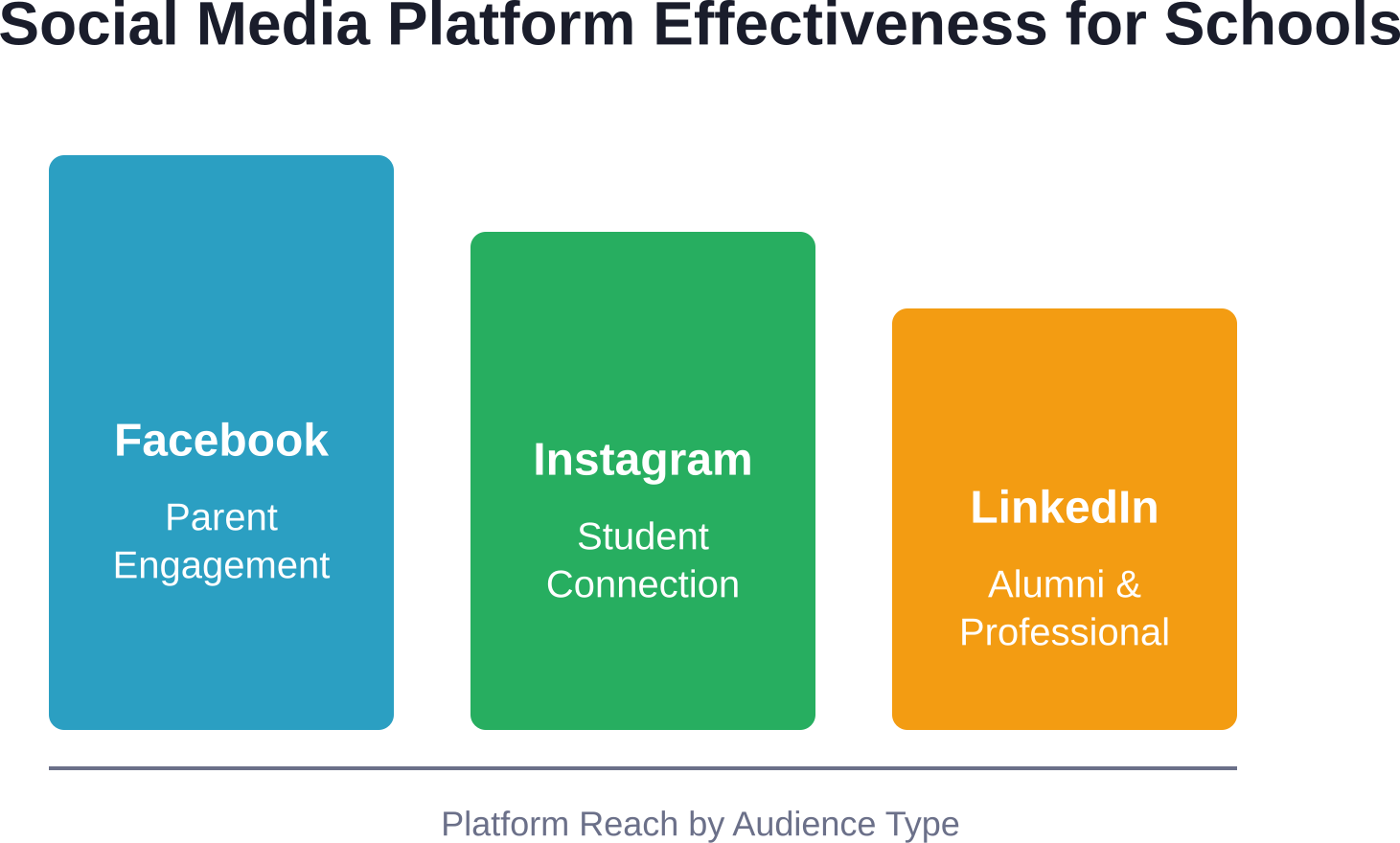
Platform selection depends on the audience. Facebook remains dominant for parent communities. Instagram connects with prospective students and younger families. LinkedIn builds credibility with alumni and professional networks.
Post consistently, but prioritize quality over frequency. Three thoughtful posts weekly outperform daily low-effort content.
Social listening amplifies effectiveness. Monitor conversations about education in the local community. Respond to questions. Engage authentically. Schools that participate in broader education discussions—not just self-promotion—build stronger brand recognition.

Enrollment campaigns can become expensive fast when schools push the wrong promotions during peak application periods. Instead of relying only on live ad testing, Extuitive helps teams forecast campaign performance before launch through predictive advertising models and AI-powered consumer analysis.
What Extuitive makes easier for marketing teams:
👉Book a demo with Extuitive and see which enrollment campaigns may be worth scaling before launch.
Sewickley Academy pioneered this approach with remarkable results. Over three years, their webinars averaged 29 registrations per session, with 50 to 55% participation rates.
The topics focused on specific parent concerns rather than generic school promotion. Sessions covered raising boys, empowering girls, financial aid processes, and college guidance strategies. Each 40-minute presentation featured subject matter experts—directors of support services, college counseling staff—and concluded with extensive Q&A.
This model works because it provides value before asking for commitment. Families learn something useful whether they ultimately enroll or not.
Virtual events lower barriers to participation. Parents don't need childcare arrangements or commute time. Recording sessions extend reach—webinar content becomes evergreen resources on the school website.
The format also enables geographic expansion. Schools recruiting beyond their immediate area can connect with distant families who can't attend in-person events.
Prospective families want to see what daily life actually looks like. Scripted promotional videos don't answer that question.
Effective school video marketing captures authentic moments. Student perspectives matter more than administrator testimonials. Faculty explaining their teaching philosophy in their own words builds credibility better than polished voiceovers.
Production quality matters less than authenticity. Smartphone footage of a classroom discussion or athletic practice often outperforms professionally produced content that feels staged.
Distribution matters as much as creation. Embed videos directly on relevant website pages—don't just upload to YouTube and hope families find them. Feature student testimonials on admissions pages. Showcase faculty interviews on academic program descriptions.
Video series work particularly well. "A Day in the Life" content following different grade levels. "Meet the Teacher" interviews. "Student Spotlight" features diverse achievements.
Email remains one of the highest-ROI marketing channels available to schools. But batch-and-blast announcements don't constitute strategy:
Local search drives discovery for families new to an area or those comparing nearby options. Google Business Profile optimization costs nothing but delivers consistent results.
Complete every profile field. Upload photos regularly—classrooms, facilities, events, student work. Respond to every review, positive and negative. Post updates about achievements, events, and news.
Online reviews influence school choice more than many administrators realize. Families trust peer experiences over institutional marketing messages.
Encourage satisfied families to share reviews. Make it easy—send direct links, provide simple instructions. But never incentivize or fabricate reviews. Authenticity matters more than volume.
Negative reviews require thoughtful responses. Acknowledge concerns. Explain steps taken to address issues. Demonstrate that the school listens and improves. How institutions handle criticism reveals character.
Schools possess deep expertise in education, child development, and learning. That knowledge becomes marketing fuel through strategic content creation:
Organic reach matters, but paid advertising accelerates results when executed strategically.
Most schools allocate 1-10% of overall budgets to marketing, with competitive institutions investing more to reach new markets. Digital advertising offers precise targeting impossible with traditional media.
Geographic targeting reaches families in specific neighborhoods or commute zones. Demographic filters focus on household income ranges aligned with tuition levels. Interest-based targeting connects with parents researching education topics.
Retargeting campaigns recover interested prospects who visited the website but didn't inquire. These ads cost less than cold prospecting while delivering higher conversion rates.
Platform selection depends on goals. Google Ads captures active search intent—families already looking for schools. Facebook and Instagram build awareness among parents not yet actively searching. LinkedIn reaches decision-makers in specific industries or companies.
Budget discipline prevents waste. Start small, test different approaches, measure results rigorously. Double down on what works, eliminate what doesn't.
Schools exist within communities, not apart from them. Strategic partnerships amplify reach while demonstrating institutional values.
Sponsor local youth sports teams, arts organizations, or community events. Visibility matters, but authentic connection matters more. Choose partnerships aligned with school mission and values.
Host community education events open to non-enrolled families. STEM nights, literacy workshops, college planning seminars—these events provide value while showcasing facilities and expertise.
Faculty and staff participation in civic organizations builds personal networks. Parent ambassadors who speak about their positive experiences carry more credibility than official marketing materials.
Local media relationships generate earned coverage. Press releases about significant achievements, innovative programs, or community contributions can result in feature stories that reach broader audiences.
NAIS research reveals that 54% of independent schools have annual marketing budgets of more than $70,000, while 28% have budgets over $120,000. But money alone doesn't guarantee results.
Effective budget allocation balances multiple priorities. Digital infrastructure—website hosting, email platforms, social media tools—forms the foundation. Content creation requires ongoing investment in writing, photography, and video production. Paid advertising demands flexible budgets that respond to enrollment cycles.
Schools with limited budgets should prioritize high-impact, low-cost strategies first. SEO optimization, content marketing, and social media engagement deliver results without massive expenditure.
Larger budgets enable acceleration through paid advertising, professional creative services, and marketing automation platforms. But strategy matters more than spending—poorly executed expensive campaigns underperform well-planned modest efforts.
Tracking results separates effective programs from wasteful activity:
Several predictable errors undermine school marketing efforts.
Generic messaging fails to differentiate. Gallup research on higher education found that mission statements are too similar—"We prepare the leaders of tomorrow" and "We nurture lifelong learners" could describe hundreds of institutions. Schools must articulate specific, tangible outcomes that distinguish them.
Ignoring mobile optimization alienates families researching smartphones. More than half of website traffic comes from mobile devices. Sites that don't render properly or load slowly lose prospects immediately.
Inconsistent communication creates confusion. Schools that update social media sporadically, let website content grow stale, or fail to respond promptly to inquiries signal disorganization.
Focusing exclusively on promotional content rather than useful information makes schools forgettable. Families remember institutions that helped them understand education choices, not those that merely advertised.
Neglecting current families while pursuing new enrollment damages retention. Marketing to enrolled families—celebrating their children's achievements, recognizing their involvement—reduces attrition and generates word-of-mouth referrals.
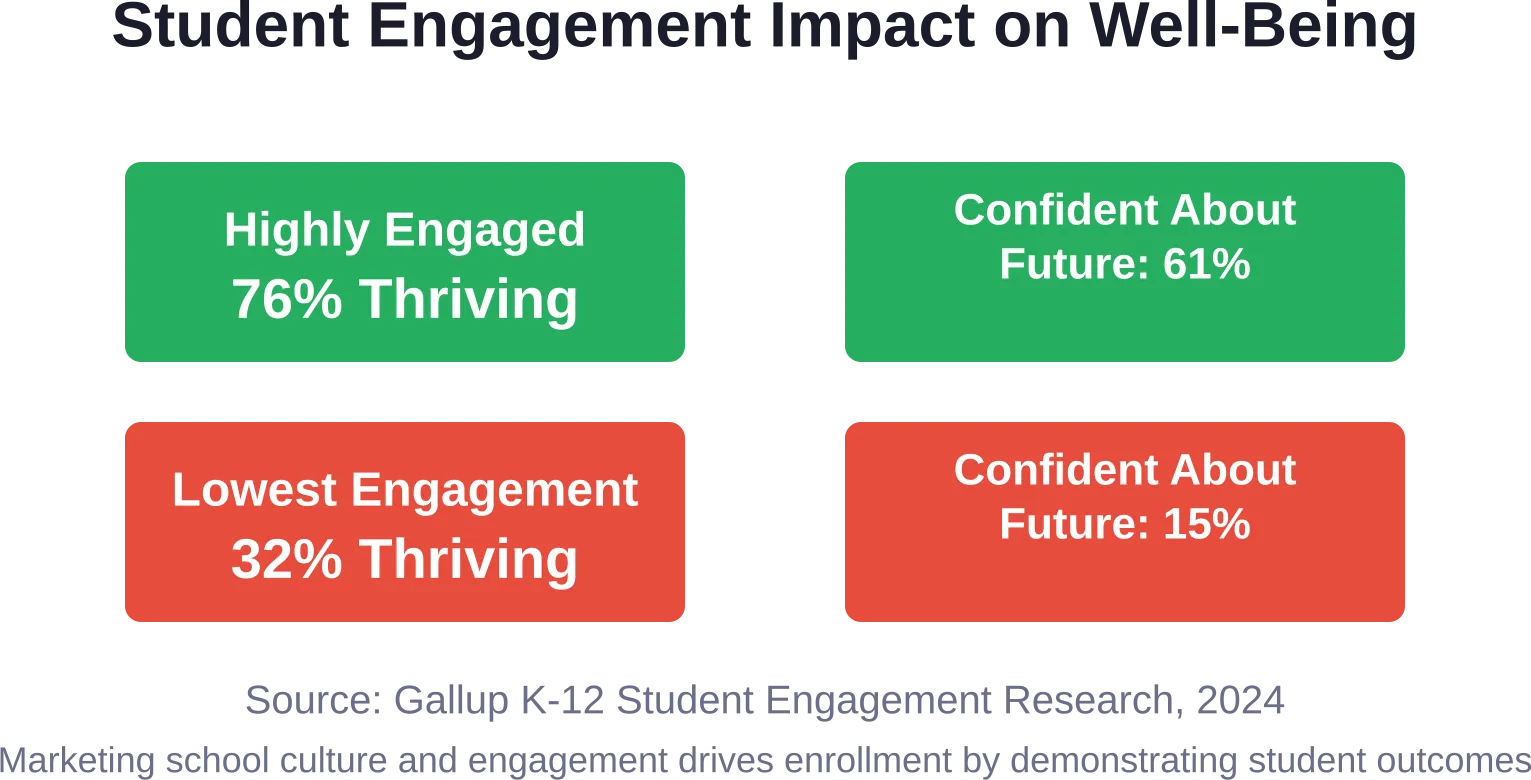
NAIS research found that about two-thirds of respondents reported their marketing teams receive good or great support (approximately 68%). But support means more than approval—it requires resources, authority, and strategic alignment.
Marketing teams need access to data. Enrollment trends, demographic shifts, competitive landscape analysis—these insights inform strategy. Schools that restrict information to senior leadership hobble marketing effectiveness.
Professional development matters. Marketing evolves rapidly, particularly in digital channels. Budget for training, conferences, and skill development.
Cross-departmental collaboration amplifies results. Admissions, academic programs, student life, alumni relations—all generate marketing content and touchpoints. Schools that operate in silos miss opportunities for integrated storytelling.
Leadership support includes defending marketing budgets during financial pressure. Short-term cuts that eliminate marketing capacity create long-term enrollment challenges. Institutions that maintain investment through economic cycles emerge stronger.
Effective school marketing in 2026 requires strategic focus, authentic communication, and measurement discipline. The institutions that thrive balance digital fundamentals with human connection.
Start with what matters most. If the website doesn't load on mobile devices or rank in search results, fix that before launching elaborate campaigns. If social media accounts sit dormant, commit to consistent valuable content or pause the channels entirely.
Listen to families throughout their journey. What questions go unanswered? What information proves most helpful? Where do they get stuck or confused? Direct feedback reveals opportunities competitors miss.
Build systems that scale. Email automation, content calendars, analytics dashboards—these tools enable small teams to compete effectively. The typical school marketing team of three or fewer staff members can't succeed through manual effort alone.
Measure rigorously. Track which channels drive inquiries. Monitor conversion rates from inquiry to tour to enrollment. Calculate cost per enrollment by marketing source. Data reveals what works and what wastes resources.
Remember that marketing serves enrollment, but enrollment serves mission. Schools exist to educate students exceptionally well. Marketing simply ensures the right families discover that opportunity. Authentic excellence attracts enrollment more effectively than clever messaging masking mediocrity.
The schools succeeding in this competitive environment share common traits. They communicate clearly and consistently. They demonstrate value through evidence rather than claims. They make it easy for families to engage, explore, and choose confidently.
Start today. Pick one strategy from this article—optimize one key webpage, launch one email nurture sequence, create one valuable piece of content. Small consistent actions compound into significant results over time.
School marketing is not about manipulation or hype. It's about helping the right families find the right educational home for their children. Done well, marketing serves both institutional health and student flourishing.


