The Best Free AI Platforms Every Marketer Should Use in 2026 to Save Time
Discover top free AI platforms for content, SEO, and design. Powerful marketing value in 2026 with no credit card required to start using them today.
Mar 24, 2026



If you run a Shopify store, email marketing isn’t optional anymore. It’s one of the most reliable ways to turn visitors into customers and customers into repeat buyers. So it’s a fair question to ask: does Shopify actually have email marketing built in, or do you need another tool?
The short answer is yes, Shopify does offer email marketing. But the longer answer matters more. Shopify’s email solution works well for some stores, and not so well for others. Understanding where it fits, and where it falls short, can save you time, money, and a lot of frustration as your store grows.
In this guide, we’ll break it down clearly so you can decide what makes sense for your business, without the buzzwords or sales talk.
Shopify Email is the built-in email marketing tool that allows merchants to create and send campaigns directly from their store dashboard. There’s no need to rely on third-party apps or deal with complicated integrations. Everything is already connected, so your customer data, orders, and products are immediately available when you start building emails.
Email marketing continues to be one of the most effective channels for ecommerce because it creates a direct line of communication with your audience. You fully own your email list, you’re not at the mercy of changing social media algorithms, and you can reach customers where they already spend time every day. More importantly, email allows you to engage shoppers at every stage of their journey, from the first visit to repeat purchases and long-term loyalty.
For Shopify merchants, this makes email a reliable foundation for sustainable growth. Well-timed campaigns help bring customers back, increase lifetime value, and build stronger relationships over time. When used consistently and thoughtfully, email marketing delivers one of the highest returns on investment in digital marketing, making it a channel worth prioritizing no matter the size of your store.
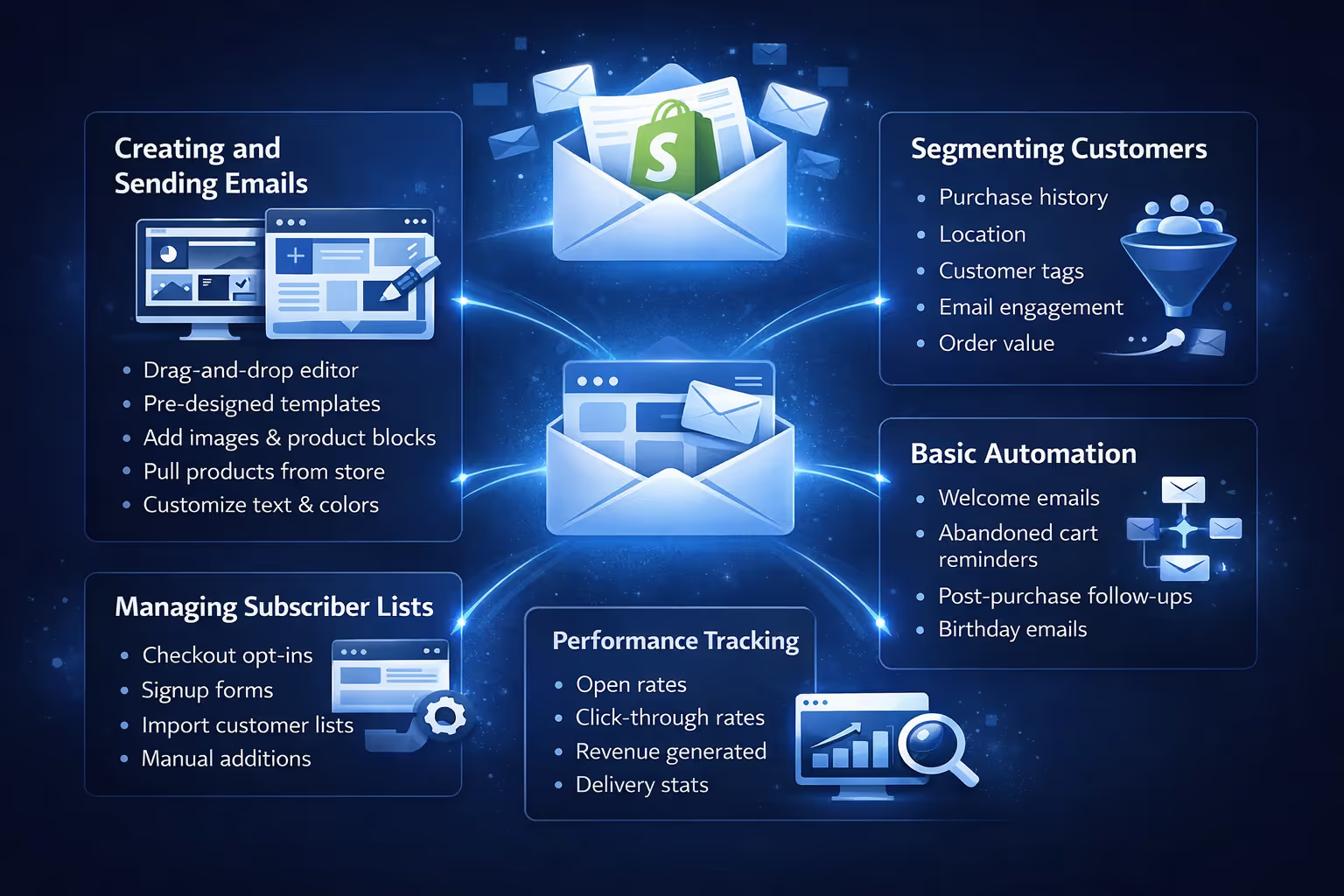
Let’s talk about functionality, not marketing buzzwords. Shopify Email covers the core tasks most merchants need when they’re getting started or running straightforward campaigns.
Shopify Email comes with a drag-and-drop editor that’s easy to use, even if you’ve never designed an email before. You can:
Because it’s connected to your Shopify catalog, adding products to an email feels natural. Prices, images, and links update automatically, which saves time and reduces errors.
Your email list is built directly from your Shopify customer data. You can collect subscribers through:
There’s no separate database to manage. Everything lives in one place, which is a big advantage for store owners who don’t want extra complexity.
Segmentation is where Shopify Email starts to show real value. Instead of blasting the same message to everyone, you can create segments based on things like:
This allows you to send more relevant emails, which usually leads to better open rates and more conversions.
Shopify Email includes pre-built automation templates that cover some of the most common ecommerce use cases, such as:
These automations don’t require technical setup. You select a workflow, customize the content, and let it run in the background.
Once emails are sent, Shopify shows you performance metrics directly in your admin. You can see:
This data helps you understand what’s working and what needs improvement without jumping between platforms.
Shopify Email isn’t trying to be everything for everyone, and that’s actually part of its strength. It focuses on doing a few things well.
Because it’s built into Shopify, everything works together naturally. Customer data, products, orders, and email campaigns all live in the same ecosystem.
There’s no need to worry about syncing issues, broken integrations, or mismatched data.
Shopify Email is included with your Shopify plan, with a generous number of free emails each month. For many small and medium-sized stores, this alone makes it appealing.
You can launch email marketing without committing to another monthly subscription right away.
The learning curve is low. Most merchants can send their first campaign within an hour. That’s important, because tools only create value when they actually get used.
For stores focused on basic retention, Shopify Email covers the essentials. Welcome emails, cart recovery, and simple promotions can already make a noticeable difference in revenue.
As useful as Shopify Email is, it’s not a perfect fit for every store forever. The limitations usually become clear as your business grows or your marketing strategy becomes more sophisticated.
While Shopify Email supports basic workflows, it doesn’t offer deeply customizable automation logic. If you want complex, multi-step journeys based on detailed customer behavior, you may find the options restrictive.
Personalization is possible, but it’s not as granular as what advanced email platforms offer. Predictive product recommendations, dynamic content blocks, or AI-driven timing often require third-party tools.
As your email list grows and your campaigns become more frequent, you may want features like advanced testing, detailed attribution, or cross-channel automation. Shopify Email keeps things simple, which can feel limiting at scale.

When we talk about email marketing for Shopify, it’s easy to focus only on what happens after someone joins your list. In reality, the quality of your emails often depends on what you learn before that first email ever goes out. That’s where Extuitive naturally fits in. While email helps us build relationships and drive repeat purchases, Extuitive helps us figure out which messages, visuals, and product angles actually resonate with real people before we spend money promoting them.
For Shopify stores, this makes email marketing feel a lot less like guesswork. When we already understand which audiences respond to certain ideas and what sparks purchase intent, our emails become clearer, more relevant, and easier to write. Instead of testing everything inside the inbox, we’re sending campaigns backed by insights from validated ad concepts. Used together, Shopify email marketing and Extuitive help create a smoother journey, from the first impression to long-term customer loyalty.
This is often the moment when Shopify merchants pause and take a closer look at what they really need from email marketing. The built-in email tool is a strong place to start, especially if you want something simple and fully connected to your store. At the same time, Shopify integrates smoothly with a wide range of third-party email marketing apps built for more advanced use cases.
These platforms are typically designed for stores that want to go deeper. They offer more flexible customer segmentation, automation triggered by detailed browsing or purchase behavior, and the ability to coordinate email with other channels like SMS or push notifications. Reporting is also more robust, making it easier to understand how email contributes to revenue over time and where campaigns can be improved.
In practical terms, Shopify’s native solution focuses on convenience and speed. You can launch campaigns quickly without managing extra tools or data syncing. Third-party apps, on the other hand, are built for scale. They support complex customer journeys, advanced personalization, and long-term growth strategies. That’s why many successful stores start with Shopify Email, learn what works, and then move to a more advanced platform as their email marketing becomes a core driver of growth.
.avif)
If you’re using Shopify Email, or planning to, there are a few best practices that can make a real difference.
Sending more emails doesn’t automatically mean more sales. Segment your audience and send messages that actually matter to them.
Most emails are opened on phones. Keep layouts clean, text readable, and buttons easy to tap.
Your subject line is the first impression. Try different styles, tones, and lengths to see what resonates with your audience.
Automated emails often outperform campaigns because they’re timely and relevant. Set them up once and refine them over time.
Don’t just send and forget. Look at open rates, clicks, and revenue, then make small improvements with each campaign.
So, does Shopify have email marketing? Yes, it does, and for many stores, it’s more than enough to get real results. Shopify’s built-in email tool makes it easy to start sending campaigns, stay in touch with customers, and drive repeat purchases without adding extra software or complexity. It’s practical, affordable, and closely tied to your store data, which removes a lot of the usual friction around email marketing.
That said, the real value isn’t just in having the tool, but in how you use it. For some merchants, the native option will cover everything they need for a long time. For others, it becomes a starting point before moving into more advanced automation and personalization. Either way, Shopify gives you a solid foundation. If email is treated as a relationship channel instead of a last-minute promo tool, it can quietly become one of the most dependable drivers of growth in your business.


