Best AI Marketing Tools for Modern Marketing Teams
A practical look at the best AI marketing tools. What they do well, where they fit, and how teams actually use them.
Feb 11, 2026



UK dropshipping enables entrepreneurs to sell products online without holding inventory, with suppliers handling storage and shipping directly to customers. Legal compliance requires VAT registration when turnover exceeds £90,000, adherence to UK safety standards, and proper business registration with HMRC. The model works best with UK-based suppliers who offer faster delivery times and simpler tax obligations than overseas alternatives.
The dropshipping model has transformed how online retail operates across the UK. Instead of purchasing inventory upfront and managing warehouses, sellers can list products from suppliers who handle everything from storage to shipping.
But here's the thing—dropshipping in the UK isn't just about finding products and uploading them to a store. Tax obligations, supplier reliability, and compliance requirements shape whether this business model actually works.
This guide breaks down what makes UK dropshipping different from other markets, which suppliers deliver quality products quickly, and how to stay compliant with HMRC regulations.

UK dropshipping brings the usual setup decisions, but paid growth still depends on whether the ads are likely to work. Extuitive helps teams predict ad performance before launch, so creative can be reviewed before budget is committed. That makes it easier to compare ideas and move forward with stronger concepts.
Talk with Extuitive to:
👉 Book a demo with Extuitive to review ad concepts before launch.
Dropshipping is a fulfillment model where retailers sell products without physically handling them. When a customer places an order, the retailer forwards it to a supplier who ships directly to that customer.
The process flows like this: a customer browses an online store, selects a product, and completes checkout. The retailer then sends the order details to their dropshipping supplier. That supplier picks, packs, and ships the item directly to the customer's address.
No warehouse needed. No inventory investment required upfront.
Three distinct roles make the dropshipping system function:
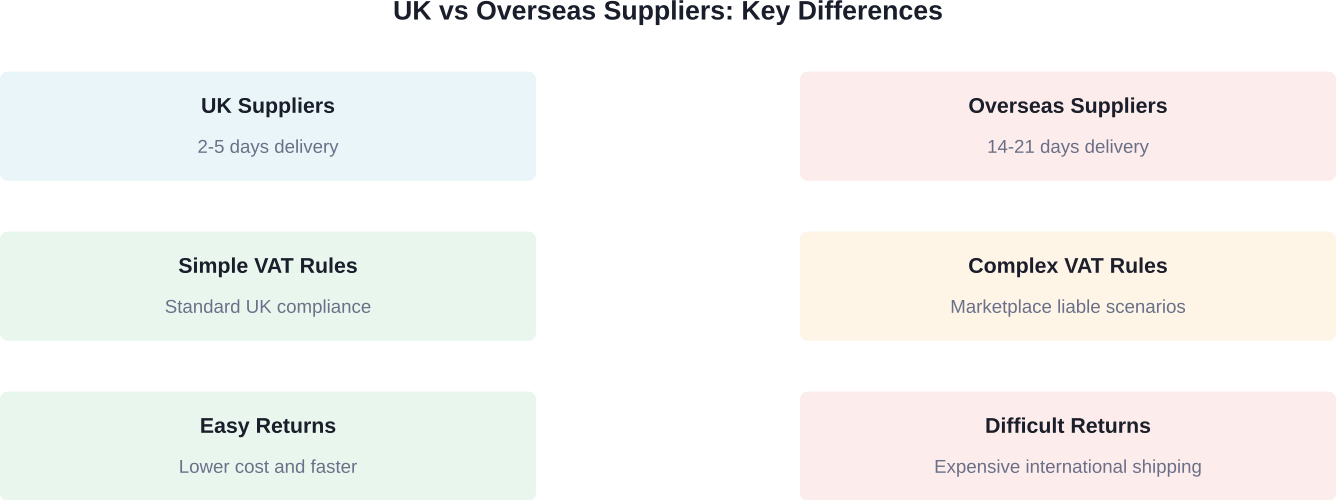
Geography plays a bigger role in dropshipping than many new sellers realize. UK-based suppliers offer distinct advantages over overseas alternatives.
Shipping times drop dramatically. Where overseas suppliers might take 14-21 days for delivery, UK suppliers typically deliver within 2-5 business days. That difference shows up immediately in customer satisfaction and review scores.
Returns become manageable. When products ship from China or other distant markets, return shipping costs often exceed the product value. UK-to-UK returns cost less and process faster.
VAT compliance simplifies considerably. Sellers working with UK suppliers avoid the complex rules around overseas goods and marketplace responsibilities that HMRC introduced for international dropshipping.
Running a dropshipping business in the UK means navigating specific legal obligations. These aren't optional—they're enforced by HMRC and other regulatory bodies.
According to guidance from HMRC, all dropshipping operations require registration for tax purposes. The business structure matters: sole trader, limited company, or partnership. Each carries different tax implications and liability protections.
Business name regulations apply as well. If operating under a name different from the owner's legal name, that trading name must comply with UK regulations.
Trademark protection becomes relevant for sellers creating their own brand rather than simply reselling existing products.
VAT represents the most complex compliance area for UK dropshipping. The rules changed significantly when the UK left the EU, and they differ based on where products ship from.
The threshold is clear: when annual taxable turnover exceeds £90,000 (updated 23 April 2024), VAT registration becomes mandatory.
According to HMRC guidance, businesses selling goods already in the UK at the point of sale face standard VAT rules. This applies whether operating as a UK seller or an overseas seller working with UK inventory.
Here's where it gets specific. HMRC defines business location by considering where essential management decisions happen, where the registered office sits, and where management meetings occur.
Sellers based outside England, Scotland, and Wales selling to customers in Great Britain count as overseas sellers—even if inventory sits in the UK.
When selling through online marketplaces, different rules apply. According to HMRC's definition, an online marketplace is a business using a website or mobile app that sets terms and conditions for sales, authorizes payment collection, or orders goods delivery.
For overseas goods sold through UK marketplaces, the marketplace itself may become responsible for VAT collection and remittance. This shifts the compliance burden from individual sellers to platforms like Amazon or eBay in specific scenarios.
The rules published by HMRC on May 13, 2022, clarify that marketplaces must deal with VAT for goods from overseas sold to UK customers when certain conditions are met.
All products sold in the UK must meet UK safety standards regardless of the fulfillment model. Dropshippers remain legally responsible for product compliance even when suppliers handle shipping.
This creates a critical verification requirement: sellers must confirm that their suppliers' products meet all applicable UK regulations before listing them.
New rules started in the UK from January 1, 2024, affecting sellers on digital platforms. The threshold for reporting is 30 sales or a total amount of 2,000 euros (approximately £1,735 GBP as per the official HMRC exchange rate at the time of legislation).
Information collected between 1 January 2024 to 31 December 2024 will be reported to HMRC by 31 January 2025. This pattern continues annually.
Supplier quality determines everything in dropshipping. The wrong supplier creates constant headaches: delayed shipments, quality complaints, inventory discrepancies.
The right supplier becomes a business partner that enables growth.
Several characteristics separate reliable suppliers from problematic ones:
Several approaches work for locating UK suppliers:
Dedicated dropshipping platforms aggregate verified suppliers. Avasam operates as a UK-focused marketplace connecting retailers with UK-based suppliers who handle automated order processing, payments, and shipping.
Wholesale directories list suppliers willing to work with dropshippers. Not all wholesalers offer dropshipping services, so this requires direct contact to verify.
Direct manufacturer contact sometimes works, particularly for niche products. Smaller manufacturers may agree to dropship arrangements with sellers who can demonstrate consistent order volume.
Trade shows and industry events provide opportunities to meet suppliers face-to-face and evaluate their operations firsthand.
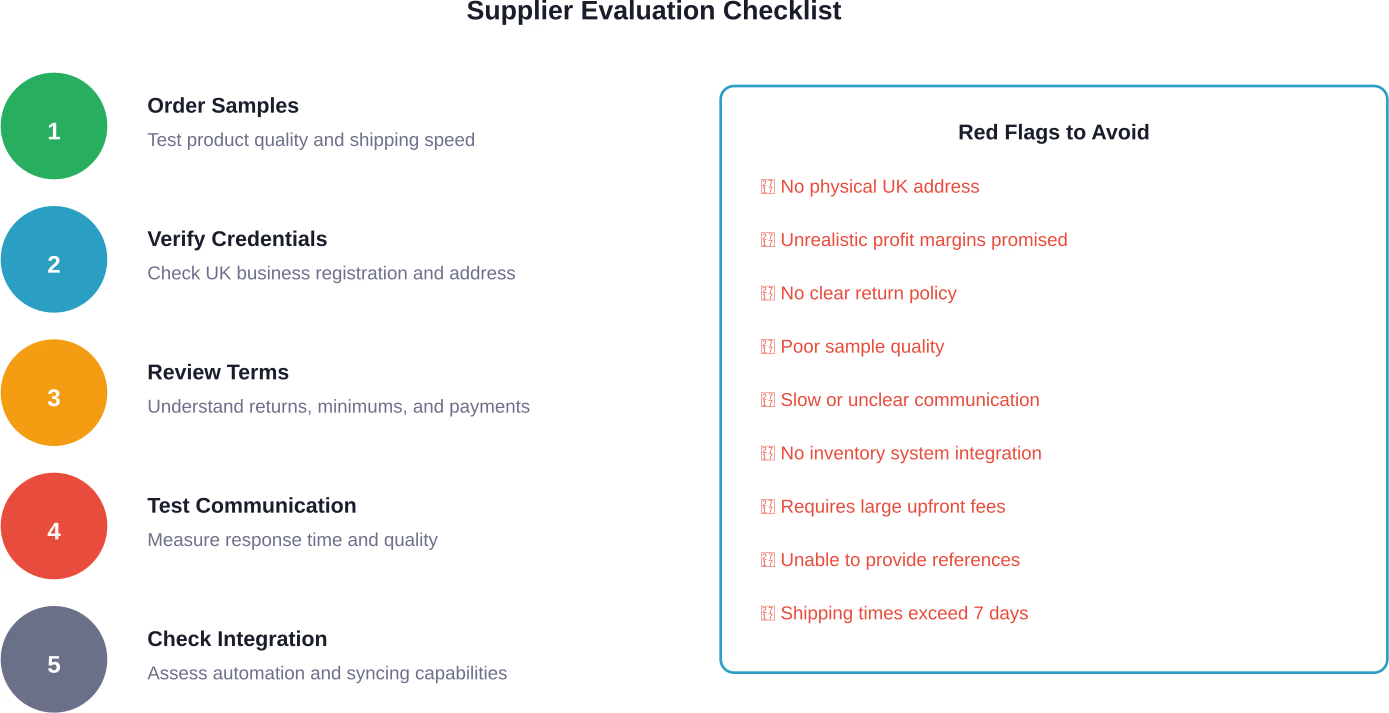
Before committing to a supplier relationship, several evaluation steps prove worthwhile:
Order sample products. This reveals actual product quality, packaging standards, and shipping times. The experience also shows what customers will receive.
Check company credentials. Verify that suppliers are registered UK businesses with legitimate business addresses and contact information.
Review terms and conditions carefully. Understand return policies, minimum order requirements, payment terms, and who handles customer service for product issues.
Test response times. Send inquiries and note how quickly and thoroughly suppliers respond. Slow communication during the evaluation phase predicts worse communication during active partnership.
Assess integration capabilities. Suppliers who offer automated order processing and inventory syncing save substantial time compared to manual order forwarding.
The technical setup process determines how smoothly operations run once orders start flowing. Getting these foundations right prevents problems later.
Several platforms support dropshipping businesses. The choice depends on budget, technical skill, and growth plans.
Shopify dominates the market with extensive dropshipping integrations and apps. The platform handles payments, inventory management, and order processing with minimal technical knowledge required.
WooCommerce offers flexibility for those comfortable with WordPress. It's open-source, meaning no monthly platform fees, though hosting costs apply.
Amazon allows dropshipping under specific conditions outlined in their official policy. Sellers must be the seller of record, identify themselves as the seller on all packing slips and external packaging, and be responsible for returns and customer service.
Specialist dropshipping platforms like Avasam integrate directly with suppliers and automate much of the order fulfillment process.
Manual order processing doesn't scale. As order volume grows, automation becomes essential.
Quality dropshipping platforms offer integration with supplier inventory systems. This means product availability updates automatically, preventing overselling of out-of-stock items.
Automated order forwarding eliminates manual data entry. When a customer orders, the system automatically sends order details to the appropriate supplier.
Payment processing automation ensures suppliers get paid while sellers retain their margin without manual calculation and transfer.
Tracking number integration gives customers shipment visibility without sellers manually updating each order.
Pricing determines profitability. The calculation seems straightforward—supplier cost plus markup equals selling price—but several factors complicate this.
Competitor pricing sets market boundaries. Pricing significantly above competitors requires clear differentiation through branding, service, or bundling.
Platform fees eat into margins. Amazon charges referral fees, Shopify charges transaction fees (unless using Shopify Payments), and payment processors charge processing fees.
VAT adds complexity. Prices displayed to customers should include VAT, but supplier prices may be quoted excluding VAT.
Shipping costs need consideration. Some suppliers charge shipping separately; others include it in product costs. The approach affects pricing strategy.
Starting is one thing. Managing ongoing operations is another. Several areas require constant attention.
Dropshipping removes direct control over product quality. Sellers can't inspect items before they reach customers.
This makes supplier selection critical. But even reliable suppliers occasionally ship defective items or products damaged in transit.
Establishing clear quality standards with suppliers helps. Some sellers include clauses in supplier agreements specifying acceptable defect rates and consequences for repeated quality issues.
Regular sample ordering catches quality degradation. Suppliers sometimes change manufacturing sources or reduce quality to cut costs. Periodic sampling reveals these changes.
Even though suppliers handle shipping, customer service remains the seller's responsibility. This includes answering product questions, handling complaints, and managing returns.
Response time matters. Online customers expect quick replies—ideally within 24 hours, preferably within a few hours.
Return policies need clarity. Who pays return shipping? How quickly do refunds process? What condition must returned items meet?
These policies should align with supplier terms while meeting customer expectations and legal requirements.
Real-time inventory accuracy prevents a common dropshipping problem: selling products that suppliers don't have in stock.
Quality suppliers provide inventory feeds that sync with seller platforms. This automation updates stock levels continuously.
Without this integration, sellers must manually check stock before listing products or risk customer frustration when orders can't be fulfilled.
Dropshipping creates unique financial management requirements. Revenue comes in immediately when customers order, but supplier payment often happens on different schedules.
Accounting software designed for ecommerce helps track revenue, expenses, VAT obligations, and profitability by product or supplier.
Separating business and personal finances simplifies both daily management and tax filing. A dedicated business bank account is essential.
Different platforms serve different business models and seller types. Understanding the options helps match platform to business goals.
Avasam positions itself as the UK's automated dropshipping marketplace. The platform connects retailers with UK-based verified suppliers and provides tools to integrate online stores, source products, and automate order processing, payments, and shipping.
The verification process matters. According to their messaging, suppliers on the platform are vetted before being approved, reducing risk for sellers.
Amazon UK allows dropshipping but enforces specific rules. The Amazon dropshipping policy requires that sellers be identified as the seller of record on all packing slips and external packaging. Purchasing products from another online retailer and having them ship directly to customers violates Amazon policy.
eBay permits dropshipping with similar transparency requirements. Sellers remain responsible for the safe delivery of items and must ensure packaging doesn't include other retailers' materials.
Platforms like Shopify or WooCommerce enable sellers to build branded stores independent of marketplaces. This provides more control over branding, customer data, and pricing but requires handling marketing and traffic generation.
The trade-off is clear: marketplace traffic versus brand control.
Community discussions reveal a common pattern: newcomers enter dropshipping expecting easy money and discover it requires substantial work.
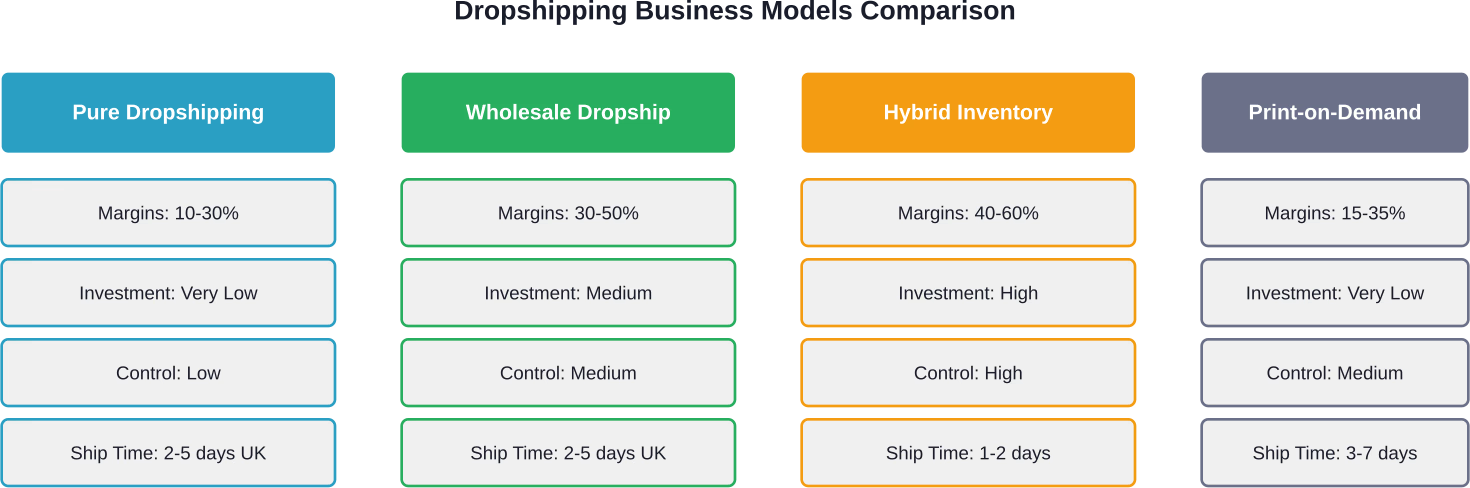
Dropshipping margins vary widely by product category, competition level, and business model. Generally speaking, margins range from 10% to 30% after all costs.
Higher margins exist in specialized niches with less competition. Commodity products in saturated markets often yield single-digit margins.
Calculating true profitability requires accounting for all costs: product cost from supplier, payment processing fees, platform fees, advertising costs, return costs, and customer service time.
The "passive income" marketing around dropshipping misrepresents the reality. Successful dropshipping businesses require active management.
Initial setup demands significant time: finding suppliers, selecting products, building the store, creating product listings, and establishing processes.
Ongoing operations need daily attention: customer inquiries, order monitoring, supplier communication, inventory checking, and marketing adjustments.
Some automation reduces manual work, but dropshipping isn't a set-it-and-forget-it business model.
Several challenges appear consistently in community discussions:
Supplier reliability issues create headaches when suppliers ship late, send wrong items, or run out of stock without notice.
Thin margins leave little room for advertising costs. Acquiring customers profitably becomes the central challenge.
Customer service demands increase with order volume. Product questions, shipping inquiries, and complaint resolution consume time.
Competition intensifies in popular niches. Many sellers source from the same suppliers and compete primarily on price.
Quality control limitations mean sellers sometimes don't know about quality issues until customers complain.
Pure dropshipping isn't the only model. Several variations address some of dropshipping's limitations.
This hybrid approach combines purchasing inventory at wholesale prices with dropshipping fulfillment. Sellers buy products in bulk at lower per-unit costs but still have suppliers store and ship items.
The benefit is better margins. The downside is upfront inventory investment.
Print-on-demand works similarly to dropshipping but focuses on customized products created after order. T-shirts, mugs, posters, and books get produced individually when purchased.
This enables unique designs without inventory but typically offers lower margins than traditional dropshipping.
Some sellers start with pure dropshipping then gradually shift to holding inventory for their best-selling products. This improves margins and shipping speed for popular items while maintaining dropshipping for slower-moving products.
The approach requires capital and storage space but offers more control.
Sustainable dropshipping businesses share certain characteristics. These practices separate occasional sellers from those who build lasting operations.
Product quality and shipping speed matter, but customer service often determines whether buyers return and recommend the business.
Fast responses to inquiries build trust. Clear communication about shipping times prevents disappointment. Hassle-free returns convert unhappy customers into satisfied ones.
Reviews and testimonials become marketing assets. Exceptional service generates the social proof that attracts new customers.
Competing with Amazon on general products is nearly impossible for small dropshippers. Specialization creates advantages.
Niche selection should balance passion with profitability. Knowledge of a product category helps identify quality issues and understand customer needs.
Smaller niches often have less competition and customers willing to pay more for specialized products and expertise.
Product selection, pricing, and marketing all benefit from systematic testing. What sells in theory doesn't always sell in practice.
Starting with small test orders before committing to major inventory or supplier relationships reduces risk.
Tracking metrics reveals what works: conversion rates, average order values, customer acquisition costs, and return rates all guide decisions.
Treating suppliers as partners rather than vendors creates mutual benefits. Suppliers who value the relationship may offer better terms, priority during stock shortages, or early access to new products.
Regular communication, prompt payment, and reasonable expectations foster these relationships.
UK dropshipping offers a legitimate path to ecommerce with lower barriers to entry than traditional retail. The model works best when approached with realistic expectations about margins, time investment, and ongoing management requirements.
Legal compliance isn't optional. Understanding VAT obligations, registering appropriately with HMRC, and ensuring products meet UK safety standards protects both the business and customers.
Supplier selection determines success more than almost any other factor. UK-based suppliers provide faster delivery, simpler tax compliance, and easier returns management compared to overseas alternatives. Thorough vetting before committing to supplier relationships prevents costly problems later.
The technical setup—platform choice, integration capabilities, and automation—creates the foundation for scaling. Manual processes work initially but become bottlenecks as order volume grows.
Customer service, quality control, and continuous optimization separate sustainable businesses from those that fade quickly. Dropshipping isn't passive income, but it can be profitable income for those willing to treat it as a real business requiring ongoing attention and refinement.
Ready to start? Begin with thorough research into your chosen niche, identify and vet reliable UK suppliers, ensure legal compliance from day one, and test products before scaling investment. The market remains viable for those who execute well.


